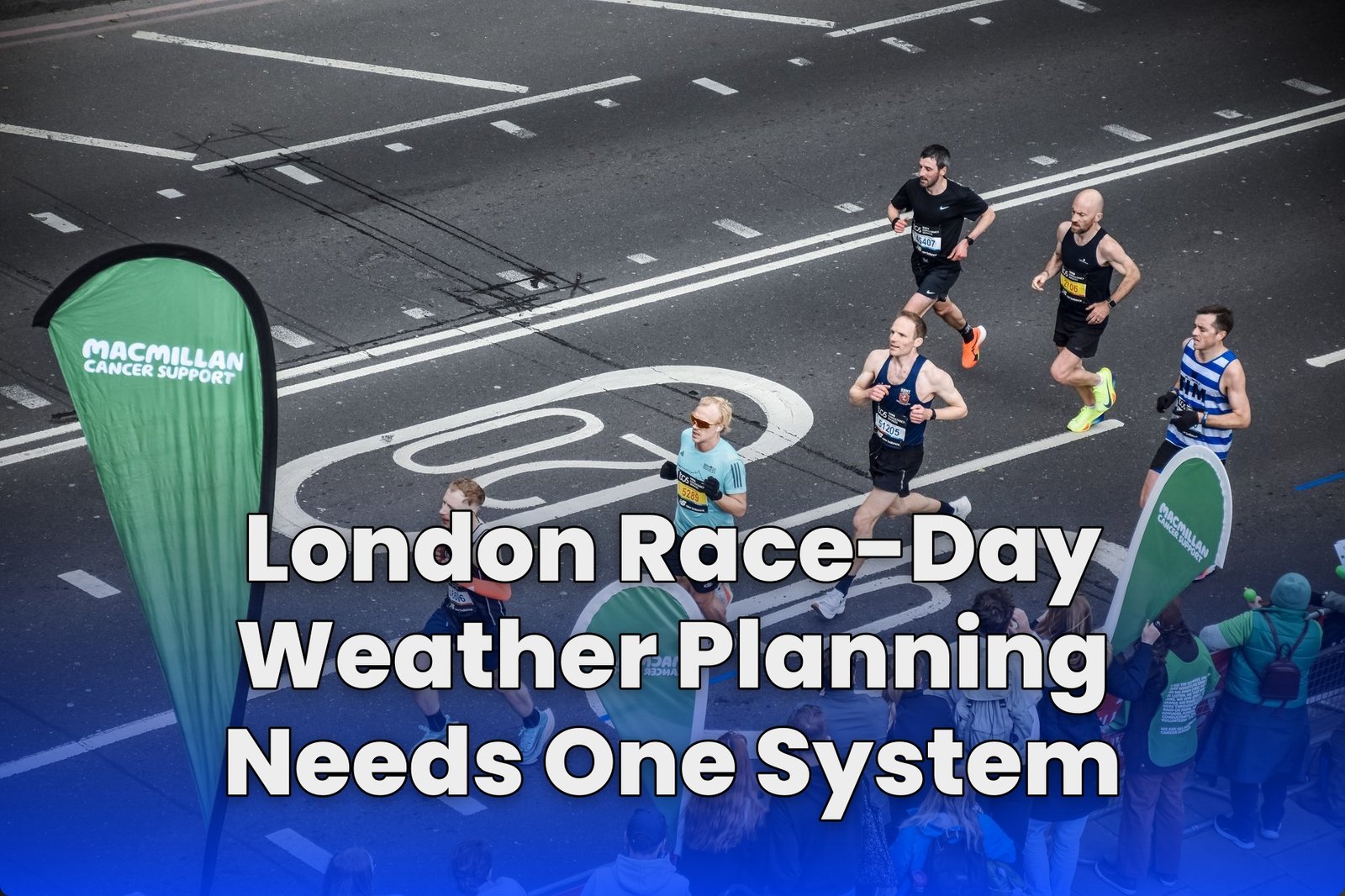
Race-day weather planning for a London marathon works best when you treat wind, rain, and temperature as one moving problem. A single temperature cannot tell you how cold you will feel in the starting pen, how hard a headwind will make the opening miles, or whether sunshine will raise your hydration needs late in the race. Plan for the wait, the course, and your expected finish window rather than dressing for the number shown at the start line.
Check the forecast in stages, then turn the latest hourly details into separate effort ranges. Cool, warm, wet, windy, and mixed conditions each call for a different response.
Key takeaways
- Forecast checks should start seven days out for broad possibilities, with final clothing and pacing choices made the day before.
- When conditions change during the race, use hourly details for the wait, opening miles, expected finish, and final hour rather than a daily average.
- Most limiting sustained conditions should guide your opening effort, while headwinds call for effort-based pacing and tailwinds call for restraint.
- As the race warms after a cool start, drink according to your practiced plan and prepare for greater hydration needs later.
Forecast Checks From One Week Out to Race Morning
Start checking the forecast seven days before the race. At that point, do not choose your singlet or set an exact pace. Look for the broad shape of the day: whether London may be cool or warm, whether rain is likely near the start, and whether wind could become a major factor. Note possible temperature ranges, rain periods, and wind direction. A forecast range such as 48°F to 58°F gives you more useful planning information than a single estimate because it shows how much conditions may move during the event.
The day before the race is when you make the real decisions. Open an hourly forecast and inspect the waiting period, the opening miles, your expected finish time, and the final hour of the race. Check air temperature, feels-like temperature, wind speed, peak gusts, wind direction, and the timing and intensity of rain. An hourly London forecast helps you see whether the weather changes during the race instead of treating the day as one fixed set of conditions.
On race morning, check again before leaving your accommodation. Compare the latest forecast with the plan you made the day before, then change your layers or effort range if the waiting period, first miles, or final hour now look different. If rain has moved into the start window, add protection for the time you will stand still. Stronger wind calls for effort-based pacing, while sunshine reaching the last part of the course calls for a hydration plan that fits warmer conditions even if the start still feels cool.

Dark storm clouds in a gloomy sky, signaling an impending storm.
Weather Details for One Race Plan
Temperature belongs in the plan, but it should not stand alone. Record the air temperature and feels-like temperature together, then add rain timing, rain intensity, wind speed, peak gusts, and wind direction. Apparent temperature combines air temperature with wind and humidity, so it can describe your exposure better than air temperature alone, especially when you wait in damp wind or run through a cool, wet stretch. Low air temperature with strong wind may feel harsher than the number suggests, while sunshine and humidity can make a mild afternoon feel harder after several hours of running. Check the conditions expected while you wait, not only those on the course.
Wind direction changes the meaning of the speed. A headwind takes more effort for the same pace, while a tailwind can make an early pace feel cheap and tempt you to spend energy too soon. Crosswinds can also make exposed sections feel unstable, particularly when gusts arrive between tall buildings or across open roads.
Turn the forecast into separate effort ranges before race day. Your plan should include:
- A cool-condition effort that leaves room to settle into the race
- A warm-condition effort with a slower starting pace
- A headwind effort based on breathing and exertion
- A wet-condition effort that stays controlled while shoes and clothing settle
- A mixed-condition effort that changes when the forecast changes
Do not force one target pace across all five conditions. A pace that fits a cool, calm start may be too hard in warmth or a strong headwind, and a pace that feels cautious in rain may protect you from wasting energy before your clothing and shoes feel settled.
Clothing for the Wait, Course, and Finish
Choose clothing for the time before the start, the conditions on the course, and the weather you expect near the finish. The starting temperature matters, but it is only one part of the decision. A cool, wet morning creates its own problem because you lose heat while standing still. Protect your hands and torso during the wait, using gloves, a disposable outer layer, or another item you have already tested in training. Once you start running, you may need less insulation, so avoid wearing a heavy layer that you cannot manage comfortably for the full race.
Rain before the start makes dry waiting layers more valuable. Rain during the opening miles calls for a controlled effort until your clothing and shoes settle. A short shower near the finish affects comfort less than steady rain during the long middle section. Check whether rain arrives before the start, during the first miles, or late in the race, and match your layers to that timing.
A cool start followed by sunshine can make the race feel warmer as the miles pass. Drink according to your practiced plan as the race warms, and avoid assuming that a comfortable starting pen means the final hour will feel the same.
Pack your race-morning options so you can remove a layer before the start, keep your hands covered while waiting, and stay comfortable if the forecast shifts. Clothing that feels fine for the first hour may feel very different after several hours of sweat, rain, or wind.
Pacing Through Wind, Rain, and Changing Heat
Wind should change your effort before it changes your confidence. Into a headwind, let the pace slow enough to keep your breathing under control. Chasing your usual split through every exposed section can turn a manageable wind into a late-race problem.
A tailwind needs restraint too. It can make your normal pace feel unusually easy, but an early surge spends energy that you may need when the course turns or the wind disappears. Hold your planned effort and accept the free speed only when it comes without extra strain.
Rain timing decides how cautious you need to be. If a light shower begins after your clothing and shoes have settled, you may keep your normal effort. If heavy rain starts in the opening miles, ease back until your footing feels reliable and your clothing stops distracting you. Wet fabric, cold hands, and soaked shoes can make a hard opening pace feel much worse later.
A rise above your usual spring training temperature can slow marathon finish times, so use a slower opening plan rather than promising to hold the same pace and see how it feels. Drink according to your practiced plan as the race warms, especially when a cool start makes the conditions seem easier than they are.
When several conditions appear together, use the most limiting sustained condition as a guide for the opening miles. Cool rain with wind calls for patience, while sunshine after a cool start calls for attention to fluids later. A warm headwind calls for effort-based pacing from the beginning.
Temperature Signals and Race-Organizer Actions
Some temperature changes affect your personal pacing plan. Others may indicate that race organizers need to change the event around you. The three signals below should not be treated as the same kind of warning.
| Temperature Signal | Planning or Organizer Response |
|---|---|
| About 9°F above typical spring training | Use a slower baseline effort |
| 73°F-82°F | Add medical support and advise slower pacing |
| Above 82°F | Consider shortening or canceling the race |
A rise above your normal spring training temperature belongs in your individual plan. Slow the opening effort, drink according to your practiced plan, and leave room for the heat to affect the final miles.
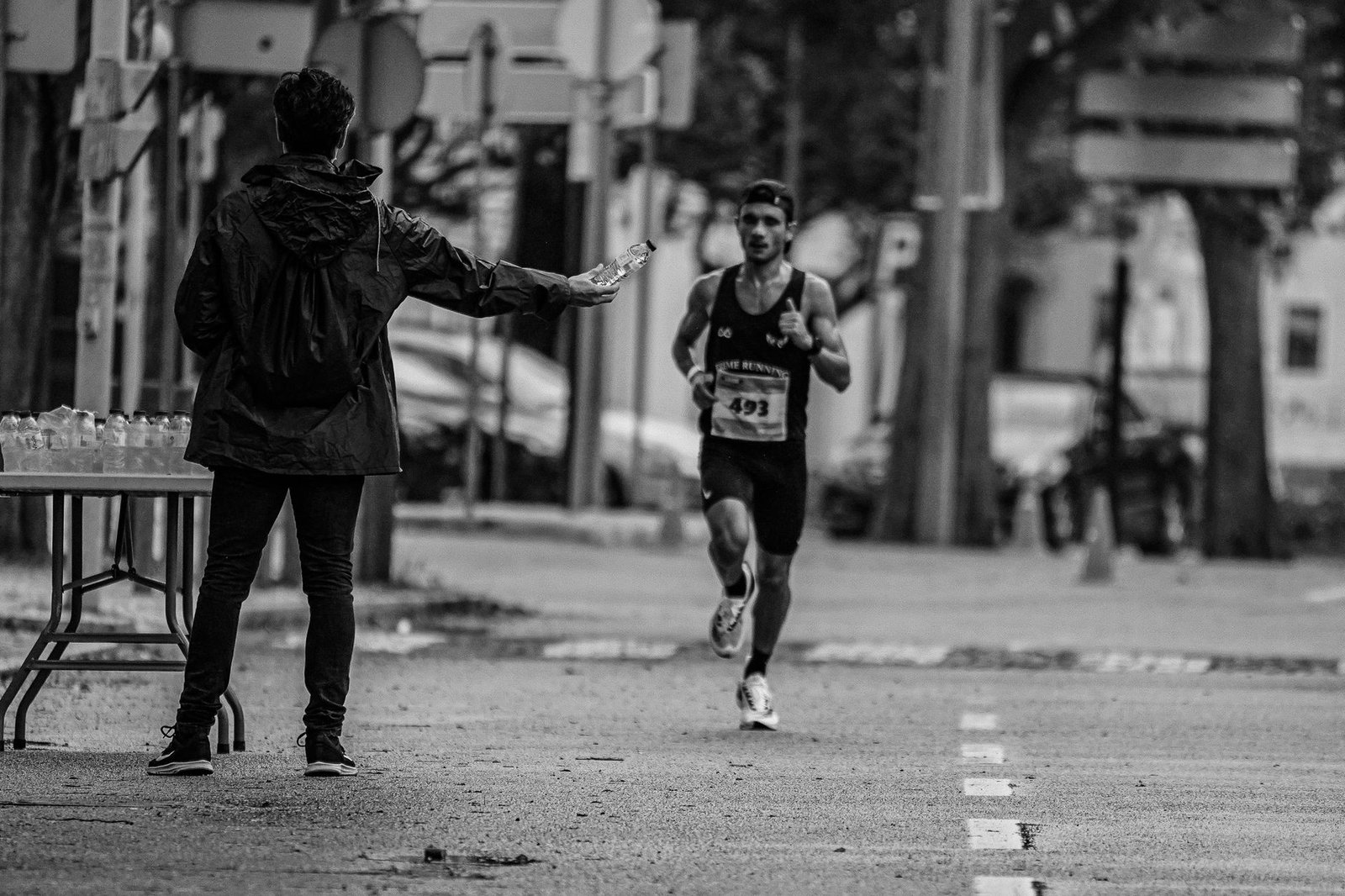
Runner getting water during a race, highlighting determination and endurance.
The warmer bands may require organizer-led action because hydration stations, medical staff, course length, and race timing affect every runner. You cannot solve those conditions by choosing a thinner shirt alone. Follow race instructions if organizers add medical support, advise a slower baseline pace, shorten the course, or cancel the event.
Adjust your pace and hydration when temperature changes within a normal race plan. Respect organizer decisions when the heat reaches a range where the event itself may need to change.
Mixed Conditions and Forecast Advice That Fails
A daily average hides the parts of the day that matter most. A day with a comfortable average can still begin with cold rain, develop a strong crosswind, and finish in bright sun. A daily rain chance also fails to tell you whether rain lasts ten minutes at the start or several hours across the course. Use the timeline instead of the daily summary.
Match each forecast period to the decision it controls:
- Use the waiting-period forecast for your outer layer and hand protection.
- Use the opening-mile forecast for your first effort range.
- Use the expected finish forecast for hydration and clothing you will still want late in the race.
- Use the final-hour forecast to prepare for rising heat, stronger sun, or worsening rain.
A race that starts cool and turns sunny needs two effort decisions, not one average pace. Start controlled, then increase attention to fluids as the temperature rises. A race with rain and wind needs a separate wet-and-windy response, even if the air temperature looks mild. Read wind speed, peak gusts, and direction together, then use effort through exposed sections. Choose your condition-specific range from the latest forecast before leaving your accommodation.
Make Race-Day Weather Work for You
London Race-Day Weather Planning: Wind, Rain, and Temperature in One System becomes most useful when the forecast turns into something you can act on quickly, even when nerves and crowds make small decisions harder. Write your key adjustment on the back of your race bib, where you will see it before the start and remember the plan when the weather changes.

I am Ozan, a London-focused running writer and marathon enthusiast with a passion for helping people discover the city’s best races, running routes, walking trails, and fitness events. I research and write practical, up-to-date guides covering marathons, race preparation, training tips, running gear, and everything related to staying active in London.
My goal is to create reliable, easy-to-follow content that helps runners and walkers of all experience levels explore London with confidence, whether they’re preparing for their first 5K or their next marathon.