
Race-day nerves are not a flaw in your fitness, they are a training issue you can fix. If you treat anxiety like an enemy, it grows. Instead, you need a pre-start routine that makes your first minutes feel familiar, especially when you rehearse it before London.
The core idea is simple and stubbornly practical. You build a mental warm-up, then rehearse the start step by step so your brain does not improvise under stress. When the gun goes off, you already know what to do next, from walking to the corral to locking into a breathing rhythm.
In this article, you will learn how to script those first high-risk minutes, how to practice the rehearsal several times across the week, and how to pair it with fast tools like box breathing when panic spikes. You will also see how to anchor your focus with short check-ins so the race feels controllable one small block at a time.
Nerves Are Not a Trap They Are a Timing Issue
Race-day nerves feel personal, but they are mostly physics. Your heart rate rises, your breathing shortens, and your attention narrows. That is not a character flaw, it is a predictable sequence that peaks right before the start.
If you treat those sensations as a verdict, you spiral. If you treat them as scheduled, you can manage them. Why aim for zero nerves when the smarter goal is consistent performance while they show up?
A Script Beats “Calm Down” Every Time
“Calm down” is a demand with no instructions. It asks your nervous system to change while your mind keeps scanning for danger. That is why it fails when the gun is near.
Instead, use a step-by-step mental warm-up that tells your brain exactly what to do in order. Walking to the corral, hearing the announcer, the gun, the first 200 metres feeling crowded, settling into your pace, then locking into your breathing rhythm. You are not trying to feel brave. You are training a reliable response.
When pressure hits, do you want feelings, or do you want a plan?
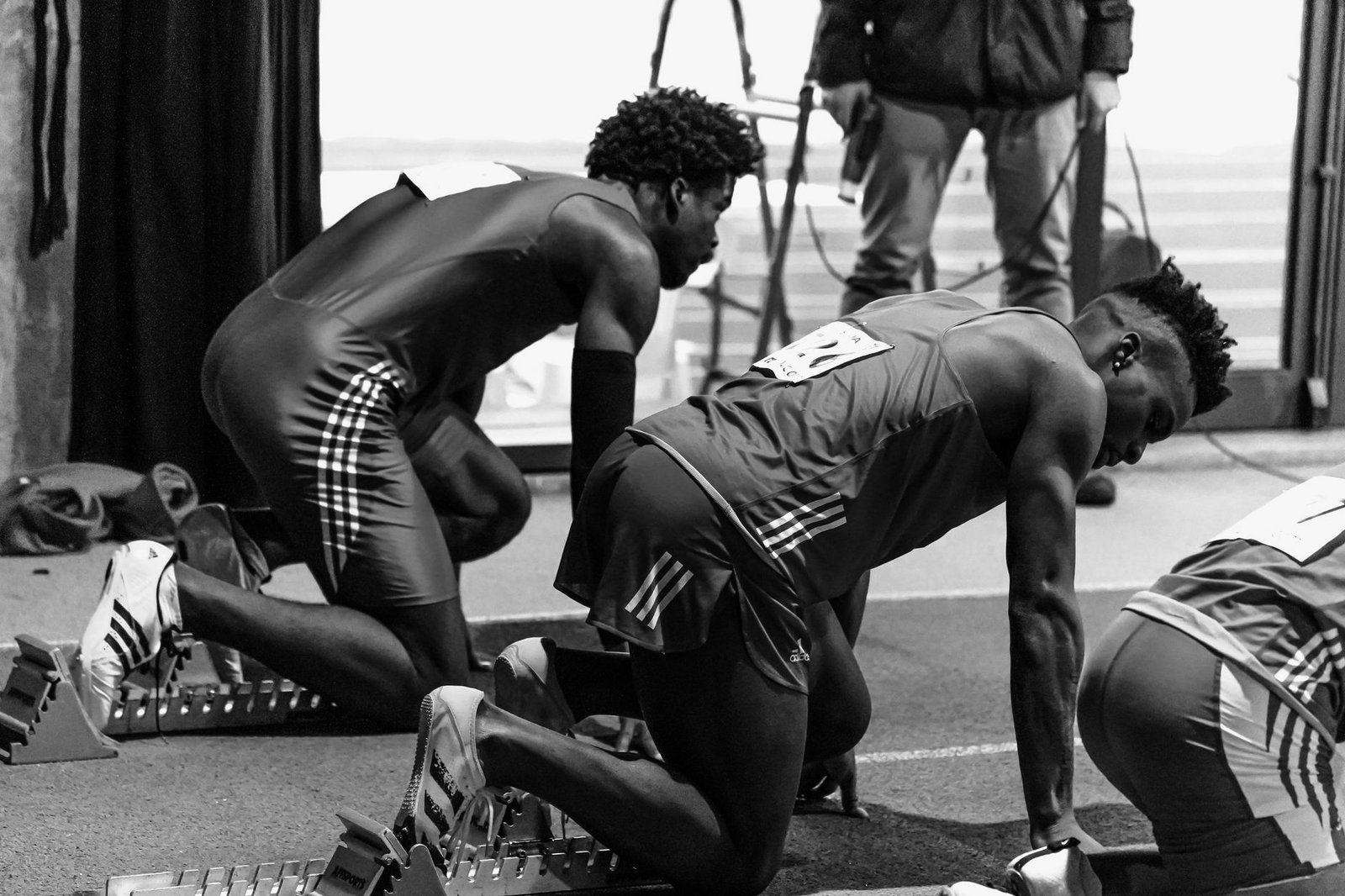
Rehearse It Before London Until It Runs on Autopilot
Tackling race-day nerves with a pre-start routine is not a superstition. It is practice. rehearse it before london like you would rehearse a start strategy or a fueling plan, because both reduce uncertainty.
Run the rehearsal 5 to 10 times across the week, ideally alongside training. Early in the process, you will notice errors. Later, the sequence becomes familiar enough that stress cannot easily hijack it.
The point is simple. Under stress, your mind defaults to what you have repeated. If you never rehearsed, it defaults to panic.
The First Two Minutes Decide Whether You Settle or Spin
Most runners obsess over the whole distance, but anxiety concentrates early. The highest-risk window is roughly 30 seconds before the gun through the first 2 minutes. That is when crowded lanes, loud noise, and the sudden motion of bodies can throw off your pacing.
Your routine should specifically cover that moment: crowd awareness without wrestling it, calm attention to breathing rhythm, and a commitment to the first-pace decision. If you do not script those first minutes, you will improvise. Improvisation is exactly how nerves turn into wasted energy.
Box Breathing Gives You Seconds You Can Actually Spend
There are many nervous-system tools, but the best are the ones you can deploy immediately. Box breathing works because it gives your breathing a tight structure and interrupts the upward spiral of fast, shallow breaths.
Try this: inhale 4 seconds, hold 4 seconds, exhale 4 seconds, hold 4 seconds. Repeat for 1 to 2 minutes. Use it the night before if needed, again in the car park, then at the start corral, and anytime panic spikes.
Why wait for nerves to pass when you can redirect your physiology in under two minutes?
Stop Naming the Fear and Start Issuing a True Cue
Fear language keeps the brain locked on threat. When you say, “I am nervous,” you teach your mind that nerves are the problem to solve. Nerves become louder because you keep reviewing them.

Swap that for present-tense cues that you can believe under pressure. Short works best: “Strong and steady.” “Breathe. Trust. Begin.” “I’ve done the work.” This is not a mantra for fantasy. It is a prompt for behavior.
Coaches who track anxious athletes note that pre-race anxiety research links controllable routines to steadier breathing and faster recovery from spikes.
Make the Routine Part of Race Logistics, Not a Hope
If your pre-start routine lives only in your head, you will lose it to chaos. Start thinking like an operator. Your job on race morning is to reduce friction so your script can run.
Below is a practical way to attach the mental warm-up to the moments that actually matter.
| Routine Step | Timing | Goal |
|---|---|---|
| Wake and hydrate | About 3 hours before | Stabilize baseline |
| Carb-forward breakfast | 2 to 3 hours before | Energy without fuss |
| Warm-up routine | 5 to 10 minutes | Move from stiff to ready |
| Arrive early | Before long waits | Reduce unnecessary stress |
| First breathing reset | In start corral | Lower spike intensity |
Keep food and drinks tested. Avoid new experiments. The less your body has to adapt on race day, the fewer surprises your nervous system must interpret as danger.
Practice the Routine Under Real Life, Not Perfect Conditions
Rehearsing in calm moments is helpful, but it can lull you. If the only time you run the script is when you feel good, what happens when the bus is late or you feel sluggish in the morning?
Use stressful normal days as training. Try the rehearsal after a hard session, during a busy week, or while you are slightly tired. Not to create misery, but to build robustness. Your goal is not perfect focus. Your goal is stable execution.
Use the Watch to Think in Decisions, Not Distance
Nerves grow when the mind imagines the entire distance at once. It becomes a mountain you cannot hold. The antidote is chunking time into manageable decisions.
With your watch, break the race into 5-minute blocks. One block at a time: “Can I run the next 5 minutes at this pace?” Then reassess. This keeps attention anchored on what you can control right now, instead of forecasting the suffering ahead.
Does the next five minutes scare you, or is it the whole plan?
Warm-Up the Body to Calm the Brain
Warm-up is often treated as physical preparation, but it also primes attention. A short easy jog, dynamic mobility, then strides teaches your body what “ready” feels like.
Use 5 to 10 minutes to get warm, then add 4 to 6 strides. You are communicating to your nervous system that speed is normal and safe. When that message is missing, the start feels like an interruption, and anxiety surges.
Nutrition and Waiting Time Are Anxiety Levers
Race-day nerves are not only mental. Your stomach and your schedule influence your emotional state. A tested carb-heavy, low-fibre, low-fat breakfast 2 to 3 hours before can prevent the gut from becoming a distraction.
Waiting stress is another trigger. Arrive with enough time to reduce unnecessary exposure to long queues and restless crowding. If you know you will have to stand still for a long period, plan a reset breathing moment and re-run your first-2-minutes script internally.

Your Routine Must Outrun Doubt, Not Persuade It
Some runners argue that rituals are gimmicks or that confidence should be earned through effort alone. They are half right. Confidence matters. But confidence on race day is not something you summon from willpower, it is something you earn through reliable repetition.
A good routine does not need to convince you that you will win. It needs to make your first minutes executable when doubt arrives. That is why the sequence should be consistent, rehearsed, and anchored to concrete cues.
Choose execution over argument. Then let your rehearsed start carry you through the window where nerves try to take the wheel.
How Can You Tackle Race-Day Nerves with a Pre-Start Routine Rehearsed Before London?
What Is a Pre-Start Routine for Tacking Race-Day Nerves Before London?
A pre-start routine is a repeatable sequence you practice so your mind knows exactly what to do before and right at the start, helping you stay calm, focused, and consistent when race-day nerves spike.
How Do You Build a Mental Warm-Up Script for the First 5 Minutes?
Build a step-by-step mental script for the highest-risk window—walking to the corral, hearing announcements, feeling the gun, getting through the first crowded 200 metres, settling into your pace, and locking into a breathing rhythm—then rehearse it so it feels automatic.
Which Breathing Tools, Like Box Breathing, Help Calm Nerves Immediately?
Use fast nervous-system tools you can deploy instantly, especially box breathing (inhale 4s, hold 4s, exhale 4s, hold 4s) for about 1–2 minutes, and pair it with a short cue like “Breathe. Trust. Begin” when panic rises.
How Many Times Should You Rehearse Your Start Routine in Training?
Rehearse your start routine 5–10 times across the week, ideally alongside training, so your responses become automatic under stress and you know exactly how to recover if the first moments feel chaotic.
What Race-Day Logistics Support Your Pre-Start Routine and Reduce Waiting Stress?
Plan logistics around the routine: wake about 3 hours before, eat your tested low-fibre, low-fat breakfast 2–3 hours prior (no new foods or drinks), complete a proper warm-up, arrive early to minimize waiting stress, and use your routine at the car park and start corral.
How Can Using 5-Minute Pace Blocks on Your Watch Keep You Anchored?
Use your watch to break the race into short blocks—focus on one at a time by asking, “Can I run the next 5 minutes at this pace?”—so your mind stays on what you control rather than the full distance.
Stick With The Pre-Start Plan
To truly tackle race-day nerves, you need one repeatable approach: tackling race-day nerves with a pre-start routine, rehearse it before london until it becomes automatic. Rehearse your exact start script, pair it with a fast regulation tool like box breathing, and lock your mind to the next 5 minutes, not the whole distance. Show up early, use your tested fuel, and let the routine do the work, because confidence on race day is built long before the gun.

I am Ozan, a London-focused running writer and marathon enthusiast with a passion for helping people discover the city’s best races, running routes, walking trails, and fitness events. I research and write practical, up-to-date guides covering marathons, race preparation, training tips, running gear, and everything related to staying active in London.
My goal is to create reliable, easy-to-follow content that helps runners and walkers of all experience levels explore London with confidence, whether they’re preparing for their first 5K or their next marathon.