
London winter race clothing works best as a light, breathable system rather than one thick jacket. Winter temperatures commonly sit around 36°F to 46°F, but wind, rain, and humidity can make the same route feel colder than the forecast suggests.
A close-fitting base layer moves sweat away from your skin, a midlayer holds warm air, and a shell blocks wind or rain. Together, they let you remove heat as the race settles into its pace instead of trapping moisture beneath one heavy layer.
Running raises your body temperature, so dress as if the air were about 10°F to 20°F warmer than it is. Keep wind, rain, running effort, and your own cold tolerance in mind: an easy pace or wet, exposed course may call for more protection, while a hard effort in calm weather may call for less.
Key takeaways
- Fast races often call for one fewer layer than easy runs, but add protection or keep the extra layer in cold, wet, or windy weather.
- Cold, wet conditions call for a waterproof outer layer; a lighter wind-resistant layer is enough for dry, windy runs.
- If the opening minutes feel cold, that can be normal if you warm up; persistent shivering or numbness means you need more protection.
- Check the base layer while moving. It should stay close to your skin without riding up, bunching, or rubbing.
London Temperatures Set the First Layer
A forecast alone does not predict how the route will feel. Wind strips warmth from exposed skin, rain reduces the insulation of damp fabric, and high humidity slows evaporation. You can feel chilled at the start while still overheating once you reach race pace.
Fast running usually needs fewer layers than an easy run because it produces more heat, but cold, wet, or windy conditions can reverse that choice. Begin with one fewer layer only when the weather is calm enough for your effort to supply the extra warmth.
Match the main pieces to the conditions:
- Use a breathable long-sleeve base layer with shorts or tights and an optional light jacket in moderate cold.
- Choose a thermal base layer, an insulating midlayer, and a weather-resistant shell in colder conditions, especially for an easy effort or exposed route.
- Use a wind-resistant layer for dry gusts and a waterproof outer layer when cold rain is steady.
- Add a lightweight insulating midlayer under the shell near freezing when the weather or pace calls for it, rather than choosing one bulky jacket.
The opening minutes may feel colder than the rest of the race. That can be normal if it improves as you warm up; persistent shivering or numbness means you need more protection.
Base Layers That Keep Skin Dry
A base layer should sit close to your skin, move sweat away from your body, and stay smooth enough to avoid bunching or chafing. Check the fit while you move: raise both arms, twist your torso, and lean forward into your running position. If the shirt rides up, gathers below your armpits, or rubs at the neck, those problems will worsen after an hour.
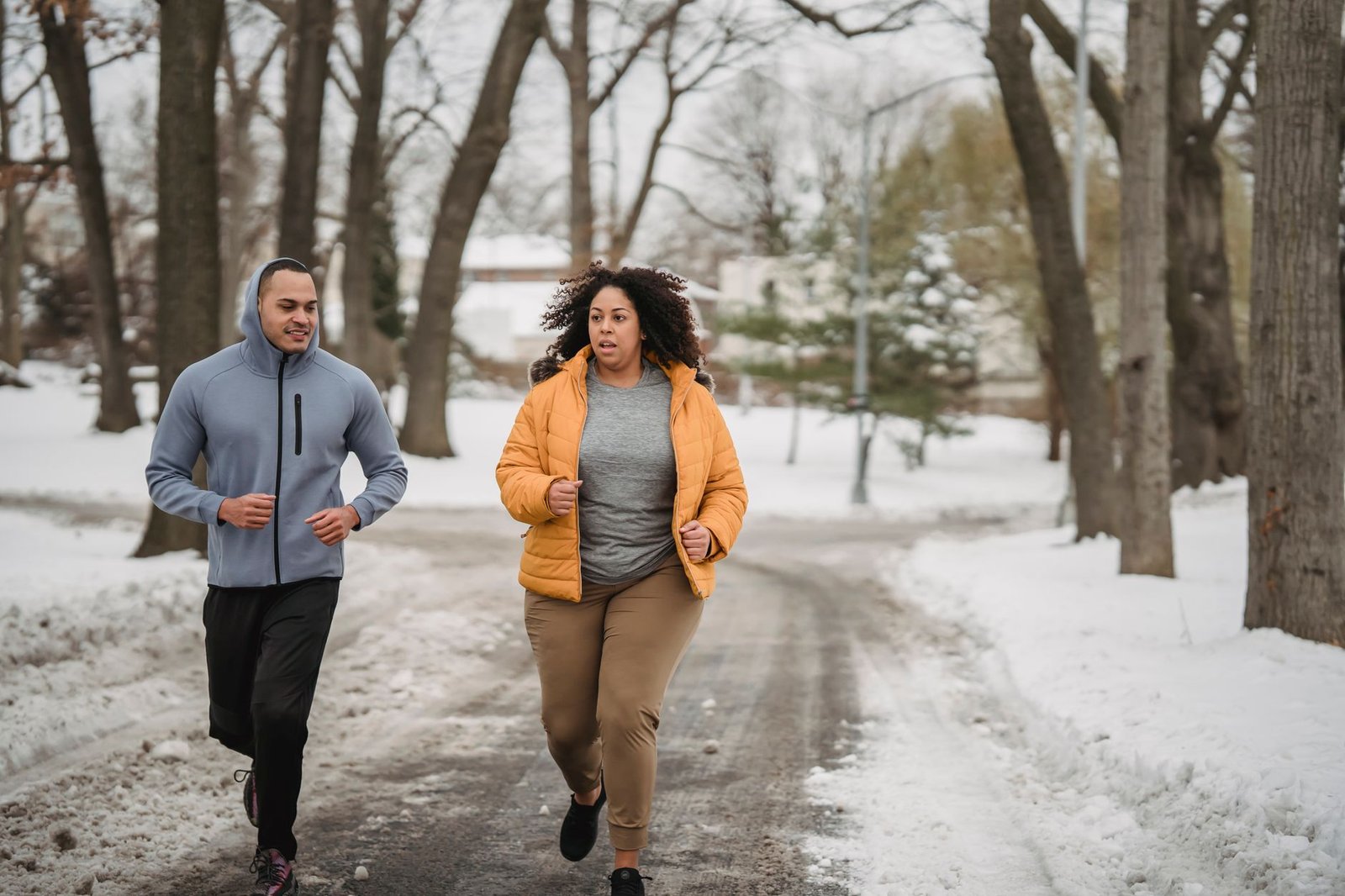
Plus size African American woman running with a coach on a snowy path.
For moderate cold, pair a breathable long-sleeve base layer with shorts or tights. In colder conditions, a thermal base layer works with an insulating midlayer, provided the effort and weather will not make the combination too warm. Keep the thermal fabric close to your skin, but leave enough room above it for the next layer to hold warm air.
Leg coverage depends on temperature, pace, rain, and how quickly you feel cold. Tights are generally more comfortable near 41°F for an easier run or a long wait before the start. Shorts become more practical as temperatures approach 50°F during a hard race in dry, calm conditions, though wind, rain, and personal comfort can change that choice.
Avoid cotton because it holds sweat against your skin and then feels cold when wind reaches the fabric. A moisture-wicking layer works better when it can spread sweat across the fabric and dry rather than trapping a damp pocket against your body.
Midlayers and Shells for Wind and Rain
A midlayer fills the space between moisture control and weather protection. It should trap warm air while remaining breathable and loose enough to remove during the run. Choose one that sits slightly away from your base layer and can come off without stopping.
A lightweight, breathable shell that blocks wind and light rain is usually more useful for London racing than a heavy waterproof jacket. In cold, wet conditions, replace it with a waterproof outer layer; in dry, windy conditions, a lighter wind-resistant layer is usually enough.
| Air Temperature | Layer Combination | Weather Adjustment |
|---|---|---|
| 30°F to 50°F | Long-sleeve base layer, shorts or tights, optional light shell | Add wind protection for gusts or light rain |
| Below 30°F | Thermal base layer, insulating midlayer, weather-resistant shell | Use waterproof protection in cold, heavy rain |
| Near 41°F | Base layer with tights or a light shell | Choose tights for easy running and lighter coverage for fast racing |
A fast race may need less insulation than an easy run, but heavy rain still requires a waterproof barrier.
Look for underarm or back vents, a zip that opens while you run, and fabric that does not cling when damp. A shell you can unzip or remove gives you more control than a heavy jacket that must stay on for the entire race.
Race Starts Need Fewer Layers Than Waiting
A cold start pen encourages a thick layer that may become uncomfortable as soon as you begin running. Your body has not produced much heat while you wait, but the same clothing can feel clammy after the first miles. Plan the running outfit for the pace you intend to hold, not just for the stationary wait.
Wear a disposable outer layer or an old sweatshirt while you wait if the event allows it, then discard it before the start. Keep the planned running layers underneath light enough for the effort, and make sure any removable item can be stored without stopping.
Near freezing, retain a lightweight insulating midlayer when the weather is wet, windy, or the pace is easy. During a hard race in milder conditions, a base layer and wind shell may be enough. This adjustment avoids both the overheating caused by too much insulation and the rapid heat loss that wind and rain can bring.
Arm sleeves and lightweight gloves provide an easier adjustment than a second full shirt. Roll the sleeves down or store them in a waistband once your arms warm, and tuck the gloves away when your hands stop feeling cold. They suit conditions that may warm during the race because they are easier to remove than a full extra layer.
Pack layers in the order you will remove them. Keep gloves and sleeves within reach, and leave the shell zip clear so you can open it during a climb or crowded section.
Small Accessories Protect the Parts You Notice First
Cold hands, ears, and wet feet can spoil a race even when your torso feels comfortable. Thin, breathable pieces protect those areas without adding the bulk of another torso layer.
A hat or ear-covering headband helps on exposed roads and in gusts. Choose the headband when your scalp runs warm or you want ear coverage without a full cap. A breathable hat suits colder rain, but a thick knit can become heavy after it gets wet.
Breathable gloves help during the early part of the race and can prevent stiff fingers from making zips difficult to use. Lightweight gloves are particularly practical when the forecast may warm because you can remove and store them more easily than a second shirt.
Moisture-wicking socks keep sweat from sitting against your feet. Match them to the shoe rather than piling on thick fabric:
- Use one pair that fills the shoe without compressing your toes.
- Choose a longer cuff if rain may run down your ankle.
- Keep the sock fabric smooth over the heel and toe seams.
Do not solve cold feet by tightening your shoes. Reduced space can make your toes feel colder and create pressure during the race.

Young man in blue and black gloves standing outdoors by a fence.
Product Examples for London Winter Racing
These garments handle different parts of the system. A warm shirt does not replace a rain shell, and a waterproof jacket does not automatically make a good breathable midlayer.
On Climate Shirt
On Climate Shirt fits the midlayer role for cool, damp races. Its lightweight woven fabric moves moisture away from your body while adding warmth, and you can wear it directly against your skin or over a thin base layer.
The quarter-zip releases heat without removing the shirt. Open it on a climb and close it during a windy section. Thumbholes keep the sleeves in place under a shell, while the side pocket holds a small item. Reflective details help you stay visible during dark winter starts.
Use this shirt when a long-sleeve base layer alone feels too thin but a bulky jacket would trap too much heat. In a fast race, add it when cold or damp conditions still call for insulation after the pace is considered.
On Trek Jacket
On Trek Jacket is a fully waterproof men’s jacket with three-layer fabric and On GuardTec™. Its listed price is €200, and its waterproof construction suits cold, wet racing when blocking rain matters more than carrying the lightest possible shell.
Wear it over a thin base layer when rain is steady and temperatures are close to freezing. If you add insulation underneath, leave enough room for your arms and chest to move freely. A waterproof jacket should still let you run naturally.
The insulated On Trek Jacket uses lightweight Polartec® Alpha® insulation designed to provide warmth and breathability. Treat that version as a midlayer rather than the waterproof shell, and pair it with weather-resistant outer protection when rain is heavy.
District Vision The Taslan
District Vision The Taslan uses a high collar to give extra wind protection on exposed or gusty routes. It suits a dry or lightly wet race where neck coverage matters but a heavy jacket would hold too much heat.
Keep the rest of the system thin so the collar adds protection without forcing you into excessive insulation. If rain becomes persistent, switch to a waterproof outer layer.
Norda Breaker Wind shirt
Norda Breaker Wind shirt uses Japanese-made Dyneema fabric and is designed to retain heat while functioning as a wind layer. It suits a dry, exposed course where cold air is the main problem and a full waterproof jacket would be excessive.
Wear it over a close-fitting base layer. If sustained rain is forecast, place waterproof protection above it or choose a waterproof shell instead. Its place is between a bare base layer and a rain jacket when wind resistance and heat retention matter more than full rain protection.
Ready Your Race Bag
London Winter Race Clothing for Breathable Comfort: Layering for Wind and Cold deserves one final practical step before race day: pack a dry spare pair of moisture-wicking socks in your bag if rain is likely. Place them beside your race shoes so they are easy to reach after the finish.
Frequently Asked Questions
Why do I feel cold at the start even when my layers are right?
The opening minutes can feel cold because your body has not yet produced the heat that comes with running effort. That can be normal if the chill improves as you warm up, but ongoing shivering or numbness means you need more protection.
Which layer should I remove if I start overheating?
Open or remove the shell first, since it is the outer barrier that releases heat most quickly when unzipped or taken off. If you are still too warm, remove the midlayer while keeping the base layer smooth against your skin.

I am Ozan, a London-focused running writer and marathon enthusiast with a passion for helping people discover the city’s best races, running routes, walking trails, and fitness events. I research and write practical, up-to-date guides covering marathons, race preparation, training tips, running gear, and everything related to staying active in London.
My goal is to create reliable, easy-to-follow content that helps runners and walkers of all experience levels explore London with confidence, whether they’re preparing for their first 5K or their next marathon.