London Marathon stretching should focus on gentle mobility for a stiff lower back, not aggressive poses that push into pain. After a long run, your hips, hamstrings, glutes, and spine may feel restricted, but forcing a deep stretch can make an irritated back feel worse.
Walk first, then add a few controlled movements that match how your body feels. A short cooldown helps you shift out of the running pattern before you settle onto the floor, while post-marathon soreness calls for more patience than an ordinary training run. A simple, cautious option is to keep moving below painful range and choose two or three exercises instead of trying to complete every stretch after exhausted legs have carried you for 26.2 miles.
Key takeaways
- The 90/90 drill is for hip rotation; reduce the range and use your hands for support if your lower spine starts twisting.
- When you cannot reach your toes in a back-lying hamstring stretch, loop a resistance band around the raised foot instead of curling your back.
- If stiffness feels spread through your hips and back, choose cat-cow, the wall stretch, or the lying back movement rather than holding one strong position.
- While the lower back remains sore or sensitive after a marathon, skip deep pressure directly on its muscles.
Cool Down Before Lower-Back Mobility
Walk for 10 to 15 minutes after finishing a long run or marathon. Keep the pace easy and let your breathing settle before you sit down. This gentle movement gives your hips and back time to loosen without asking tired muscles to hold a demanding position. Sitting immediately can make the first stretch feel sharper, so use the walk to remove your shoes, drink some water, and let your stride shorten naturally. You do not need to turn the cooldown into another workout.
After a normal long run, light mobility can start when your breathing has settled and your back feels calm. A deep static stretch can wait until your body no longer feels hot, shaky, or unusually tender. Guidance on post-run static stretches also supports keeping each position comfortable and controlled.
After a marathon, the timing may need to change. Use easy walking and gentle mobility first, then stretch deeply only when your body has settled and the position feels comfortable. Avoid deep tissue sports massage over the lower-back muscles while the area remains sore or sensitive.
Stop a movement if pain becomes sharp, spreads down your leg, or increases each time you repeat it. Mild pulling or stiffness can be acceptable, but pain that makes you brace, hold your breath, or twist away means you should make the movement smaller or stop. A lying stretch should leave your spine comfortable; if pressing your lower back toward the floor increases pain, bend your knees or stop that exercise.
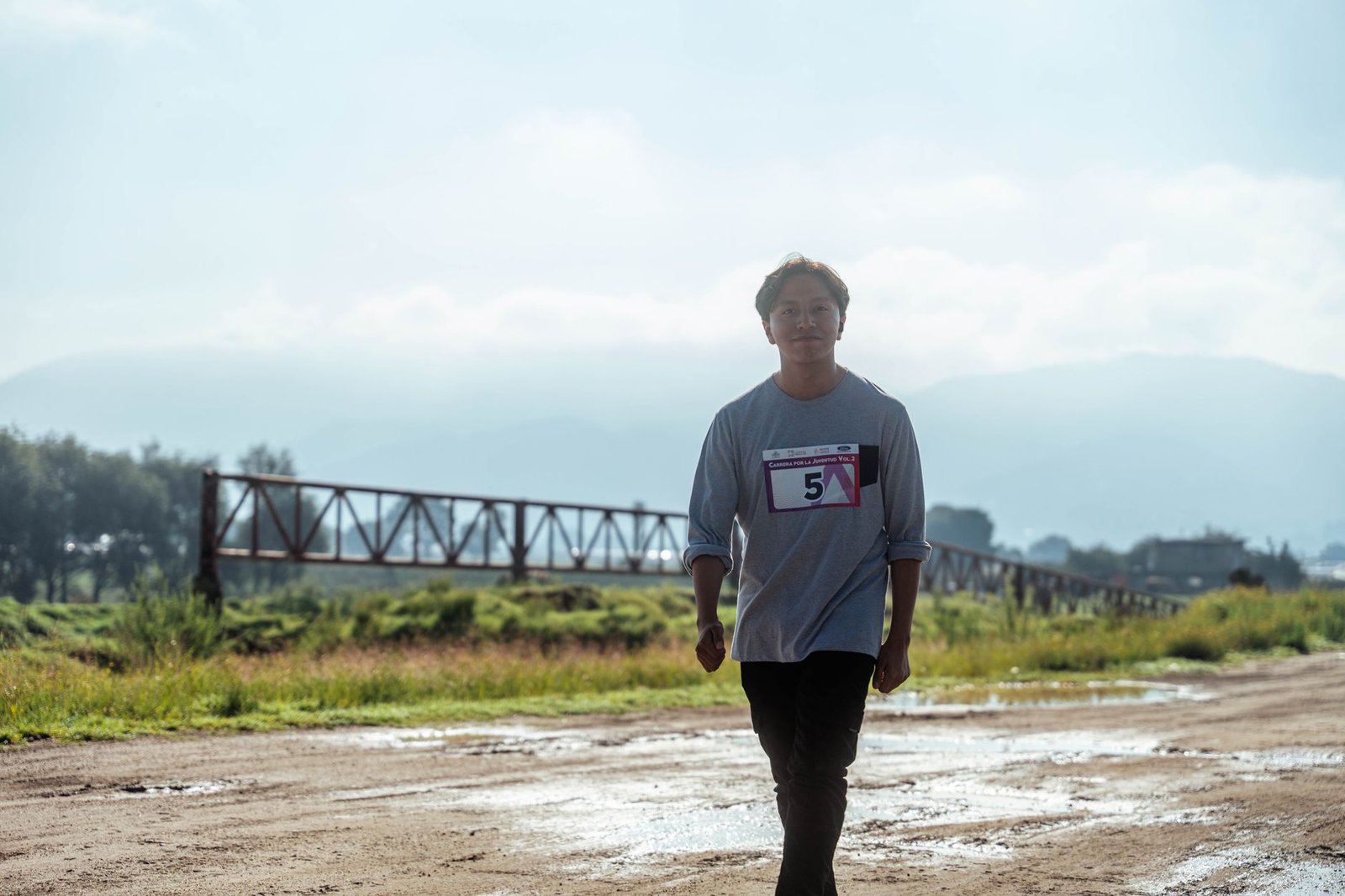
A runner strides along a sunny rural dirt path, displaying determination.
Hip and Leg Mobility After Miles
The front of the hip may feel tight after a long run, and prolonged hip use is one possible reason. Begin with a kneeling hip-flexor stretch when your lower back feels steady. Place your right foot forward and lower your left knee to the floor. Engage your buttocks gently, bring your hips forward a small amount, and open your chest. Add a slight side bend toward the front leg while keeping your ribs facing forward and your pelvis controlled.
Return to the center before switching sides. A runner’s lunge gives you another way to mobilize the front of the hip: step one foot back, lower that knee to the floor, and place your hands inside the front foot. Use a low, steady movement, and shorten the stance or lift your chest if your back starts to pinch.
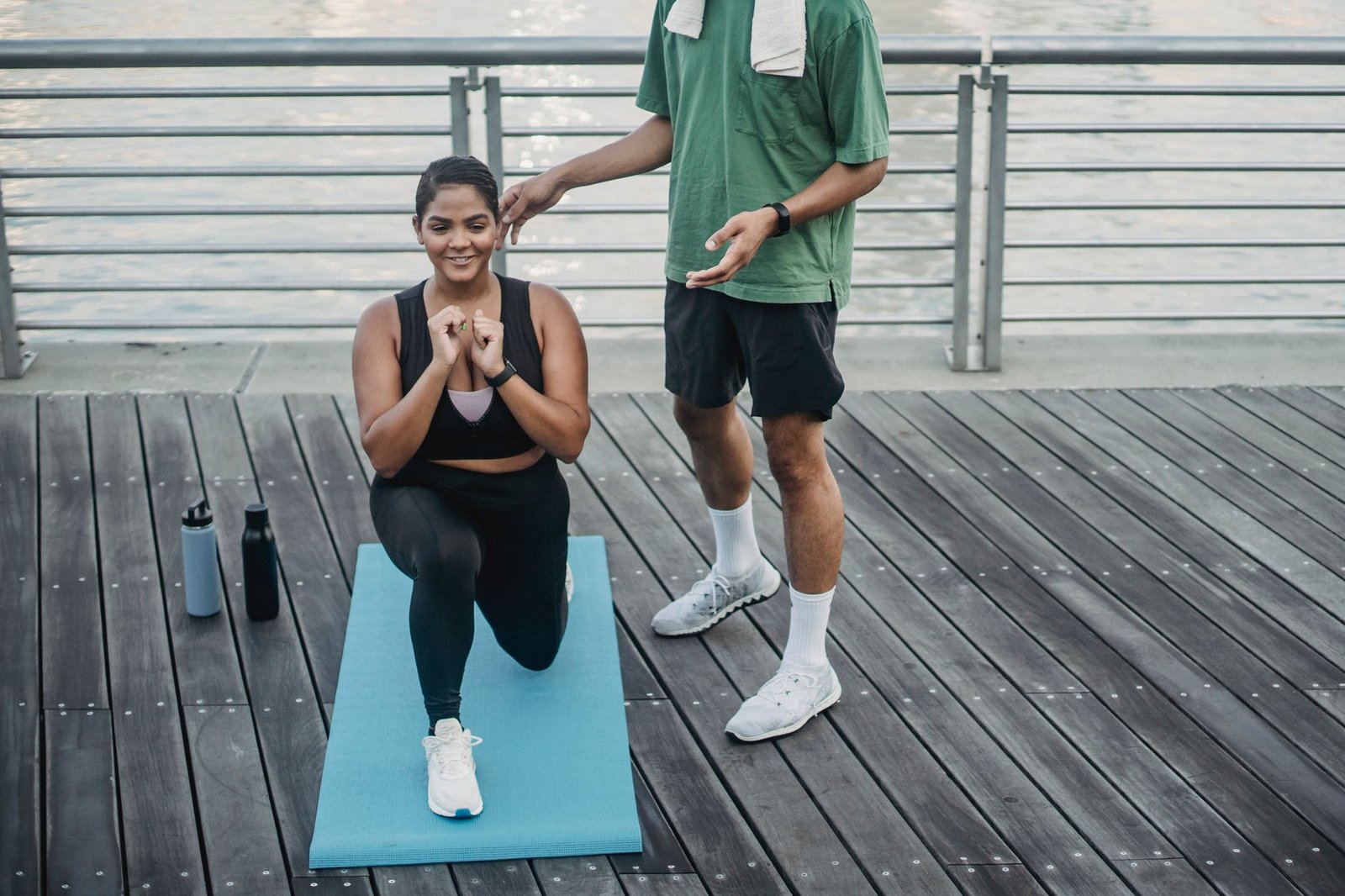
A woman lunges on a yoga mat outside while receiving instruction.
For the quadriceps, lie on your stomach and draw one heel toward your buttock. Align your knees and press your pelvis and stomach into the floor. Stop before the lower back lifts or the knee turns outward.
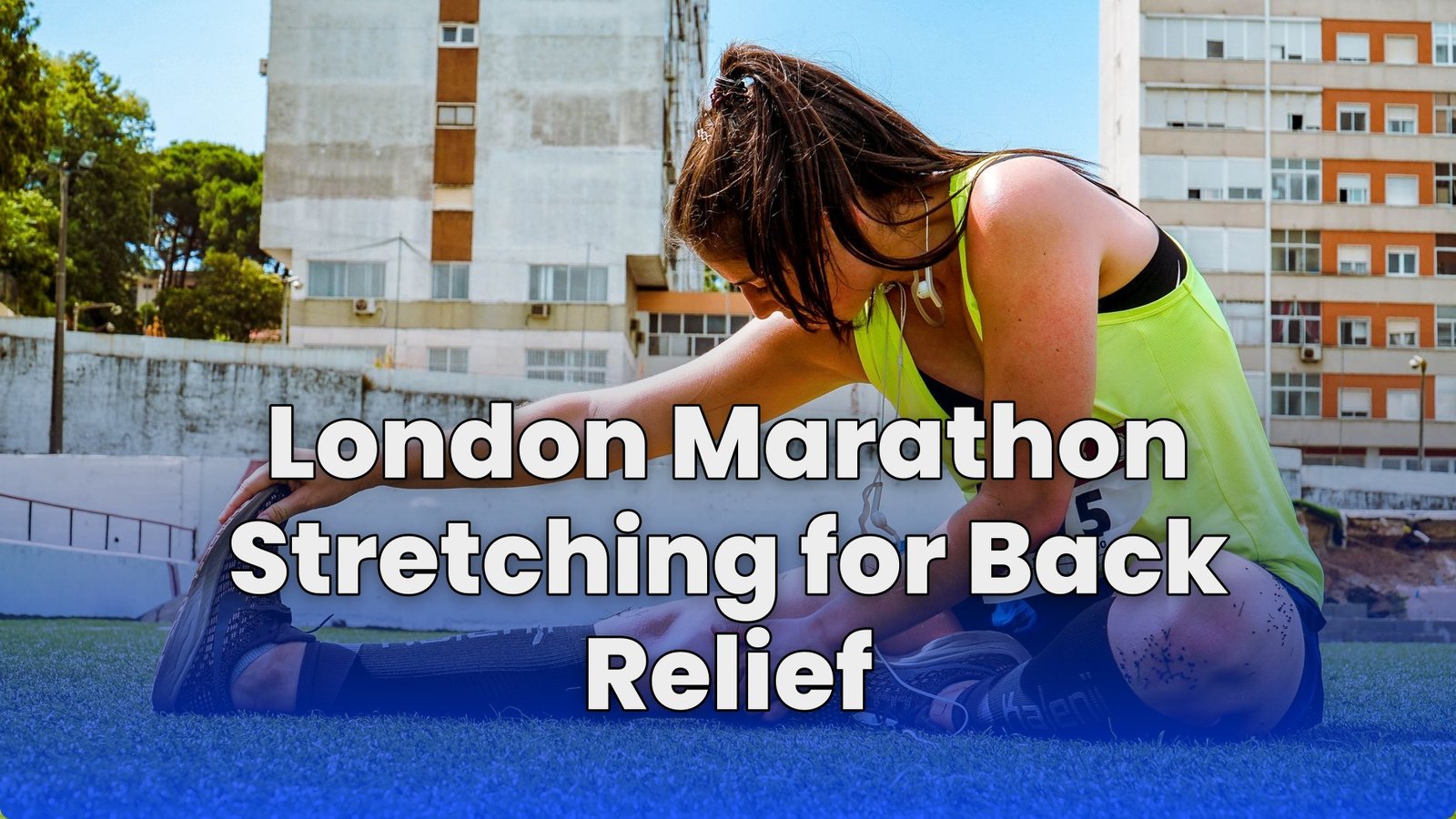
The hamstring stretch works well on your back. Raise one leg toward the ceiling while the other leg stays relaxed or bends to about 45 degrees. A resistance band around the raised foot can help if your hands cannot reach your toes. The hamstrings may take time to relax, so stay with a mild pull rather than increasing force.
Lower-Back and Spine Movements
Lie on a comfortable, flat surface with both legs extended. Gently move your lower back toward the floor, then release without forcing your spine flat. The movement should stay small and comfortable. Bend your knees and support your feet if your back tightens, and stop if the pain increases.
Cat-cow moves the spine through controlled rounding and arching after hours of repeated running. Start on your hands and knees with your hands below your shoulders. Slowly round your back as you tuck your chin, then ease into a gentle arch while keeping your neck relaxed. Move through both positions at a pace you can control rather than holding the most rounded or arched shape.
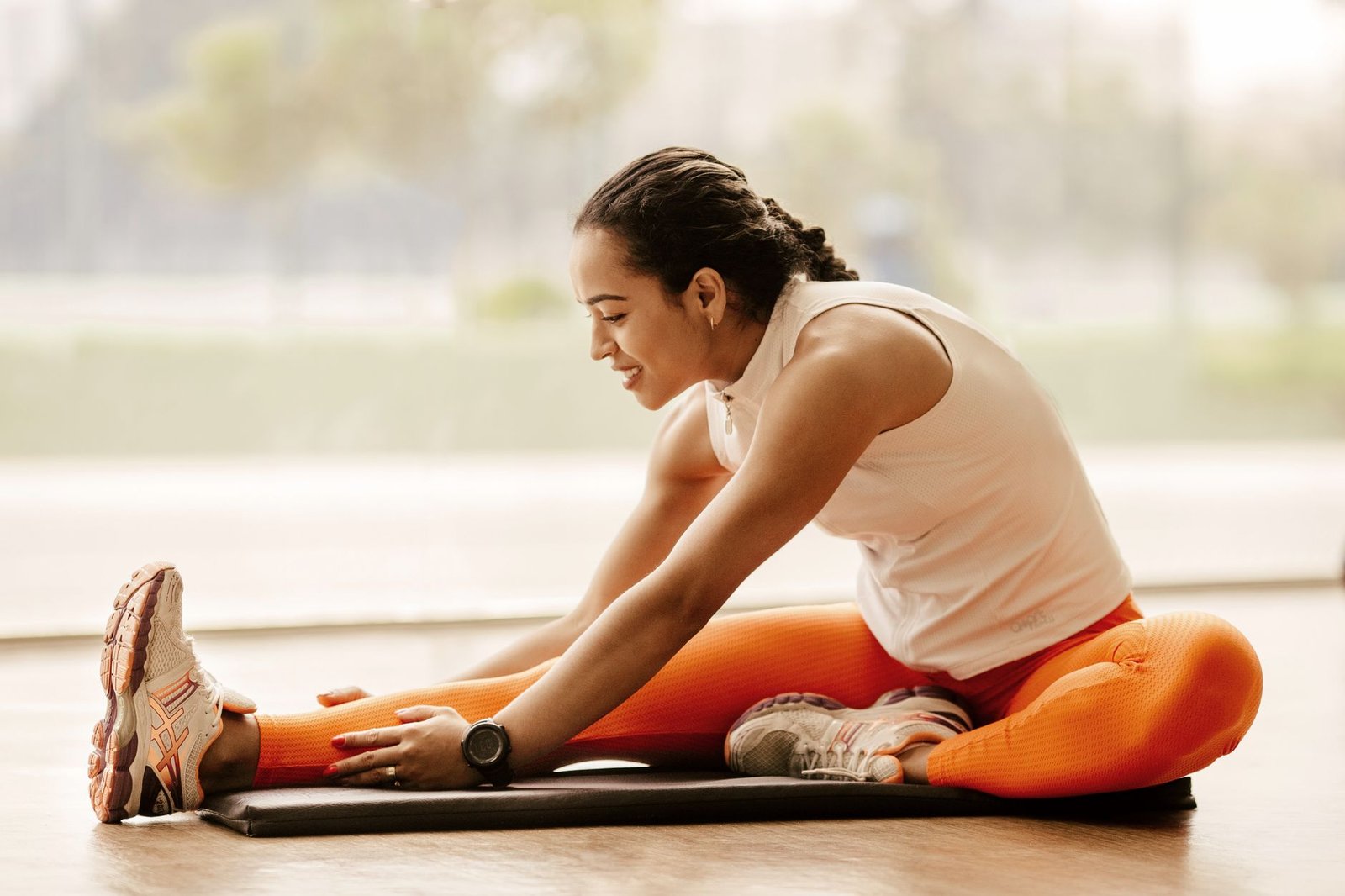
A woman stretches her hamstring indoors, focusing on flexibility and fitness.
A seated spinal twist can add rotation when your back feels settled. Sit tall with your legs in a comfortable position, place one hand behind you, and rotate slowly from your rib cage. Stop before painful end range, and do not pull yourself deeper with your arm.
A wall stretch can ease stiffness through the hips and lower back without asking you to fold forward deeply. Stand facing a wall, place your hands on it, and step back until your hips move behind you. Soften your knees and let the hips move back only as far as your back stays comfortable. Choose this or another gentle moving drill when a held stretch feels too strong.
Glute and Hip-Rotation Mobility
The glutes can feel tight after a marathon, and that tension may make the lower back work harder when you walk afterward. Lie on your back with both knees bent and both feet on the floor before starting the figure-four stretch. Cross your right ankle over your left thigh, then draw the left thigh toward you until you feel a stretch through the right glute. Keep the crossed foot active and your head and shoulders relaxed. Switch sides without letting your pelvis roll sharply.
Use the glute or piriformis position only while your breathing stays easy. If your back feels sore or your legs tremble after the race, use fewer sets and stop before the stretch makes you brace. A steady pull that eases as you breathe is enough; sharp pain at the back of the hip or spine means the position needs to change.
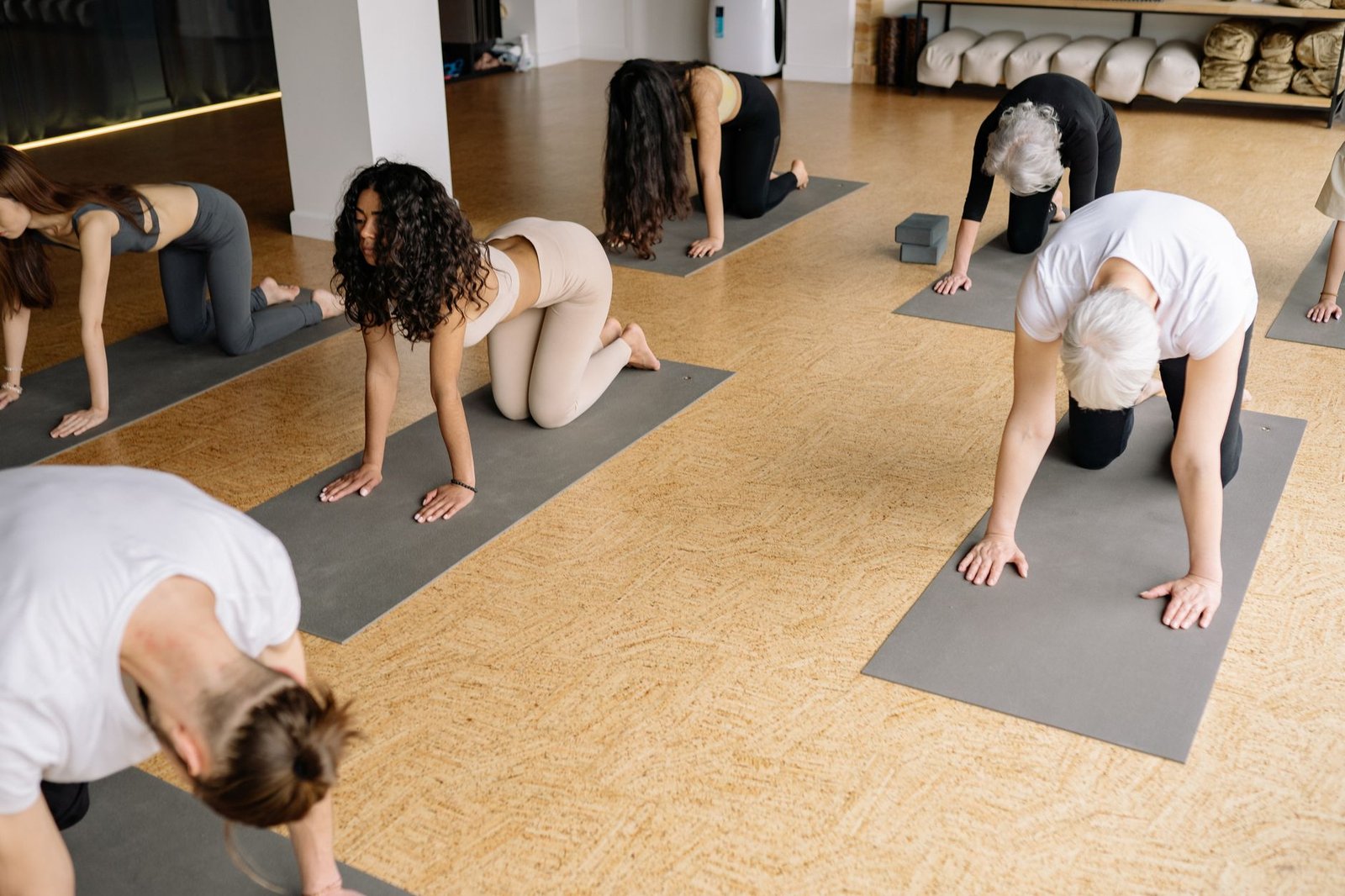
Runner moving through controlled cat-cow spinal motions
The 90/90 drill works on inward and outward hip rotation. Sit with one leg folded in front and the other folded behind, then move slowly between the two hip positions. Center the motion at the hips rather than twisting the lower spine. Support yourself with your hands and reduce the range if your lower back starts creating the movement.
Stretch Holds and Movement Choices
Held stretches and moving drills have different jobs after a long run. A held position can calm a tight muscle when you can stay relaxed, while a moving drill suits a back that dislikes being placed at one end range. Use the hamstring and glute positions only when your breathing stays easy, and choose cat-cow or the wall stretch when stiffness feels spread through your back and hips.
| Movement | Body Position | Hold or Movement Guidance |
|---|---|---|
| Kneeling hip-flexor stretch | Half-kneeling | 20 seconds each side |
| Supine hamstring stretch | Lying on back | At least 30 seconds |
| Prone quadriceps stretch | Lying on stomach | Gentle held stretch |
| Cat-cow | Hands and knees | Controlled rounding and arching |
| Figure-four stretch | Lying on back | 30 to 60 seconds, 2 to 3 sets |
| 90/90 drill | Seated on floor | Slow inward and outward movement |
You do not need the whole routine. If your lower back feels painful, pick one gentle moving drill and one comfortable hip stretch, then stop. A short routine that leaves you looser is preferable to completing every exercise and walking away more guarded.
When Marathon Soreness Needs a Different Approach
Marathon soreness can make a familiar stretch feel wrong. Heavy legs, general stiffness, and a back that eases during an easy walk usually call for food, fluids, rest, and small movements. A position that becomes more painful with each repetition needs less range or a pause. Let the movement stay light while your body settles, rather than using pressure to force a sore area to loosen.
Deep massage needs the same restraint. Light touch elsewhere may feel pleasant, but avoid pressure directly over lower-back muscles that remain sore or sensitive. Stop stretching and see a doctor if pain travels below the knee, your leg becomes weak or numb, or you lose control of your bladder or bowel. For uncomplicated stiffness, return to mobility only when the movements remain comfortable.
Make Recovery Part of the Plan
London Marathon stretching works best when it fits the reality of tired legs and a sensitive back, not an ideal routine on paper. Before race day, pack a resistance band with your recovery gear so you have a simple way to reach your foot during the hamstring stretch.

I am Ozan, a London-focused running writer and marathon enthusiast with a passion for helping people discover the city’s best races, running routes, walking trails, and fitness events. I research and write practical, up-to-date guides covering marathons, race preparation, training tips, running gear, and everything related to staying active in London.
My goal is to create reliable, easy-to-follow content that helps runners and walkers of all experience levels explore London with confidence, whether they’re preparing for their first 5K or their next marathon.