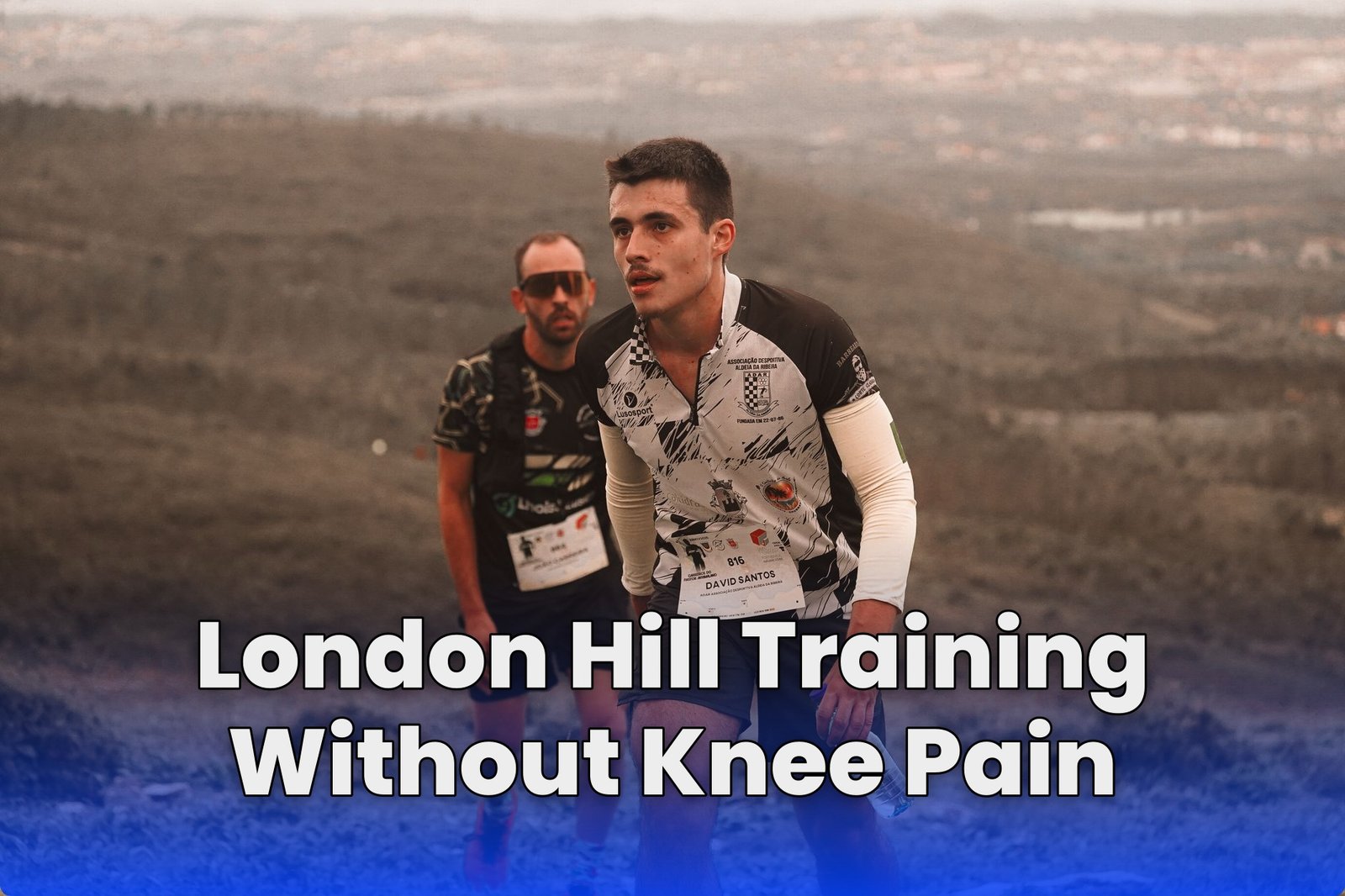
Hill training for London works best when you treat the downhill as a separate skill, not as free recovery after each climb. Uphill running usually shifts more work toward your calves, Achilles tendons, and hips, while a steep descent can load the kneecap joint heavily as your quadriceps brake your body.
Structured hill work is easiest to tolerate when you limit it to once a week and keep it to 6% to 8% of your weekly mileage while your legs adapt. Cadence, posture, and the way you handle the descent matter more than forcing a fast pace. If your knee is recovering from kneecap pain, walking the downhill portion can reduce downhill braking while preserving the uphill work.
Mild symptoms may be acceptable for some runners when they stay at or below 4 out of 10, the stride remains normal, and the knee returns to its usual baseline within 24 hours. A different plan is needed if those conditions do not hold.
Key takeaways
- When recovering from kneecap pain, walk the descents so you can keep the uphill work while reducing downhill knee loading.
- For a first session, warm up for 10 to 15 minutes, then do 4 to 6 uphill efforts lasting about 30 to 60 seconds.
- If your calves or Achilles tendons stay sore after hills, keep the next session at the same volume until walking, stairs, and easy running feel normal.
Before Your First London Hill Session
Start with one structured hill session each week. Count the uphill efforts and their planned descents as hill training, but keep ordinary rolling routes separate so you can see how much steep work your legs actually receive. While your tissues build tolerance, keep structured hills to 6% to 8% of your total weekly mileage. If you run 25 miles in a week, that gives you about 1.5 to 2 miles of deliberate hill work. Easy routes with gentle rises do not need the same accounting, but repeated hard climbs on a route such as Highgate Hill do.
Make the first session modest. Use a slope that lets you hold your posture without sprinting, and leave at least one easy or rest day before another demanding leg workout. A hill session should add one clear training stress, not arrive on top of intervals, a long run, and heavy strength work. Warm up on flat ground before you begin, and do not add a second hard hill day while your legs are still adapting.
Set your pain rules before you start:
- Keep mild kneecap pain at 4 out of 10 or less during the run.
- Stop the running portion if pain rises above that level or changes your stride.
- Check the knee again later that day and the next morning.
- Reduce or replace the session if pain has not returned to your normal baseline within 24 hours.
These rules give you a way to respond when tired legs make every symptom harder to judge. You can walk home, finish on flat ground, or end the workout without turning a useful session into a test of willpower.
Downhill Form That Reduces Knee Load
Downhill running places the greatest demand on the quadriceps when they lengthen under tension to slow your fall. On a decline of 6 degrees, peak kneecap-joint stress and total knee stress can rise above the levels seen on flat or uphill ground, although the effect varies with the runner and the conditions. A descent therefore needs its own technique rather than the same form you use on level ground.
Raise your cadence above your normal rate and let your feet land in shorter, quicker steps beneath your body. The change may reduce peak kneecap-joint stress for some runners. If you usually take 170 steps per minute, aim for roughly 179 to 187 on the descent. Let the pace stay controlled instead of reaching forward for each landing, and notice whether the extra steps make braking feel smaller rather than more hurried.
Lean forward slightly from your hips, about 5 to 10 degrees, and let the slope carry you. Keep your chest open and your eyes well ahead. Leaning backward creates a braking posture, often followed by a long stride and a heel-first landing that asks the quadriceps to absorb more force. A forward lean lowers the force your knee extensors must produce and reduces kneecap-joint reaction force.
Use hill running form that keeps your steps quick and your body slightly inclined. The position reduces the force your knee extensors must produce.

Smartwatch displaying stats during a 3-mile run by a male runner.
Do not chase speed on a steep London descent. If your cadence becomes difficult to control, shorten the effort, walk, or choose a gentler slope until the movement feels quiet and balanced.
Uphill Form Without Trading Knee Stress for Lower-Leg Stress
Climb with a small forward lean from your ankles. Your head, ribs, and hips should stay stacked while your whole body tilts toward the hill. This position lets gravity move you forward without folding your torso over your thighs. Think about pushing the ground behind you, not lifting your knees high.
Bending at the waist is easy to spot. Your hips fall behind you, your chest points toward the pavement, and your knees bend more deeply with each step. That reduces hip extension and makes the knees handle work that your hips should share. Use a smaller step if you need to pull yourself upward with a hard knee drive, because the slope or pace is probably too demanding for that repetition.

An adventurer running up a grassy hill under a clear blue sky.
Uphill running shifts more work toward the calves, Achilles tendons, and hips, while peak kneecap-joint stress remains similar to flat running. That does not make every climb harmless for the knee. Your lower legs still need time to adapt, especially if you are moving from flat paths to repeated climbs.
Watch for calf tightness and Achilles soreness after the session. Hold the next hill workout at the same volume until those areas feel normal during walking, stairs, and easy running.
A London Hill Session, Step by Step
Warm up on flat ground for 10 to 15 minutes, then add a few relaxed strides before reaching the hill. Run the uphill at a firm effort you could repeat with the same form rather than sprinting the first repetition. At the top, check your breathing, cadence, and knee symptoms before beginning the descent. Start each downhill with shorter steps and a slight hip-led lean.
| Session Choice | Cadence Cue | Main Load | Best Use |
|---|---|---|---|
| Uphill running | Normal controlled rhythm | Calves, Achilles, hips | Building climbing strength |
| Downhill running | 5%-10% faster cadence | Eccentric quadriceps | Practicing descent control |
| Walking downhill | Comfortable walking rhythm | Removes high-load eccentric braking | Recovering from kneecap pain |
For a first session, complete 4 to 6 uphill repeats of about 30 to 60 seconds. Jog or walk back only if your downhill form stays controlled. At the top of each climb, take a brief reset before starting the descent. If your knee is recovering from kneecap pain, walk the downhill portion to reduce downhill braking while preserving the uphill training. Begin the next repeat only when your walking feels normal.
Finish with 10 minutes of easy flat running or walking. The session is complete when your form breaks down, your pain crosses its limit, or you start using the descent as a brake. More repetitions cannot fix a movement pattern that has already fallen apart.
Pain Limits and the Next-Day Check
Change the session at once if pain moves above your limit, changes your stride, or grows from one repetition to the next. Walk the descent, switch to flat running, cut the number of repeats, or stop for the day. A sharp pain, swelling, locking, giving way, or a limp deserves more caution than a familiar mild ache, so stop running and arrange an assessment with a sports medicine clinician or physical therapist.
Check the knee after cooling down, again that evening, and the next morning. Compare it with your usual baseline, not with how it felt at the hardest point of the workout. If the knee feels normal by the next day, the session was more likely to stay within your current tolerance. If pain remains higher than usual after 24 hours, that may indicate that the session was more than your current tolerance.
Reduce the next hill session by removing downhill running first, then lower the number of uphill repeats if symptoms still linger. Easy flat running belongs in the week only when it follows the same pain rule. Do not increase pace and hill volume in the same week. Hold one variable steady while the knee settles, then add a small amount of work after the current session leaves you at baseline the next day.
Common Hill-Running Form Errors
Leaning Back on Descents
Leaning back feels cautious, but it puts your feet out in front and turns each landing into a brake. Your quadriceps then work eccentrically to slow your body, increasing the force passed through the kneecap joint.
Replace that position with a 5- to 10-degree lean from the hips. Short steps let your feet land closer beneath you while your arms help maintain the rhythm. The goal is not to fall downhill. It is to stop fighting the slope with a long, stiff stride.
If you cannot keep that shape on a steep section, walk it. A controlled walk protects the purpose of the workout better than a fast descent that leaves your knee sore for two days.
Bending at the Waist on Climbs
Folding forward at the waist makes the hill feel shorter, but it pushes your hips behind you and reduces the hip extension that should drive the climb. Your knees then bend more to compensate, while your calves and Achilles tendons may still work hard.
Keep your body in one line from your ankles through your hips and shoulders. Use a smaller step and lower the pace until you can press backward through the ground without collapsing over your thighs.
Adding Hills Too Often
The common mistake is counting only hard uphill repetitions and forgetting the descents, rolling approaches, and extra climbing added to the rest of the week. Track the deliberate hill miles separately from ordinary rolling routes. Add frequency only after the current weekly pattern feels routine.
Make the Descent Measurable
For Hill Training for London That Doesn’t Destroy Your Knees: Form Cues and Volume Limits, a short video can reveal faults that fatigue hides, especially an upright torso or feet landing far ahead of your body. Film the first 30-second descent from the side, then review whether your hips stay over your feet before changing the workout.
Frequently Asked Questions
How short should uphill sprints be if I want more power?
Short uphill sprints of 10 to 30 seconds are used to develop power and reinforce uphill running form. Use them as brief, high-quality efforts rather than treating every hill repeat as a sprint. Stop the sprint work when you can no longer keep the same uphill technique.
Which hill grade works well for repeated efforts?
A moderate hill for repeated efforts is about a 5% to 7% grade. That slope gives you meaningful resistance without requiring the steepest climbing technique. It can be a practical choice when a steeper hill makes you bend at the waist or lose control.
Can I do several short hill repeats in one workout?
A common short-hill workout uses 30- to 60-second uphill efforts followed by an easy jog back down, repeated 6 to 10 times. Keep the jog easy enough that you can begin the next climb without braking hard or losing your downhill form. Walking back down is the better choice when knee symptoms make jogging uncomfortable.

I am Ozan, a London-focused running writer and marathon enthusiast with a passion for helping people discover the city’s best races, running routes, walking trails, and fitness events. I research and write practical, up-to-date guides covering marathons, race preparation, training tips, running gear, and everything related to staying active in London.
My goal is to create reliable, easy-to-follow content that helps runners and walkers of all experience levels explore London with confidence, whether they’re preparing for their first 5K or their next marathon.