Foot swelling prevention starts with your shoes, socks, and schedule, not with a last-minute trick at the starting line. Your feet can expand during a 26.2-mile race, so every item you wear needs to leave enough room without letting your foot slide around. Use footwear and compression gear you have already tested, avoid long periods of standing before the start, and keep your warm-up gentle.
A banana may suit you better than a full meal, while a larger breakfast may need more time to digest. Small pressure points can become rubbing, numbness, or painful tightness several hours later, so check how your choices feel beyond the start-line warm-up.
Key takeaways
- Roomy-toe-box shoes are the better choice when your feet expand; reject any pair that pinches during a late training run.
- In the start area, sit when possible and change position instead of standing still for long periods.
- If compression causes numbness, cold or pale toes, or a painful band, do not race in that pair.
- Finish a larger, high-fiber breakfast about three hours before the start; the table lists a banana as the small option shown for runners who cannot tolerate a full meal.
Footwear and Socks That Leave Room to Swell
A race shoe should feel secure at the heel and midfoot while leaving your toes space to spread. Swelling during the day can turn a shoe that felt snug at an early fitting into a restrictive one during the marathon. Try your race shoes while standing, because your foot spreads under your body weight, then walk, jog, and go up and down a few steps in them.
The toes should not touch the front, and the upper should not press across the widest part of your foot. Socks need to fit without bunching or leaving tight bands around the ankle. If a sock leaves a deep mark after a short run, it may add pressure to an area that already needs room.
A practical fit check looks like this:
- Stand with your full weight on both feet.
- Jog for 10 minutes in the shoes and socks.
- Check for toe pressure, hot spots, numbness, and pinching.
- Repeat the test late in a training run when your feet are warm and slightly larger.
Choose shoes with a roomy toe box and enough upper material to accommodate normal expansion. Avoid narrow toe boxes, tight straps, stiff seams, and laces pulled so hard that they leave marks across the top of your foot. You can read more about room to swell when checking your running shoes.
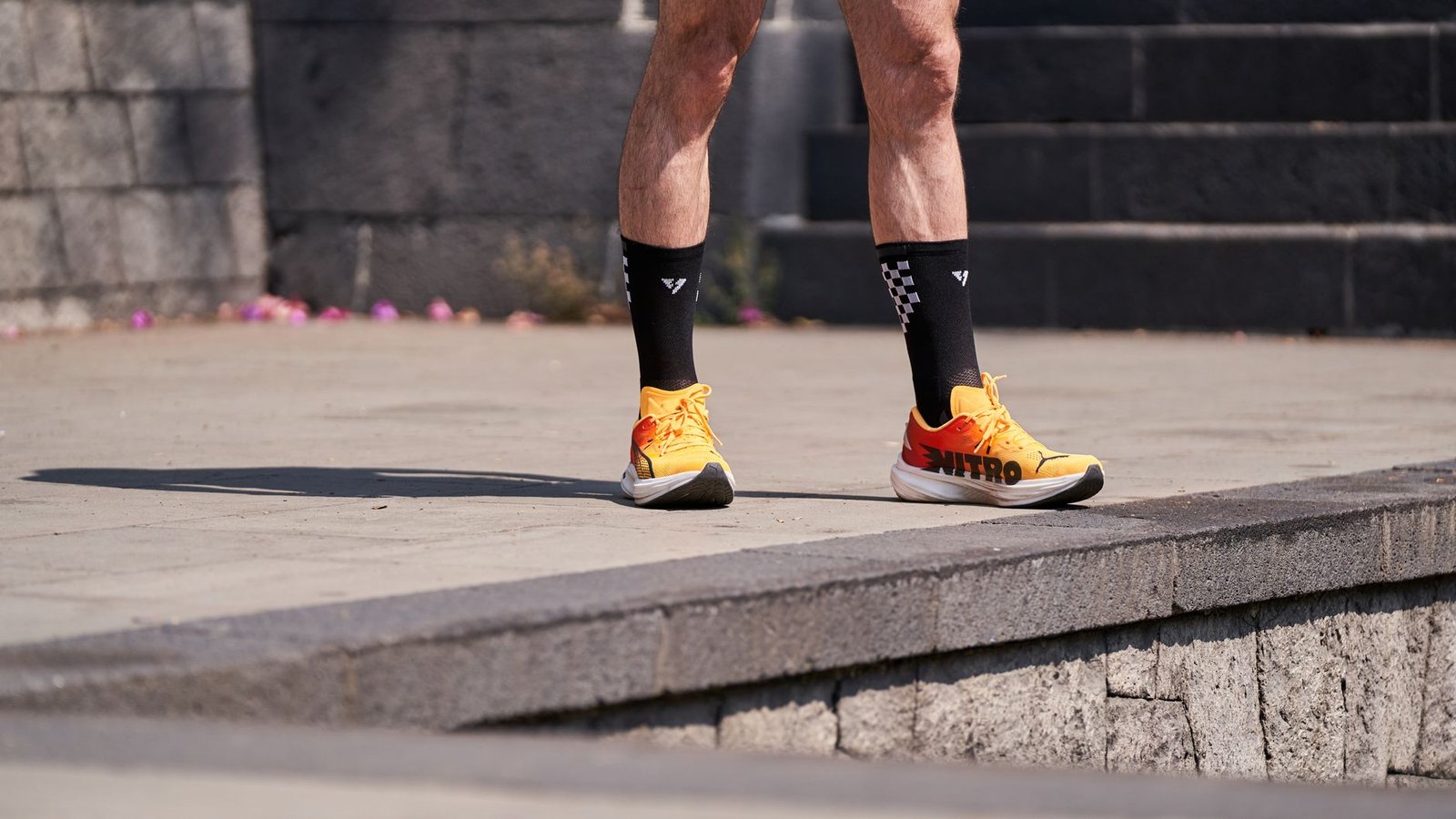
Close-up of a runner’s legs in bright orange shoes and black socks.
The Week Before the London Marathon
The final week is a poor time to repair a training mistake. Keep your usual sleep, rest, recovery, and strength routine steady so your feet reach race day without extra fatigue or soreness. During the month before the marathon, do not suddenly add hill repeats, speed sessions, or another unfamiliar training demand. A new workout can change how your foot lands and leave the calves, ankles, or small foot muscles irritated when you need them to feel settled.
Keep these choices familiar:
- The shoes you have worn successfully on long runs
- The socks that stayed dry and comfortable
- The compression gear you tested without numbness or pinching
- The strength exercises already included in your routine
Set aside the exact race-day clothing at least 48 hours before the event. Check the shoes for worn areas, make sure the socks are clean and free of stretched seams, and pack a backup pair if rain or damp conditions are possible.
Do not use the taper as an excuse to spend hours walking around London before the race. Sightseeing, transport queues, and standing at the expo can leave your feet puffy before you start. Plan seated breaks and keep the pre-race day calm.
Race-Morning Meal and Standing Plan
Your morning meal needs to match your digestion, not someone else’s routine. A familiar meal with carbohydrates and protein can provide a steadier starting point, while new foods may bring bloating or an urgent toilet stop. A larger meal with plenty of fiber may need more time to digest, while a smaller option gives you less food to work with before the start.
| Meal option | Best timing | Suitable use |
|---|---|---|
| Oats with protein | 3 hours before | Larger breakfast |
| Familiar carbohydrate-and-protein meal | 1-3 hours before | Usual race routine |
| Banana | Close to the start | Small appetite |
Do not test a new breakfast on marathon morning. Eat the meal you have used before long training runs, and keep the portion familiar. If oats normally sit well, finish them about three hours before the start; if a banana is your tested choice, use it as the smaller option instead of forcing down a full plate.
Standing still in the start area can add pressure to your feet before the race begins. Sit when you can, change position often, and take a few short walks instead of remaining upright in one place. A brief walk to the toilet, a gentle calf raise, or a few ankle movements can break up the wait, but do not pace for an hour just to stay warm.
Compression Socks and Tights Before the Start
Compression cannot correct a shoe that pinches. The footwear still needs the right length, width, and upper space before you add a sock or tight.
Compression socks apply pressure around the lower leg and foot area, and some runners find them comfortable during long efforts. Others find the fabric too tight, especially when the size is wrong or the sock bunches inside the shoe. Test the exact pair during training before race day. Wear it on a long run, not just for a short walk around the house, and check the top band, heel, toes, and skin around the ankle when you finish.
Stop using that pair for racing if you notice:
- Numbness or tingling in the toes
- Cold or unusually pale toes
- A painful band at the calf or ankle
- Wrinkled fabric rubbing the skin
- Pressure that increases as the run continues
Put the socks on carefully so the fabric lies flat. Do not pull hard from the top and leave extra material bunched near the ankle. If you use compression tights, check that the foot area and waistband allow normal movement without pulling during a squat or stride.
A pair that feels good after training may not feel good inside a race shoe for several hours, so test it under the same conditions you expect on marathon day. After the race, compression is a separate choice: use it only if it feels comfortable and you have used it safely before.
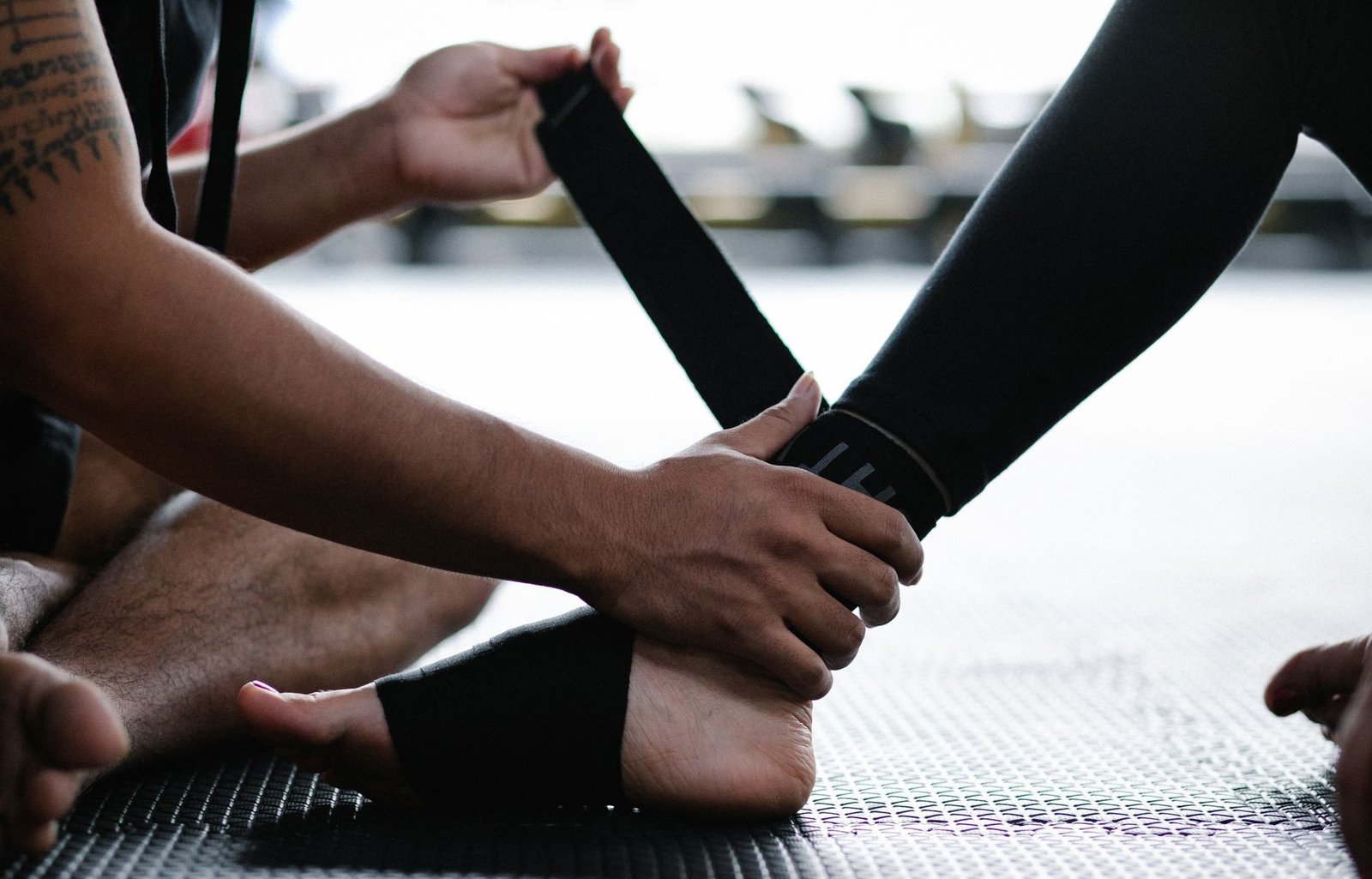
Athlete’s ankle wrapped with an elastic bandage in a gym.
Gentle Foot and Ankle Warm-Up
A short warm-up helps you move after travel, waiting, and sitting. It should wake up the feet without using energy you need for the race.
Start with an easy walk for 5 to 10 minutes if the race setup allows it. Then stand comfortably and make slow circles with each ankle. Keep the movement small at first, then let the circle grow if it feels smooth.
Use a simple sequence:
- Make 10 slow circles in each direction with one ankle.
- Repeat on the other side.
- Raise and lower your heels 10 times while holding a rail or another steady object.
- Walk easily for a few minutes before settling into the start area.
These movements can help keep the ankles and feet moving after a long period of sitting or standing. They do not remove swelling caused by a tight toe box, a tight strap, or badly fitted compression. Avoid deep stretches, repeated jumps, hard strides, or a long extra jog if those movements are not part of your normal warm-up.
If a circle causes sharp pain, stop that movement. A mild sense of stiffness can improve with easy motion, but pain, numbness, or a growing pressure point deserves attention before you start.
Comfort Through the Marathon
The first few miles can feel comfortable even when a shoe or sock becomes a problem later. Plan for several hours on your feet, because swelling and friction may increase after the early part of the race. Use the first part of the marathon as a check-in period: notice whether your toes can move, whether the upper presses when you land, and whether one foot feels tighter than the other.
Pay attention to these changes:
- A hot spot that does not fade after a few minutes
- Increasing tightness across the forefoot
- A sock seam rubbing the same patch of skin
- A heel slipping because your foot has changed position
Do not wait until pain becomes severe before slowing down or stopping at a support station. If you can safely adjust a lace or sock, do it early. A small change can prevent repeated friction over many miles. The shoe must allow expansion, the sock must stay flat, and compression must feel supportive without becoming restrictive.
If one foot suddenly swells much more than the other, or swelling comes with severe pain, marked redness, chest pain, or trouble breathing, seek medical help promptly. Those signs do not fit ordinary race-day puffiness.
Post-Marathon Compression and Recovery
After the finish, change out of wet race clothing and inspect your feet before putting compression back on. Look for blisters, broken skin, bruising, red pressure marks, and areas that feel numb. Compression over damaged skin can make a small problem harder to notice.
A sensible recovery sequence is:
- Walk gently for a few minutes if you can do so comfortably.
- Drink and eat the recovery foods you have used successfully in training.
- Put your feet up when you return to your room or home.
- Use tested compression only if it feels comfortable and leaves your toes warm and normally colored.
Do not force a tight garment over a foot that has become very swollen. Remove it if the pressure increases, your toes become cold or pale, or you develop tingling. The garment should not create a new problem while you are trying to recover.
Use the sleep, food, gentle movement, and strength habits that have worked during training, and give your feet time to settle after the full distance.
Runner resting legs after marathon finish
The Practical Finish
A calm race morning leaves less room for improvised choices that can affect your feet later. Add your exact shoe, sock, and compression combination to your packing list, then check each item before leaving for the start.
Frequently Asked Questions
How can I stay warm before the start without making my swollen feet worse?
A loose, warm layer lets you stay comfortable while avoiding tighter footwear around feet that have already begun to swell. Pack clothing you can remove easily before the race starts.
What should I bring if I have to wait on wet ground before the race?
A plastic bag or poncho can keep you and your belongings off wet ground while you wait. Staying dry makes it easier to avoid standing around in uncomfortable, damp clothing.
Is there anything I should pack for the portable toilets?
Pack toilet paper because the portable toilets in the start area may run out. Keep it somewhere you can reach without unpacking your whole race bag.

I am Ozan, a London-focused running writer and marathon enthusiast with a passion for helping people discover the city’s best races, running routes, walking trails, and fitness events. I research and write practical, up-to-date guides covering marathons, race preparation, training tips, running gear, and everything related to staying active in London.
My goal is to create reliable, easy-to-follow content that helps runners and walkers of all experience levels explore London with confidence, whether they’re preparing for their first 5K or their next marathon.