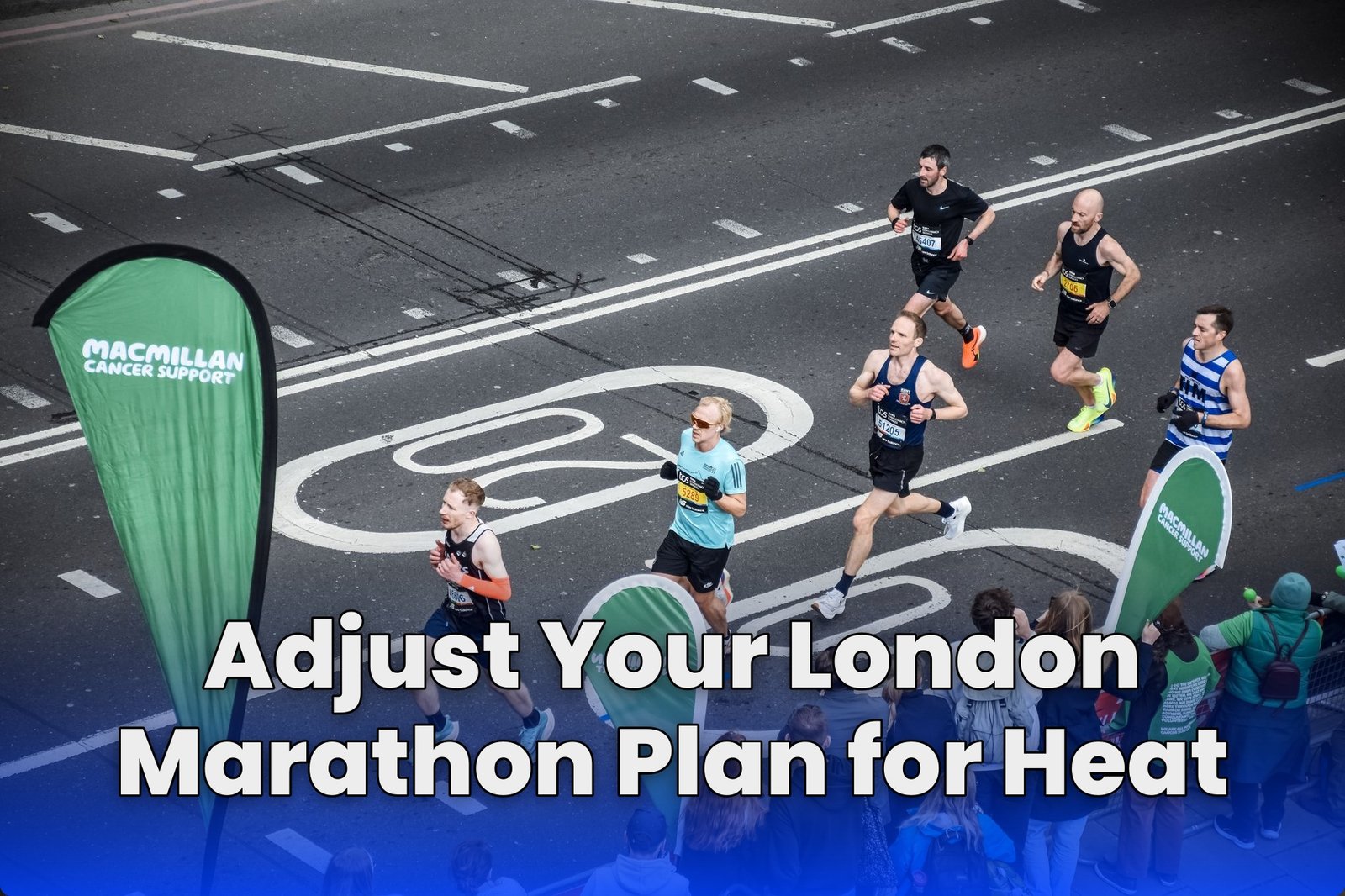
A late heatwave should change your London Marathon goal, pace, clothing, and hydration plan. It should not send you into a frantic final week of hard workouts. Use the forecast’s wet-bulb globe temperature, or WBGT, to judge the strain of heat, humidity, wind, and sunlight, then race by controlled effort instead of forcing a cool-weather pace.
A runner targeting 4:00 in cool conditions may need to accept a finish near 4:13 when the temperature reaches 72°F. Conditions that make the same pace cost more can turn a time goal into an effort goal.
Start slower, keep your effort under control, cool yourself whenever you can, and abandon the time goal if your body stops responding normally.
Key takeaways
- The 4- to 5-hour group should make a bigger pace adjustment than under-3-hour finishers and protect the second half of the race.
- A late heatwave during taper week calls for the planned mileage reduction, not hard workouts in heavy clothing to chase heat adaptation.
- At aid stations, match small drinks to your practiced plan and thirst. Salt tablets cannot make overdrinking safe.
- Hot-weather shoes need comfortable extra room for foot swelling, with lightweight socks instead of thick ones.
Check the Heat Forecast and Your Race Goal
Start with the forecast for the race window, not the weekly high. Look at the temperature, humidity, wind, cloud cover, and direct sun during the hours you will be on the course. WBGT combines those factors, so it gives you a better picture than the air temperature shown in a standard weather app. A warm, cloudy day with wind can feel very different from a slightly cooler day with strong sun and high humidity. Check the WBGT forecast on the morning before the race and again before leaving for the start. If the number has risen sharply, change your goal before the gun goes off.
| Runner case | Heat effect | Planning response |
|---|---|---|
| Under 3-hour finisher | Smaller proportional performance loss | Keep effort controlled and accept a modest pace reduction |
| 4- to 5-hour finisher | About twice the proportional loss of an under-3-hour runner | Make a larger pace adjustment and protect the second half |
| 4:00 goal at 72°F | Revised goal near 4:13 | Replace the fixed time with an effort-based target |
Use your cool-weather finish time as a reference, not a promise. For nonelite London Marathon runners, each additional 9°F above 54°F slows average finish times by about 2.8%. That estimate describes a broad group, so it cannot predict your exact result. It shows why holding your old pace may be a poor choice.
Write down three goals before race day:
- A cool-weather time goal
- A heat-adjusted time range
- An effort goal you can hold without strain
The effort goal becomes the one that matters once the heat rises. A steady run that leaves you able to respond late in the race is better than a fast first 10 miles followed by overheating and walking.
Reset Pace Around Effort and WBGT
Higher WBGT can impair endurance performance as heat stress increases. Use the forecast to set your opening pace, then let breathing, heart rate, and muscle control decide whether you hold it.
- Start slower than your normal marathon pace for the first 3 miles.
- Check whether your breathing feels controlled and your heart rate is settling.
- Hold the slower pace through at least the first half if the heat remains high.
- Increase only when your effort stays steady and your cooling plan is working.
Do not use a pace calculator as if the weather were a fixed indoor condition. The calculator may give you a useful starting point, but WBGT tells you whether that pace is affordable on this course, on this day. You can also practice pacing in warm weather during training, but a late forecast still calls for restraint.
A runner expecting to finish in four to five hours needs to be especially careful because more time on the course gives heat more opportunity to raise body temperature and drain reserves. Start conservatively even if the first miles feel easy. Your heart rate may sit above its usual marathon range even when your pace looks modest, so do not chase the pace to correct that number. If your effort keeps rising, slow down, use water and shade, and protect the next mile.
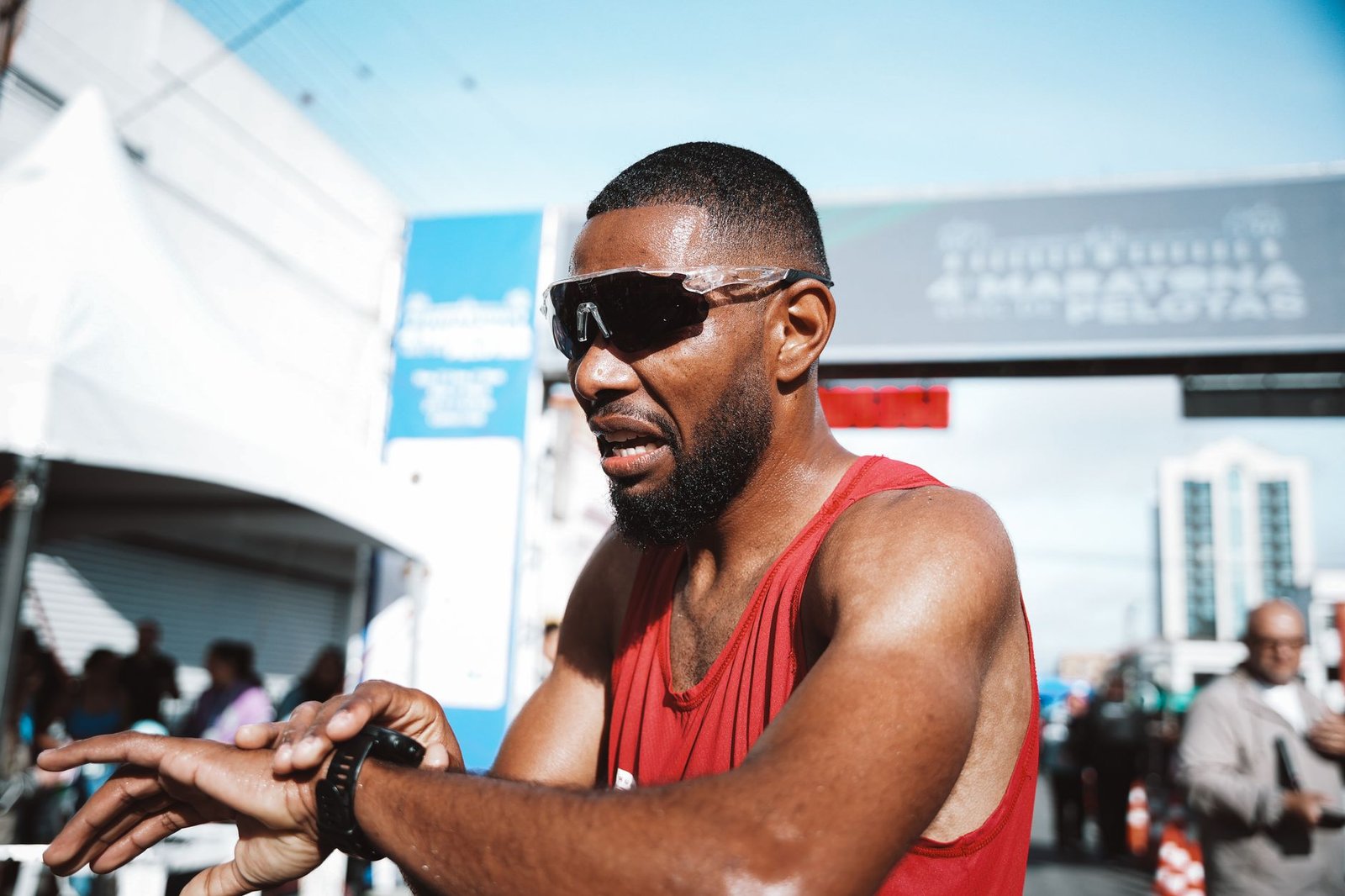
A marathon runner glancing at his smartwatch after crossing the finish line.
Change the Taper Without Chasing Heat Adaptation
A late heatwave is a reason to protect your taper, not to rebuild it. Keep your planned reduction in mileage, retain only the short sharpening work already on your schedule, and avoid adding a hard heat session in the final week. Intervals in heavy winter clothing add fatigue when you need fresh legs and can raise your risk of heat illness before race day. Do not turn an easy run into a test of toughness because the forecast looks unpleasant.
During the remaining days:
- Move easy runs to the coolest part of the day.
- Cut a workout short if your effort rises above its planned level.
- Practice drinking with a plan in the clothing and shoes you will race in.
- Sleep in a cool room and arrive at the start rested.
Heat acclimatization works best when you build it into training before race week. Repeated easy or moderate exposure over time can help your body handle warmth, but a few aggressive sessions during the taper cannot create useful fitness. They can leave you tired, dehydrated, or sore. If the heatwave appears with several weeks left, place warm-weather running into ordinary training gradually. Make the first sessions easy and stop if you develop dizziness, chills, confusion, or unusual weakness. When the forecast changes in the last few days, keep the adaptation you have and remove the risk.
Dress and Cool for a Hot London Marathon
Wear less than you would for a cool start because your body temperature will climb as the race continues. Choose lightweight, breathable fabric, and avoid thick layers that trap warm air against your skin. Your shoes need enough room for heat-related foot swelling. Use your usual race shoes if they fit well, but do not tighten them aggressively or pair them with thick socks. Lightweight running socks can reduce the pressure that develops when your feet expand.
Race-day choices include:
- A ventilated cap for shade, with water added when it feels comfortable
- A soaked neck gaiter around your neck, wrists, or head
- Lightweight socks and shoes with comfortable toe room
- Sunglasses to reduce squinting in bright sun
- Breathable clothing that does not cling heavily when wet
A cap and neck gaiter can help you feel cooler, especially when water is available. Cooling water on the back of your neck can also make you more comfortable. Keep the fabric light enough that it does not become a heavy, warm layer.
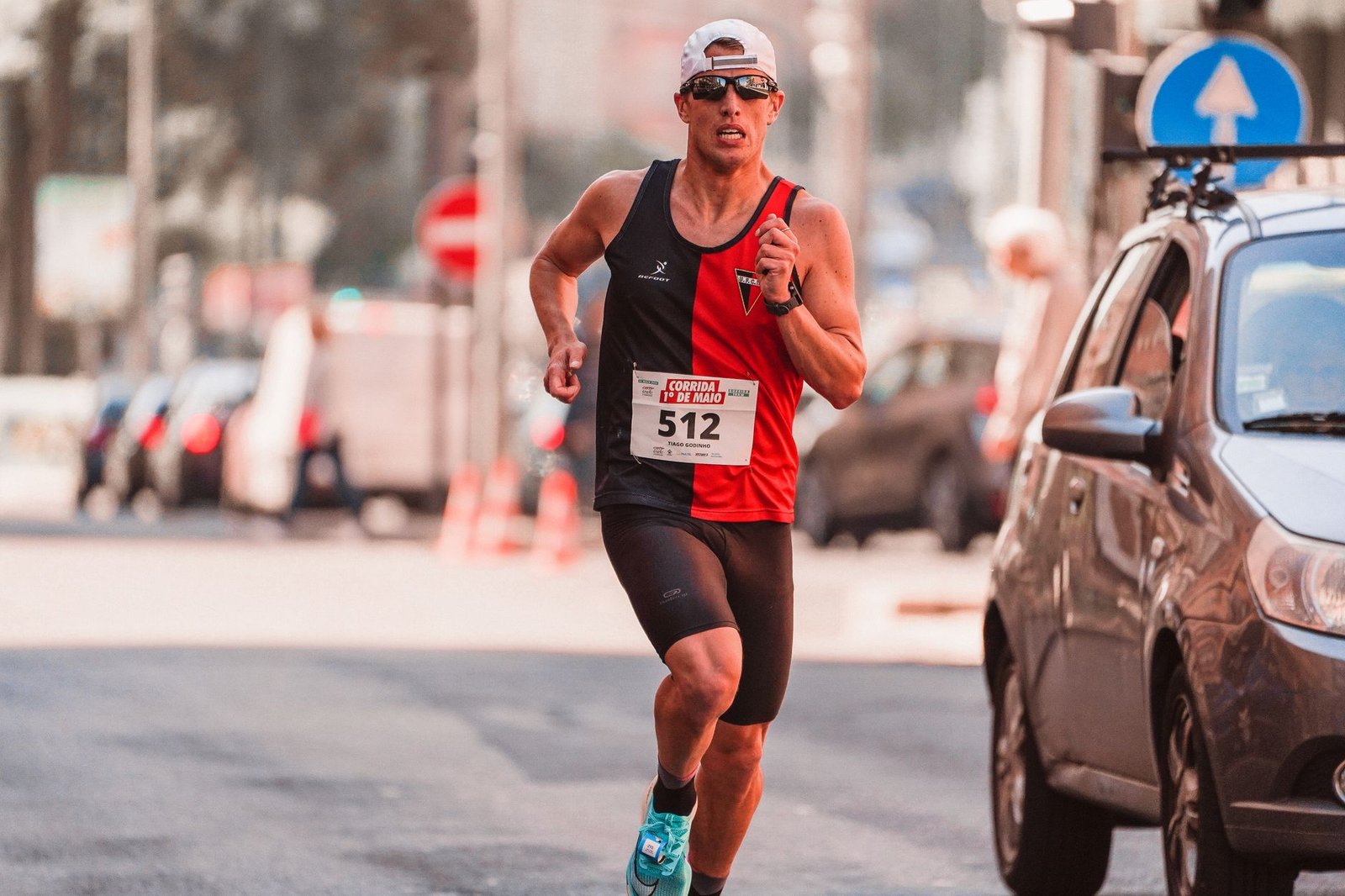
Marathon runner wears lightweight clothing and a ventilated cap
Use shade in the starting area before the race and along the course whenever the route allows it. Stand away from exposed pavement while you wait, and move toward shade after collecting water if the crowd and course layout permit it.
Sunglasses do not lower your body temperature. They can reduce glare, squinting, and facial tension, which may make bright sections of the course easier to handle. That comfort benefit does not replace pacing by effort. Slow down when your effort keeps rising.
Drink to Thirst With a Practiced Plan
Thirst can guide drinking, but during a prolonged hot race it may not fully reflect your fluid needs. Take small amounts at aid stations according to your practiced plan instead of emptying a cup at every table. Avoid forcing fluid when you are not thirsty unless your established plan calls for it, and watch for symptoms as the race continues.
Use the aid stations this way:
- Take a small drink when thirst or your practiced plan calls for one.
- Use water on your neck or cap when you want cooling without more fluid.
- Slow down briefly if you need to drink safely.
- Move to the side after taking a cup so you can drink without tripping or gulping.
Excessive plain water can dilute the sodium in your blood and cause exercise-associated hyponatremia, a serious condition that can resemble dehydration in its early stages. Salt tablets do not make excessive drinking safe. High-sodium supplements may add sodium, but they cannot cancel out a large amount of unnecessary fluid.
Use the drinks and gels you have already practiced with. A hot race is a poor time to test a new sports drink, concentrated electrolyte product, or unfamiliar gel. Follow your practiced fueling plan unless your stomach or race conditions force a change.
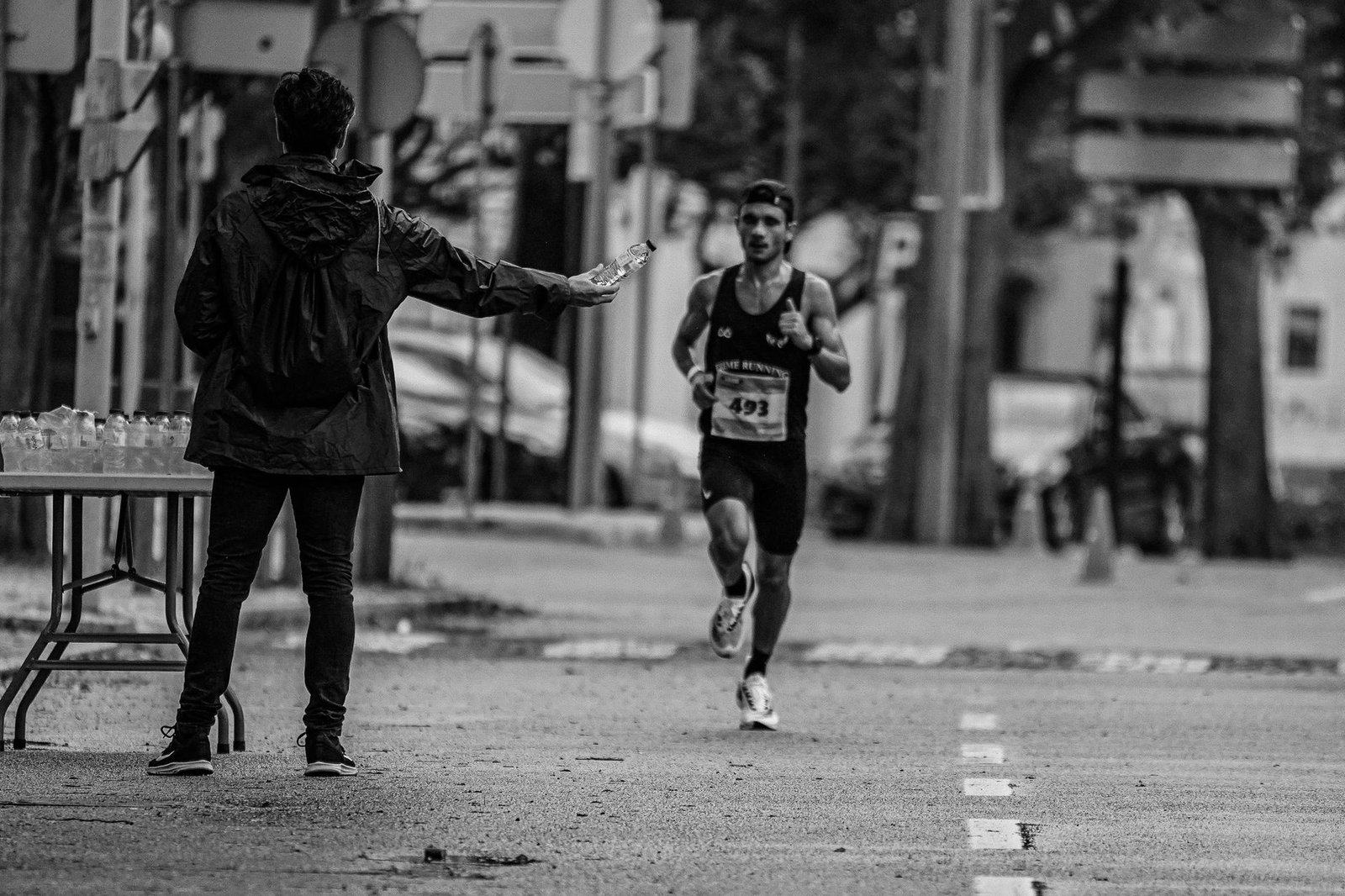
Marathon runner drinks at a crowded race water station
Recognize When the Plan Is No Longer Safe
A slower finish is acceptable. Heat illness is not. Stop treating the race as a time trial if your thinking becomes unclear, your coordination changes, or you feel faint.
Slow down and seek a course marshal or medical station if you notice:
- Confusion or unusual difficulty following directions
- Loss of balance or poor coordination
- Faintness, collapse, or severe weakness
- A sudden inability to keep running normally
- Vomiting that prevents you from drinking
- A worsening headache with hot, abnormal behavior
Move into shade if you can do so safely, tell a volunteer exactly how you feel, and follow the medical team’s instructions. Do not continue alone because you are close to a checkpoint or because your watch still shows a possible personal best.
If your effort feels too high but your thinking and coordination remain normal, slow to a walk, take small drinks when thirsty, and cool your neck. If those steps do not bring your effort back under control, stop at the next staffed point.
Set the watch aside and leave the course when warning signs appear so the medical team can take over.
Make the Final Call Before the Start
A late forecast can change the value of every target on your watch, so treat your plan as a decision you make on race morning, not a promise made weeks earlier. The safest race is the one that leaves room to respond when conditions become harder than expected. Set a phone reminder for 30 minutes before you leave, then record the forecast WBGT on your race card beside your planned opening pace.
Frequently Asked Questions
Why is my heart rate higher even when I am running slower?
Heart rate can rise by about 5 to 15 beats per minute at the same running pace in the heat. Use that reading to control effort, and slow down when your heart rate keeps climbing instead of forcing your planned pace.
What should I wear if the morning feels cool but the race will get hotter?
A cool start does not guarantee cool conditions later, so avoid dressing only for the opening miles. Wear lightweight, breathable clothing and leave off extra layers that may become too warm as the race progresses.

I am Ozan, a London-focused running writer and marathon enthusiast with a passion for helping people discover the city’s best races, running routes, walking trails, and fitness events. I research and write practical, up-to-date guides covering marathons, race preparation, training tips, running gear, and everything related to staying active in London.
My goal is to create reliable, easy-to-follow content that helps runners and walkers of all experience levels explore London with confidence, whether they’re preparing for their first 5K or their next marathon.