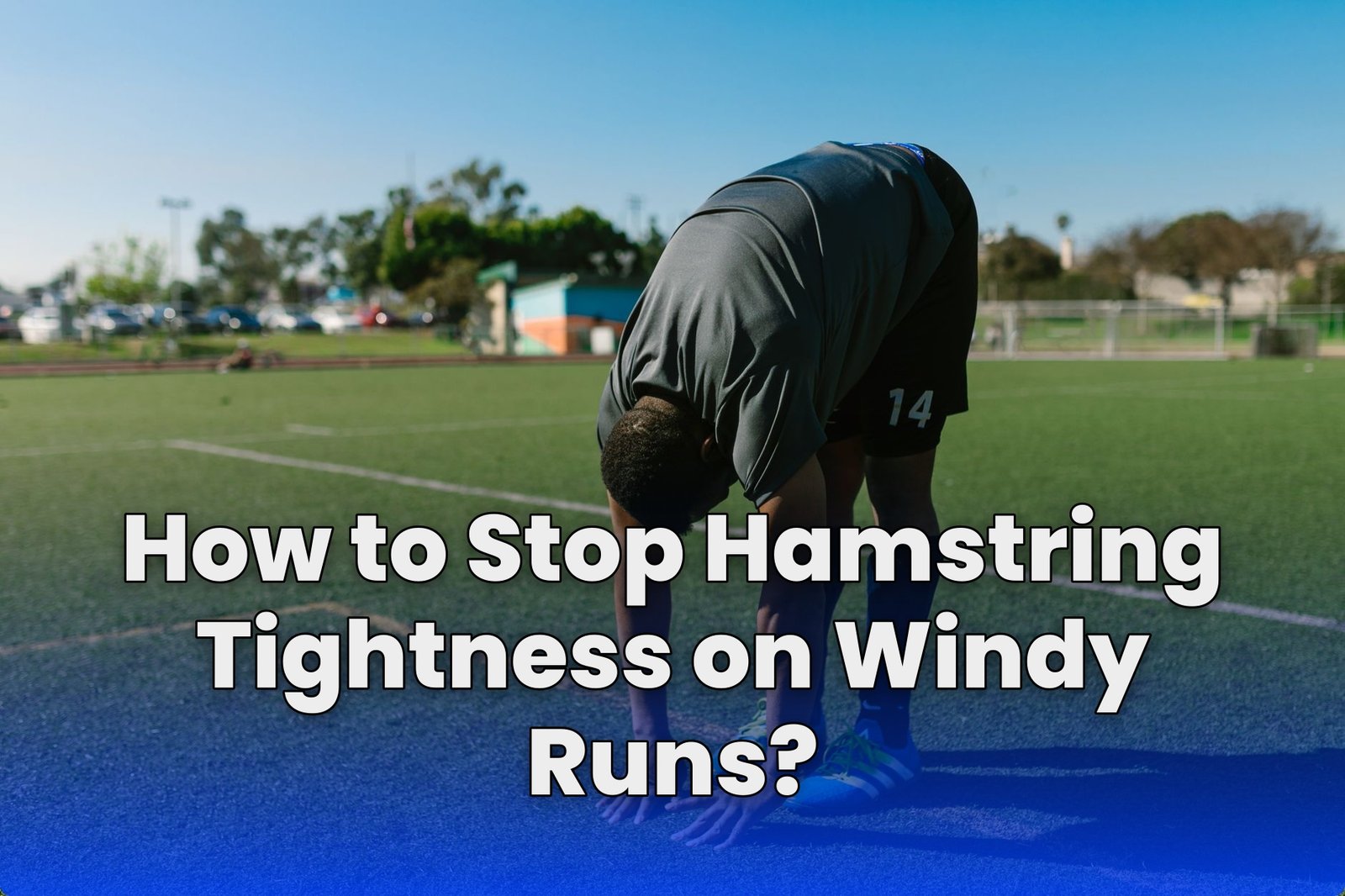
Wind makes your legs feel slower, but hamstring tightness is not inevitable. Most runners blame the weather and keep the same warm-up and pacing, then wonder why the back of the thigh turns into a tight band after mile ten.
In windy conditions, you often fight resistance without noticing, which nudges your form toward shorter steps and extra braking. That means your hamstrings do more work to control each stride, and any lack of heat or strength shows up as stiffness when the run goes long.
This guide takes a practical stance: prevent the tightness before it starts by warming up specifically for the hamstrings, easing into effort instead of jumping into pace, and protecting your range when gusts force you to work harder. Keep your cadence steady, dress for wind chill, and finish with quick recovery work so you leave the run feeling like you can move freely again.
Wind Changes Stride Mechanics and Triggers Hamstring Tightness
When you run long in windy conditions, the wind steals stability. Your body compensates with micro-adjustments: shorter steps into a headwind, a reach that overstrides in a tailwind, and side-leaning when crosswinds push you off line. Those changes increase hamstring demand because the hamstrings help control hip extension and deceleration through each step.
If you treat windy miles like ordinary miles, you miss the real cause of tightness. Your hamstrings feel “tight” because they are working harder to keep your stride consistent, not because stretching suddenly stopped working.
Warm Up Like You Are Entering a Second Sport
Do a warm-up that matches the specific stress of long runs in windy conditions. Start with easy movement, then build stride rhythm before you reach intensity. A hamstring that feels supple at minute five can stiffen fast if your warm-up never teaches your hips to move under load.

Use a progression: 10 to 15 minutes easy running or fast walking, then 3 to 5 build-ups of 15 to 25 seconds with full, controlled posture. After that, add dynamic work like leg swings and hip hinges. Keep it brisk and repeatable, not tender and long.
Pre-Run Mobility Should Be Dynamic and Fast, Not Long and Painful
Static stretching before a long windy run often backfires because it can reduce tolerance to load right when you need snap and control. Tightness during the run is your signal to prepare your hamstrings to tolerate tension, not to “pull” them loose.
Choose dynamic mobility that moves through range while you stay tall and stable. Think controlled walking lunges, high-knee drills with a relaxed upper body, and short-range hamstring scoops with straight posture. You should feel increased ease, not a lingering ache.
Strength Between Runs Beats Stretching Before Miles
Hamstring tightness is usually a fatigue and control issue. If your hamstrings struggle to stabilize the hip late in long runs, they will feel increasingly “locked” in the wind when you have to fight for form.
Build a routine that targets posterior chain capacity 2 to 3 times per week. Use exercises like Romanian deadlifts, hip hinges, and hamstring bridges. Train with ranges you can repeat under good control, because strength that holds up under form breaks reduces tightness under stress.
Footwear and Foot Strike Matter More in Gusts Than You Admit
Gusts amplify how small differences in landing mechanics affect muscle timing. If your shoes encourage a harsh heel strike or if your stride collapses medially, your hamstrings pay for it with extra braking work.
Check two things: whether your heel-to-toe transition feels smooth at easy pace and whether your midfoot feels stable when you land. In windy conditions, you do not have time to “learn” a new setup mid-run. Use the same category and size you have already proven comfortable for long efforts.
Use Form Cues That Counter Wind Without Over-Bracing
In long runs in windy conditions, your job is not to fight the wind with tension. Your job is to keep hips and spine aligned while your stride stays efficient. The most common mistake is adding stiffness through your back and legs, which drags the hamstrings into a longer, tighter contraction pattern.
Try these cues and match them to what the wind is doing:
| Wind Situation | Tension Load Rating 1-10 | Technique Adjustment |
|---|---|---|
| Headwind | 7 | Shorten stride, land under hips |
| Tailwind | 6 | Stay tall, avoid reaching forward |
| Crosswind | 8 | Level shoulders, steady cadence |
| Gusty bursts | 9 | Relax jaw, soften knees on contact |
| Wind shadow on turns | 4 | Re-center posture, keep rhythm |
After you apply a cue for 5 to 10 minutes, you should notice less “drag” in the back of the legs. If you feel more gripping, reduce the cue intensity. Tension that grows across minutes usually causes tightness, even if it feels like control at first.
Cadence and Pacing Prevent Late-Run Hamstring Fatigue
Hamstring tightness often shows up after you slow down or when your cadence drops. Wind makes pacing harder because it changes effort without changing your route. You start thinking you are running “easy,” then you are actually doing more work per step.

Use cadence and perceived effort together. Run with a cadence target you can maintain into the final third of the long run in windy conditions. If your cadence drops, shorten the stride and keep your torso tall. It is better to add 5 to 10 steps per minute than to overreach while your hamstrings fatigue.
Breathing and Bracing Decide Whether You Clamp or Float
In gusts, many runners clamp their core and hold their breath at impacts. That creates an indirect problem for the hamstrings because stiff bracing changes pelvic motion and increases the effort required to swing the leg through.
Practice a breathing rhythm at easy effort before your long windy run. Use exhale timing that matches your stride and keep the shoulders down. If your breathing gets shallow, your hamstrings will feel it soon after.
Hydration and Carbs Reduce the “Wired and Tight” Feeling
When you run long, fuel and hydration influence how muscles tolerate load. If you get behind on fluids or carbohydrates, perceived tightness can rise because your body compensates for lower performance with higher effort per step.
Follow established guidelines. The American College of Sports Medicine recommends fluid intake around 0.4 to 0.8 liters per hour and carbohydrate intake to support endurance performance, often around 30 to 60 grams per hour depending on intensity and tolerance. In windy weather, sweat can be harder to notice because airflow cools your skin.
Don’t Stretch Aggressively During the Run
Stopping to stretch hard on the shoulder of a windy road can create more problems than it solves. A long run in windy conditions already introduces stiffness through repeated impacts. Aggressive stretching mid-run can briefly reduce sensation while increasing instability, which brings tightness right back when you start moving.
If you need to address early tightness, use low-intensity reset moves instead: short walk breaks, gentle hip hinges, and a few controlled strides at reduced speed. Keep it calm. The goal is to restore your mechanics, not to force range.
Train the Cold and Wind Stress You Keep Avoiding
Windy runs are often colder than calm days, even when temperatures feel similar. Cold tissue and reduced neuromuscular efficiency can make the hamstrings feel less compliant. That is why you can do all the prep and still feel tight if you never practiced in comparable conditions.
Include a few long sessions in breezy weather or simulate it with slightly cooler, wind-exposed outings. Pay attention to how quickly you warm up and how your hamstrings behave in the last third. You are not trying to “tough it out.” You are building tolerance.
Post-Run Recovery Prevents the Next-Day Tight Trap
Prevention does not end at the finish line. After long runs in windy conditions, you often get the same fatigue patterns that make the next run feel more constrained. If you ignore recovery, your hamstrings start the next session already irritated.

Prioritize light movement within a few hours, easy mobility that stays comfortable, and sleep. If tightness lingers, use gentle hamstring-focused work the next day while keeping it pain-free. The objective is readiness for your next long run, not a maximum stretch.
Track Wind Patterns and Tightness So Your Fix Actually Fits
Random advice wastes time. Tightness is a pattern problem, and wind offers clues you can log. Record wind direction relative to your route, your pacing, and when tightness started. Did it begin within 20 minutes into headwind, or only after you slowed down in gusty crosswind?
Then change one variable at a time. If tightness starts early in headwind, your stride likely becomes too short and stiff. If it starts late, pacing and fuel are usually the culprits. When you track and adjust, “how to prevent hamstring tightness during long runs in windy conditions” stops being a guess and becomes a system you can repeat.
How to Prevent Hamstring Tightness During Long Runs in Windy Conditions
How Can You Warm Up to Prevent Hamstring Tightness During Long Runs in Windy Conditions?
Start with 8 to 12 minutes of easy running or brisk walking, then add leg swings, light lunges, and a few short accelerations to raise temperature and improve muscle response before you settle into your long-run pace.
What Stretching and Mobility Work Helps Reduce Hamstring Tightness for Windy Long Runs?
Use gentle, short-duration hamstring stretches and hip mobility before the run, plus a brief dynamic warm-up during the first 10 minutes, so tissues move through range without forcing a deep stretch when they are cold.
Which Strength Exercises Improve Hamstring Flexibility and Endurance for Long Runs?
Train consistently with exercises like Romanian deadlifts, bridges, hamstring curls, and split squats, and include single-leg balance work so your hamstrings control your stride when wind pushes you off line.
How Should You Adjust Pace and Running Form When Wind Causes Extra Strain?
Stay slightly more conservative into a headwind, shorten your stride, and keep your cadence steady to reduce hamstring overreach, then lean forward from the ankles rather than bending at the waist when you fight gusts.
What Role Do Footwear, Surface Choice, and Clothing Play in Preventing Hamstring Tightness?
Wear well-fitting shoes with enough cushioning and stability for the conditions, choose smoother routes when possible, and dress for wind chill so your legs stay warm, since cold wind can tighten muscles faster.
How Can Recovery and Early Treatment Stop Hamstring Tightness From Returning After Windy Runs?
Cool down with easy walking or light jogging, then do gentle mobility and light activation the next day, and if tightness shows up early, reduce intensity immediately, rest, and address it with controlled movement rather than aggressive stretching.
Take Control Of Hamstring Tightness On Windy Long Runs
For anyone asking how to prevent hamstring tightness during long runs in windy conditions, the answer is simple: prepare your stride, protect your hips, and manage effort. Warm up longer than usual, start slower to steady your mechanics in gusts, keep your cadence quick, and finish with targeted hamstring and hip work so stiffness does not build. Commit to this routine every time and you will feel the wind, not your hamstrings, steering your pace.

I am Ozan, a London-focused running writer and marathon enthusiast with a passion for helping people discover the city’s best races, running routes, walking trails, and fitness events. I research and write practical, up-to-date guides covering marathons, race preparation, training tips, running gear, and everything related to staying active in London.
My goal is to create reliable, easy-to-follow content that helps runners and walkers of all experience levels explore London with confidence, whether they’re preparing for their first 5K or their next marathon.