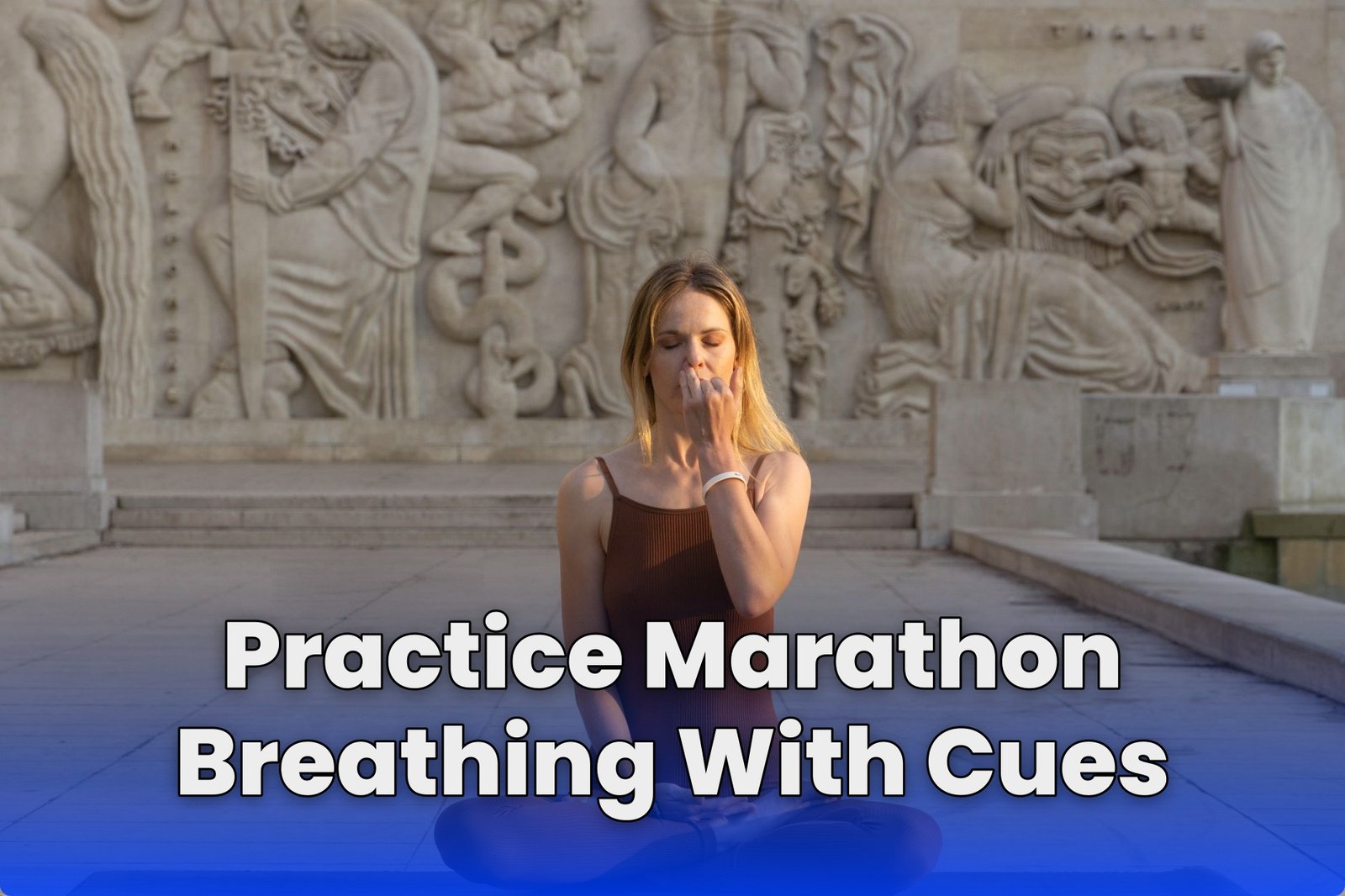
Most runners overthink breathing, then blame their body when the real culprit is confusion. Marathon breathing works best when you treat it like a skill, not a vibe. Once you stop guessing and start using repeatable cues, your breathing becomes steadier, your effort feels more manageable, and your head stops panicking every time the pace climbs.
The idea behind Marathon Breathing with simple cues and drills is straightforward: you set a rhythm, you breathe from your diaphragm, and you train your nervous system to stay calm while the workout heats up. Timed inhale and exhale counts give your mind something concrete to hold onto, so you breathe evenly instead of chopping your breath into fragments.
In this article, you will learn a practical way to practice at home first, then apply it while running. Expect small drills built around belly breathing, quiet counting, and a rhythm that you can speed up gradually as intensity rises, without forcing yourself into a rigid rule that collapses the moment you get tired.
Marathon Breathing Is A Regulation Skill
Marathon breathing is not a mysterious gift. It is regulation. When your breathing stays orderly, your nervous system stays orderly. When it breaks, your effort feels bigger than it is. The real question is simple: do you train control, or do you hope for calm on race day?
Most runners chase pace and treat breath as a passenger. That mistake shows up as mouth breathing, shallow chests, and a racing heart you cannot talk down. If your breathing is random, your control is random.
Breath discipline creates emotional discipline at speed.
So this is how to practice marathon breathing with simple cues and drills. You use clear signals, you run them repeatedly, and you measure the result by how steady you feel, not by how proud you look.
Start With Posture So Your Breath Has A Path
You cannot cue breathing effectively if your body blocks it. Before you count anything, get into a position where air can move without effort. Sit tall, soften your shoulders, and let your chest be quiet while your belly does the work.
Do you feel pulled forward, braced, or clenching your jaw? Fix that first. Then imagine your spine lengthening, not forcing. The cue matters because it changes muscle tone.
- Shoulders soft, jaw relaxed
- Hands easy, arms able to hang
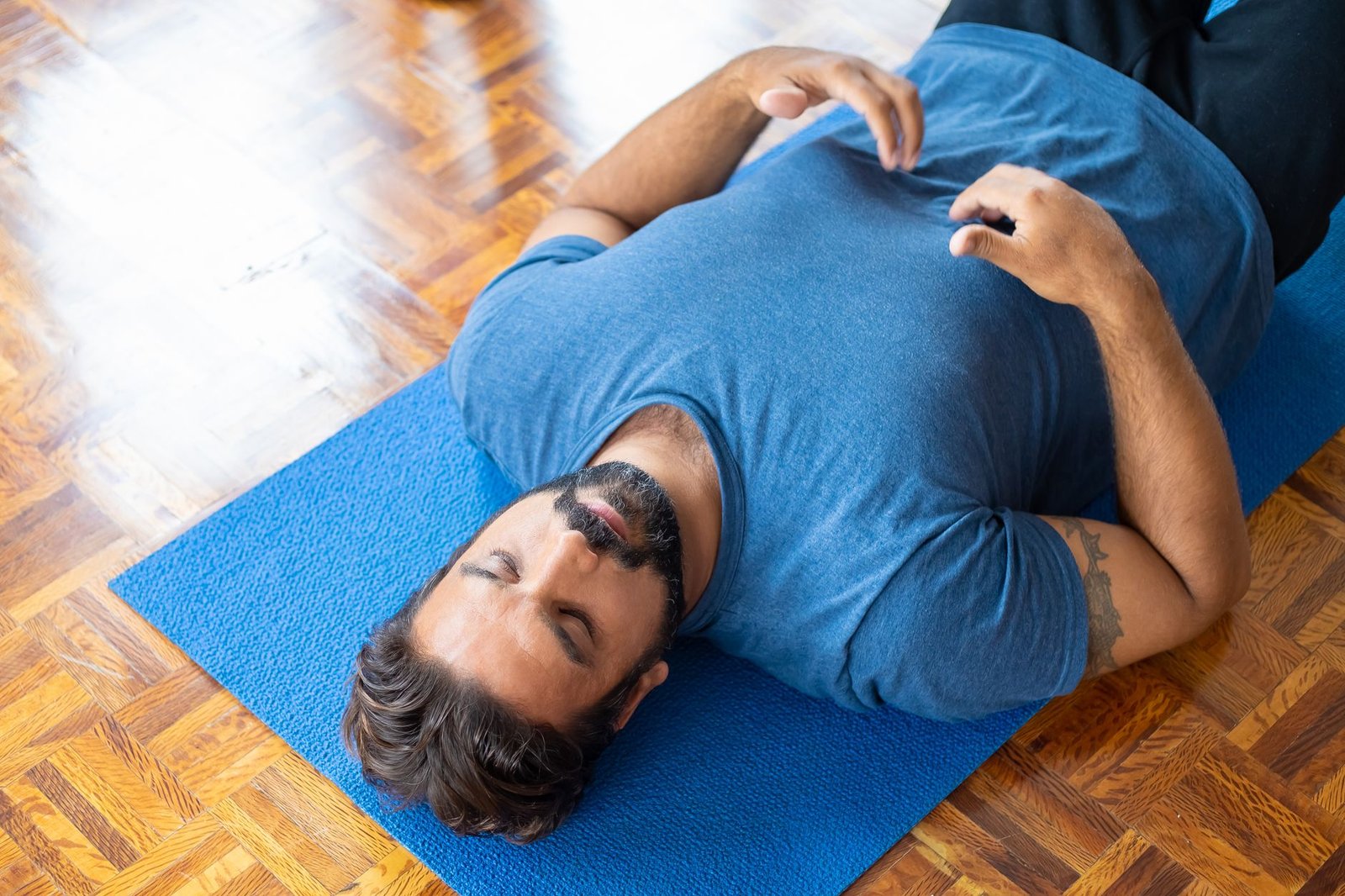
- Ribcage quiet, belly rises on the inhale
Once the mechanics are stable, counting becomes reliable. Without mechanics, the drill turns into guesswork.
Use The 4-4 Belly Rhythm To Quiet The Panic Switch
The fastest way to build control is a rhythm you can repeat. For marathon breathing practice, use rhythmic diaphragmatic belly breathing where inhale and exhale match in time. Start with inhale 4 seconds and exhale 4 seconds, over and over.

This works because the body learns timing. When exhale matches inhale and stays slow, your system gets a predictable pattern instead of a threat response. You are not trying to be calm by force. You are training calm by structure.
Practice it seated at first, distraction-free. Then keep the same rhythm while you stand. If the rhythm collapses when you move, you have found your training gap.
Count Silently To Lock Consistency Under Strain
Cues fail when your mind wanders. Counting handles that. During the 4-4 drill, keep breathing steady and add a silent mental sequence while you inhale and exhale. One simple option is to count on the inhale with a pattern like “1,000 2,000 3,000 4,000,” then keep the inhale and exhale length consistent.
The point is not the exact numbers. The point is attention tied to timing. When thoughts race, your breathing follows. When you anchor attention to counts, breathing follows.
What do you do when your workout feels hard? You return to the cue you trained. That is why you practice counting long before the race forces your focus.
Run The 3-3-5 Drill When Your Heart Feels Too Loud
Sometimes the problem is immediate physiology. Your heart speeds up, your shoulders hitch, and you want a switch that turns down intensity without derailing the session. The 3-3-5 pattern gives you that switch.
Inhale for 3 seconds, hold for 3 seconds while staying relaxed, then exhale slowly from your stomach for 5 seconds. Wait 3 seconds and repeat for 3 to 5 rounds. You should feel the exhale length doing the heavy lifting.
If you want a trusted starting template, breathing basics for runners keeps the focus on slow, diaphragmatic breaths.
A One-Week Drill Menu Turns Practice Into Proof
Do not practice random drills every day. Build a short menu that you can finish. You want enough repetition to create a reflex, but not so much that you resent the work. Below is a simple way to structure your week around marathon breathing practice.
| Drill | Breath Pattern | Target Time Or Rounds |
|---|---|---|
| Belly Rhythm | In 4 seconds, Out 4 seconds | 6 rounds |
| Counting Inhale | In 4 seconds, Out 4 seconds | 4 rounds |
| Calm Reset | In 3, Hold 3, Out 5 | 3 to 5 rounds |
| Easy Cadence | In 3 steps, Out 2 steps | 10 minutes |
| Hard Cadence | In 2 steps, Out 1 step | 5 minutes |
Use the menu like training, not like therapy. If you can complete the rounds with relaxed shoulders and a stable rhythm, you are progressing. If you cannot, reduce time and protect consistency.
Shift From Step Timing To Breath Timing Mid-Run
Step timing can be useful, but it should not become a rigid rule that forces strain. When intensity rises, your body naturally changes. The skill is to keep breathing timed to your effort without turning breathing into math that breaks your form.
For a running-friendly cadence, start with inhale for 3 steps and exhale for 2 steps. When intensity increases, shift to inhale for 2 steps and exhale for 1 step. Still, focus on naturally timed breathing rather than chasing a perfect breath-to-stride ratio.
Ask yourself during the workout: does my belly still rise on the inhale, and does it move toward my spine on the exhale? If yes, you are training what matters.
Make A Progression Rule From Easy Sessions To Hard Days
Progression does not mean making the drill harder. It means making it reliable in more stressful conditions. Start where you can succeed seated. Then stand. Then use the cadence during easy runs. Finally, keep the cues during harder efforts.
A simple progression rule: keep the pattern the same for a week, then extend the duration by a small amount. Example, increase from 4 rounds of 4-4 to 6 rounds, or add 5 minutes of cadence practice during an easy run. When rhythm stays calm at the longer duration, you level up.
This is training control, not chasing novelty. Consistency creates the breathing reflex you will need when the race tightens your pace.
Fix The Common Failures Jaw Tightening And Shoulder Hoarding
Most failures are not about lung capacity. They are about tension habits. Runners tighten the jaw to “brace,” lift shoulders to “support,” and then wonder why exhales feel short. That pattern forces shallow breathing and increases perceived effort.
During drills, periodically reset posture. Loosen shoulders. Let arms hang. If your ribcage starts to lead and your belly stops moving, the drill is slipping into chest breathing.
- Jaw clenched and mouth open too early
- Shoulders rising with effort
- Belly not rising on inhale
Correcting these is immediate. Correcting them early is what turns breathing drills into a real performance tool.
Practice In Context So It Works In Races
Breathing skill becomes useful when it shows up under pressure. That means you practice cues at the edge of comfort: after a warm-up, near the time you would normally feel urgency, and during the moments when you usually lose control.
Before tempo segments, do 2 rounds of the 4-4 belly rhythm. When the heart rate lifts, transition into a shorter reset like 3-3-5 for a few rounds without tensing. On harder intervals, switch into step cadence and keep the exhale smooth.
Do not wait for the race to invent your breathing strategy. You either rehearse it or you improvise it. Improvisation usually loses.
Know The Red Flags And Stop Chasing Breath Control
Breathing drills are helpful, but safety comes first. Stop and seek medical advice if you experience chest pain, fainting, severe dizziness, or breathlessness that does not ease with rest. If you have asthma, COPD, or a known heart condition, tailor breathing practice with a clinician.

Also avoid forcing holds that make you tense. In the 3-3-5 pattern, the hold should feel relaxed and suspended, not locked down. If you feel panic, reduce the hold time and return to the 4-4 rhythm.
The goal is steadiness you can repeat. Chasing control by overexertion turns a breathing drill into an anxiety drill.
Consistency Beats Intensity In How To Practice Marathon Breathing With Simple Cues And Drills
Here is the editorial truth: most runners do too much intensity and too little rehearsal. Marathon breathing practice works when you repeat simple cues until they become automatic. Your job is to show up, run the drill, and keep the rhythm calm.
Commit to a small routine. A few rounds most days beat a heroic session once a month. When you can do the 4-4 belly rhythm with relaxed shoulders, count without losing time, and shift cadence on the run, you have the foundation that carries you through late miles.
Train the exhale. Train the timing. Then trust your body to follow the script you wrote during practice.
How To Practice Marathon Breathing With Simple Cues And Drills
How Can You Practice Marathon Breathing With Simple Cues?
Start seated or standing tall, soften your shoulders, and breathe with a steady rhythm where your inhale and exhale last the same amount of time, like four seconds in and four seconds out, then keep repeating while you focus on slow, controlled breathing.
What Is Diaphragmatic Belly Breathing For Marathon Effort?
Use diaphragmatic breathing by letting your belly gently rise as you inhale and move back toward your spine as you exhale, while keeping your jaw relaxed and your hands and arms loose during the breath.
How Do You Use Counting Cues To Keep Your Breath Steady During Long Runs?
Practice in a quiet place by inhaling for four seconds while silently counting “1,000 2,000 3,000 4,000,” then exhale for four seconds while using the same cue, so your breath stays even and calm.
How Does The 3-3-5 Breathing Drill Calm A Racing Heart At Home?
Draw in for a count of three, hold for three while staying relaxed, then exhale slowly for five from your lower belly, wait three, and repeat for three to five rounds.
How Do You Match Breathing To Strides Without Forcing A Strict Rule?
When running, keep breathing timed to your effort by trying a simple step rhythm like three steps in and two steps out, then as intensity rises switch to two steps in and one step out, focusing on natural coordination rather than a rigid breaths-per-stride target.
What Should You Reset In Your Shoulders And Jaw While Practicing Marathon Breathing?
Every few minutes, take a quick check, loosen your shoulders, let your arms hang, and unclench your jaw, then take one calm inhale and one longer exhale to bring your breathing back under control.
Do The Practice, Then Watch Your Breathing Hold
If you want real control on race day, how to practice marathon breathing with simple cues and drills is simple: use rhythmic belly breathing, count through calm inhale and exhale, and repeat short patterns like 3 to 3 to 5 until your body does it automatically. Keep your jaw and shoulders relaxed, reset your posture when you get tense, and practice often enough that the cues become reflex. Train the breath like you train the mileage, and your pace will feel steadier when it matters.

I am Ozan, a London-focused running writer and marathon enthusiast with a passion for helping people discover the city’s best races, running routes, walking trails, and fitness events. I research and write practical, up-to-date guides covering marathons, race preparation, training tips, running gear, and everything related to staying active in London.
My goal is to create reliable, easy-to-follow content that helps runners and walkers of all experience levels explore London with confidence, whether they’re preparing for their first 5K or their next marathon.