

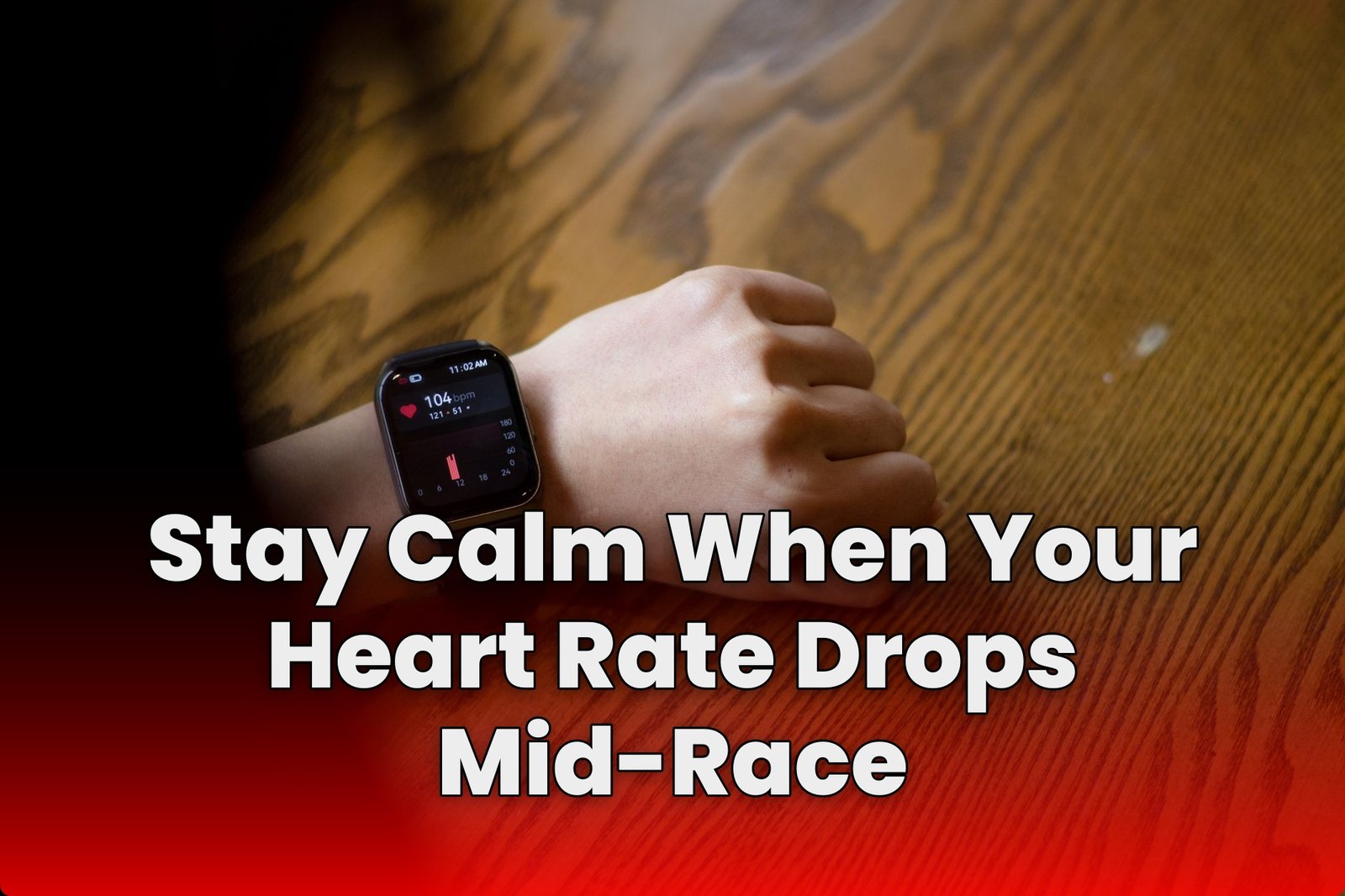
Panicking is the fastest way to make a scary moment worse. If your heart rate suddenly drops mid-race, the best move is to stop pushing hard, take a brief pause, and breathe slowly and deeply to steady your body and your rhythm. Your goal is not to “power through” the feeling, but to prevent adrenaline and tension from turning a manageable dip into an emergency.
Stay in control with simple grounding, like box breathing, and relax your muscles on purpose, such as easing shoulders, unclenching your jaw, and using progressive muscle relaxation. This calm reset can help you regain stable breathing and reduce the symptoms that often spike when you feel alarmed. At the same time, you should respect the possibility that a truly low or unstable heart rate can signal an underlying problem.
Check for danger signs immediately, including shortness of breath, dizziness, chest pain, or fainting, and seek urgent medical help right away if symptoms are severe or persistent. If you are otherwise stable but this keeps happening, or your heart rate is unexpectedly low when you are not exerting, follow up with a clinician to find the cause rather than relying on “home fixes.” For prevention, prioritize sleep, cut back on caffeine and alcohol, and avoid stimulant ingredients like pseudoephedrine that can worsen heart-rate swings.
Heart-Rate Drops Are Not a Moral Test
Here is the stance: stay calm, but do not ignore the signal. A heart rate drop mid-race can be benign, especially during terrain changes or pacing shifts. It can also reflect stress, dehydration, or a medical issue. So the rule is simple: keep your mind steady while you quickly assess whether this is safe or dangerous.
If you have been searching for what to do if your heart rate drops mid-race, stay calm, start with the mindset that panic makes everything worse. Tight breathing and adrenaline spikes can distort symptoms, worsen dizziness, and push you to overcorrect on the next minute. Calm first. Then act.
Stop Pushing and Let Your Body Catch Up
When your heart rate unexpectedly drops, your first instinct might be to “make up the pace.” Resist it. Ask yourself: what is the point of sprinting through a warning sign you do not understand?
Ease off immediately. Slow to a controlled jog or brisk walk for a brief window. Keep moving if you feel stable, but do not force output. Your goal is to reduce strain while you observe breathing, alertness, and comfort.
Scan for Danger Signs in Seconds
Calm does not mean careless. In the middle of a race, you need a fast triage: shortness of breath, chest pain or pressure, dizziness, confusion, and fainting are red flags. If any of these show up, you do not “wait it out.” You get help.
Also pay attention to persistence. If the symptoms are severe or do not settle quickly after you slow down, treat it as urgent. When you feel something is wrong, that gut signal is worth listening to.
Change Your Breathing to Prevent Panic from Running the Show
Low heart rate can be accompanied by nervousness, and nervousness can trigger rapid, shallow breathing. That combination can make your body feel unstable even when the immediate physiology is improving.
Use a steady pattern: inhale through the nose for about 3 to 4 seconds, then exhale slowly for about 5 to 6 seconds. Repeat for several cycles. If you know box breathing, you can use it, but keep it simple: longer exhale than inhale.
Relax Muscles so the Whole System Stops Bracing
Tense shoulders and locked legs create a feedback loop. Your body interprets the effort as threat, and the stress response keeps symptoms loud. That is why relaxation is not “soft.” It is functional recovery.
Try progressive muscle relaxation on the move. Unclench your jaw. Drop your shoulders. Let your hands loosen. Then release tension in your calves and thighs for a few slow breaths. Feel the difference between straining and cooperating.
Separate Performance Anxiety from Real Medical Risk
Many athletes experience palpitations, breath changes, or a sudden sense of doom during intense exertion. It can be panic, it can be heat, it can be under-fueling. Or it can be something more serious. The mistake is assuming every symptom is “just nerves.”
What if it is anxiety? Then you can still treat it with calm breathing and grounding while you monitor danger signs. If you want a reality check, standard medical guidance consistently emphasizes slowing down and focusing on symptoms rather than forcing effort.
Use a Quick Decision List, Not a Guessing Game
In the heat of competition, you need a short script you can follow without thinking. Use this quick reference right away when your heart rate drops mid-race and you want to stay calm while you check safety.
| What You Notice | How Fast To Act | Do This Now |
|---|---|---|
| Stable breathing and alertness | Immediately | Slow to walk, start controlled breathing |
| Dizziness or near-faint feeling | Within 10 seconds | Stop effort, move to safe ground, call for help |
| Chest pain or pressure | Immediately | Stop, alert medical staff, do not resume |
| Severe or persistent breathlessness | Within 1 minute | Get aid, avoid pushing through |
| Symptoms settle but HR stays unusual | Same day | Hydrate, rest, arrange clinician follow-up |
Follow the list. If you are stable, your job is to keep your body calm and gather information. If you are unstable, your job is to get medical support. Either way, you are not alone, and you are not powerless.
Rehydrate and Address Fuel, But Do It Wisely
Heart-rate behavior during a race is strongly influenced by fluid balance and energy availability. Dehydration can reduce blood volume and make your body feel off even when you try to stay composed. Low fuel can amplify shakiness and anxiety-like symptoms.
If you are stable, take small sips of water when possible and consider electrolyte intake if the course and aid stations offer it. Avoid chugging. Then shift your focus from “how fast can I go” to “how can I make my next minutes safer.”
Decide When to Stop Completely and Seek Help
Some athletes treat any interruption as failure. That mindset is dangerous here. If your heart rate drop comes with concerning symptoms, the correct editorial line is clear: stop competing and seek medical help promptly.
After you contact race medical staff, do not argue with the decision. Let clinicians evaluate rhythm issues, blood pressure changes, heat-related stress, or other causes. A fast check can save you from slow consequences.
After the Race, Treat This as a Data Problem, Not a Myth
If it happens again, you need more than a story. You need facts. Your wearable may be inaccurate, but it is still useful as a prompt to investigate. Write down what you felt, when it occurred, what the terrain was like, and what you ate and drank.
Then schedule a clinician follow-up, especially if the drop was unexpected, repeated, or accompanied by dizziness, fainting, or chest discomfort. This is how you turn fear into prevention.
Prevent the Next Episode with Simple, Boring Habits
Prevention beats bravery. Prioritize adequate sleep because poor recovery can raise stress reactivity and impair thermoregulation. Reduce caffeine and alcohol before big efforts, and avoid stimulant products that can destabilize heart-rate patterns.
If you use any medication or supplements, check for ingredients that can raise cardiovascular stimulation. The goal is not maximal performance chemicals. The goal is steady physiology so your race signals are meaningful.
Train Your Pace and Practice Calm Under Strain
Remote bravado does not apply here. Your body needs training for pacing, not just distance. Sudden intensity spikes can create erratic heart-rate patterns and make symptoms harder to interpret mid-race. So practice race starts, not just race totals.
During workouts, learn how you feel in your target effort range. If your heart rate drops while your perceived effort stays high, stop and recalibrate. Consistent pacing and stress management training make “stay calm” a skill, not a hope.
Build a Support Plan So You Do Not Handle This Alone
You can manage a heart-rate drop better when someone else knows what to do. Tell a friend, coach, or teammate that you want prompt help if you show warning signs. Share your typical symptoms and your plan to slow down, breathe, and get assistance if needed.
Because the truth is uncomfortable: there is no reliable home fix for a truly abnormal heartbeat. What you can do at the moment is stay calm, stop pushing when needed, and escalate appropriately. That is not overreaction. That is responsibility.
What to Do If Your Heart Rate Drops Mid-Race, and Stay Calm?
What should you do immediately when your heart rate drops mid-race and panic kicks in?
Slow down to an easy walk or stop briefly, then shift attention to staying calm: relax your shoulders and jaw, take steady breaths, and let your pace reset instead of pushing through.
How can breathing help you stay calm when your heart rate drops mid-race?
Use slow, deep breathing (try inhaling for a few counts and exhaling longer), and consider box breathing or grounding techniques to reduce adrenaline surges that can worsen breathing and symptoms.
Should you stop pushing hard if your heart rate drops during a race?
Yes—ease off intensity immediately. Keep moving gently only if you feel stable, and prioritize recovery time over finishing strong.
When does a low heart rate mid-race mean you should get emergency help?
Get urgent medical help right away if you have shortness of breath, chest pain, dizziness, fainting, confusion, or if symptoms are severe or don’t improve quickly.
What quick checks can you do after you slow down for a sudden low heart rate?
Note when it started, how you feel now, and whether there are other signs (lightheadedness, trouble breathing, pain). If you’re unsure or symptoms linger, don’t try to “self-correct” and seek medical evaluation.
How can you prevent recurring low heart-rate episodes on future runs?
If this keeps happening or your heart rate is unexpectedly low when you’re not exerting, schedule a clinician follow-up. In the meantime, improve sleep, cut back on caffeine/alcohol, and avoid stimulant drugs or ingredients that could affect heart rhythm.
Stay Calm and Act Fast
If you’re searching for what to do if your heart rate drops mid-race, stay calm, but don’t treat it like a mental game. Ease up immediately, steady your breathing, and relax your body, yet keep your safety lens on: any chest pain, dizziness, fainting, or trouble breathing means you need emergency help, not more self-coaching. The best mindset is calm control paired with smart follow-through, because ignoring a possible medical issue can turn a solvable moment into a preventable crisis.

I am Ozan, a London-focused running writer and marathon enthusiast with a passion for helping people discover the city’s best races, running routes, walking trails, and fitness events. I research and write practical, up-to-date guides covering marathons, race preparation, training tips, running gear, and everything related to staying active in London.
My goal is to create reliable, easy-to-follow content that helps runners and walkers of all experience levels explore London with confidence, whether they’re preparing for their first 5K or their next marathon.


6 thoughts on “Stay Calm When Your Heart Rate Drops Mid-Race”