
Race-day fueling is won or lost long before the starting line. The real mistake runners make is treating marathon nutrition like a generic checklist instead of route-specific practice. If you want to hit your targets, you must rehearse your plan in the exact rhythm of your course, not in whatever schedule fits your training calendar.
To practice marathon fueling for your exact route, start early and treat key long runs as trial workouts for race day. Begin taking fast-digesting carbs once you are roughly 30 to 45 minutes in, then keep a steady cadence based on grams per hour, using packaging labels to translate servings into real carb totals. Match your products to what the course provides, and for the love of consistency, do not experiment with anything new on race day.
Then pair your carbs with a hydration and sodium plan you can validate under conditions similar to your route. Measure sweat rate during training so you are not guessing fluid needs, and lean on electrolytes instead of plain water alone, especially for longer efforts. This is also when you should rehearse timing for stomach comfort and practice the last few days of carb-loading strategy so your gut is ready, not surprised.
Stop Treating Long Runs Like Guesswork
The best way to practice marathon fueling for your exact route is to stop treating long runs as generic cardio and start treating them as trial workouts. Your race is a timed physiological stress test with specific start time, course shape, aid spacing, weather exposure, and pacing pressure. Why would you fuel as if it were random?
In practice, you should mimic race-day inputs with brutal honesty. That means timing carbohydrates the way you will on race day, using the same brand strategy you intend to rely on, and rehearsing hydration and sodium in conditions that resemble the course.
Start Carbs Early So “Late” Never Becomes “Too Late”
Many runners wait until hunger shows up, then act surprised when their energy stalls. Fueling late can feel “fine” at mile 6, then turn into a slow-motion crisis once glycogen depletion catches up.
Begin carbohydrate intake once you are roughly 30 to 45 minutes into the run so your body is absorbing energy before it runs low. Then keep it steady. A marathon is not a one-time snack event. It is a continuous intake problem solved by repetition.
Use Carb Math, Not Vibes, Per Hour
If you want remote-like clarity for marathon fueling, you need numbers you can execute. For most runners, that means targeting about 30 to 60 grams of carbs per hour, then adjusting upward for longer or faster efforts and downward early in a build so your stomach adapts.
Don’t “eyeball” grams. Use packaging labels to calculate intake, and rehearse your rhythm: take carbs in the first 30 minutes, then roughly every 30 to 40 minutes. If you cannot state your plan in grams per hour, you do not have a fueling plan. You have hope.
Make Aid Stations Your Weapon, Not Your Surprise
Course-specific fueling beats personal preference. If the race offers gels, sports beans, or drink mixes at defined times, the smartest practice is to reproduce that exact pattern. Your job is to make race day boring for your gut.
Map the aid-station plan and align your intake with it. If you will grab fuel at specific miles, practice those mile marks in training. Avoid the common mistake of testing one product all month, then switching on race day because “it seemed available.”
Practice Hydration With Sweat Rate, Not Stadium Weather
Hydration that works on a cool treadmill often fails on a sunlit course. To know what “enough” looks like, measure your sweat rate during training by running for about an hour and weighing before and after. That gives you an estimate of liters per hour.
If you want guidance you can trust, hydration studies emphasize the same core principle: practice in conditions that resemble the route and control the variables you can control. Most athletes should replace only a portion of losses, rather than trying to erase every drop.
A practical starting point is often around 300 to 600 ml per hour in normal temperatures, with heavier sweaters or hotter conditions requiring more, sometimes around 750 ml per hour. Your measurements decide; your wishful thinking does not.

Sodium Is the Hidden Variable That Controls Comfort
Plain water can leave you feeling worse, not better, especially if you are pushing carbohydrates and sweating heavily. Sodium supports fluid retention and helps you avoid the fatigue that comes from electrolyte mismatch.
Here is a simple way to turn “sodium anxiety” into a plan you can rehearse.
| Training Situation | Carb and Fluid Target | Electrolyte Focus |
|---|---|---|
| Cooler conditions | ~500 ml/hour | Start steady sodium |
| Hot and humid | ~750 ml/hour | Increase sodium per hour |
| Long effort | ~30 to 60 g carbs/hour | Electrolytes with carbs |
| Heavier sweater | Drink to measured need | Dial using sweat data |
| 24-hour prep | Normal intake | Begin electrolytes earlier |
Common guidance suggests roughly 700 to 900 mg sodium per hour in longer training and races, but your sweat rate and tolerances matter. The point is not to copy a number blindly. The point is to practice a consistent sodium strategy so race day feels like continuation, not experimentation.
Don’t Make Your Gut Discover New Products On Race Day
Every fueling decision has a gastrointestinal price tag. The runners who finish confidently are the ones who already paid those costs in training, with the same products, similar timing, and realistic hydration.
If it is not rehearsed, it is a risk. That includes gels, chews, sports beans, electrolyte drink mixes, and caffeine if you plan to use it. Your goal is to keep digestion stable while intensity rises. Innovation on race day is the fastest route to cramping, nausea, and detours to “wait and see.”
Carb Loading Means Changing What Your Stomach Can Handle
In the final days, you are not just topping up glycogen. You are also shaping what your intestines can digest quickly and comfortably. Switch toward higher-carb, lower-fiber, and lower-fat meals to reduce workload right before the race.
During the last 2 to 3 days, avoid foods that are notorious for becoming race-day liabilities. Skip high-fiber choices like leafy greens and cruciferous vegetables (broccoli and cabbage), also avoid beans and other heavy, slow-digesting options. Save protein for after the race, and do not treat greasy comfort foods as “fuel.”
Caffeine Should Have a Test Run and a Cutoff
Caffeine can help, but only if it arrives when your body expects it. If you use caffeine, start low in the early miles, such as 20 to 30 mg, and only build if training proves you tolerate it.
Rehearse the rhythm: consider alternating caffeinated and noncaffeinated gels so you do not spike and crash unpredictably. Also respect the practical side. If caffeine timing triggers stomach issues in training, it will not suddenly become a miracle on race day.
Fuel Like the Course Changes, Not Like a Flat Loop
A marathon course forces pacing shifts. Hills slow you, climbs change breathing, and even slight terrain variations can affect digestion. If you only plan fueling by time, not effort, you risk underfueling when the body is working hardest.
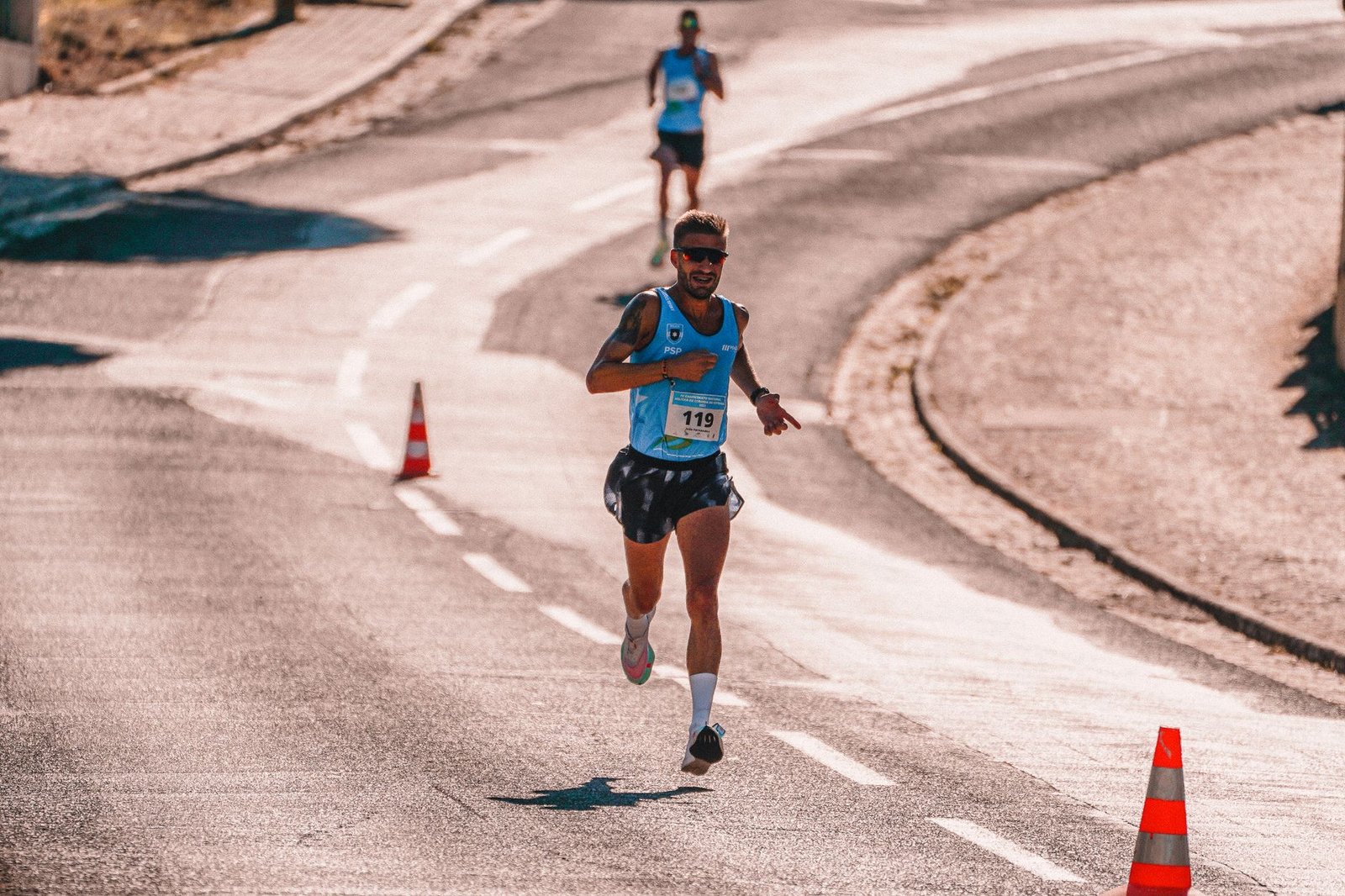
Adjust your intake based on where intensity rises. On tough segments, you may need to keep carb timing tight even if you feel “too busy” to eat. On easier segments, you can recover and maintain your schedule. The best route-specific practice is learning how your gut behaves when effort spikes, not just when cruising.
Body-Mass Loss Limits Keep Your Plan Real
Overdrinking is not hydration. It is dilution and discomfort. Many athletes do better by aiming to replace only a portion of sweat losses, often keeping body-mass loss within about 2 to 4%. That target is a boundary that prevents the extremes of dehydration and overdrinking.
During long-run practice, weigh yourself before and after and compare it to how much you drank. If you repeatedly overshoot, your “more is better” instinct is costing you. Your fueling plan should be repeatable, measurable, and adjustable based on outcomes, not nerves.
Turn Your Rehearsal Into a Checklist You Can Execute
The best way to practice marathon fueling for your exact route is to make execution automatic. Build a checklist that matches your race: first carb timing, grams per hour, the cadence of every 30 to 40 minutes, the aid-station pickup moments, and your hydration and sodium rhythm.
Then practice that checklist in conditions that mirror your route as closely as possible. If you cannot complete your routine without thinking, race day will magnify every distraction. When your plan is consistent, your performance stops being a negotiation with your gut and becomes what it should be: work you already trained.
What Is the Best Way to Practice Marathon Fueling for Your Exact Route?
How should you time carbohydrate fueling when practicing marathon fueling for your exact route?
Start fueling after you’ve been running long enough to anticipate glycogen use, typically around 30–45 minutes in, then take fast-digesting carbohydrates about every 30–40 minutes, using your long runs as trial sessions for the exact timing you’ll aim for on race day.
What carbohydrate amount per hour should you target when practicing marathon fueling for your exact route?
Most runners do best around 30–60 g of carbs per hour, with higher targets possible for longer or faster efforts, and you should confirm how many grams you’re getting by checking packaging labels and practicing the same products and intervals you plan to use.
How do you practice hydration and sodium for marathon fueling on your exact route?
Measure your sweat rate during training, estimate how much fluid you lose per hour, and plan to replace a portion of it (often roughly 300–600 ml per hour in moderate conditions), while using electrolytes/sodium rather than water alone—then practice with the same sodium sources you’ll take on race day.
How can you match your marathon fueling practice to your race course and aid stations?
Study the race’s aid-station plan and rehearse fueling in workouts that mirror where and when you’ll have access to food, gels, drinks, and electrolytes, so your stomach learns the route-specific schedule rather than guessing on race day.
What should you eat in the days before race day to support marathon fueling for your exact route?
In the final few days, shift toward higher-carb, lower-fiber and lower-fat meals to top up glycogen, and avoid common stomach troublemakers like very high-fiber foods or heavy, hard-to-digest meals, then keep protein lighter until after the race.
Should you practice caffeine and gel combinations when preparing marathon fueling for your exact route?
If you plan to use caffeine, start low during early training, practice with your planned caffeinated and noncaffeinated gels, and pay attention to how your stomach responds so the timing and combinations match what you’ll use during the marathon.
The Best Way Is Practicing It Exactly Like Race Day
The best way to practice marathon fueling for your exact route is to turn your long runs into trial workouts and rehearse both the carbs and the timing you will use on race day, then dial hydration and sodium to your own sweat rate and conditions rather than generic targets. If you want race day to feel controlled instead of chaotic, practice your plan precisely, and commit to nothing new when it matters.

I am Ozan, a London-focused running writer and marathon enthusiast with a passion for helping people discover the city’s best races, running routes, walking trails, and fitness events. I research and write practical, up-to-date guides covering marathons, race preparation, training tips, running gear, and everything related to staying active in London.
My goal is to create reliable, easy-to-follow content that helps runners and walkers of all experience levels explore London with confidence, whether they’re preparing for their first 5K or their next marathon.