London Marathon travel works best when you pack the routine that gets you to the starting line, not just enough clothes for a few days in the city. Put your shoes, race outfit, socks, practiced fuel, medication, identification, and race documents in your carry-on, because a delayed checked bag should not decide whether you can race.
After you land, protect your sleep, familiar meals, bib collection, transport plan, and race-morning breakfast before making room for sightseeing. Arriving 3 to 5 days before the marathon gives you time to settle after a time-zone change and fix small problems while there is still time.
Key takeaways
- The event-approved finish bag is the safe choice for the race; many standard rolling carry-ons are too large, so check your bag against 50 × 30 × 20 centimeters or leave larger luggage at your hotel.
- When you cross time zones, keep arrival day quiet, eat at your normal times, and skip sightseeing that could cut into sleep.
- If you plan to use course fuel, test Lucozade Sport before race day; otherwise carry the gels or drink mix you already know works for you.
- Before packing electrical gear, check its voltage rating. A U.S. device without dual-voltage support needs a step-down converter as well as a Type G adapter.
Pack the Marathon Into Your Carry-On
A backup outfit and familiar food protect your routine if checked luggage is delayed or your main clothes become wet. Do not test new shoes in London because your checked bag arrived late. Do not depend on a hotel breakfast that starts after you leave for the start area. Familiar items are small, but they protect the routine you built through months of training. Keep your race kit accessible by rolling the backup outfit into the same packing cube as the main outfit and putting food in a separate bag.
Airport security treats gels as liquids, so put compliant containers in the clear liquids bag. Each container must hold no more than 3.4 fluid ounces, and all carry-on gels must fit in one clear 1-quart bag under standard TSA rules. A large pouch of gel may be legal to buy after security, but the same pouch can cause a problem before your flight.
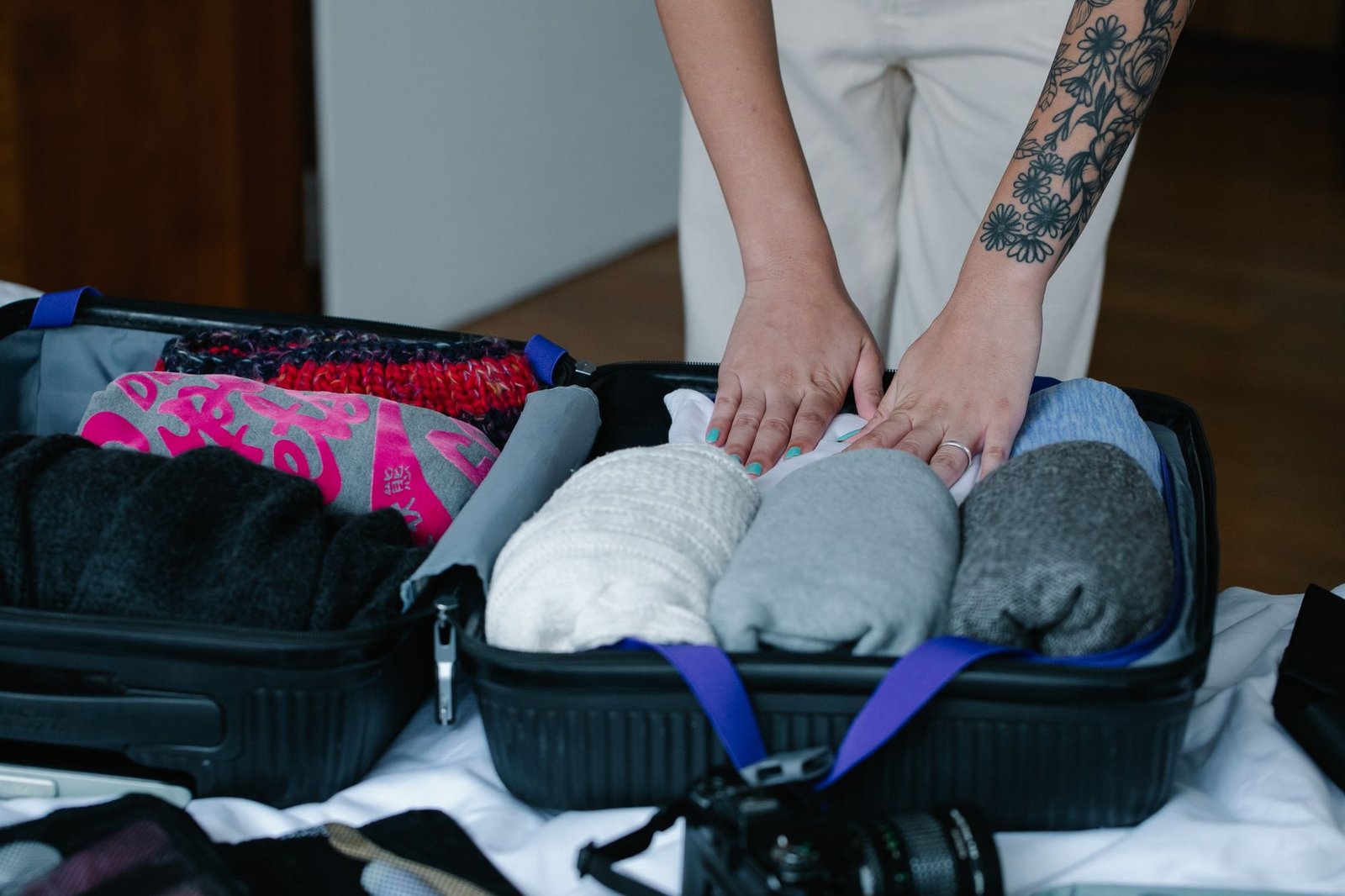
A person packing clothes neatly into luggage indoors.
The personal items you need during the journey should stay within reach, while sightseeing clothes, nonessential toiletries, and other items can go in checked luggage. Keep your passport, phone, wallet, medication, and one snack in a personal item you can reach without unpacking your shoes.
| Item or Situation | Rule or Limit | What You Do |
|---|---|---|
| Carry-on gels | 3.4 fluid ounces per container; one clear 1-quart bag | Pack compliant containers in the liquids bag |
| Finish-bag drop | 50 × 30 × 20 centimeters | Use the approved event bag or leave larger luggage at the hotel |
| UK outlets | 230 volts; 50 hertz; Type G | Check voltage support and pack an adapter or converter |
| Lithium batteries | Cabin baggage only | Keep power banks, spare batteries, and battery massage devices out of checked luggage |
Arrive Early Enough to Settle Your Body Clock
The early arrival window gives you time to sleep at local hours, find the start transport, collect your bib, replace a missing item, and eat several normal meals before the marathon. Treat the first day as a recovery day. Drink at regular intervals, eat familiar food at your usual meal times, and take a short walk or an easy shakeout only if that movement already belongs in your training routine. Protect your sleep instead of filling the afternoon with museums, shopping, and long restaurant visits. A short walk can help you loosen up after a flight, but it should not become a full day on your feet.
Buy breakfast and race snacks before race morning if your hotel room is near a busy station, so you do not spend the next day searching for a store that carries your preferred food. Eat the meal you have used before long runs, set two alarms, charge your phone, and lay out race clothing before sleep. Check the route to bib collection and the start area before bed. Confirm whether breakfast opens early enough, whether you can store luggage after checkout, and whether the room has the outlets your devices need. Solve any mismatch before Saturday night.
Make Bib Collection a Short ExCeL Visit
Bring your government-issued photo ID and the digital QR code on your phone when you collect your bib at the ExCeL London Running Show. Bib collection closes at 5:30 p.m. on the Saturday before race day, so do not leave this job until the last possible hour.
Open the QR code before you enter the building, and keep your identification in the same small pouch. A dead phone or a buried passport can turn a simple collection into a stressful search through your luggage.
The expo should answer race-day questions, not become a sightseeing stop. Check these points before you leave:
- Your race number
- Your start wave or color
- The baggage procedure
- Restroom locations
- The route back to your hotel
The London Marathon race guide can help you understand the city’s start and finish layout before you arrive, but the information at the expo controls your own race-day instructions. Read the signs, confirm anything that affects your wave or bag, and leave once those checks are complete.
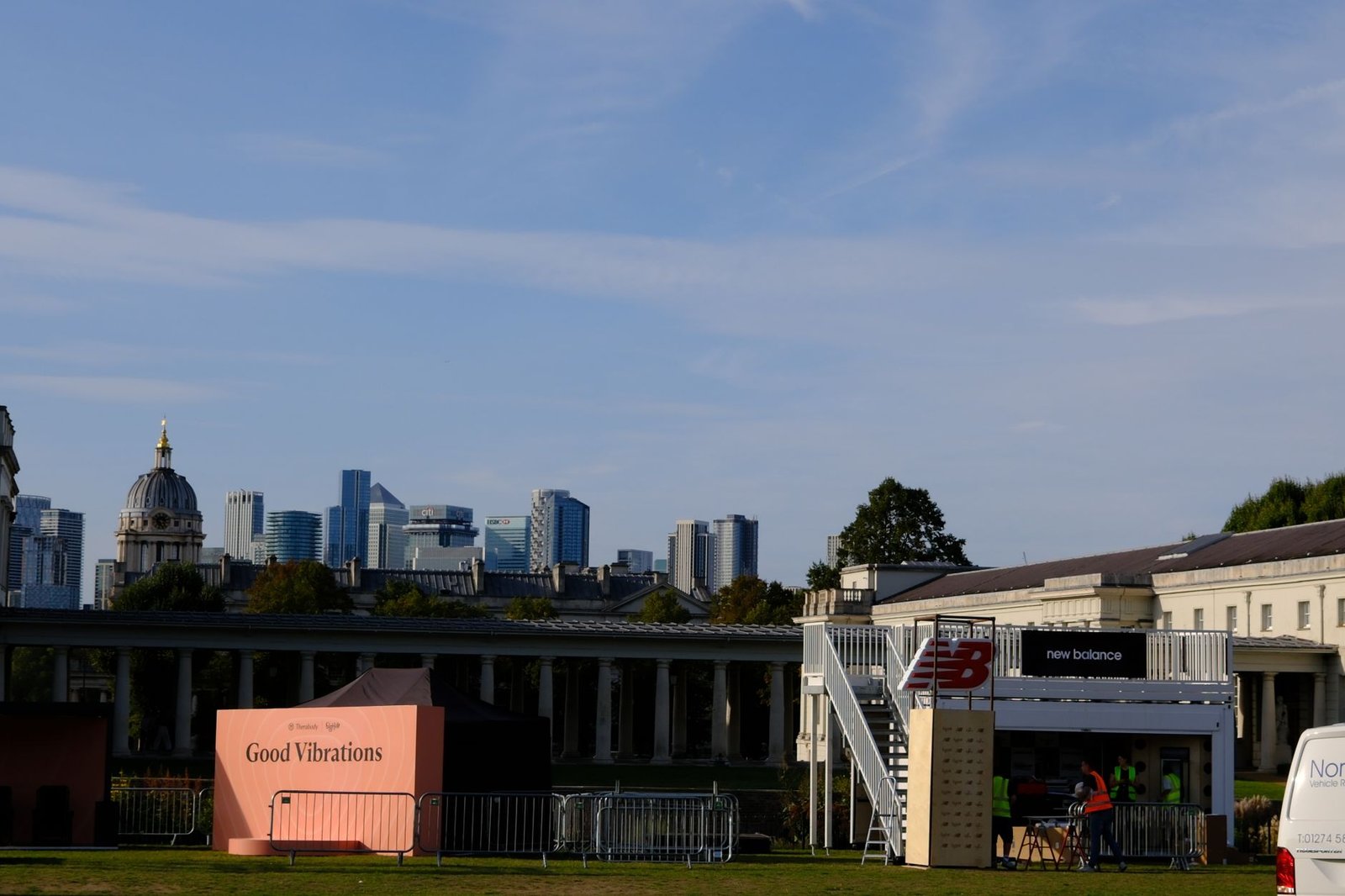
London skyline visible from an event at Greenwich Park.
Long periods of standing and walking can leave your legs tired before the race has started. Wear comfortable shoes, avoid carrying a heavy shopping bag, and resist the urge to turn every booth into another stop. You need the expo to remove uncertainty, not add a new activity to race week.
Keep Breakfast and Fuel Familiar
Eat your first familiar breakfast soon after waking, with about 50 to 100 grams of carbohydrates. Pack a second breakfast with the same carbohydrate range and eat it about 2 hours before the start, using foods you have already tested before long training runs. This two-part plan helps when transport begins early and the start area has limited food choices. It also protects you if hotel breakfast service opens too late or the available food does not match what your stomach handles well.
Bring your own pre-race drink and snack to the start. Pack them in a small bag that you can carry through transport and eat without preparation. A banana, bagel, rice cakes, drink mix, or another familiar choice can work if it already belongs to your routine. The organizers provide Lucozade Sport gels at miles 14 and 19, but that supply does not replace your personal fueling plan. Carry the gels or drink mix you practiced with, and use the course product only if you have tested it before or know you can tolerate it.
Write your fuel plan on a small card or in your phone:
- Note what you take before the start.
- Note when you take each gel or drink during the race.
- Carry enough of your practiced fuel to follow that plan.
- Keep one backup serving in case a gel is dropped or a crowded aid station slows you down.
Build Extra Time Into Start Transport
Confirm your start area and transport route before race morning. London Marathon runners leave from different start areas, and a missed train, crowded platform, or wrong turn can take away the time you planned for a warm-up, restroom stop, and calm walk to the corral.
Colorful lunchboxes filled with sandwiches, fruits, and vegetables.
Leave earlier than the suggested arrival time when you can. A transport buffer gives you room to wait for the next train, walk from the station, find the correct entrance, and handle a long restroom line without rushing. Plan the route from your hotel and save it offline. Mark the station, the direction of travel, the walking section after you leave the train, and the location where you need to join your wave. Check the route at the expo and follow the event signs on race morning.
Your clothing needs to work during the wait, not just during the race. Wear tested layers and add a light waterproof layer if rain is possible. Avoid a new jacket, tight base layer, or pair of socks that could rub after several miles. Remove or discard extra layers only through the event’s approved arrangements. Do not leave clothing, bags, or packaging beside a station, fence, or start-area sign. Unofficial piles can disappear, create a hazard, or leave you without the layer you expected to find later.
Choose the Right Bag for the Finish
Many standard rolling carry-ons are too large for the official finish-bag drop, so check the dimensions before you travel to the start. Use the event-approved bag or leave larger luggage at your hotel.
The finish bag needs only what you want after the race, such as dry clothes, a recovery snack, medication, and a phone charger. It does not need your full suitcase, extra shoes, or sightseeing gear. Keep the carry-on, finish bag, and hotel luggage separate so you do not take essential start-day items to the finish.
Confirm the baggage process at the expo, including where you drop the approved bag and where you collect it after finishing. Put the bag in the same place as your race documents the night before. If you check out before the race, ask the hotel how it handles luggage storage and when you can collect your suitcase. A hotel storage room is a better place for a large roller bag than an unofficial drop point near the start.
Check UK Power Before Packing Devices
Check the label on every charger, massage device, and other electrical item before you pack it. A plug adapter changes the shape of the plug so it fits the outlet, but it does not change the voltage. If a U.S. device is not rated for dual voltage, you need a step-down converter as well as the correct plug adapter.
Look for an input range printed on the charger, such as 100-240 volts. A charger with that range can handle the UK supply with the correct adapter. A device marked only for 120 volts needs a converter, and some high-power devices are better left at home.
Keep power banks, spare lithium batteries, and lithium-battery massage devices in your cabin baggage. Do not put them in checked luggage. Tape or cover loose battery contacts, and keep the devices easy to remove if airport staff asks to inspect them.
Pack only the devices that support your race plan. A phone, watch charger, and power bank may be enough. Test the charging setup at home, put the adapter in your carry-on, and check your watch battery the night before the marathon so the first problem does not appear at the start.
Make the Final Check Count
Race-Week Travel for London Marathons becomes easier when your last check removes a problem instead of adding another item to your bag. Save a screenshot of your digital QR code on your phone before heading to the ExCeL London Running Show.
Frequently Asked Questions
When does hotel breakfast need a backup plan?
Many central London hotel breakfast services do not open until about 6:30 or 7:00 a.m., so an early start can leave you without a meal. Keep shelf-stable food in your room for race morning, especially if you need a specific breakfast you have already tested.
Where should I keep prescription medication during the flight?
Keep prescription medication in its original containers and carry enough for the entire trip in your hand luggage. Bring a copy of the prescription or the medication details so the information stays with you if questions arise during travel.
Why reserve a pre-race dinner before I arrive?
Reserve your pre-race dinner in advance and choose food you have already tolerated in training. That protects you from a restaurant with unknown hours or limited menu options when you need a familiar meal.

I am Ozan, a London-focused running writer and marathon enthusiast with a passion for helping people discover the city’s best races, running routes, walking trails, and fitness events. I research and write practical, up-to-date guides covering marathons, race preparation, training tips, running gear, and everything related to staying active in London.
My goal is to create reliable, easy-to-follow content that helps runners and walkers of all experience levels explore London with confidence, whether they’re preparing for their first 5K or their next marathon.