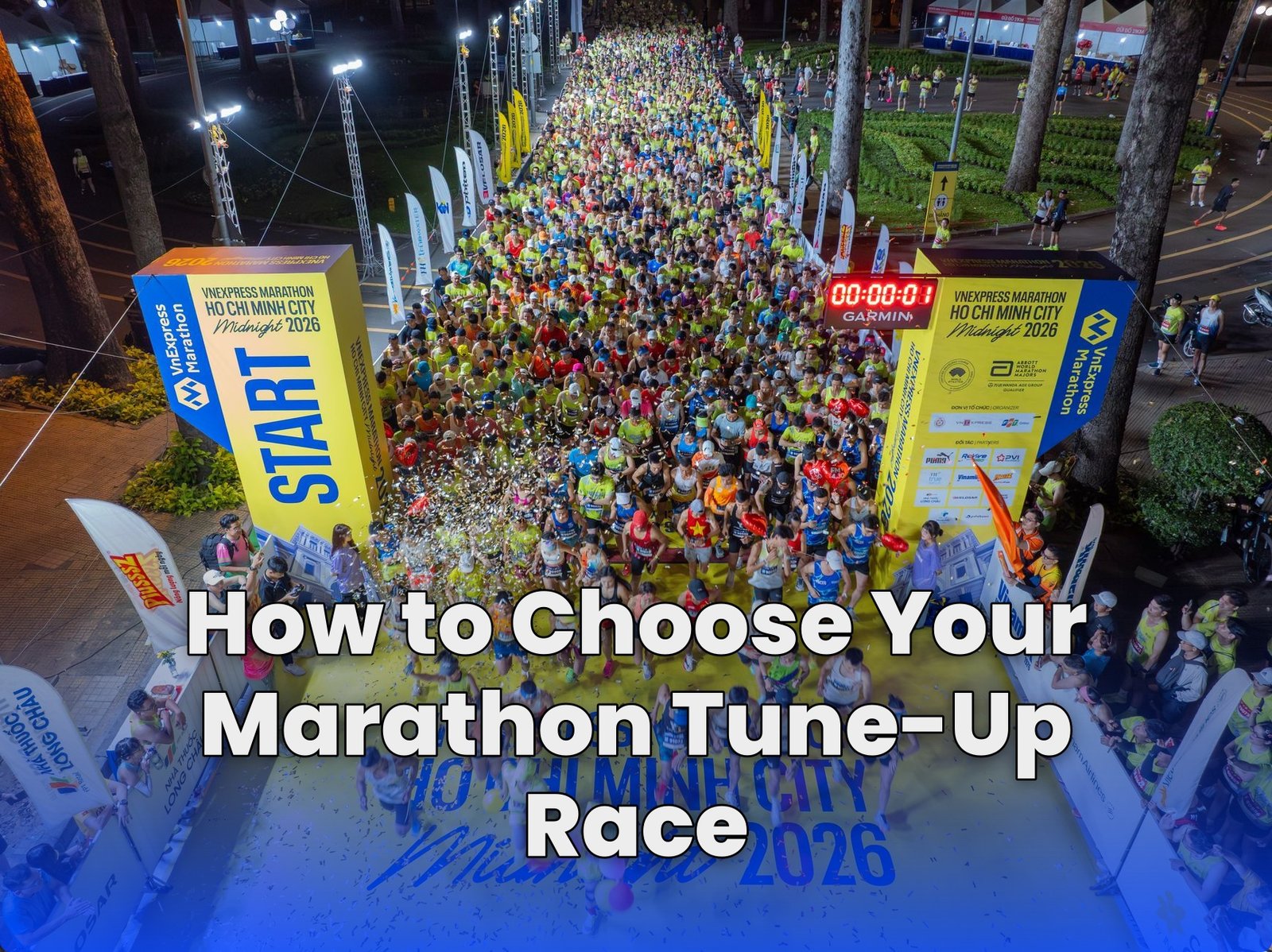
A marathon tune-up race should answer one clear training question. A half marathon is best suited to a close check on marathon fitness when you have enough marathon-specific training behind you. A shorter local race is the better fit for practicing pacing, fueling, travel, or race-day routines with less fatigue.
The right distance depends on what you need to learn, not on which event happens to fit your calendar. Decide the race’s purpose and recovery window before you register. If you cannot name both, leave the event out.
Key takeaways
- A half marathon suits runners who want a close fitness check only if marathon-specific work and recovery capacity are already in place.
- When the race is mainly a rehearsal for travel, breakfast, warm-up, clothing, or fueling, use a local club event at a controlled effort.
- If sustained pacing is the question but a half marathon would disrupt training, choose the middle-distance race rather than the shortest event.
- Before paying, check that the course and surface resemble the marathon and that the event can replace a planned workout without crowding the next hard session.
Define the Question Before You Enter
Start with one purpose. A race can test marathon fitness, or it can give you a place to practice the details that often go wrong on race day. Trying to make one event answer every question usually turns it into a tiring experiment with muddy results.
A half marathon suits a performance check, while a local club race can test:
- Breakfast and travel timing
- Warm-up and starting-line routines
- Race clothing and shoes
- Pacing under pressure
- Fueling during competition
Those goals need different levels of effort. If you want to know whether your marathon pace feels realistic, you need enough distance to expose poor pacing and weak endurance. If you want to learn whether your breakfast sits well after a 5:30 a.m. wake-up, a shorter race can answer that without taking several days from your training.
Write the purpose in plain language before race week. “Test marathon fitness” points toward a half marathon. “Practice fueling while running hard” may point toward a 10K, 15K, or controlled club race.
The event must fit around the next long run, your hardest workouts, and the taper. A race with no clear purpose is not justified by its entry fee or atmosphere.
Match the Distance to the Job
The distance should be the shortest one that gives you a trustworthy answer.
| Race option | Distance | Primary use |
|---|---|---|
| Half marathon | 13.1 miles | Marathon fitness check |
| 10K to 15K race | 6.2 to 9.3 miles | Sustained pacing practice |
| 5K race | 3.1 miles | Logistics and race-day practice |
The half marathon is best suited to a close marathon-fitness check; the shorter races provide practical rehearsal with less fatigue.
Half Marathon
A half marathon fits when you have enough marathon-specific training to recover without disrupting the final long-run block or taper. It can show whether your pace holds under sustained effort, whether your fueling plan works at race intensity, and whether your current fitness supports a sensible marathon target.
The race can also rehearse the days before the marathon, including meals, hydration, shoes, clothing, and on-course fuel, when the race schedule and your recovery allow. Keep those choices familiar rather than using the event to test several new variables at once.
A strong half marathon still does not prove that you are ready to run a strong marathon. The races demand different physiological skills, and a personal best over the shorter distance cannot guarantee that your endurance will last through the marathon.
10K to 15K Race
This middle distance works when a half marathon would cost too much recovery but a 5K would end before you could practice sustained pacing. It gives you enough time to settle into an effort, control the first miles, and test fueling without carrying the full strain of the longer race.
You can run hard enough to learn about pace control, or hold a planned effort while testing your warm-up, clothing, and breakfast. Keep the effort controlled if the race is meant to fit into a busy training week; a hard 15K can require more recovery than its distance suggests.
5K Race
A 5K is enough when the setting itself is the experiment. It lets you practice parking, bib pickup, travel, warm-up, starting position, and race clothing with limited physical cost.
It gives too little sustained pacing practice for many marathon questions. If you need to learn whether you can hold a controlled effort for more than a few miles, move up to the 10K to 15K range.
Place the Race in the Marathon Build
A half-marathon tune-up often falls about 6 to 8 weeks before the marathon when your training plan and recovery window support it. That spacing can leave room to absorb the race, complete another useful block, and start the taper without forcing hard sessions together.
Race effort changes the recovery cost. A half marathon can create more fatigue and may require more recovery than a shorter race, especially when you run it hard, so keep it away from another demanding workout and protect the long run that follows it. Your legs may feel fine the next morning while your ability to handle the next hard session is still reduced.
A shorter race can fit earlier in the build or closer to the marathon when you keep the effort controlled. A 5K used to rehearse travel and warm-up may need little adjustment, while a fast 15K places a bigger load on your legs.
Treat the event as a replacement for a planned workout, not an extra effort added to the training week. A planned workout can become the race, but the rest of the week must change around it.
Use a simple calendar check before entering:
- Mark the next long run after the race.
- Mark the next quality workout.
- Mark the start of your taper.
- Leave enough time for normal training to resume.
If the race forces you to shorten the final long-run block or compress your taper, choose a shorter distance or skip the event.
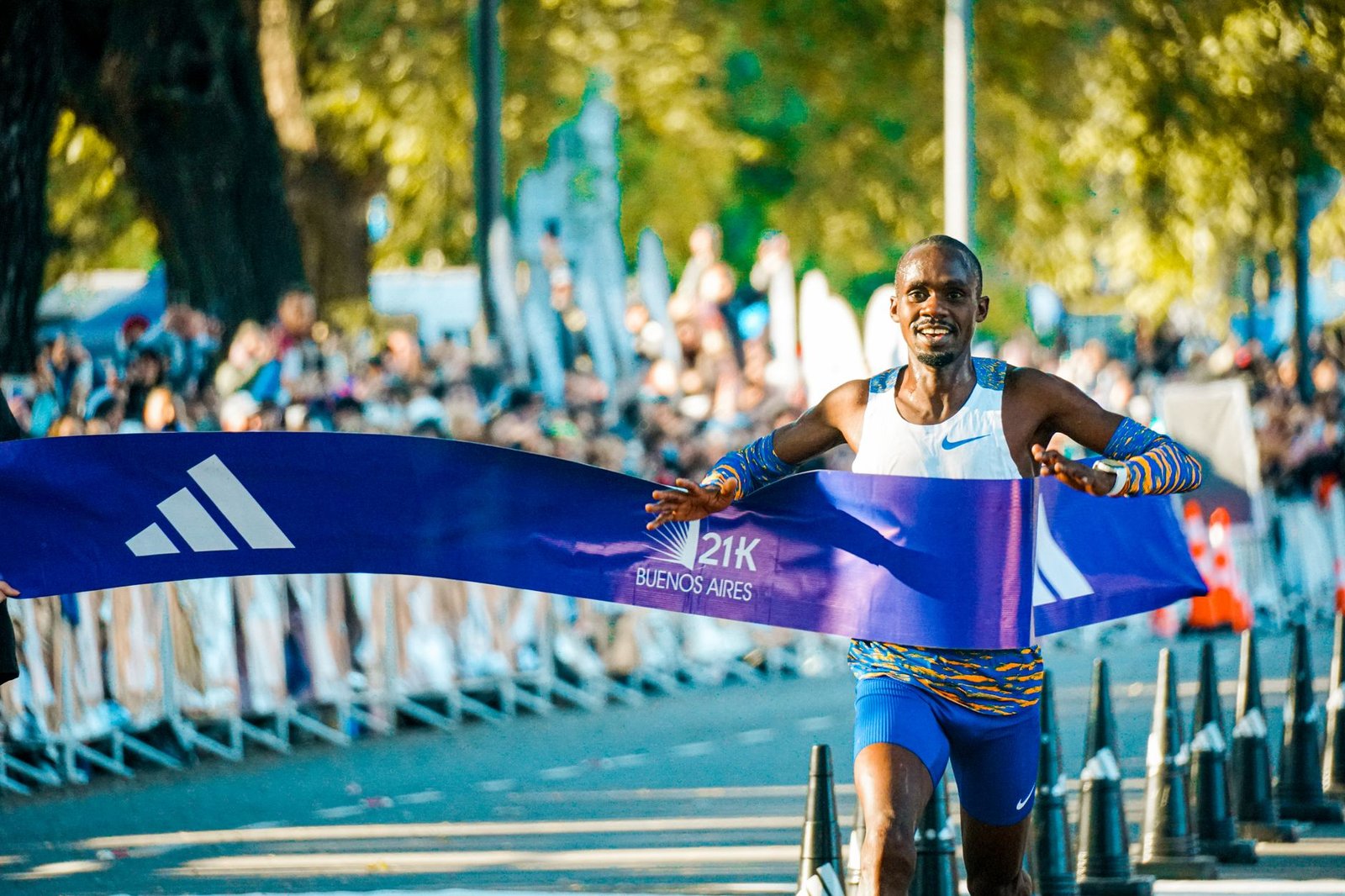
Male runner finishing the Buenos Aires marathon during an energetic event.
Set the Effort Before Race Morning
Decide whether you are racing all out or practicing at a controlled effort before you arrive at the start. The two plans need different training around them, and deciding halfway through the race usually gives you the fatigue of a hard effort without a useful test.
For an all-out half marathon, reduce the load beforehand and allow one or two rest days before the race if your normal schedule leaves you tired. Do not place a hard interval session immediately before it. Afterward, let the race replace your next quality workout rather than adding another hard session to the week.
A controlled local race has a different job. Hold the planned effort even when other runners surge, and use the event to rehearse your breakfast, departure time, drive to the venue, warm-up, race clothing, shoes, starting-line routines, and fueling. That control lets you return to the marathon plan without losing the next key workout.
If the question is whether a new breakfast causes trouble, pace steadily and keep the other variables familiar. If the question is race-day positioning, practice starting where you expect to stand and avoid turning the event into a fitness test.
Use the Half Marathon for Marathon Pacing
A half marathon can guide marathon pacing only when the course and surface resemble the marathon course. A hilly tune-up gives a weaker pacing signal for a flat marathon because climbing changes the effort and downhill running adds extra muscle damage. Match the terrain as closely as your race calendar allows.

Happy runners at a 5K start line with colorful inflatable toys.
The same rule applies to the surface. A road half marathon tells you more about a road marathon than a muddy trail race does. If you use a different course, treat the result as a general fitness clue and avoid turning its pace into a fixed marathon target.
Do not combine the race with several new choices. New shoes, unfamiliar food, a new pace target, and a next-day long run can each change how you feel, leaving you unsure what caused the result. Test one known variable at a time and keep the rest familiar.
A half-marathon result has a narrow meaning. It tells you how you handled that distance on that day, under that course and effort. Use it to adjust expectations and training, not to promise yourself a finish time.

Hoka running shoes and a Garmin watch on a sunny outdoor track.
Keep New Variables Out of the Same Race
A tune-up race should clarify your training, not scatter the evidence. If you want to test fueling, wear familiar shoes and run a familiar pace. If you want to assess new shoes, keep the breakfast and fuel unchanged. A race is a poor place to test an entire marathon plan at once.
Check the recovery window against the next long run and the taper before you enter. Put the race on the calendar, then count the days until the next demanding session. If the race leaves no room to absorb the effort, it does not belong in that part of the build.
A convenient local race is still the wrong choice if it answers nothing you need to know. Skip an event when you cannot name its purpose or the recovery window it requires.
Turn the Result Into Useful Data
A tune-up race becomes more useful when you judge it by what it teaches after the finish, not just by the clock. After the race, record your pace, fueling, and how your legs feel the next morning in the same training log as your 13.1-mile result.
Frequently Asked Questions
What if I want race experience but am not ready to run the full distance hard?
A shorter race can be run as an easy event or a progression workout when you want race experience without a maximum-effort attempt. You can begin at a controlled pace and increase the effort gradually while practicing how you respond to competition.
Why should I change my plan if a controlled race becomes competitive?
An unexpectedly hard race should be treated as a demanding workout rather than as an extra effort added to the week. Allow more recovery before the next quality session because the competitive setting may have raised the effort beyond your plan.

I am Ozan, a London-focused running writer and marathon enthusiast with a passion for helping people discover the city’s best races, running routes, walking trails, and fitness events. I research and write practical, up-to-date guides covering marathons, race preparation, training tips, running gear, and everything related to staying active in London.
My goal is to create reliable, easy-to-follow content that helps runners and walkers of all experience levels explore London with confidence, whether they’re preparing for their first 5K or their next marathon.