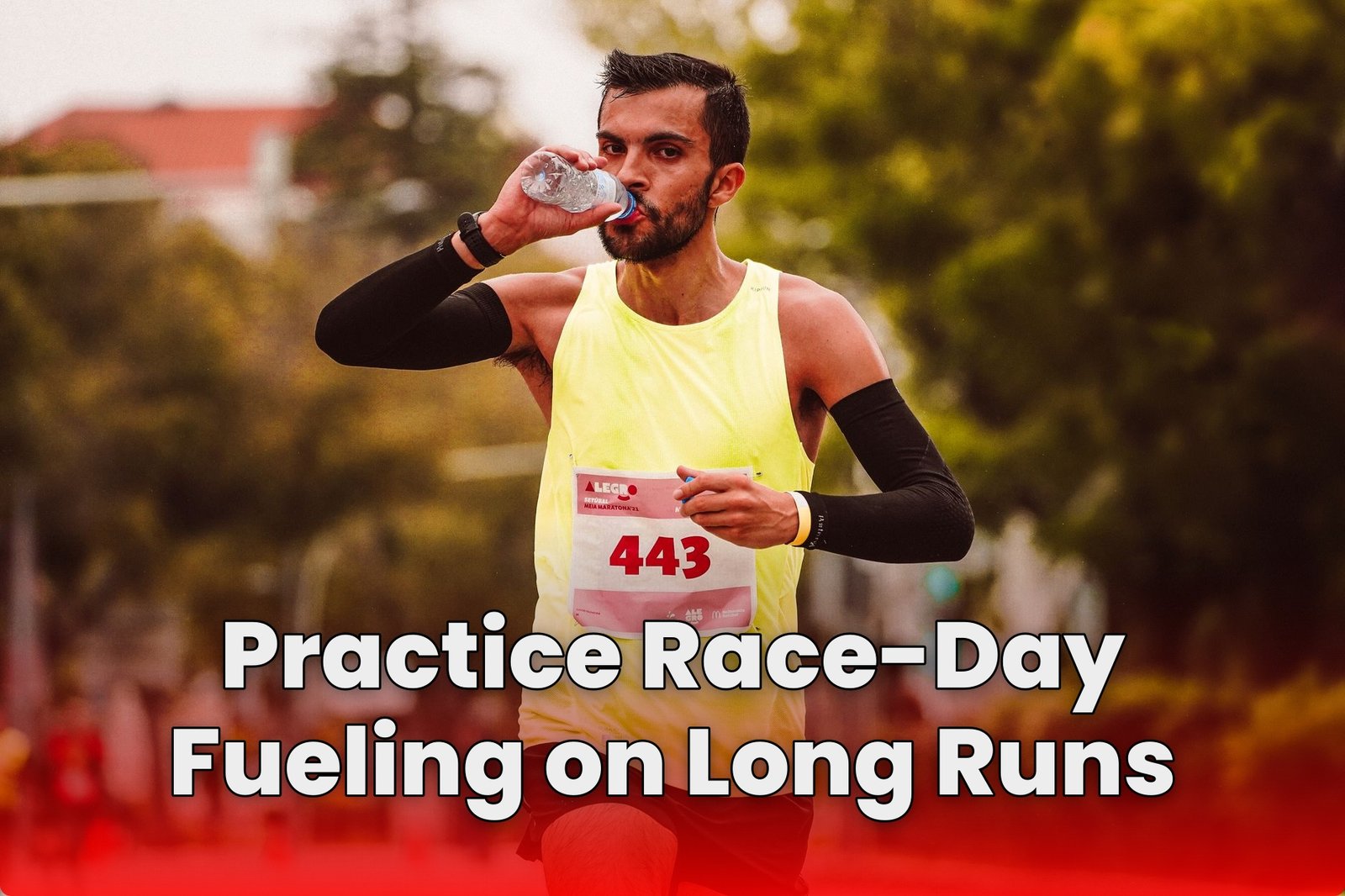
Your gut will not magically cooperate on race day, and “I’ll try it during the race” is a recipe for avoidable GI chaos. If you want better long-run results and smoother racing, you have to treat fueling like training, not like an emergency plan. That means running your long runs with the same timing, carbs, and drink setup you expect to use when the pressure rises.
The simplest rule is rehearsal before depletion. Start fueling well before glycogen starts to feel low, commonly around 30 to 45 minutes into the long run, then keep intake steady with small, frequent hits rather than long gaps. A practical baseline is about 30 to 60 grams of carbohydrates per hour, but the real win is gradual tolerance-building as you rack up long-run miles.
Choose fast, easy-to-digest options, and test what you will actually carry or take on race day, including how gels or chews pair with water and whether your plan includes electrolytes for sodium. If you keep everything familiar, you reduce the variables that cause nausea, cramps, or stalls, and you walk into race day knowing your system can handle the workload.
Start Fueling Around Mile 30 to Prevent Late-Run Surprises
If you want how to practice race-day fueling on your long runs to actually pay off, start early. Most runners wait until their legs feel heavy, then scramble for carbs. That is the wrong order. Your gut cannot time-travel, and your glycogen reserves do not care about your intentions.
On long runs, begin fueling about 30 to 45 minutes in, well before glycogen runs low. The goal is simple: make steady intake feel normal while digestion is still calm. Isn’t it smarter to train the routine instead of testing it under stress?
Make that first planned dose nonnegotiable. If you skip the early start, you are not practicing race-day fueling. You are gambling on late execution.
Turn Every Long Run Into a Repeatable Fuel Protocol
Practice fails when it is random. If your long run fueling changes from week to week, you cannot tell what worked and what wrecked your stomach. You need a protocol you can repeat with minor tweaks, not a vibe check.
Create a standard playbook: same starting time, same carb type, same approximate grams per hour, and similar interval timing. Then test one variable at a time. Consistency lets you measure outcomes like energy stability and GI comfort.
Remote work productivity readers would recognize the pattern: repeatable process beats improvisation. Your long run is no different. Better practice produces better performance.
Chase 30 to 60 Grams of Carbs Per Hour With Intention
Race-day fueling is not about maximum carbs. It is about reliable carbs. A strong baseline for many runners is roughly 30 to 60 g of carbohydrates per hour. That range keeps energy available without demanding your gut perform miracles.

Training is where you earn the right to go higher. Some runners handle 80 to 90 g/h or more, but only after deliberate build-up. If you jump to high numbers early, you are effectively betting on perfect digestion under fatigue.
Ask yourself a hard question: do you want a plan that sounds impressive, or one that you can execute when your pace slips and your stomach tightens?
Use Small, Frequent Doses to Avoid the Big-Gap Crash
Big gaps between fuel doses create a predictable pattern: energy dips, then you try to catch up. That catch-up often arrives too late and hits your gut with a larger load than it can handle comfortably.
Instead, keep intake steady with small, frequent doses, commonly about every 15 to 20 minutes. Think of fueling as sipping your way through the run, not bombing your way back to performance.
If you notice a mid-run slump after a long stretch without intake, that is feedback. Adjust timing before you change your carb brand.
Increase Your Intake Gradually Until Your Gut Agrees
Tolerance is earned through repetition, not optimism. If you want higher carb rates, increase them slowly over successive long runs, such as adding 5 to 10 g/h while keeping the rest of your plan steady.
Build tolerance by testing specific options at race-relevant times. For example, rehearse the same gel, chew, or drink format under similar conditions. Your gut adapts to patterns, not marketing claims.
The opposing view is that you should “just go with what the race provides.” You can do that on race week. During training, you still need rehearsal. Otherwise, race day becomes the first day your digestion sees the load.
Pair Gels and Chews With Water and Sodium Every Time
Fuel without fluid is how you manufacture GI trouble. Many runners treat gels or chews as standalone products, then wonder why their stomach feels sloshy or revolts later. The fix is boring and effective: pair solids with water or use a sports drink that gives carbs plus hydration.
Also, do not fuel in a vacuum. Electrolytes and sodium matter because sweat losses vary by person and conditions. Following fuel and hydration guidance can help you pick a starting sodium approach, then adjust based on how you feel and what you observe.
| Practice Target | Common Intake Rate | Purpose |
|---|---|---|
| Carbohydrates | 30–60 g/h | Stable energy |
| High-End Tolerance | 80–90 g/h+ | Long-event output |
| Fuel Interval | Every 15–20 min | Avoid big gaps |
| Sodium | 300–600 mg/h | Match sweat losses |
| Water With Fuel | Small sips each dose | Reduce GI upset |
Make it concrete. If your plan says “gel at X miles,” your execution should include the gel and the water at that moment, not afterward. Repeat the pairing until your body treats it like a habit.
Race-day fueling is won by consistency, not by heroics.
Rehearse Hydration With a Sipping Rhythm, Not One Big Chug
Hydration is training, not just weather management. Carry water on your long runs so you can practice the same rhythm you will need on race day. A fuel belt, handheld, or hydration pack helps you control the timing.

Instead of one big drink, sip regularly. A practical guideline is a few long sips about every 15 minutes. That rhythm reduces spikes in stomach pressure and helps you pair fluid delivery with carb dosing.
If you want a more personalized target, estimate sweat rate by weighing yourself before and after an hour-long run without food or water. Then use that information to adjust what you sip. Why guess when you can measure?
Choose Fast-Digesting Carbs You Already Trust
The carbs you pick should be easy to digest and fast-absorbing. Gels, sports chews (like common brands), gummy candies or fruit drops, and sport beans are popular because they deliver carbohydrates in forms many runners tolerate well during hard effort.
Carbohydrate delivery matters, but so does texture and timing. If you know you struggle with heavy, thick, or high-fat options mid-run, do not try to “fix it” on the next long run. Fix it in training by selecting what your gut already handles.
Some runners insist that “real food” is better. Real food can work, but only if you rehearse it the same way you would rehearse gels and drinks. No rehearsal, no confidence.
Control Your Pre-Run Meal So Training Starts in a Good Place
Your pre-run meal sets the stage for digestion. If you show up with a heavy, fiber-rich meal still working through your system, your mid-run fueling plan inherits the problem. That is avoidable.
For many runners, the pre-run meal should be mainly carbohydrate, roughly 75%, and you should steer clear of common GI offenders for about 12 hours before. High-fiber or cruciferous vegetables, beans, and heavy meats or dairy often cause trouble.
Think of this as debt management. You pay for mistakes before you start, not halfway through your long run.
Practice the Exact Timing and Distribution You Will Use on Race Day
Race-day fueling is not just about grams per hour. It is about when those grams hit. Practice timing by using the same intervals, such as fueling at similar distance markers or at the same “minutes into the run” windows you plan for race day.
Match the effort profile too. If your race starts controlled and tightens later, rehearse fuel during that same pattern, not during an all-out training push. Your gut responds to effort, not just ingredients.
What if you have a course where aid stations are spaced widely? Your long run should mimic that spacing. Your plan should arrive at those moments already tested.
Rehearse Gel and Water Timing at the Same Points on Every Long Run
Consistency beats complexity. If you plan a gel at a specific point, pair it with water at that exact point. Then do it again next long run. When runners feel “randomly fine” one week and “randomly sick” the next, the cause is usually inconsistent timing, not the carb itself.
Use a simple checklist before each long run: start time, first fueling window at 30 to 45 minutes, interval timing, carb type, water pairing, and planned sodium. Then execute without improvising when you feel good.
But shouldn’t you listen to your body? You should. The catch is that “listening” works best when your body is reacting to a known plan, not when your plan is drifting.
Don’t Try New Foods on Long Runs That Count
New gels, new chews, new drink formulas, new brands, new flavors. Each change can shift texture, sweetness, osmolality, and digestion timing. If you are serious about race-day performance, stop treating training as an experiment farm for last-minute discoveries.
Test changes on earlier, easier long runs, then lock them in. Keep protein for after your session, not during. Mid-run is a time for quick carbs and hydration, not a time to “balance” your nutrition.

You earn the right to keep what works. You do not earn it by rolling the dice when the miles are already demanding.
Let Your Training Feedback Fix the Plan Before Race Day
After each long run, review what happened like a professional. Did your energy stay steady after you started around 30 to 45 minutes? Did the stomach feel calm after gels and water? Did you hit your interval schedule, or did you drift?
Use that feedback to refine one detail at a time. If you fell behind, increase rehearsal discipline on interval timing. If you felt bloated, adjust water pairing or carb rate. If you cramped or faded early, revisit your carb targets per hour.
Race day should feel like repetition, not improvisation. When your long runs mirror your race plan, remote work productivity and other modern routines remind us of the same truth: systems deliver under pressure. Your fueling system should be built long before the starting line.
How Do You Practice Race-Day Fueling on Your Long Runs?
When Should You Start Race-Day Fueling During Long Runs?
Start fueling during your long run about 30–45 minutes in, so you can rehearse the timing before your body’s glycogen gets low and you increase intake in a controlled, race-like way.
How Often Should You Take Carbs to Nail Race-Day Fueling on Long Runs?
Keep intake steady with small, frequent doses, commonly every 15–20 minutes, and use a baseline of roughly 30–60 g of carbohydrates per hour (then adjust upward only if your gut handles it).
What Fuel Types Should You Practice for Race-Day Fueling on Long Runs?
Practice easy-to-digest, fast-absorbing carbs like gels, sports chews, gummy candies/fruit drops, or sports drinks, and if possible use the same brands and formats you plan to consume on race day.
How Should You Pair Hydration With Race-Day Fueling on Long Runs?
Take water with your gels/solids or choose sports drinks that include carbs and hydration, sip regularly throughout the effort, and add electrolytes to match sweat losses so your fueling doesn’t trigger stomach discomfort.
How Do You Build Tolerance for Higher Intake During Long Runs?
Increase carb intake gradually across successive long runs (for example, by about 5–10 g/h each time) while testing the exact fueling routine—so you learn your upper limit without sudden jumps that can cause GI issues.
How Can You Match Your Practice Plan to Your Race Course for Long-Run Fueling?
Rehearse the same timing, fuel types, and “fuel at X miles” intervals, mimic what the course provides, and avoid trying anything new—keep pre-run nutrition mostly carbohydrate and focus on practicing the race plan exactly.
Rehearse Race Fuel On Your Long Runs
To master how to practice race-day fueling on your long runs, you must treat every long session like a dress rehearsal: start fueling early (around 30–45 minutes in), take small steady doses every 15–20 minutes, hit a carbs per hour target that matches your training level, and pair carbs with water and electrolytes while gradually building tolerance. The best time to find what your gut can handle is before race day, not on it, so lock in your timing, your exact gel or chew choices, and your hydration plan during training.

I am Ozan, a London-focused running writer and marathon enthusiast with a passion for helping people discover the city’s best races, running routes, walking trails, and fitness events. I research and write practical, up-to-date guides covering marathons, race preparation, training tips, running gear, and everything related to staying active in London.
My goal is to create reliable, easy-to-follow content that helps runners and walkers of all experience levels explore London with confidence, whether they’re preparing for their first 5K or their next marathon.