A long run that starts falling apart needs a quick decision, not extra grit. Slow down if your effort settles with walking, change the route if the surface or darkness is the problem, and stop if pain, illness, severe cramping, or missing water makes continuing unsafe.
London gives you practical escape options. You can find a refill point, check station toilets, leave a difficult path for a main road, or use a bus or tram to reach home. The best correction protects your training week instead of forcing one more mile.
The planned distance is only one session. A shortened run is unlikely to ruin your training block, but pushing through a worsening problem can cost you several days. After a shortened session, adjust your next runs by returning to your normal progression instead of trying to replace every missed mile at once.
Key takeaways
- A shortened run is unlikely to ruin your training block, but forcing on through a worsening problem can cost you several days.
- When walking brings your effort back under control, use a gentle run-walk pattern. Stop and seek help if the effort may signal illness or injury.
- The Thames Path’s stairs and cobbles, or Royal Parks gates near sunset, can rule out the scenic route. Switch to a lit street, staffed station, or bus route while you still have a safe exit.
- Before adding distance for water or a toilet, check the Refill App or TfL’s toilet map. Check whether a toilet is beyond the barriers, and ask staff about access if you need a RADAR key.
Decide Whether to Slow Down or End the Run
At the first sign that the run is going wrong, identify the problem instead of arguing with the distance on your watch. Your next move depends on whether the problem is effort, supplies, terrain, darkness, cramping, injury, or illness.
Use a controlled correction when you can walk normally, think clearly, and bring your breathing down within a few minutes. End the run when any of these apply:
- Pain changes your stride or gets worse with each step
- Cramping keeps returning after you slow down
- You feel faint, confused, unusually weak, or sick
- You cannot reach water before your condition worsens
- Darkness or a closing route leaves you without a safe exit
If walking lowers your effort and the symptoms do not return, shorten the route and head toward a familiar road or transit stop. Do not turn the recovery into a test of willpower. Missing one planned distance matters less than pushing through a worsening problem that can cost you several days.
Bring Effort Back Under Control
Start with a short reset. Stop running, walk for two minutes, loosen your shoulders, and take several slow breaths. Check whether your stride feels even and whether you can speak a full sentence without gasping.
If your breathing settles, use a run-walk pattern for the next 10 minutes. Run gently for one minute, walk for one minute, and repeat. This lowers effort without turning the recovery into a test. When excessive effort may signal illness or injury, stop and seek help instead of using walking breaks to continue.
Continue only if the effort stays controlled through that test. If your breathing rises sharply again, your legs feel unsteady, or the original problem returns, shorten the route and leave it. If the walk itself feels difficult, stop running altogether.

Jogger running on a graffiti-covered bridge surrounded by lush greenery.
A missed distance does not need repayment during the same outing. Walk to a nearby exit, take a shorter route home, or end the session where you are safe. Your next workout should follow the plan only if your body feels normal during ordinary walking and the trouble has not returned.
Correct the London Route Before It Becomes Unsafe
A route that looked easy on a map can become a poor choice when your legs are tired. Stairs, cobbles, poor lighting, and park gates all turn a small problem into a longer one.
Choose the nearest exit that reduces decisions and surface changes. A main road, staffed station, familiar high street, or busy transit stop is usually a better target than a scenic loop that adds distance.
Do not run deeper into a park or along a riverside path just to reach the route you originally planned. If you need to change direction, use this order:
- Leave the difficult surface.
- Move toward a lit road or staffed transport hub.
- Stop and arrange a bus, tram, or other ride if walking becomes hard.
Thames Path Stairs and Cobblestones
The Thames Path between Blackfriars Bridge and King’s Reach has recurring stairs and cobbled sections. A runner with tired calves, a sore ankle, or worsening cramps should not treat it as an easy escape route.
If the river path starts making your stride uneven, leave at the next practical access point. Choose a paved street with regular crossings, or walk directly to a nearby station or bus stop instead of pressing on to the next landmark. A short detour is safer than adding river miles to avoid it.
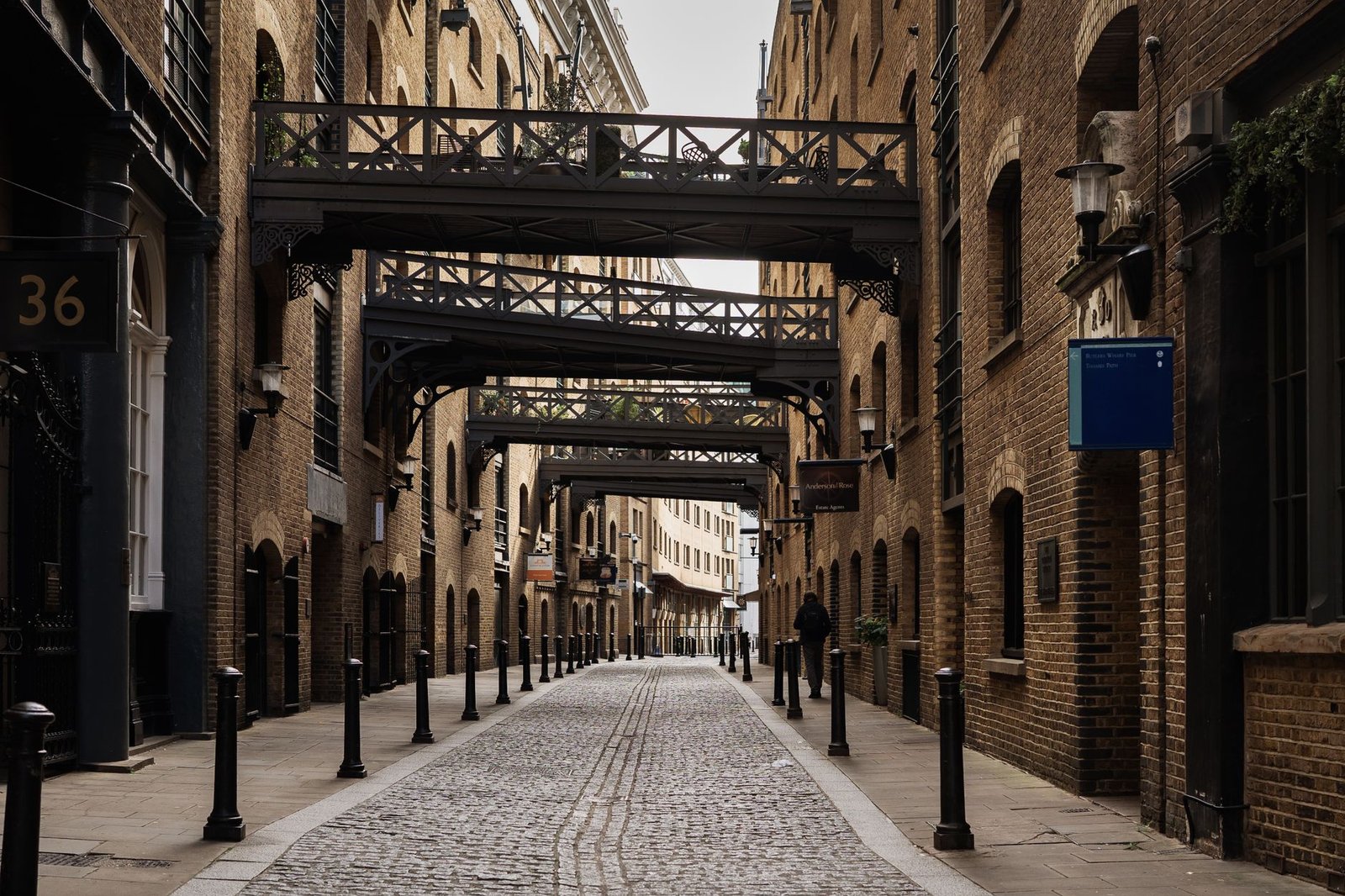
Historic London alley with iron walkways and cobblestone path.
Royal Parks Near Sunset
Regent’s Park, Hyde Park, and Kensington Gardens may begin closing perimeter gates around sunset. Leave before access becomes uncertain, while you still have daylight and phone battery.
Head toward a public street, station, or bus route rather than relying on a park crossing as the shortest way home. If the gates are already closing, follow the perimeter to a known exit only while the route remains lit and safe. Otherwise, stop at a safe public place and arrange transport.
Find Water and Toilets Without Extending the Run
Lack of water can turn manageable fatigue into a reason to stop. The Refill App lists participating refill locations across Greater London, including businesses and public fountains.
Use it before you leave and note one refill point near the middle of the route and one near the end. During the run, go to a listed point only if it is close enough to reach without adding a long detour. If reaching it means running farther while thirsty, change course or stop.
For toilets, use Transport for London’s toilet map and check whether the facility sits inside or outside the ticket barriers. Accessible Tube-station toilets may require a RADAR key or help from station staff.
If you do not have the key, ask staff before walking farther. If the station cannot provide access, use another listed facility rather than spending energy searching through the network. A nearby toilet or refill point only helps if you can reach it safely at your current effort.
Leave the Run by London Bus or Tram
Both buses and trams can get you away from an unsafe route without requiring you to finish the planned distance. Either mode can work as a short escape or as part of a longer trip home.
| Mode | Single journey fare | Transfer rule |
|---|---|---|
| Bus | £1.85 | Unlimited bus and tram transfers within 60 minutes with the same contactless card or device |
| Tram | £1.85 | Unlimited bus and tram transfers within 60 minutes with the same contactless card or device |
Before boarding, move to a safe stop away from traffic, check the route on your phone, and keep your card or device ready. Tap with the same contactless card or device each time. Do not switch from your phone to a physical card during the transfer window, because the system may treat them as different payment methods.
Use the first practical service toward one of three places:
- A safer starting point where you can meet someone
- A major transport hub with staff and more route choices
- Home, if you are too tired or unwell to continue
If you need to change buses or trams, stay near the stop and sit down while you check the next service. Do not walk several blocks to save a few minutes if your legs are cramping or your balance is poor.
Keep your phone charged enough to show the route and contact someone if your plan changes. If you feel unsafe waiting alone, choose a busier stop, enter a staffed station where appropriate, or call someone to meet you.
Get Help for Injury, Illness, or a Hard-to-Reach Location
Separate a non-life-threatening problem from an emergency. A sore muscle that improves when you stop is different from chest pain, severe breathing trouble, fainting, confusion, a serious fall, or an injury that prevents you from walking.
For a non-life-threatening injury or illness, call NHS 111. The service can direct you to an Urgent Treatment Centre and tell you what to do next. Stay somewhere safe while you make the call, and do not run onward to reach a clinic.
If you have a serious emergency, call 999. Give your location, symptoms, and the safest way for responders to reach you. In a park, heathland, or marsh, a normal street address may not identify the access point well enough.
When requesting emergency help, give the what3words location to the emergency service. Describe nearby paths, gates, bridges, or landmarks as well, rather than relying on the three-word address alone.
Do not try to self-transport when you have severe symptoms, cannot stand safely, or may have a serious injury. Stay put, keep your phone available, and follow the operator’s instructions.
Build a Better London Long Run Plan
Good London long run planning includes an exit plan, not just a distance target. Before setting out, pin one staffed transport hub and one public street exit in your phone’s map. That small preparation gives you a clear next move when the route stops working.

I am Ozan, a London-focused running writer and marathon enthusiast with a passion for helping people discover the city’s best races, running routes, walking trails, and fitness events. I research and write practical, up-to-date guides covering marathons, race preparation, training tips, running gear, and everything related to staying active in London.
My goal is to create reliable, easy-to-follow content that helps runners and walkers of all experience levels explore London with confidence, whether they’re preparing for their first 5K or their next marathon.