Upper-body strength training can help you stay supported on long London miles, but it must fit around your running. You need a small amount of pulling, pressing, and trunk work that improves control without leaving your shoulders and back tired for your next long run. Posture does not mean forcing yourself into a rigid upright position; your running form should stay relaxed, with a slight ankle-based lean and a natural arm swing.
Key takeaways
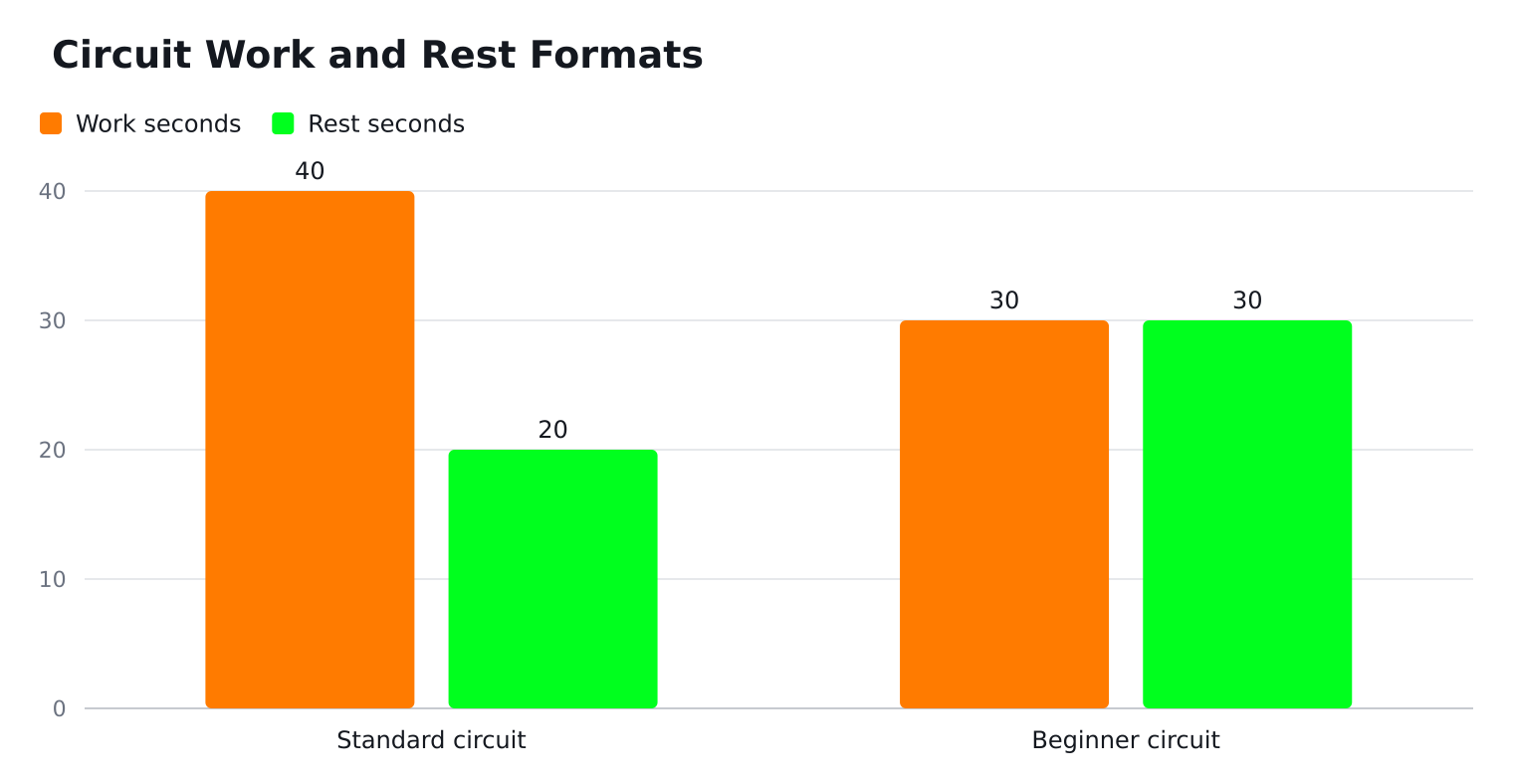
- A standard circuit works as three rounds of five exercises, with 40 seconds of work, 20 seconds of rest, and 60 seconds between rounds.
- New circuit users should choose easier movements and keep the work intervals at 30 seconds with 30 seconds of rest.
Schedule Upper-Body Training Around Running
Train your upper body twice a week, with at least 48 hours between sessions. A Tuesday and Friday schedule can leave room for recovery before a weekend long run, but move the strength work if it conflicts with your speed session. Keep hard strength work at least one full day away from a long run or speed workout, and move it farther if you still feel fatigued. Heavy rows, pull-ups, carries, and pressing can tire your upper back and trunk even when your legs feel fresh. During race week, reduce the total volume while keeping the same movement patterns.
- Monday: Easy run or rest
- Tuesday: Speed workout
- Wednesday: Upper-body strength
- Thursday: Easy run
- Friday: Upper-body strength
- Saturday: Rest or short easy run
- Sunday: Long run
Use two to four working sets for each upper-body movement. Stop when your back starts arching, your shoulders begin shrugging, or you need to swing the weight. Choose resistance that lets you keep steady form and finish feeling fresh.
Choose a Starting Circuit
A short circuit combines strength and posture work without turning the session into a long gym visit. The standard version uses five exercises across three rounds, while the beginner version uses easier movements and shorter work periods.
| Circuit Version | Work Time | Rest Time | Rounds | Exercise Difficulty |
|---|---|---|---|---|
| Standard | 40 seconds | 20 seconds | 3 | Moderate |
| Beginner | 30 seconds | 30 seconds | 3 | Easy |
The standard format challenges your upper body while keeping the session manageable for a runner. The beginner format gives you more recovery and makes rushed form less likely. If you are new to circuits, start with wall push-ups, light-band rows, and a static plank. Choose a resistance that lets you complete every interval without holding your breath or changing your spine position. After several sessions, make the exercise harder before making the interval longer, such as moving from wall push-ups to incline push-ups and then to floor push-ups.
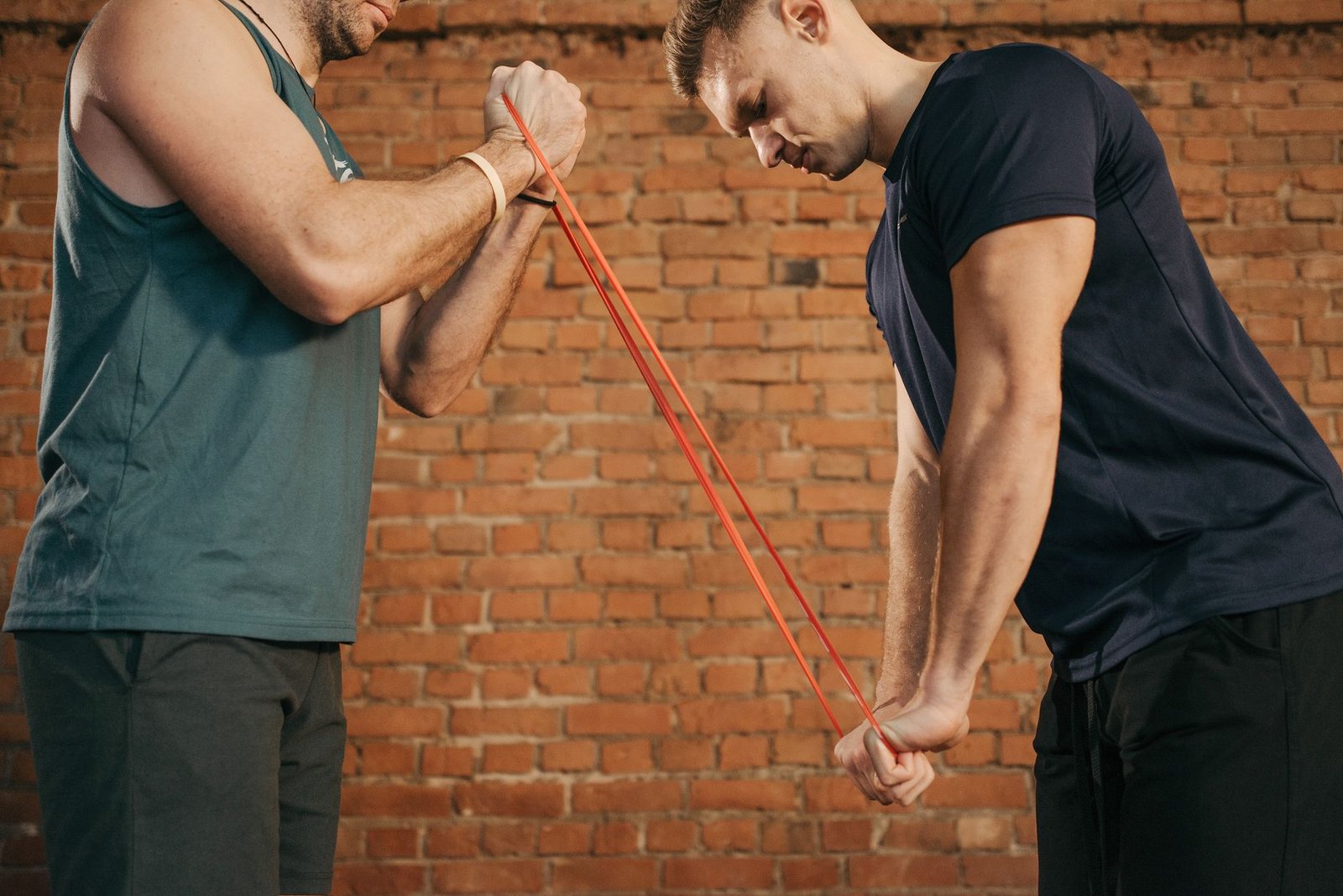
Two men using a resistance band for workouts in a gym.
Your ribs should stay stacked over your pelvis, and you should be able to breathe steadily through each round. Repeat the same range of motion from the first round to the last. When your shoulders rise toward your ears or your hips twist during the plank, reduce the resistance or return to the easier version.
Build Each Session Around Pulling, Pressing, and Trunk Control
Use one or two pulling movements, one pressing movement, and one trunk exercise in each session. Rows, assisted pull-ups, push-ups, and loaded carries cover these patterns without requiring a separate arm workout.
Rows can train the muscles between your shoulder blades and help control your upper back, while push-ups and overhead pressing can train the front and supporting shoulder muscles depending on your technique. Set your back flat, keep your elbow close to your body, and pull the handle or band toward your lower ribs. Pause briefly at the top, then lower the resistance without letting your shoulder roll forward. A controlled row is more useful than a heavy row that turns into a shrug.
Pull-ups and chin-ups train your lats, upper back, and grip at the same time. Use a resistance band or an assisted pull-up machine if you cannot complete a full repetition. The assistance lets you practise the same pulling pattern while keeping your ribs down and neck relaxed.
Push-ups train the chest, shoulders, and arms while asking your trunk to stay steady. Keep your hands under or slightly outside your shoulders, lower your body as one unit, and stop before your hips sag. Loaded carries add a walking element: hold a weight at each side, stand tall without leaning, and walk slowly while keeping your shoulders down. Use a load that lets you take steady steps without shrugging or bending sideways. You can read a straightforward guide to upper-back strength exercises while choosing variations, but stop when the weight changes your posture.
Train the Upper Back and Shoulders Without Losing Control
Prone Y-T-W raises target the upper-back and shoulder muscles that help support an upright position. Lie face down, move your arms through a Y, T, and W shape, and lift them only a few inches. Complete 5 to 10 slow rounds of the full sequence, gently squeezing your shoulder blades without forcing them together.
Comparison of work and rest intervals for standard and beginner circuits
Reverse flyes use a similar movement. Keep the weights light, bend forward with a flat back, and move your arms out to the sides until they line up with your body. You should feel the work around the upper back and the back of the shoulders, not in your lower back. If the weights make you swing, they are too heavy.
Supermans can add back endurance, but lift your arms and legs only a small amount and stop before your lower back arches sharply. Use a short, controlled range during Supermans, reverse flyes, and prone raises; excessive arching or momentum shifts the work away from the upper back. Keep your neck long instead of looking forward, lift slowly, and lower with control. Stop when your lower back takes over, and reduce the range before adding weight.
Strengthening may improve upper-back and neck posture, while stretching alone may produce less change, so use mobility work to support this training.
Add Neck, Chest, and Trunk Mobility Work
Chin retractions give your head and neck a small control exercise without heavy loading. Sit or stand tall, draw your chin straight back as if making a gentle double chin, hold for 3 seconds, and relax. Complete 10 repetitions without tipping your head up or down. The movement should come from sliding your head back, not pressing your chin toward your chest.
Use a doorway chest stretch when the front of your shoulders and chest feel tight after desk work or a long run. Place one forearm against the door frame, keep your shoulder below ear level, and turn your body away until you feel a mild stretch across the chest. Hold for 20 to 30 seconds and repeat two or three times on each side. Do not force the shoulder behind your body.
Bird dogs and dead bugs train your trunk without heavy loading. For a bird dog, start on your hands and knees, extend the opposite arm and leg, and keep your hips level. For a dead bug, lie on your back, press your lower back gently into the floor, and move the opposite arm and leg without letting your ribs flare. Aim for 10 repetitions on each side of either movement. If your hips twist during a bird dog, shorten the reach or move only one limb at a time. If your lower back lifts during a dead bug, bring your arms and legs closer to the floor or reduce the range.
Apply the Training to Long-Run Posture
Strength work should help you hold a relaxed running position when fatigue begins to build. It should not make you brace every muscle or force your chest upward for the whole run. Let your upper back stay supported, your shoulders stay loose, and your head remain balanced over your trunk.
A slight lean may be useful for some runners when it comes from the ankles rather than the waist. Keep your body tall, tilt gently from the ankles, and let your feet land beneath you without reaching forward. Bending at the waist can put your hips behind you and make your lower back take over. Forcing yourself vertical can make your stride feel stiff.
Let your arms swing naturally instead of pinning them to your sides, crossing them tightly over your body, or deliberately tiring them. Restricting or fatiguing the arm swing can increase running demands, which may be a poor choice on a long day. Let your elbows bend comfortably and allow your hands to travel forward and back without clenching. If your shoulders rise, shake out your hands and settle back into your normal rhythm.
Make Your Strength Work Count
Good posture on long London miles comes from upper-body control that stays reliable as fatigue builds, not from forcing your body into one fixed position. After your next session, record the resistance used for each movement and note which exercise first caused your form to change.
Frequently Asked Questions
What should I do during a long day of sitting between runs?
Change position regularly and take short movement breaks instead of trying to hold one perfect posture all day. Set your screen near eye level and keep commonly used items close, which reduces the time you spend looking down or reaching forward.
Will upper-body strength work make me gain noticeable body weight?
Moderate loads and controlled repetitions build useful strength without adding meaningful body weight for most runners. Keep the sessions modest and avoid turning them into high-volume bodybuilding workouts.
What should I change if my neck or shoulders start to hurt?
Favor rows, face pulls, band pull-aparts, and controlled rear-shoulder work when discomfort appears. Reduce movements that aggravate the symptoms, since continuing to push through an irritating exercise can make it harder to train with good control.

I am Ozan, a London-focused running writer and marathon enthusiast with a passion for helping people discover the city’s best races, running routes, walking trails, and fitness events. I research and write practical, up-to-date guides covering marathons, race preparation, training tips, running gear, and everything related to staying active in London.
My goal is to create reliable, easy-to-follow content that helps runners and walkers of all experience levels explore London with confidence, whether they’re preparing for their first 5K or their next marathon.