A sensible warm-up can protect your Achilles better than a few rushed toe touches before you run. Running can produce peak tensile forces of about 6 to 8 times body weight, especially as pace and surface demands rise. London’s hard, uneven pavement makes a gradual start particularly important.
Light jogging is a useful starting option for many runners because it raises the load in small steps while keeping the running pattern familiar. Calf raises add controlled loading, and both straight-knee and bent-knee versions prepare the calf-and-Achilles unit. Stretching can change how the tendon works in the short term, but it does not replace time spent moving gradually through the effort you are about to demand.
Plan about 10 to 12 minutes before a normal run, with more time if your route begins on paving slabs, your calves feel stiff, or your first mile includes hills. The aim is to make faster running feel ordinary before you ask the tendon to handle it.
Key takeaways
- Both calf-raise positions belong in preparation when you want to ready the full calf-and-Achilles unit for running.
- When a route starts on broken or sloping paving, build speed on a smoother section first, then tackle the uneven ground.
- If raises make the tendon sore, keep the run easy and skip pace increases; worsening pain means ending the run.
- A longer build-up suits cold calves, hard paving, or intervals better than using a brief routine before fast running.
What to Have Ready Before a London Run
A route that begins on uneven paving needs a slower opening than one that starts on a flat rubber track. Concrete paving slabs can produce a greater impact challenge than asphalt or a synthetic track, especially when broken edges, camber, and missing sections make your foot land at different angles.
Use the opening minutes for easy movement and controlled calf work instead of treating the first mile as your warm-up. If you have to catch a group at a set pace, start the preparation indoors or walk for several minutes before joining them. Light jogging suits many runners, but adjust it if your symptoms or the session demand a different start.
Choose your opening pace from the first surface and the first effort:
- Uneven paving: walk for 3 minutes, then jog easily.
- Flat asphalt: begin with an easy jog and keep the first 5 minutes relaxed.
- Synthetic track: jog easily, then add short pace increases before the main session.
A warm-up changes the movement of the tendon and calf muscles; it is not just a way to make your skin feel warm. Fast ankle circles may loosen your joints, but they do not prepare the calf-and-Achilles unit for repeated landings.
If you have had Achilles pain, build in extra time and keep the first pace increase small. A gradual return to running, with pain-free progress over time, gives the tendon time to tolerate the next increase.
A Gradual Jogging Warm-Up
Light jogging is one useful way for many runners to begin, provided your symptoms stay quiet and the session does not demand a different approach. Start slowly enough that your feet land quietly and your calves do not feel as though they are gripping the ground.
Use this sequence before a steady run:
- Walk briskly for 3 minutes.
- Jog easily for 4 minutes.
- Run for 2 minutes at a pace below your planned training speed.
- Add 3 increases of 20 seconds, returning to an easy jog for 40 seconds after each one.
This gives you about 12 minutes of rising effort without turning the warm-up into a workout. If the session includes intervals, use the final increase at about the speed of the first interval, not the fastest pace you expect later.
Your Achilles should feel ready when the first pace increase feels springy and even on both sides. You should not feel a sharp spot, a growing ache, or a heavy pulling sensation that changes your stride. If you do, stay at the easy jog and leave out the faster work. A short routine may still fail when the start is too hard: five minutes of slow shuffling can raise your temperature without changing tendon mechanics enough for a fast session.
Do not use the first downhill section as a test. Downhills can increase the demand on the calf while uneven paving makes foot placement less predictable. Keep the opening minutes on the smoothest safe line available, then move onto the harder section once your stride feels settled. Add the calf raises below when you need more preparation without adding much distance.
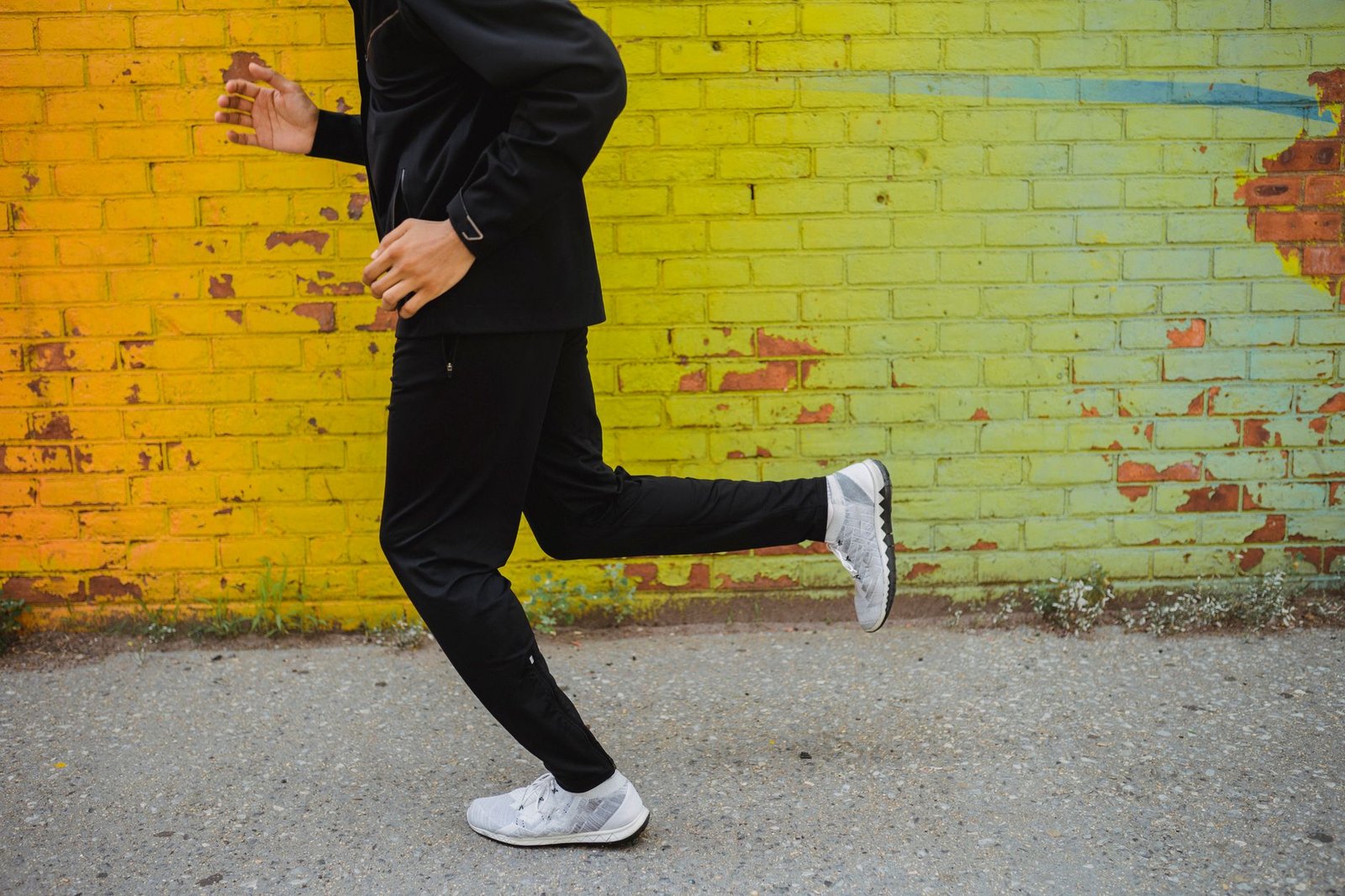
Jogger running past a vibrant urban brick wall in casual attire.
Straight-Knee and Bent-Knee Calf Raises
The two calf muscles do different jobs, so one version of a calf raise cannot prepare the whole unit. A straight-knee raise gives more work to the gastrocnemius, the large calf muscle that crosses both the knee and ankle.
Stand with your hand on a wall or railing. Keep both knees straight without locking them, rise onto the balls of your feet for 2 seconds, pause briefly, and lower for 3 seconds. Do 10 controlled repetitions on each side, then repeat the set once if your calves feel cold.
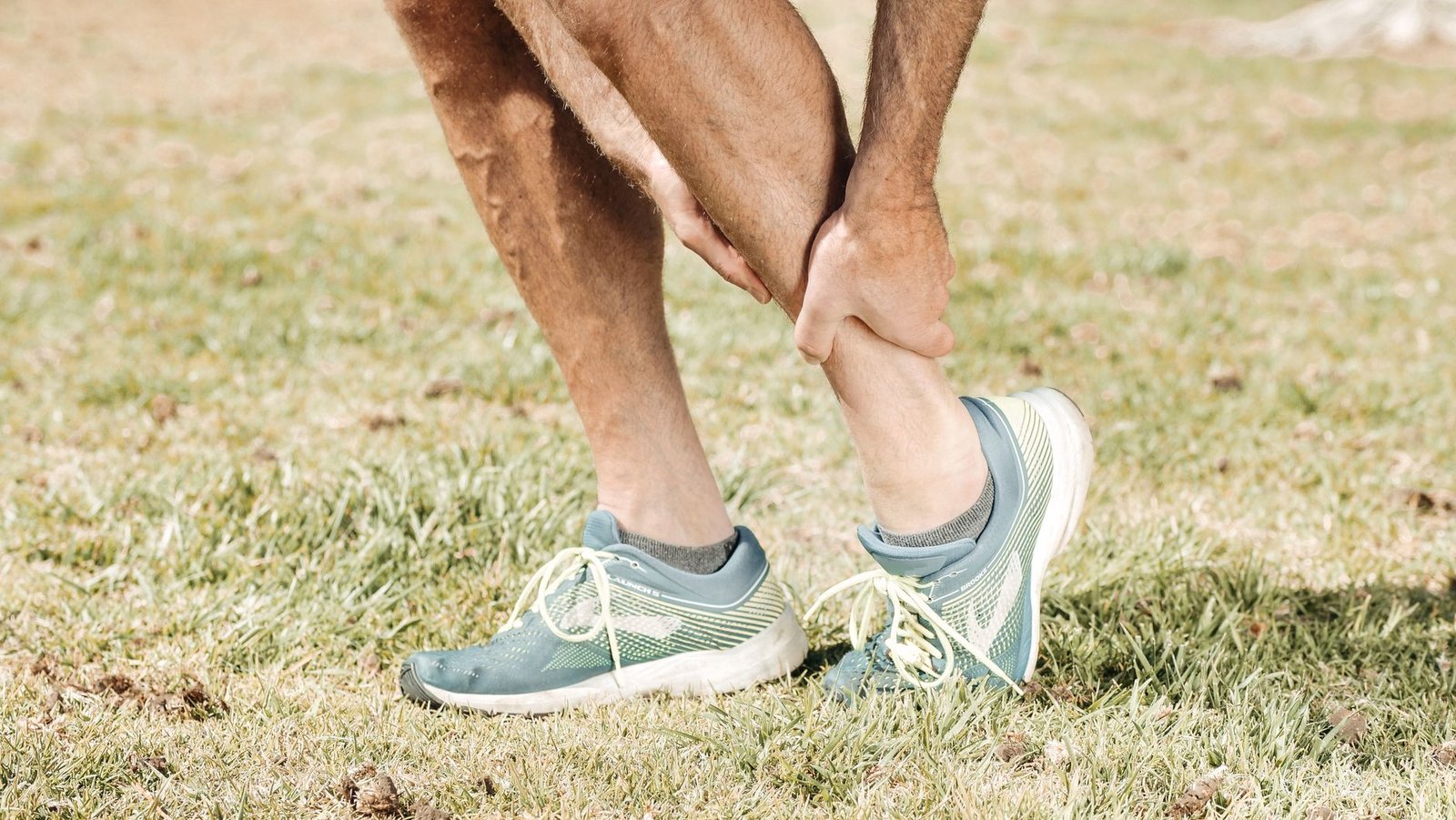
Man experiencing calf pain on green grass while wearing teal sneakers.
A bent-knee raise shifts more work toward the soleus, the deeper calf muscle that crosses the ankle but not the knee. Sit or hold a shallow squat with your knees bent about 30 degrees, keep your heels lined up under your hips, and lift them without letting your ankles roll outward.
Complete 10 repetitions on each side, using the same slow rise and lower. The soleus can contribute substantially to running propulsion, so include this version rather than preparing only the gastrocnemius.
Use both versions as a warm-up, not as a strength test. Stop each set while you still have about 3 easy repetitions in reserve. You should feel the calf working, but you should not reach shaking, cramping, or a burning sensation that changes the way you stand.
A practical order is:
- Straight-knee raises first.
- Bent-knee raises second.
- Easy jogging for 2 minutes afterward.
The final jog lets the tendon meet the running pattern after the controlled calf loading. Save heavy, slow strength work for a separate session.
Stretching, Warm-Up Length, and Achilles Mechanics
Stretching and warming up can create similar short-term changes in Achilles tendon biomechanics. They do not do the same job in every running session. Stretching changes the muscle-and-tendon unit while you hold a position; jogging and calf raises expose it to the kind of loading your run will use.
A brief or very gentle routine may produce no measurable change in tendon mechanics. If you have been sitting at a desk, step outside and spend at least 10 minutes moving through the progression before you ask for training pace. Use 12 to 15 minutes when the weather is cold, the route starts on hard paving, or the session begins with intervals.
Static stretching can fit after the easy jog if a stretch makes your calves feel less restricted. Hold a mild calf stretch for 20 to 30 seconds on each side, and repeat it once. Do not force the heel down or bounce into the position. A hard stretch that creates pain adds no useful preparation.
Dynamic movement belongs before faster running because it rehearses the ankle action you need. Calf raises, easy jogging, and short pace increases let you judge how the tendon responds under rising load.
Use these signs to adjust the plan:
- Calves feel stiff but pain-free: add one easy minute of jogging.
- The tendon feels sore during raises: remove the pace increases.
- One side feels sharper with every step: stop the run and do not try to warm through it.
Warmth alone is a poor test. Your legs can feel warm while the tendon still needs a slower rise in force.
Concrete, Asphalt, and Synthetic Track Surfaces
Running surfaces change the impact your lower leg has to manage. Concrete paving slabs produce the greatest peak impact acceleration of the three surfaces here, while a synthetic rubber track produces less and asphalt less than concrete.
| Running Surface | Relative Impact |
|---|---|
| Concrete paving slabs | Highest |
| Synthetic rubber track | Lower than concrete |
| Asphalt | Lower than concrete |
A route that begins on concrete deserves the most careful rise in pace. London paving can also be uneven, so the issue is not only how hard the surface feels. A slanted slab or broken edge can change where your foot lands and make one calf absorb more work than the other.
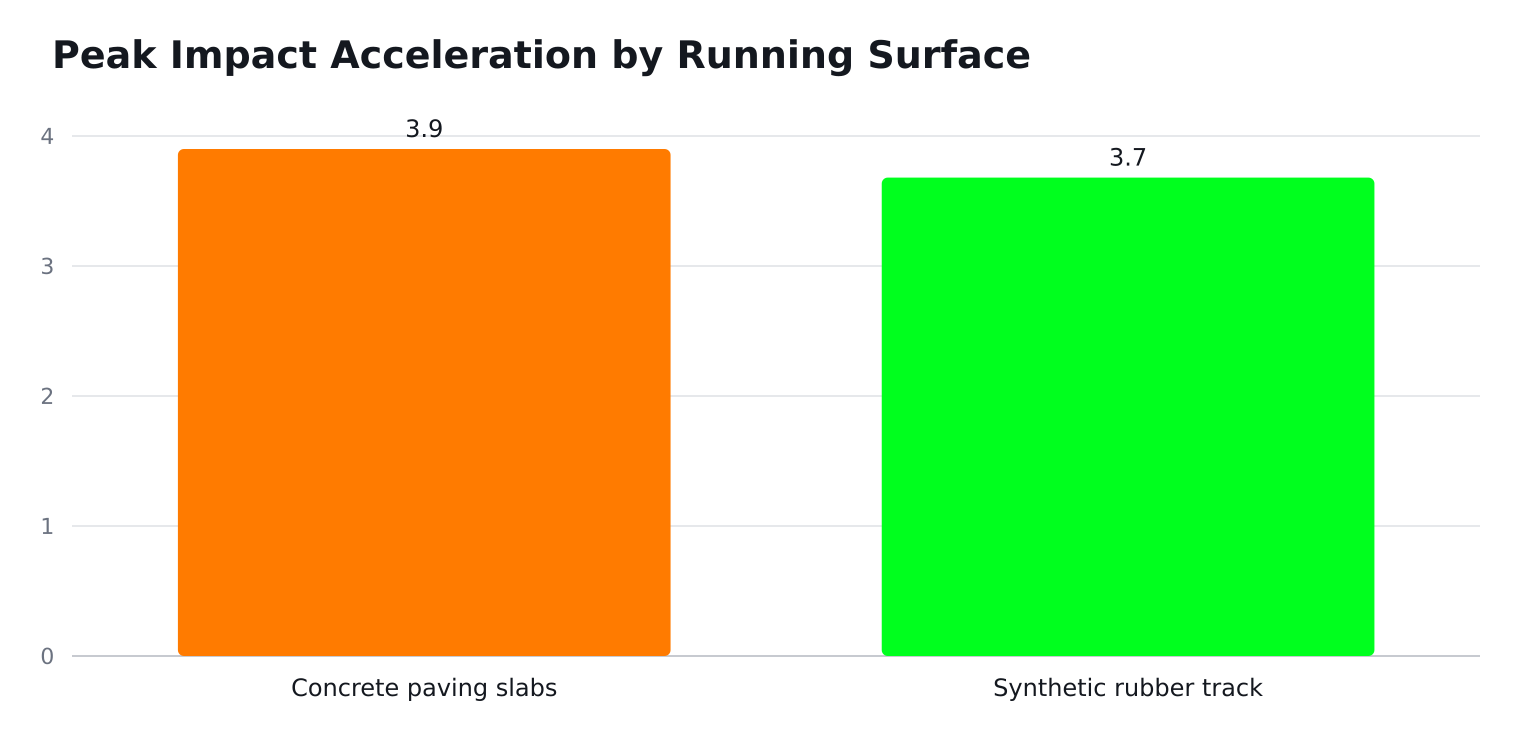
Peak impact acceleration differs across concrete paving slabs, synthetic rubber tracks, and asphalt.
On asphalt, keep the first few minutes easy even though the surface is usually more consistent than paving. A synthetic track gives you a better place for pace increases, but it does not remove the need to warm up. If you have a choice, do the first pace increases on the smoothest section of the route.

Curved red running track featuring dashed white lines for lane markings.
Move to uneven paving after your stride is even and your calf raises have felt comfortable. That small change lets you prepare for the surface instead of asking the surface to test you cold.
When the Standard Warm-Up Needs More Care
A standard 10 to 12-minute sequence suits an ordinary steady run, but some sessions need a slower build. The demand rises when the route starts with hard paving, the weather has left your calves cold, or the plan moves from walking straight into sprinting or steep hills.
Use these adjustments when the opening conditions are demanding:
- Use 5 minutes of walking for especially demanding uneven starts rather than the usual 3 minutes.
- Add 3 minutes to the easy jog if you have just finished a long period of sitting.
- Repeat one set of calf raises if the muscles still feel stiff but the tendon feels pain-free.
- Remove all pace increases if the tendon becomes more painful as you move.
Do not treat pain that worsens step by step as normal stiffness. Stop, walk home if you can do so comfortably, and arrange an evaluation with a sports medicine clinician or physical therapist if the pain remains with ordinary walking.
A tender Achilles also changes how you should handle the next run. Choose a flatter, smoother route, keep the pace easy, and shorten the distance instead of trying to make up the missed effort. The tendon responds better to a load it can manage than to a sudden return to the session you planned.
You can still stretch lightly after the jog, but do not use stretching to hide a warning sign. If calf raises hurt, if your stride changes, or if one side feels weaker, leave out fast running until those signs settle and you can walk normally.
Let the Route Shape the Warm-Up
How to Protect Your Achilles in London Training: Warm-Ups That Work depends on treating the route as part of the training plan, not as background scenery. Before your next run, mark every stretch of paving slabs on your route map and note where the first hard section falls.
Frequently Asked Questions
Can Aaron Rodgers’ fast Achilles recovery tell me how quickly I will recover?
No, Aaron Rodgers’ recovery does not establish a general timetable for other runners. Recovery depends on the injury, treatment, rehabilitation, and how the tendon responds to increasing activity. Use your own symptoms and running tolerance rather than another athlete’s return as your guide.
Should I stretch or warm up if both can affect the Achilles?
Stretching and warming up can produce similar short-term changes in Achilles tendon biomechanics, but they are not interchangeable for every session. Stretching changes the muscle and tendon while they are held in position, whereas running movements rehearse the loading pattern you are about to use. Choose the moving progression when your goal is readiness for running.

I am Ozan, a London-focused running writer and marathon enthusiast with a passion for helping people discover the city’s best races, running routes, walking trails, and fitness events. I research and write practical, up-to-date guides covering marathons, race preparation, training tips, running gear, and everything related to staying active in London.
My goal is to create reliable, easy-to-follow content that helps runners and walkers of all experience levels explore London with confidence, whether they’re preparing for their first 5K or their next marathon.