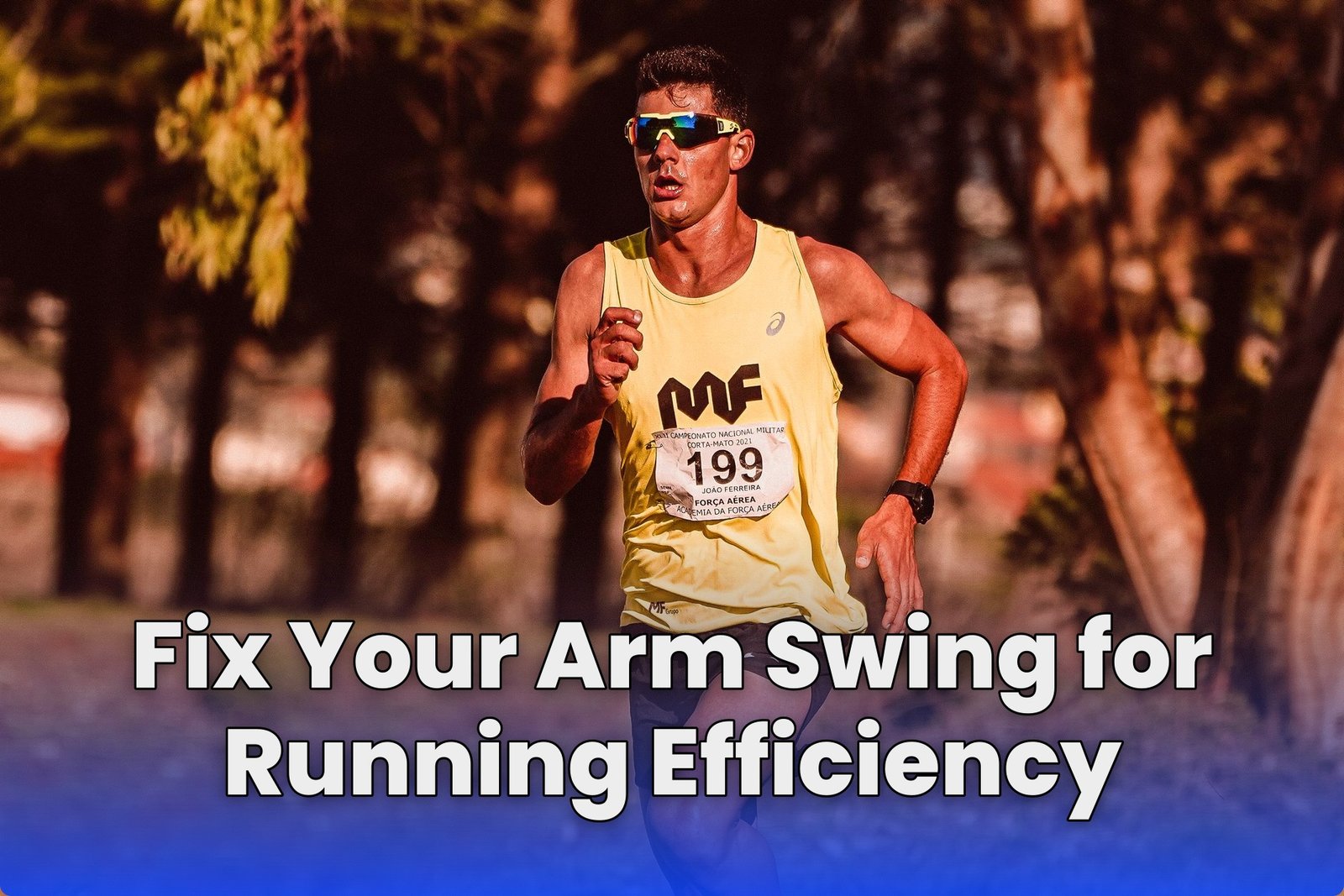
Most runners lose efficiency because their arm swing gets tense, wide, and sloppy. They look for “more speed” through legs, then wonder why the body feels awkward at the same pace. The truth is simple: when your arms travel with poor mechanics, you waste energy and disturb the rhythm between trunk and stride.
If you want better running efficiency, treat your arms like relaxed stabilizers, not movers. Keep your elbows soft and your shoulders down, then imagine a clear “pane of glass” from mid-chest forward: your hands should move forward and back without crossing the centerline or “breaking” that plane. Drive the swing from the shoulder joint, pulling the elbow back while your hand follows a slight diagonal path, and aim for the hand to travel backward at least as far as it comes forward.
Practice beats theory. Pick one cue, like “drive your elbow straight backward” or “keep hands out of the centerline,” and run with it for 1 to 2 minutes every few minutes. Use simple drills like one-arm swings on a slight jog, then test it with an easy 400 meters while you repeat the same cue. For durability, add posterior-delt work like rows or rear flyes and keep your core firm so your arm swing stays narrow and controlled instead of turning into a reach-and-catch.
Efficiency Starts With Relaxation Not Force
If you want to improve your arm swing for better running efficiency, stop trying to power your way through the motion. Relaxed arms waste less energy, keep your swing closer to the direction of travel, and reduce the “tension tax” that shows up as extra shoulder work and quicker fatigue.
Think about it. When your hands feel heavy and your elbows lock up, what happens to your stride? Your posture tightens, your torso rotates more than it should, and your legs lose rhythm. Relaxation is not softness for its own sake. It is a technique that keeps your arms from becoming an engine that fights the rest of your body.
So why do so many runners swing like they are hauling groceries? Because force feels controllable. But control from tension is still tension. Your job is to make the swing smaller, cleaner, and easier to repeat.
Lock the shape With a Pane of Glass at Mid-Chest
To clean up your arm swing, imagine a pane of glass from mid-chest forward. Keep your hands sliding along that imaginary surface without breaking it as your arms swing forward and back. The goal is consistent spacing, not dramatic reach.
At the same time, keep your elbows soft and steady, often around a 90-degree bend, so the angle stays stable while the arm moves. If your elbow angle changes, your swing becomes a sequence of mini-corrections, and those corrections steal efficiency from your stride.

This is where most form attempts fail. Runners tell themselves to “move faster,” then they widen the swing and reach across. You do not need a bigger arc. You need a repeatable one.
Elbow-Driven Swing Beats Elbow Fidgeting
Drive the swing from the shoulder joint, not the elbow. The elbow should act like a lever that follows a shoulder-driven path, not the steering wheel that constantly re-aims your hand.
Use a simple cue: pull the elbows back. Let the hand travel on a diagonal path that runs from near the breastbone toward your side and hip area. If your elbow “digs” backward while the shoulder stays quiet, you can end up with short, choppy movement that never creates a smooth recovery.
What should your hands do? They should travel backward at least as far as they travel forward. If your hands sprint forward but barely return, your body is paying for imbalance with every stride.
Diagonal Hand Path and the Centerline Rule
One of the fastest ways to improve your running efficiency is to prevent your hands from crossing the centerline. Stop near the midline rather than reaching to the opposite side. Crossing creates extra trunk rotation and coordination conflicts between arms and legs.
Keep the motion narrow. That “pane of glass” cue makes it easier: your hands move on a controlled track, not a sweeping arc that drags your torso sideways.
If you catch yourself with hands that cross or swing too wide, do not fight it by exaggerating the opposite mistake. Narrow the pattern until it feels smooth, then rebuild speed on top of that shape.
Shoulders Tall and Elbows Back Without Shrugging
A tall, upright posture helps your arm swing work with your stride, not against it. Drop your shoulders and avoid shrugging. When you raise your shoulders during the forward swing, you add tension and shorten the range that your shoulders can use efficiently.
Now make the direction of pull clear. Cue “drive the elbow straight backward” and watch what your chest does. If the chest collapses or the ribs flare, your arms will start doing the job of trunk stabilization.
Efficiency is boring in the best way. The best arm swing looks calm while it produces the same, repeatable timing every step.
Turn Cues Into Practice With Short Reps
Great cues do nothing if you never program them into your running. The fix is short, frequent practice during runs, not a single heroic session. Give your brain frequent chances to feel the new mechanics while you still have form energy.
Use a brief “arm swing block” every few minutes. Below is a simple way to choose reps and cues.

| Drill or Segment | Main Cue | Time or Volume |
|---|---|---|
| Posture Reset | Drop shoulders | 60-90 seconds |
| Easy Run Focus | Elbow drives back | 1-2 minutes |
| One-Arm Switch | Glass pane path | 6-8 x 20-30 m |
| Rep at Easy Pace | Hands do not cross | 2 x 400 m |
| Fast Check | Diagonal hand travel | 4-6 x 10-15 seconds |
Place this work inside an easy run first. If you force it during a hard effort, your body will default to old tension patterns. After the new swing feels automatic at easy effort, then you progress.
One-Arm Drills Reveal Your Real Weak Link
If you want to know whether your shoulder-driven swing is working, remove the symmetry. One-arm running drills make it obvious when your torso rotates too much or when your elbow wanders across the centerline.
Start with short segments and switch arms often. Keep the cue simple: stay on the pane of glass and pull the elbow back. If your free arm tries to compensate by crossing or shrugging, you will feel it immediately in your trunk.
Does this feel awkward? Good. That awkwardness is your old pattern trying to reappear. The drill gives you feedback fast, and feedback is what turns “advice” into change.
Strengthen Posterior Deltoids and Add Core Timing
Your arms do not swing efficiently just because you “think about it.” They swing efficiently because the right muscles can produce the motion without extra effort. Strengthen posterior deltoids with rows and rear flyes so pulling the elbow back feels stable, not strained.
Then connect it to core action. Core-to-arm coordination is a major lever for efficiency because the trunk controls how the arms can swing without forcing extra rotation. When core timing is off, arm swing turns into a negotiation with your torso instead of a smooth partnership.
Keep strength work practical: train the pulling pattern, then return to running and repeat the cue. If you never bring strength back to the track or road, your engine stays powerful and your mechanics stay stuck.
Protect Trunk-Leg Coordination When Speed Rises
As pace increases, small arm swing errors become stride errors. Wide swings, centerline crossing, and shoulder shrugging show up as rhythm breakdown, extra braking, and a torso that rotates more than it should.
So keep the mechanics stable under stress. The best strategy is to narrow your swing and preserve the same elbow angle. Your goal is a consistent timing pattern, not a frantic attempt to “match faster feet.”
If your arms start doing something different when you run fast, that is your cue to simplify. Reduce range until your trunk and legs feel synced again.
Progress From Easy Form to Tempo Without Losing the Cue
Do not jump from easy mechanics to tempo and hope your body remembers the right pattern. Progress in layers. First lock the cue at easy pace, then keep the cue while you raise effort gradually.
A straightforward approach is to use easy form runs, then add one tempo segment where the cue stays the same. If the cue breaks at tempo, you pushed too far, too soon. Back down, tighten the swing, and re-check the elbow path and the centerline rule.
Runner fatigue is predictable. Your job is to control what fatigue attacks first: range, timing, or posture. Start by protecting range, because range drives timing.
Fix Common Mistakes With Direct Corrections
Most runners do not have “mystery” arm swing problems. They have repeatable errors. For example, hands crossing the centerline create trunk rotation conflicts. Elbows that lead the motion create choppy recovery. Shrugging shoulders turns a shoulder-driven swing into a tension-driven scramble.
Use direct corrections, not vague reminders. Here is a tight set of fixes:
- Crossing becomes “stop near midline” and narrow the pane of glass path.
- Short return becomes “hands travel back at least as far as forward.”
- Shoulder tension becomes “drop shoulders” and keep elbows soft.
If you want a quick reference for how coaching cues are commonly framed, see arm-swing guidance in practice language, then apply it to your own video or mirror checks.

Track Improvements With Simple Run Notes
You cannot improve what you cannot notice. Track a few measurable or at least repeatable markers so you know whether your changes increased running efficiency. Record what feels different, what stays the same, and where form breaks.
Keep it simple. Note whether your hands stay on the same track, whether elbows return fully, and whether you feel shoulder tension during the last 10 minutes. If your arm swing stays narrow and your trunk stays quiet, that is progress even if your pace does not jump overnight.
Over time, your goal is a reliable swing under fatigue. Consistency beats novelty every time. When your cue becomes your default, you earn efficiency you can actually use.
How To Improve Your Arm Swing for Better Running Efficiency?
How Can You Keep Your Arms Relaxed to Improve Arm Swing for Better Running Efficiency?
Keep your shoulders down and your elbows soft, with a light grip and no tension through the forearms. Think “easy swing,” then reduce any exaggerated motion until your hands move with smooth, repeatable timing.
What Does the ‘Pane of Glass’ Cue Mean for Arm Swing Mechanics?
Imagine a vertical pane from mid-chest forward and treat it like a boundary your hands should not break. As your arms swing back and forth, let your hands travel forward and backward without crossing the centerline.
Should You Drive the Swing From the Shoulder or the Elbow?
Use the shoulder to initiate the swing and let the elbow follow along naturally. A steady elbow angle helps the arm move as one unit, so your hand travels backward at least as far as it comes forward.
How Do You Prevent Your Hands From Crossing the Centerline While Running?
Stop your hand near the midline instead of reaching across it, and keep the swing compact. If you notice crossing, try a slightly narrower range and focus on pulling the elbow straight back.
What Posture Cues Help You Maintain Efficient Arm Swing and Economy?
Stay tall with a relaxed neck, avoid shrugging, and let your shoulders drop. Keep your trunk stable so the arm swing matches your stride without twisting your upper body.
Which Drills and Strength Exercises Improve Arm Swing Control Over Time?
Practice short arm-swing focus periods during easy runs, such as one specific cue for one to two minutes. Add drills that emphasize the elbow moving back, and strengthen the posterior shoulder with exercises like rows or rear delt flyes.
Arm Swing Efficiency Comes From Control
To solve how to improve your arm swing for better running efficiency, focus on relaxed hands and a narrow, diagonal swing driven from the shoulder, with elbows that keep a steady angle and travel straight backward without crossing the centerline. Keep your posture tall with dropped shoulders, then practice short, repeatable cues during easy running so the motion becomes automatic. If you want faster, smoother strides, build a consistent arm pattern first, then let your legs follow.

I am Ozan, a London-focused running writer and marathon enthusiast with a passion for helping people discover the city’s best races, running routes, walking trails, and fitness events. I research and write practical, up-to-date guides covering marathons, race preparation, training tips, running gear, and everything related to staying active in London.
My goal is to create reliable, easy-to-follow content that helps runners and walkers of all experience levels explore London with confidence, whether they’re preparing for their first 5K or their next marathon.