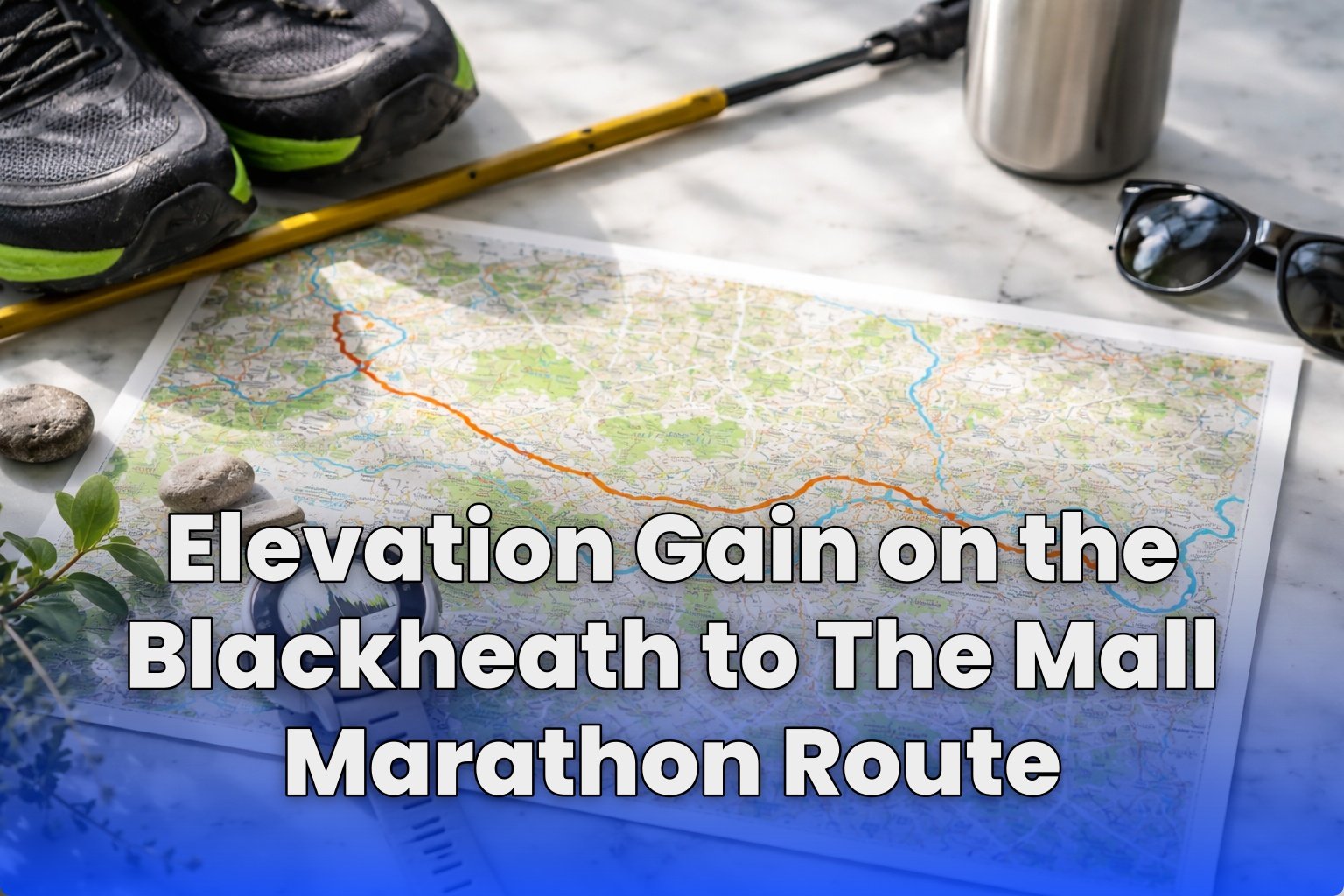
The blackheath to the mall elevation gain on the TCS London Marathon is fairly gentle. Across the full 42.2 km, runners see about 75 m of total elevation gain, yet the route trends slightly downhill overall with a net elevation change around minus 35 to minus 38 m.
That mix of small climbs and overall descent is what makes the course feel smoother than the numbers might suggest. The most noticeable drop comes on the Charlton and Blackheath descent around km 5 to 7, where the route falls roughly 44 m from the Blackheath plateau. The start sits about 40 m above the Thames, and the finish is on The Mall near Buckingham Palace.
If you are planning pacing, this profile helps explain why some runners feel steady early and quicker later. You still get a bit of climbing throughout the distance, but the net downhill shift means the effort often stays controlled for longer stretches than a purely flat course.
What the Elevation profile Feels Like For Most Runners
On paper, a lot of marathon routes look dramatic, but your legs usually feel a different story. On the London Marathon from Blackheath to The Mall, the work is spread out, and the big moment comes early.
Runners often assume an all downhill course will be effortless. Here, the blackheath to the mall elevation gain picture is mixed, because there is some overall climbing even though the course trends slightly downward when you compare the start and finish.
Starting on the Blackheath Plateau Sets Your Baseline
The run begins on the Blackheath plateau, roughly 40 m above the Thames. That starting height matters because it makes the later descents feel more “earned” than random downhill.
From the beginning, you can expect modest changes rather than immediate steep gradients. The early positioning along the course also gives you time to settle into rhythm before the Charlton area arrives.
Why the Charlton to Blackheath Descent Shapes the First Half
The standout feature is the Charlton and Blackheath descent that happens between about km 5 and 7. During this stretch, the route drops by roughly 44 m, which is large enough that many runners notice it without checking a watch.
This descent is why the overall course can still feel controlled even with a total climb included elsewhere. If you go out too fast here, you can pay for it later, especially on long, steady sections.
How to Read the blackheath to the mall Elevation Gain Numbers Without Getting Confused
The confusing part is that the route has both total elevation gain and a net elevation change. The total climb is about 75 m, yet the course is slightly downhill overall with a net change around -35 to -38 m across the full 42.2 km. That combination explains why you can feel both “climb effort” and “downhill recovery” in the same race.
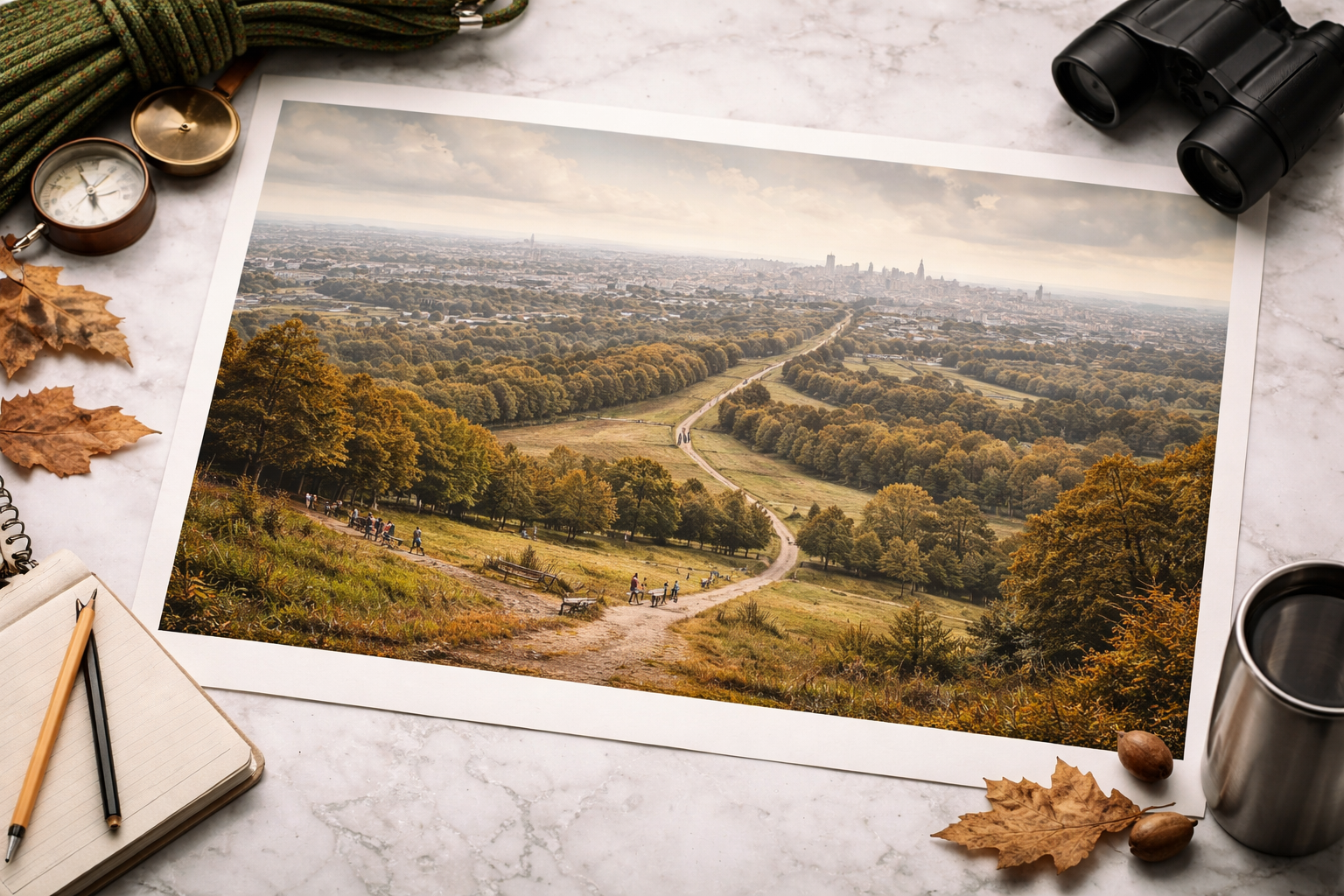
To keep it simple, use a quick checklist like this before you plan your pacing. For a route overview that helps you picture where the big drop lands, it is easier to trust your own effort once the kilometer numbers appear.
| Landmark or Segment | Elevation Feature | Measurable Detail |
|---|---|---|
| Blackheath Start | Plateau elevation baseline | About 40 m above Thames |
| Charlton Descent | Major downhill stretch | Roughly 44 m drop (km 5 to 7) |
| Total Climb | All uphill sections combined | About 75 m gain |
| Net Change | Start to finish difference | Around -35 to -38 m over 42.2 km |
| The Mall Finish | Lower end of the course | Finishes after overall downhill trend |
Once you accept that the race is “slightly downhill overall” but includes meaningful climbs, you can stop arguing with your data and start building a strategy that matches how the course behaves.
Between Greenwich, Tower Bridge, and Canary Wharf, the Course Stays Manageable
After the Charlton descent, the route transitions into a mix of streets that includes Greenwich, Tower Bridge, and the Canary Wharf and Isle of Dogs area. These sections are rarely about one dramatic hill, and more about sustained effort on urban terrain.
That is why the overall profile remains slightly downhill. Even when you hit small rises or uneven road camber, the bigger story is the net change across the whole distance and the fact that you are still trending from the plateau toward The Mall near Buckingham Palace.
Pacing Strategy for a Slightly Downhill Marathon Course
If the net change is negative, it tempts you to accelerate early. The smart approach is to treat the first big downhill moment like a controlled tool, not an invitation to race the course.
- Set your early effort using time, not only feel, so km 5 to 7 stay fast but not reckless.
- On the flatter stretches, focus on smooth cadence to keep form stable after the descent.
- Reassess at key landmarks when you move toward the river sections, because conditions can change your breathing and stride.
When you pace this way, the slightly downhill profile becomes a benefit. When you ignore it, the same profile can turn early speed into later stiffness.
Common Traps on the Way to the Mall After the Biggest Drop
The biggest trap is overstriding after the Charlton descent. The legs often feel “light” for a short time, and that is exactly when form can slip, especially if you are trying to protect a time goal.
Another mistake is treating the rest of the route as if it is flat. The marathon still has a total climb amount, so you can accumulate fatigue even when the line on the elevation chart is trending downward.
Practical Race-Day Advice for Consistent Effort From Blackheath to The Mall
Plan your hydration and fuel around your schedule, but pay extra attention to how your body responds after the descent. Many runners end up under-fueled later because the early downhill masks effort, so the stomach does not tell the whole truth.
Also consider footwear and stride habits. If you know you tend to reach forward when the road drops, practice staying “under” your hips during training runs that include short downhill segments.
With a clear understanding of the blackheath to the mall elevation gain story, you can turn the profile into an advantage. You will still feel work across 42.2 km, but the course becomes predictable instead of surprising.
Blackheath To The Mall Elevation Gain Is Modest Overall
The blackheath to the mall elevation gain is about 75 m across the 42.2 km, but the course is slightly downhill overall with a net change around -35 to -38 m. The most noticeable feature is the Charlton to Blackheath descent between roughly km 5 and 7, where the route drops about 44 m, so runners can plan for a steady effort rather than a heavy climb.

I am Ozan, a London-focused running writer and marathon enthusiast with a passion for helping people discover the city’s best races, running routes, walking trails, and fitness events. I research and write practical, up-to-date guides covering marathons, race preparation, training tips, running gear, and everything related to staying active in London.
My goal is to create reliable, easy-to-follow content that helps runners and walkers of all experience levels explore London with confidence, whether they’re preparing for their first 5K or their next marathon.