
Marathon GI trouble is mostly training, not fate. If you want to master how to train your gut for marathon fuel without GI trouble, you have to treat fueling like a skill you practice under effort, not like a last-minute decision you hope will work out on race day.
Here is the perspective I stand by: your stomach does not need perfect products, it needs repetition. Start conservatively with carbs and fluids at race-appropriate intervals, then gradually “train up” in small steps while you pay close attention to timing and symptoms. Keep notes after key runs so you can find your sweet spot where you feel fueled, not stuffed.
The fastest way to stay calm on the line is to remove obvious triggers and then rehearse the exact plan. Ease into race-week with lower-fiber, lower-fat meals, stick to liquid or easy-to-digest options while you run, and avoid chugging by taking smaller, frequent sips and bites. If your gut gets cranky, slow down briefly and switch to smaller amounts rather than forcing the schedule forward.
Stop Treating GI Trouble Like Bad Luck
If you want how to train your gut for marathon fuel without gi trouble to work, you must stop treating nausea, cramps, and bathroom stops as mysterious fate. Your stomach is not fragile. It is simply reacting to repeated demands you have not trained for.
GI issues are often blamed on “sensitive guts,” but sensitivity is usually the result of untrained fueling. New products, random timing, and high-carb overload during hard efforts teach your body the wrong lesson: not that fuel is bad, but that your plan is chaotic.
Why gamble on race day when the fix is repetition? Treat fueling as a skill you practice, track, and refine until it becomes boringly reliable.
Train Fuel Timing Until It Feels Automatic
Most marathon fueling failures are not about whether carbs are available. They are about when they arrive. Your gut needs consistent, race-appropriate intervals to adapt to incoming fluid and carbohydrates.
Start taking fuel at predictable moments, such as every mile or every aid station window, rather than waiting for hunger or deciding mid-stride. Even a small delay can create a backlog your stomach tries to process during high demand.
Ask yourself this: if your plan changes every long run, how can your digestion learn anything? Timing consistency turns “maybe I will tolerate this” into a tested routine.
Start low and Build the Carbs Like a Staircase
To train your gut, you cannot jump straight to marathon targets. Begin conservatively with 20–30 g carbs per hour and roughly 8–10 oz water per hour, especially if you are sensitive or new to fueling.

Then “train up” in small steps. Add about 1 oz fluid and 5–10 g carbs at a time, or increase carbs by roughly 10 g per hour every 1–2 weeks. Small changes prevent gut shock and let you identify what your stomach actually tolerates.
Waiting until race week to raise intake is the fastest way to earn GI trouble. Build gradually so the only thing accelerating is your confidence.
Choose Liquid Carbs and Water Over Chugging
Your gut often cooperates when the fuel format matches running reality. Many runners do better with liquid calories, gels, and sips taken steadily, not with big gulps or dense solids during hard running.
Progress from slow, small sips and nibbles, then settle into your rhythm. If you feel stomach pressure, you do not “push through” with a larger amount. You reduce the serving size and keep intake frequent.
Consistency beats volume. The goal is enough fuel without feeling stuffed, not a dramatic victory over discomfort.
Use a Glucose Fructose Mix to Reduce Leftover Carbs
Carbohydrates are not all processed the same way. Using both glucose and fructose helps your body absorb more efficiently because different transport pathways can work in parallel.
Many endurance nutrition approaches cite a ratio around 1:0.8 or at least 2:1 glucose to fructose. That combination can improve oxidation and reduce leftover carbs that may contribute to GI symptoms.
If a single-source carb has repeatedly wrecked your stomach, the solution is not “drink less carbs.” The solution is change the carb mix so your gut has fewer leftovers to struggle with.
Log Every Run and Let Data Pick Your Sweet Spot
Gut training is not vibes. It is method. After each run, record what you ate and drank, the timing, the intensity, and how your gut responded. Over time, patterns emerge that no anecdote can replace.
If you want a proven framework, gut-training guidance treats digestion like a system you can rehearse. Your notes become the map to your own fuel tolerance and the point where “effective” stops feeling “aggravating.”
| Carbs per Hour | Fuel Timing | Gut Response to Track |
|---|---|---|
| 20–30 g | Every 1–2 miles | No nausea; normal comfort |
| 30–40 g | Aid station cadence | Light stomach pressure |
| 40–50 g | Sips then gels | No cramping; steady energy |
| 50–60 g | Even intervals | Watch for “gurgles” |
| 60–90 g | Race plan timing | Stable tolerance; finish strong |
Then train your way to that target. Typical endurance targets land around 60–90 g carbs per hour, but your “sweet spot” may arrive earlier if your fueling mechanics are steady. The data tells you which step is right, not your optimism.
Pre-Race Fiber and Fat Cuts Matter More Than Fancy Gels
Race prep is where many athletes sabotage themselves. In the 1–3 days before the marathon, reducing dietary fiber can prevent bulk that your gut must process while you run hard. Keep the day-of pre-exercise meal low fiber, low fat, and low protein.
High-fat or very heavy meals create delays. If your stomach is still working on yesterday’s dinner when you start the clock, everything you take afterward becomes harder to tolerate.
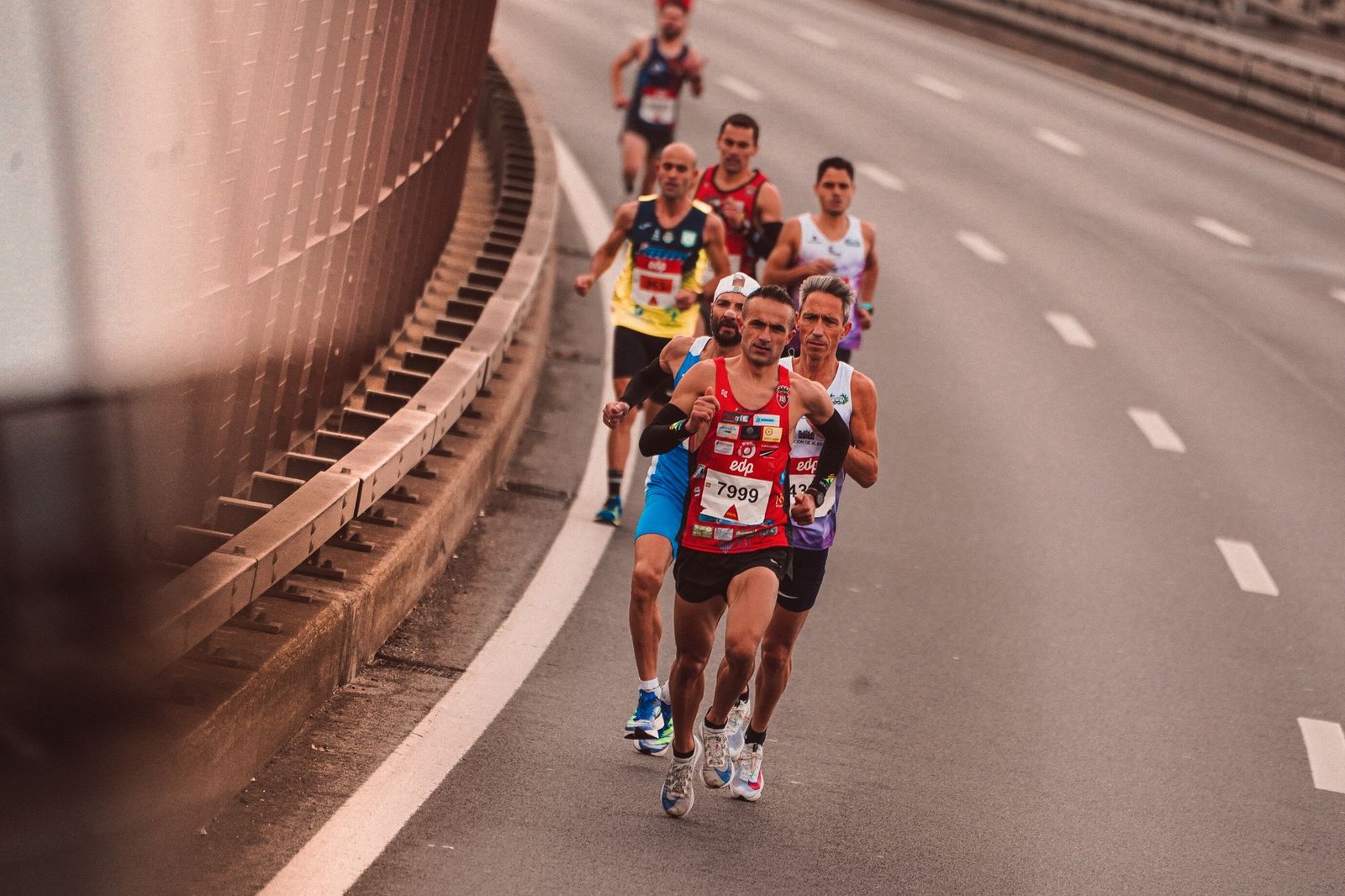
So why add complexity with premium products when the basics are mismanaged? Clean up what you eat before you dial in what you fuel with.
Avoid Triggers When Intensity Spikes
GI distress often shows up when effort rises, not when calories arrive. During hard running, solid foods can become a liability because they require more mechanical work and slower gastric emptying.
Switch to liquid or gels when intensity is high. If you are sensitive, also limit artificial sweeteners found in some “low/no-calorie” electrolytes, and keep a tight leash on sugar alcohols and excess caffeine. Even common pain habits can backfire if NSAIDs are part of your routine.
Your gut cannot negotiate with physics. Lower the inputs when intensity is highest, and keep the plan structured instead of improvising.
Practice the Exact Breakfast and Aid-Station Plan
Long runs are where you test your race day, not where you “see how it goes.” Practice the full fueling protocol early, including the breakfast you plan to eat before the race.
Then practice the same timing you will use on the course. If your race strategy depends on aid-station timing, simulate it. If your plan assumes taking fuel early, do it in training too, often around 15 minutes after you take off.
When you reach marathon pace, the stomach should recognize the routine. If it does not, you have trained wrong, not unlucky.
If Symptoms Appear, Follow the Protocol Immediately
Having a troubleshooting plan is the difference between a fixable hiccup and a full-blown stomach derailment. When symptoms start, slow down or walk briefly, let your heart rate settle, and cool down enough to reduce stress on digestion.
Keep moving when you can, but switch to smaller sips and smaller amounts. The worst response is to wait until the problem peaks. Early correction protects your next few minutes, and those minutes determine whether the gut calms down.
Don’t treat symptoms like a warning sign to stop caring. Treat them like data and adjust in real time.
Use Multiple Carbs So Your Stomach Has Options
Endurance nutrition is more stable when it gives your body multiple ways to process carbs. That is why many athletes do better with multiple transportable carbohydrates rather than relying on one source.
Carb sources that combine glucose and fructose can increase total absorption and reduce leftover carbs that may trigger GI problems. When your fueling strategy includes variety, you reduce the chance that a single ingredient overwhelms your gut.
If you have a history of intolerance, breadth beats repetition of the wrong thing. Your training should not just increase intake, it should improve compatibility.
Race Day Is a Training Day, Not a Surprise
On race day, your job is not to experiment. Your job is to execute the protocol you already tested at least 2–3 times under similar intensity. If the plan only works in theory, it will not work at mile 18.
Start early, keep intake steady, and continue with smaller, frequent amounts when your gut feels grumpy. That approach prevents the “big gap then big catch-up” pattern that often triggers cramps and nausea.

When your strategy matches what your gut practiced, the question stops being “Will I handle marathon fuel?” and becomes a simpler one: How smoothly can I keep going?
Consistency Beats Heroics
The core truth is blunt: GI trouble is rarely an innate flaw. It is usually the predictable result of inconsistent timing, improper intensity practice, and fueling amounts that your gut has not rehearsed.
Train your gut with deliberate intervals, build carbs gradually, use liquid-first approaches, and keep a log so you can find your sweet spot. Pre-race dietary cleanup prevents avoidable problems, and a clear on-course protocol keeps symptoms from escalating.
Want marathon fuel without GI misery? Then choose discipline. Practice the same plan until it stops feeling like a plan and starts feeling like routine.
How To Train Your Gut for Marathon Fuel Without GI Trouble?
How can you start training your gut for marathon fuel to avoid GI trouble?
Begin conservatively by planning regular fueling intervals (about every mile or every aid station) and taking roughly 20–30 g carbs per hour with about 8–10 oz of fluid per hour, then adjust based on how you feel during easy-to-moderate running.
How do you train up marathon fueling without upsetting your stomach?
Increase in small steps over multiple long runs by adding about 1 oz fluid and 5–10 g carbs at a time (or roughly 10 g carbs/hour every 1–2 weeks), and move from slow sips and small “nibbles” to your target intake instead of chugging.
What carbohydrate mix helps you reach marathon fuel targets with less GI trouble?
Work toward the common endurance range of 60–90 g carbs per hour using multiple transportable carbohydrates, and aim for a glucose-to-fructose mix often cited around 2:1 (or at least about 1:0.8) to improve oxidation and reduce leftover carbs that can trigger GI symptoms.
What should you eat before a marathon to support marathon fuel and minimize GI trouble?
Reduce common GI irritants by cutting back dietary fiber for 1–3 days pre-race, keep the day-of pre-exercise meal low fiber and low fat/protein, avoid heavy or very fatty meals, and during hard running prefer liquid or gel fuel over solid foods.
How should you practice and track gut training for marathon fuel during long runs?
Test your full race-day fueling plan early in long runs—including the same breakfast you’ll use—at similar intensity at least 2–3 times, and record what you took (timing and carbs/hour) plus how your gut responded to find your “sweet spot.”
What can you do if GI trouble starts while you’re fueling on race day?
If symptoms appear, cool down briefly to let heart rate settle, then slow or walk for a moment and switch to smaller, more frequent sips or bites; if you can continue, stick with the smaller intake rather than stopping, and avoid pushing new foods during the same effort.
Stick With the Plan and Let Your Gut Catch Up
To get real results, you need to treat how to train your gut for marathon fuel without gi trouble as a repeatable practice, not a one-time experiment: start conservative, train your timing at race effort, use a consistent carbs-plus-fluid schedule, and adjust in small steps until your stomach stops rebelling. Fueling works only when you practice it, so commit to the same approach on long runs and race day, and you will earn the stomach stability to keep running strong.

I am Ozan, a London-focused running writer and marathon enthusiast with a passion for helping people discover the city’s best races, running routes, walking trails, and fitness events. I research and write practical, up-to-date guides covering marathons, race preparation, training tips, running gear, and everything related to staying active in London.
My goal is to create reliable, easy-to-follow content that helps runners and walkers of all experience levels explore London with confidence, whether they’re preparing for their first 5K or their next marathon.