
London does not reward guesswork in your training. If you want to handle repeated climbs, descents, and the grind of uneven tarmac, you have to practice the job, not just log more miles. Generic workouts on smooth routes tend to flatter your fitness while leaving your legs unready for the constant braking, re-powering, and rhythm changes that uneven roads demand.
Build tolerance the same way you build endurance: gradually, on purpose, and often enough to matter. Add hill work at least once every 1 to 2 weeks, then increase how much hill time you do as race day approaches. For downhill durability, treat the last weeks before your event like a skill session: use repeated downhill running to get the repeated-bout effect working for your quads, then back it up with eccentric-focused strength two to three times per week, using slow controlled lowering and single-leg options like step-downs and reverse lunges.
To make repeated efforts feel manageable on the day, structure your sessions around repeatability and fatigue. Use forms like hill sprints with walk-down recovery, timed climbs repeated back-to-back, or hill ladders that teach you to change gears without losing control. And when the event piles effort across time, simulate that demand by stacking hard-ish efforts across 2 to 3 days with reduced volume each day, while matching the terrain and elevation as closely as you can around London’s unforgiving variations.
Hills Are The Main Event, So Train Like They Are
If you want to handle London’s uneven roads, the plan cannot treat hills as a warm-up extra. The event’s climbs and descents punish specific muscles and specific pacing decisions, again and again. That is why this question of how to train for repeated efforts on london’s uneven roads has a simple answer: practice the demands you will face, not the comfort you prefer.
Runners who “just get fit” often discover they can run fast on flat training days and still feel wrecked on the third surge. Why? Because strength, coordination, and fatigue management respond to repeated stimulus. When the stimulus is missing, your legs arrive unprepared.
Some people argue that long steady miles build everything you need. But uneven roads are not a steady treadmill. They are repeated accelerations, repeated braking, repeated re-platforming through uneven footing. London is an outcome test, and your training must be an outcome rehearsal.
Set A Hill Frequency That Forces Adaptation Every Week
Progress beats heroics. The most practical rule is hill work at least once every 1 to 2 weeks, then climb toward doing it twice per week as your event gets closer. If your weekly structure stays the same for months, your body adapts to the routine, not to the race.
Start with manageable volume such as a few short hill sets once per week. Then progressively increase the time you spend working on hills. Aim so that at least half of your hill-included training includes meaningful climbing efforts when you are preparing for a hilly event.
What happens when you under-dose hills? You keep your cardiovascular fitness while your mechanics and tolerance lag behind. That gap tends to show up where the course keeps refusing to flatten out.
Train Uphill Like Repeatable Effort, Not One Big Push
Uphill running is not just “going faster uphill.” It is learning to produce power under fatigue, while your form and breathing drift. For repeated efforts, use structured sessions that build the ability to hit similar outputs with incomplete recovery.

Choose formats such as these:
- Hill sprints up a short incline, about 50 meters, at roughly 90% effort with 1 to 2 minutes walk-down recovery, building toward 8 to 10 reps.
- Timed hills of 3 repeats where the uphill takes around 3 minutes at a controlled pace, then walk or jog down.
- Hill ladders that step up from 5 seconds sprint to 7 seconds, then increase in 2 to 3 second jumps up to around 15 seconds.
Think about repeatability, not peak performance. If every rep turns into a different workout, you are learning chaos, not control.
Practice Downhill Durability So Your Quads Survive The Second Descent
Downhill damage is real, and London will deliver it more than once. The goal is not to “fear the descent.” The goal is to train quads and connective tissue to handle repeated braking forces without the mid-race breakdown that turns speed into survival.
Use the repeated bout effect by inserting downhill running in the final weeks before race day. This helps reduce future damage after you have already exposed your legs to the pattern, so the second and third descents feel less like a shock.
Some athletes treat downhill practice as optional because it feels slower. But when you can descend with controlled tension instead of frantic pounding, your energy costs drop and your stride stays organized. Isn’t that the difference between “moving” and “reacting”?
Strength Training Must Target Eccentrics, Not Just Soreness
Hill tolerance is not a mystery. Your nervous system learns it, and your muscle-tendon units adapt to it. If you want downhill durability, you need eccentric-focused strength 2 to 3 times per week, and you need it to resemble the loading pattern of running on descents.
Build around slow, controlled eccentric work such as slow eccentric squats, step-downs, reverse lunges, and plyometrics like bounding, hops, or split-squat jumps. Start around 3 sets of 8 to 12 reps with a slow lowering phase. Keep form crisp. If you cannot control the lowering, you have no business chasing volume.
Want a blunt way to check your priorities? If your strength work mainly creates general fatigue without teaching controlled lengthening, you are guessing instead of training.
Recovery Is Training When You Do Repeated Efforts
Repeated efforts only work when recovery is purposeful. If you go hard without planned downshifts, you manufacture soreness and lose the quality that repeatable hill running requires. Recovery is not laziness. It is the mechanism that turns stress into adaptation.
Use a simple structure for your last 3 to 5 weeks and keep it consistent across your plan. It can look like this:
| Training Block | Hill Work Frequency | Downhill And Strength Emphasis |
|---|---|---|
| Early Build | 1 hill day per week | Short downhill exposure 1x weekly |
| Strength Accumulation | 1 to 2 hill days per week | Eccentrics 2x weekly |
| Specific Repeats | 2 hill days per week | Downhill running 1x weekly |
| Race Prep Weeks | 1 to 2 hill days per week | Downhill running last 2 to 3 weeks |
| Peak Sharpening | Reduced volume | Strength tapers, keep movement quality |
Hill training guidance is useful, but you still need to match it to your recovery reality. If you feel wrecked by Wednesday, your Friday hills become a lesson in denial. Protect session quality so the work actually lands.
Match Elevation And Terrain So Your Body Recognizes The Job
London’s uneven roads demand more than “running up hills.” They demand climbing and descending over surfaces that disrupt rhythm. You cannot fully replicate every bend and slope, but you can recreate the pattern of effort, footing, and re-acceleration.
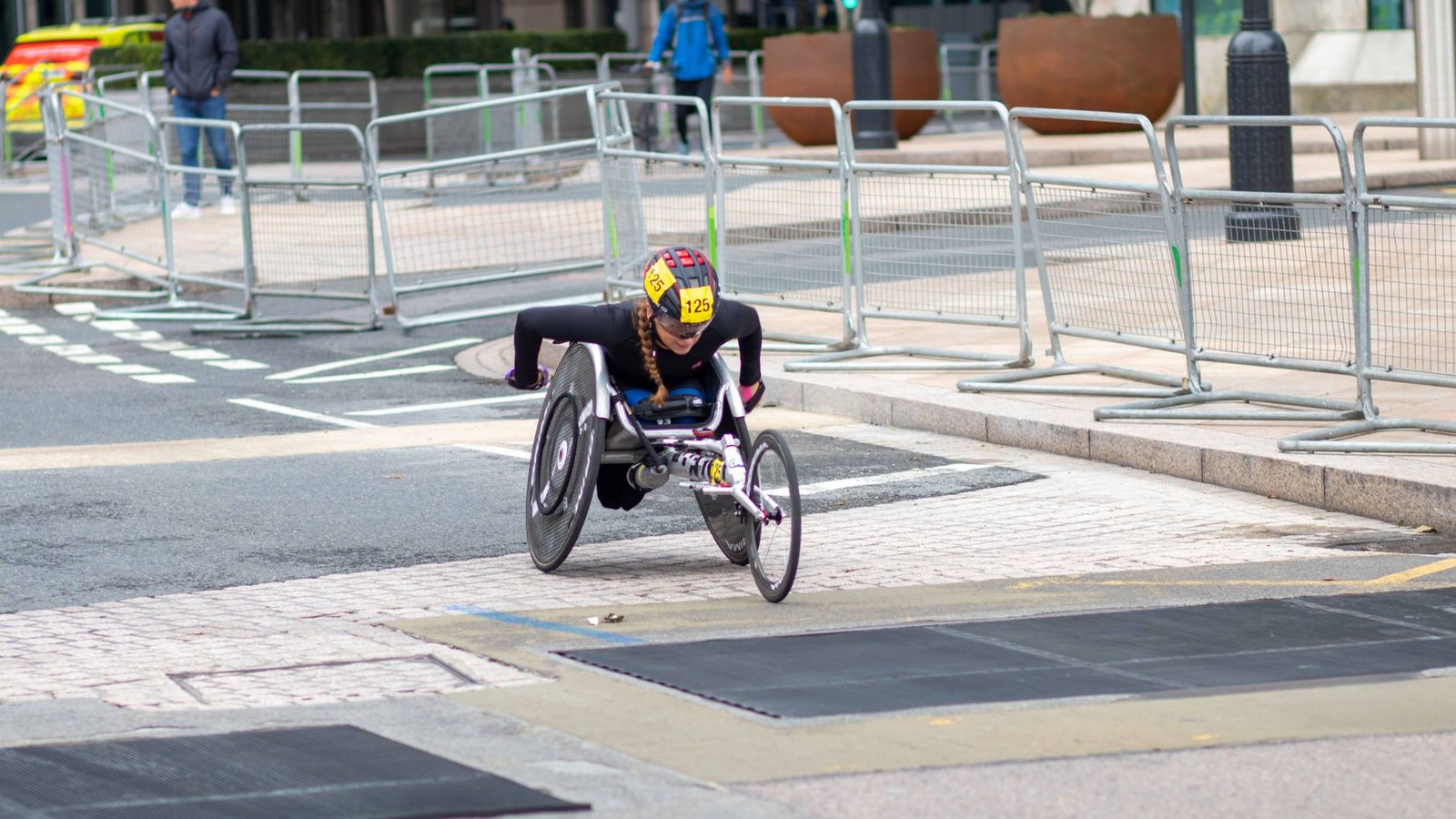
That is why whenever possible, recce the course, or at least match elevation gain and terrain type in training. If London includes lots of climbs and descents in short intervals, your plan should include similar sequences, not isolated hill repeats that start and finish on the same smooth groove.
When your legs recognize the pattern, your pacing decisions improve. When they do not, you burn time guessing. Isn’t race performance often just a better guess made earlier?
Simulate Long-Course Fatigue By Stacking Efforts Over Days
For long-course events, one heroic day rarely teaches you what repeated days do to your legs, your hydration, and your fueling tolerance. Instead, simulate demand by stacking efforts across 2 to 3 days with reduced volume each day.
A practical example is a “100K-style back-to-back” block: Day 1 6 to 8 hours mostly climbing, Day 2 3 to 5 hours steady controlled effort on similar terrain, Day 3 1 to 2 hours light shake-out movement. You are training durability and rhythm, not trying to invent a brand-new race.
If you are training for London’s uneven roads and you skip the multi-day stress, you risk entering the event with strong single-day legs. The course punishes that mismatch quickly.
Warm-Up Intelligently So Uneven Footing Does Not Surprise You
A good warm-up is not a ritual. It is a ramp that prepares your nervous system for repeated climbs and descents. If you begin cold on uneven roads, your first hard seconds cost extra attention and extra muscle tension.
Use gradual ramping: easy running plus drills that improve ankle stiffness and hip control, then short pickups before your first hill effort. Include a few controlled strides, and if you are practicing downhill, do it progressively so your quads learn tension early.
Some runners say warm-ups slow them down. On race day, the real slowdown comes later when your form breaks and you pay for it with injury risk and pacing loss. Warm up to protect both.
Pace Your Repeats Like A Budget, Not Like A Guess
Repeated efforts fail when pacing turns into improvisation. On climbs, go out with control so the second and third repeats do not become survival missions. On descents, aim for stable speed rather than reckless momentum. Stability is what preserves mechanics when fatigue rises.
A reliable method is to define effort targets by time or perceived exertion before you begin, then honor them. If your timed hills call for about 3 minutes uphill, treat that as a pacing anchor, not a suggestion.
Ask yourself a simple question mid-session: “Am I learning consistency, or am I chasing adrenaline?” Consistency keeps you moving through the course repeats. Chase behavior only works until it breaks.
Fuel And Hydrate For Climbing Stress, Not Just Distance
Uneven roads tax more than your legs. Climbing raises heart rate and heat stress, and repeated descents increase muscular cost. That combination means your fueling and hydration needs may drift if you rely on flat-course habits.
Plan carbs early and practice race-day timing in training. If your event is long and hilly, your stomach may tolerate carbs differently when your stride changes on descents. Test what works on your longest hill-inclusive sessions and keep hydration consistent.
Some people treat nutrition as something they do “later” in race week. That is backwards. Your gut adaptation needs reps, just like your quads do.
Track The Right Signals So You Adjust Without Guessing
You cannot improve what you do not measure. But measurement must match the goal. For repeated efforts on London’s uneven roads, track outcomes connected to the specific sessions: whether hill reps keep pace, whether downhill feels more controlled over weeks, and whether strength sessions feel stable rather than chaotic.

Use simple checks after key workouts: did your uphill pacing stay within your target range across repeats, did your downhill form degrade sooner than last time, and did your recovery keep you ready for the next quality session? If you only watch total mileage, you will miss the real progress signals.
The winners tend to be the ones who respond to feedback fast. When your data says your downhill tolerance is lagging, adjust eccentric work and downhill exposure. When uphill reps crumble, reduce volume and raise quality next week.
Stop Seeking Magic. Build A Specific System And Repeat It
London’s uneven roads will not care about your motivation speeches. They will respond to a system: hill frequency, structured uphill repeats, downhill durability practice, eccentric-focused strength, and multi-day fatigue simulation. Do the work in the right order, and the event stops being a threat.
Yes, there are other training philosophies. Some athletes prefer pure mileage. Others chase only one type of hill session. But the course demands repeated climbs and descents, and your plan must train the repeatability of effort and the tolerance of braking.
So commit to the boring, effective parts. Train the pattern. Measure the reps. Recover on purpose. If you do that, the uneven roads will feel less like punishment and more like proof that your preparation matched the job.
How To Train For Repeated Efforts On London’s Uneven Roads
How Can You Plan Hill Work For Repeated Efforts On London’s Uneven Roads?
Schedule hill sessions at least once every 1 to 2 weeks and treat them as specific practice for the climbs and short descents you expect on race day.
How Do You Increase Hill Training Volume Without Overuse Injuries?
Start with a small amount of hill time, then increase the total minutes on hills gradually and consistently, adding frequency only when you recover well.
How Should You Train For Downhill Durability On London’s Uneven Roads?
In the final weeks, add some controlled downhill running at the end of sessions to use the repeated bout effect and reduce the muscle soreness risk from repeated descents.
Which Strength Sessions Improve Eccentric Control For Repeated Descents?
Do eccentric-focused lower-body work 2 to 3 times per week with slow lowering in movements like eccentric squats, step-downs, and reverse lunges, and begin with manageable sets.
What Hill Workout Formats Match Climbing And Descent Rhythm For London?
Use structured options such as short hill sprints up a steep incline with walk-down recovery, timed repeats where you run up at a controlled effort and walk or jog down, or hill ladders that build duration step by step.
How Can You Simulate Multi-Day Fatigue From Repeated Efforts In London?
When your event structure allows it, rehearse the demand by stacking hard efforts across 2 or 3 days with reduced volume each day, and match elevation and terrain during key sessions when possible.
Time To Get Serious About Training For London’s Uneven Roads
How to train for repeated efforts on london’s uneven roads is simple in principle and strict in execution: match the work to the terrain, build tolerance gradually, and train the downhill durability as deliberately as the climbs. If you do hill sessions, eccentric-focused strength, and back-to-back fatigue blocks with controlled progression, London will stop feeling random and start feeling predictable, and that is the real advantage on race day.

I am Ozan, a London-focused running writer and marathon enthusiast with a passion for helping people discover the city’s best races, running routes, walking trails, and fitness events. I research and write practical, up-to-date guides covering marathons, race preparation, training tips, running gear, and everything related to staying active in London.
My goal is to create reliable, easy-to-follow content that helps runners and walkers of all experience levels explore London with confidence, whether they’re preparing for their first 5K or their next marathon.