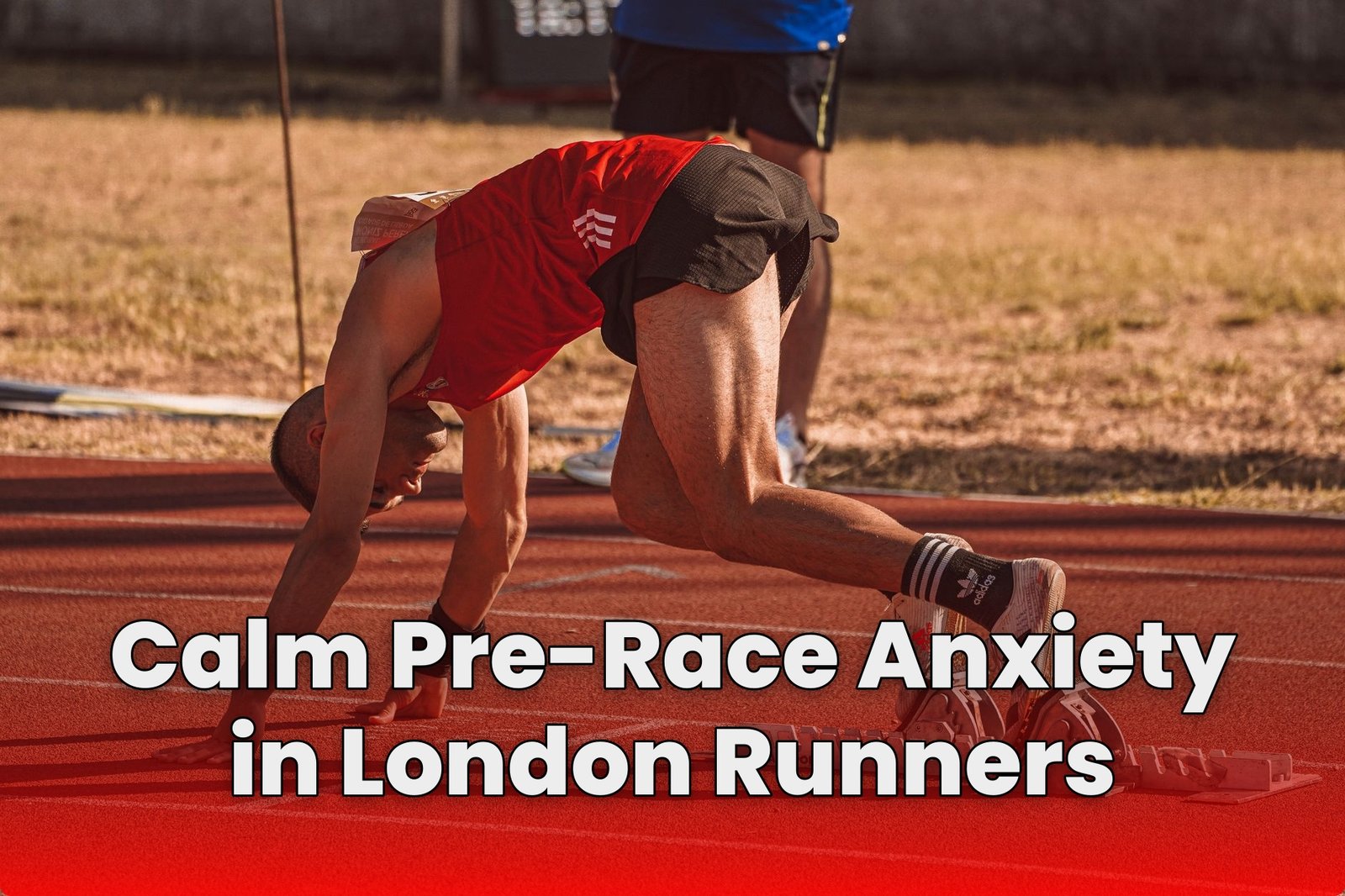
Pre-race anxiety is predictable, and you can beat it with a plan, not willpower. If you are dealing with pre-race anxiety for london runners: calming techniques that work, the goal is not to “feel fearless,” it is to steady your nervous system quickly and give your mind something concrete to do. When you treat anxiety like training data instead of a verdict, your race day stops being a gamble.
The most reliable shift is breathing on purpose. Box breathing can move you from fight-or-flight toward calm in a couple of minutes, and you can apply it anywhere you spike, whether that is the night before, the car park, the start corral, or even mid-race. The second advantage is rehearsal: run the first five minutes in your head and in practice so you land in the race with a script, not a scramble.
After that, control the race by making it manageable. Use simple check-ins in five-minute blocks, replace unhelpful messages with short present-tense phrases, and use the “30-second rule” when anxious thoughts show up so you notice, acknowledge, and redirect instead of arguing. Back the mental tools with predictable race-week routines and reduced triggers, and you will feel more in command just when your body wants to panic.
Anxiety Is Information, Not a Disqualification
Pre-race anxiety for London runners is not a moral flaw and it is not a sign you are unfit. It is your nervous system doing its job too aggressively, treating the start as danger instead of a plan. If you keep judging it, you turn a manageable surge into a fight you cannot win.
Here is the editorial truth: calming techniques work when you treat anxiety as a signal that you can steer, not a verdict on your ability. You do not need to erase nerves. You need to steady the system and give your mind a clear sequence to follow.
When you stop arguing with fear and start running a protocol, control returns.
Stop Negotiating With Fear and Start Breathing
The most reliable first move is to shift from fight-or-flight toward calmer breathing fast. Box breathing does that: inhale for 4 seconds, hold for 4, exhale for 4, hold for 4, then repeat. Within a couple of minutes, many runners feel their body stop sprinting in place.
Where do you use it? Anywhere the spike hits. Before sleep, in the car park, at the start corral, even mid-race. Anxiety does not wait for convenient timing, so your technique should be portable and immediate.
Key point is repetition. One round can help, but repeating until you feel more in control is what turns breathing into performance support, not a one-off attempt.

Rehearse the First Five Minutes, Not the Finish
Most runners rehearse the wrong part of the race. You think about the finish when your mind should be practicing the transition from waiting to moving. If you can predict the opening, you reduce the uncertainty that fuels pre-race anxiety.
Your rehearsal should be simple and specific: walk to the corral, hear the announcer, hear the gun, survive the first crowded 200m, then settle into pace and breathing. Then repeat that rehearsal across the week, 5 to 10 times, so it feels familiar under pressure.
Time Your Escape With Five Minute Blocks
When anxiety rises, your brain zooms out and starts forecasting catastrophe. Counter it by zooming in with measurable segments. Divide the race into manageable 5-minute blocks and use your watch for quick check-ins.
Roughly speaking, that gives about 9 blocks for a 10K, 18 to 24 for a half marathon, and 40 to 55 for a marathon. Numbers matter because they reduce “all or nothing” thinking. Next action becomes obvious: run the next five minutes well.
- Focus only on the current block, not the full distance
- Let the clock tell your story, not your mood
Use Present Tense Cues That Match Your Strides
Unhelpful inner messages are common, but you are not powerless. Replace them with short present-tense phrases that track what you are doing. “I am ready.” “Strong.” “Smooth and easy.” “Next mile.” “Keep moving.”
This works because it turns anxious narration into task-relevant attention. Your mind cannot simultaneously monitor your dread and your cue word. When you practice these cues in training, you are building an automatic script for race day.
Be honest: how many runners waste energy trying to think their way calm instead of giving the brain a job to do?
Handle Intrusive Thoughts With the 30 Second Rule
Intrusive thoughts will arrive. The goal is not to stop them, but to shorten their life. Use the “30-second rule”: notice the thought, acknowledge it without arguing, then redirect. You give the brain less time to grow the story.
If you want a simple structure, use STOP: Stop, Take a few breaths, Observe, Proceed. You are signaling to yourself that you stay in charge even when your mind tries to panic.
This is where pre-race anxiety for London runners becomes something you can manage minute by minute, not something you endure for hours.
Race Week Should Stabilize You, Not Surprise You
On race week, consistency is a performance tool. Your job is to reduce uncertainty so the start feels earned, not chaotic. That means sleep, food, and warm-up should be predictable and tested, not improvised because you are anxious.
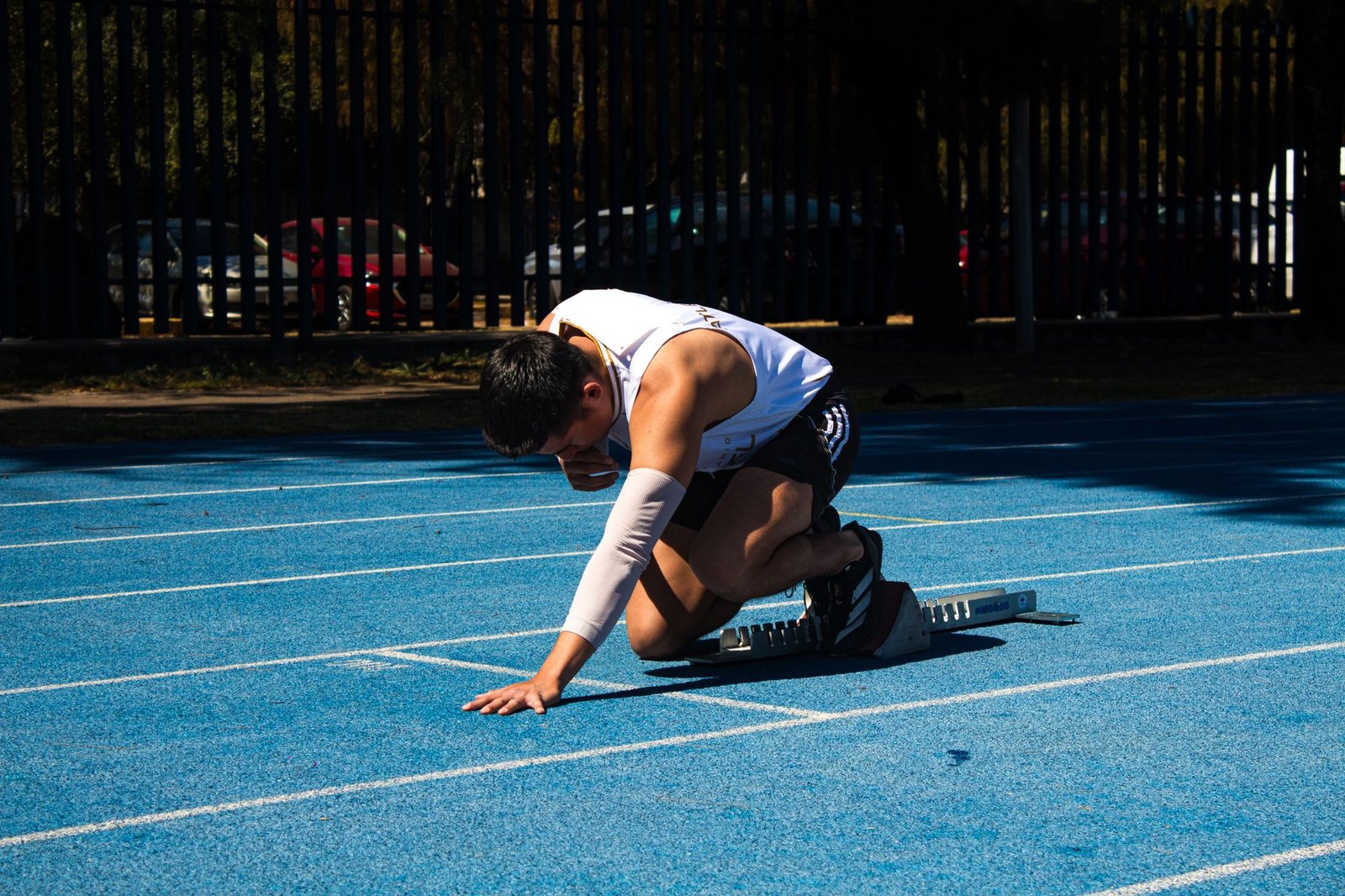
Build your routine like this. The plan is not glamorous, but it is effective because it lowers the number of variables your nervous system must interpret.
| Race Week Routine | Timing | Measurable Target |
|---|---|---|
| Tested breakfast | 2 to 3 hours before | No new foods |
| Night sleep | Before race day | 6 to 7 hours |
| Early arrival | Before corral access | Time to warm up |
| Easy jog warm up | After arrival | 5 to 10 minutes |
| Strides | Late warm up | 4 to 6 reps |
If you need motivation to keep it disciplined, remember that structured stress-relief practices are repeatedly linked with steadier nerves, and stress relief tips reinforce that same logic.
Put simply, you reduce pre-race anxiety by removing “what if” moments. You cannot control the weather or crowd energy, but you can control your routine.
Delete the Triggers That Feed the Spiral
Anxiety loves constant input: forecasts, social media, and late caffeine decisions. If you feed the brain uncertainty, it will keep producing alarm. Your responsibility is to cut off those triggers before they manufacture a worse problem.
Practical rules for London runners: avoid obsessively checking the forecast, limit caffeine after midday, and avoid alcohol. Do not scroll social media before your race, and avoid race-day conversations that wind you up. If someone is telling you horror stories, you do not owe them your attention.
Calm is not passive. It is what happens when you stop pouring fuel on the fire.
Warm Your Body With Breathing and Tension Release
Breathing is mental, but tension is physical, and the two travel together. Gentle yoga can reduce tightness and help you stay in a calmer rhythm. Think about slow mobility and controlled breathing rather than trying to “stretch everything out” aggressively.
Sports massage can also help as preparation, especially when it targets areas that tend to lock up under stress. The goal is not pain relief for its own sake. The goal is to show your body that it does not have to brace for impact.
Opponents argue that these tools are “extra.” But if extra means less tension and better breathing, why would you refuse it?
Mindfulness Works When It Trains Attention, Not Mood
Mindfulness and meditation are useful when they focus on breath and thought regulation, not when they promise a magical calm that never arrives. A breath-focused practice slows the rate at which thoughts run away from you and helps you return to the present more efficiently.
Try this mindset shift: you are not searching for perfect serenity. You are training the ability to notice distraction and come back. That is exactly the skill you use when you get anxious at mile one and still have miles to go.
Reframe Discomfort Into Purpose and Motion
Your race will hurt at times, and anxiety often exaggerates that truth into dread. Reframing helps. Accept expected discomfort with a steady message such as, “I know this will hurt, but I can handle it.” Then pair it with a task: keep moving, stay smooth, hold your form.
Some runners also benefit from reframing anxiety as excitement. Feeling keyed up does not have to mean danger. It can mean you are ready to work. When you stop treating the sensation as an alarm, perceived effort can drop.
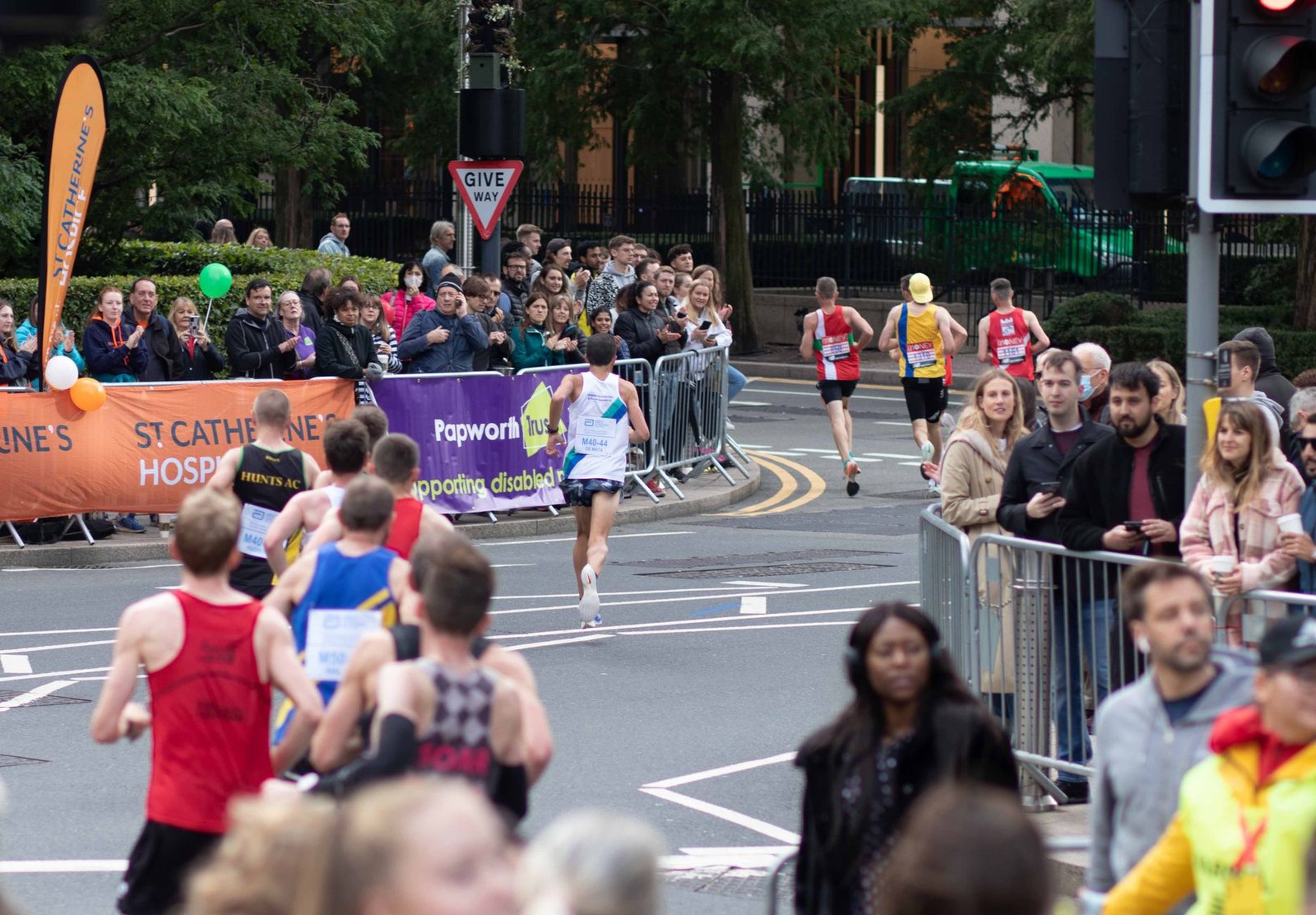
Discomfort is data, not drama, and you can still choose how to interpret it.
Track Less, Execute More
When anxiety rises, runners either track too much or track nothing. Both extremes fail. The better strategy is simple execution with limited check-ins: trust your plan, use your watch for only what matters, and let the next decision be the next decision.
Stay externally focused on task-relevant cues. That could be breathing cadence, relaxed shoulders, foot strike, or steady pacing. The more your attention stays on controllable mechanics, the less room anxiety has to dominate.
Ask yourself a hard question: are you running the race, or are you conducting an audit of your feelings?
Make It Trainable and Consider Help When Needed
The strongest calming techniques are the ones you rehearse. Practice box breathing, present-tense cues, and thought redirection in training so they show up automatically. Rehearse your first five minutes and your five-minute blocks until they feel familiar. Then pre-race anxiety becomes something you can manage with skill, not something you fear.
And if your anxiety is severe, persistent, or spiraling into avoidance, getting professional support is not weakness. It is responsible training for your mind. You would not ignore a recurring injury, so why treat a recurring mental burden as optional?
Pre-Race Anxiety for London Runners: Calming Techniques That Work
What Are the Fastest Calming Techniques for Pre-Race Anxiety for London Runners?
Use box breathing to steady your nervous system: inhale, hold, exhale, and hold for about 4 seconds each, repeating for a couple of minutes until you feel more in control.
How Can London Runners Rehearse the First Minutes to Reduce Pre-Race Anxiety?
Practice only the first 5 minutes repeatedly—walking to the corral, hearing the announcer and gun, managing the first crowded section, then settling into pace and breathing—so race starts feel predictable.
When Should London Runners Use Breathing Exercises for Pre-Race Anxiety?
Apply calming breathing as soon as you notice anxiety spikes, whether that’s the night before, in the car park, at the start corral, or mid-race, and keep repeating until your attention shifts back to your rhythm.
How Do You Stop Anxious Thoughts During a London Run Using a 30-Second Rule?
Notice the thought without arguing, acknowledge it, then redirect immediately—use a simple loop like “observe and proceed,” so anxiety doesn’t hijack your pacing or breathing.
What Race-Week Routines Help London Runners Manage Pre-Race Anxiety?
Stick to a tested breakfast 2 to 3 hours before, avoid new foods and caffeine changes late in the day, prioritize 6 to 7 hours of sleep, arrive early to warm up with an easy jog plus dynamic mobility, and limit anxiety triggers like obsessively checking the forecast.
Do Mindfulness, Yoga, or Sports Massage Reduce Pre-Race Anxiety for London Runners?
They can help: breath-focused mindfulness or meditation slows racing thoughts, gentle yoga releases tension, and sports massage in preparation may reduce physical tightness so you feel calmer when you line up.
Trust the Plan and Tame the Jitters
For pre-race anxiety for london runners: calming techniques that work, the key is consistency, not intensity. Choose a few reliable tools like box breathing, a short first-5-minutes rehearsal, and a simple thought redirect such as the 30-second rule, then practice them across your week so race day feels familiar. When anxiety shows up, respond with a clear next step and keep your focus on the next controllable mile, because calm comes from preparation you can actually repeat.

I am Ozan, a London-focused running writer and marathon enthusiast with a passion for helping people discover the city’s best races, running routes, walking trails, and fitness events. I research and write practical, up-to-date guides covering marathons, race preparation, training tips, running gear, and everything related to staying active in London.
My goal is to create reliable, easy-to-follow content that helps runners and walkers of all experience levels explore London with confidence, whether they’re preparing for their first 5K or their next marathon.