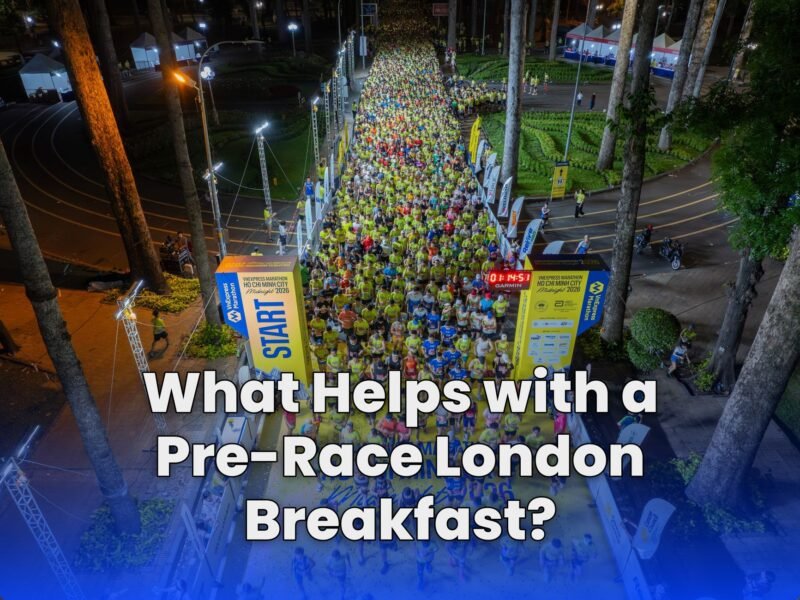
Race-day crowd stress is going to hit you, but it should not hijack your form. If you are trying how to manage race-day crowd stress without losing form with sheer willpower, you are fighting the wrong enemy, because anxiety loves uncertainty and bottlenecks. The goal is simple: reduce the moments that break rhythm, then give your body a repeatable way to calm down without slowing your execution.
Start before you ever feel the first squeeze. Tighten logistics so you spend less time in lines and closer to the start, and pick the moment you enter the expo so you are not stuck in peak congestion. Then stage with the correct pace group so you are not forced into sudden surges, and scan ahead on course for chokepoints so you can stay on one side and reduce passing-related accelerations. When you control the flow, crowd noise turns into background, not a command.
When the anxiety spikes anyway, keep your routines form-friendly. Warm up properly so your heart rate climbs with purpose, practice belly breathing to take the edge off, and ground yourself with quick “see, hear, feel” cues so your focus snaps back to the moment. Slow down only in the places that matter, like choosing the less-busy end of an aid station, then mentally rehearse your plan in the week leading up so stress has fewer ideas to latch onto.
Treat Logistics Like Training
If you want the answer to how to manage race-day crowd stress without losing form, start with the boring truth: stress is often time pressure in disguise. You do not lose composure because you care too much. You lose it because you are stuck in lines, late to your start, and forced to improvise while your body is already warming up.
Plan transportation and parking in advance. Scout accessible lots the night before, arrive early, and build an exit path that does not depend on luck. If you are prone to crowd panic, assign a driver for the final leg so you can quickly leave when you need to protect your rhythm.
Some runners say crowds are part of the race and you should “adapt.” Adaptation has a cost, and that cost shows up as rushed strides and broken mechanics. Better logistics buys you clean minutes, and clean minutes buy you consistent form.
Make Bib Pickup Work for You
Expo crowds are loud, chaotic, and sticky. They drag your attention away from your pacing plan and they drain your patience before the gun even goes off. Why wander booth lines when your goal is execution?
Pick up your bib when the expo opens or right before it closes. Then skip the booths entirely. You are not hunting for inspiration. You are guarding your concentration, keeping your body cool enough to start strong, and avoiding the jitter that comes from endless slow movement.
When you reduce exposure, you reduce the stress signal that crowds trigger. The result is simple: you arrive with your warm-up intentions intact instead of trying to rebuild them in real time.
Start Where Your Pace Lives
Staging is not a formality. It is a mechanical decision. If you start in the wrong place, you spend the early miles braking, surging, and re-sorting yourself around bodies that refuse your stride length.
Stage with the correct pace group, especially the pacer for your target marathon time. Then commit. You cannot run “almost the pace” without paying for it in early accelerations, clogged passing lanes, and delayed oxygen uptake.
People argue you can “feel it out” and slot in later. Feelings are not timing chips. If you gamble on the first mile, you teach your nervous system that the plan is optional. A controlled start trains your body to hold mechanics under pressure.
Scan for Chokepoints Before You Meet Them
Crowd stress spikes when your brain predicts a block and then confirms it. Your best defense is forecasting. Before you hit a dense section, scan ahead for bottlenecks and change your plan early, not at the moment you are forced to stop accelerating.
Chokepoints behave like traps: they compress stride cadence and they push runners into awkward lateral movement. Identify likely pinch points, then set your expectations for controlled spacing, quicker foot turnover, and reduced passing attempts.
This is not paranoia. It is pacing intelligence. When you know what is coming, you can keep your form stable instead of reacting with arm flails and choppy steps.
Pick a Side and Kill the Passing Surges
Passing is where runners “forget” mechanics. Every time you weave through traffic, you create micro-collisions in your stride. To manage crowd stress without losing form, choose one side of your lane and stick with it when passing is likely.
Scanning matters, but so does consistency. Keeping to one side reduces the constant re-centering your body must do, which lowers the energy cost of crowd avoidance. Your breathing stays organized and your hips stop doing extra work to correct every sidestep.
Do not chase openings that disappear. Create a stable corridor, then move through it with calm intent. The crowd will still be there. Your job is to keep your technique in control.
Aid Stations Are Precision, Not Interruptions
Aid stations look harmless until you slow down, reach awkwardly, or bump someone while you scramble for the next sip. That is where rhythm dies. Treat fluids like a drill: approach, take, and depart with the same cadence you used on approach.
When the station is busy, choose the less-busy end and take fluids deliberately. You avoid the stop-start tug-of-war that forces elbows wide and stride length short.
| Race Moment | Form Risk | Management Fix |
|---|---|---|
| Left-side surge | Stride chopping | Hold one lane |
| Long queue at end | Overreaching | Take at calmer end |
| Spill from contact | Stomach disruption | Sip, then steady |
| Catching up mid-station | Hard accelerations | Keep cadence constant |
| Rushing the cup | Posture collapse | Two-step receive |
Even small delays matter. A chaotic station can cost seconds, but it also costs mechanics. Your goal is fewer disruptions, not heroic glances at who is ahead.
Warm Up to Earn Calm
Crowds can turn your warm-up into a nervous negotiation. If you arrive underprepared, your heart rate spikes faster, your breathing tightens, and your form starts to wobble. The fix is to warm up with purpose, not hope.
Warm up properly and get your heart rate near lactate threshold before you join dense movement. That timing reduces the shock when you hit faster-than-expected surges near the start. Your body feels “ready” instead of “trapped.”
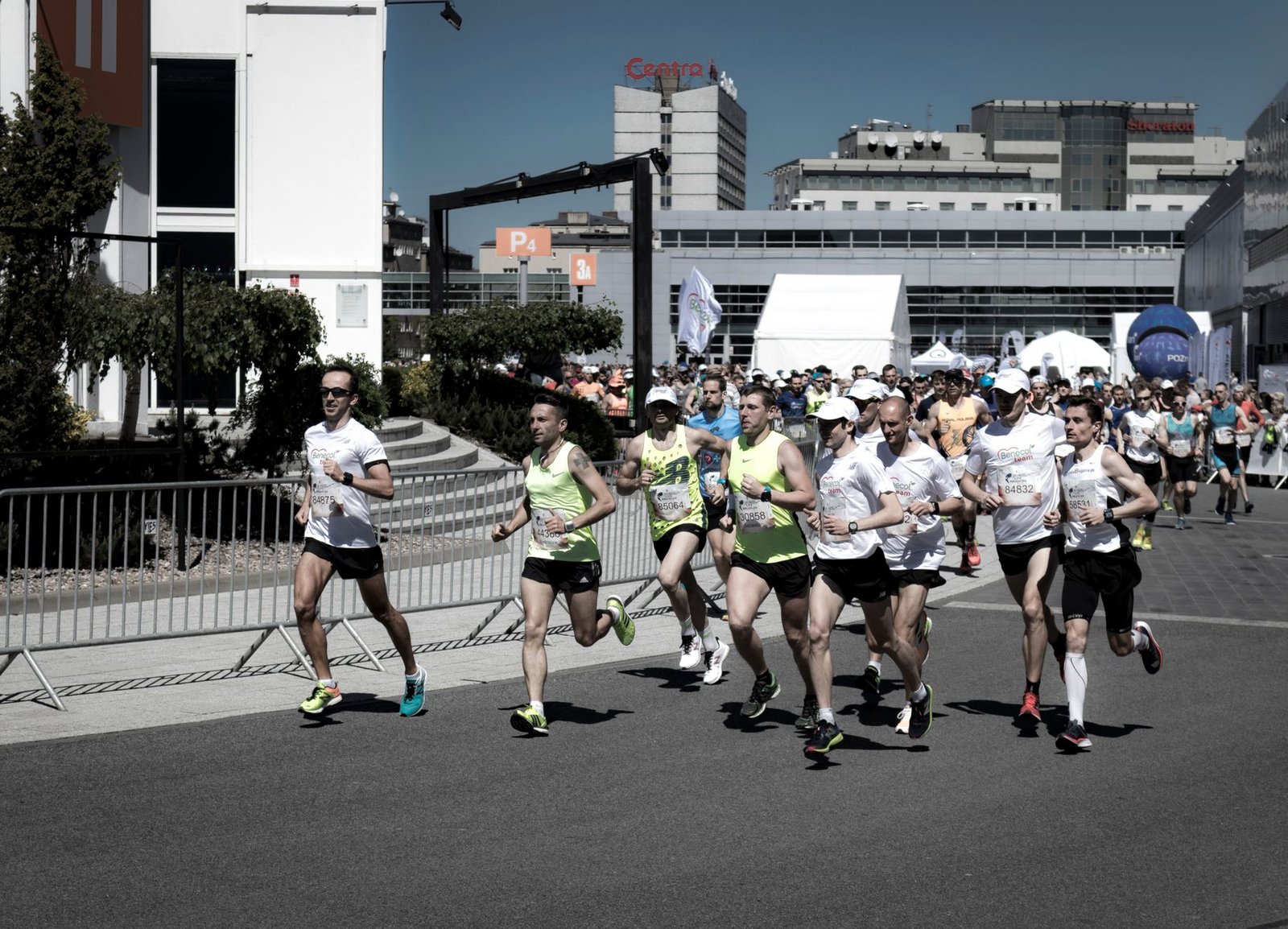
When runners say, “I’ll calm down once I start running,” they forget that running starts with what your warm-up taught your nervous system. Teach steadiness early, and crowd noise loses leverage.
Move Through Bottlenecks, Do Not Freeze
Standing still while surrounded by motion is a recipe for panic. Freeze moments create internal alarms: you feel trapped, your breathing changes, and your legs prepare to compensate instead of move smoothly.
When bottlenecks appear, keep moving. Adjust stride length slightly, maintain cadence as much as possible, and use smooth arm carriage to reduce extra tension. If you need micro-corrections, do them with your feet, not your torso.
Movement turns stress into motion you can control. Freeze turns it into spiraling attention. Ask yourself: do you want your body reacting or executing?
Use Abdominal Breathing That Respects Technique
Breath control is not a meditation trick. It is a form tool. If your breathing becomes shallow, your shoulders rise, your ribcage tightens, and your mechanics pay the bill. That is why remote work productivity comparisons are irrelevant here, and why you need race-specific breathing.
Use belly or abdominal breathing patterns during calmer stretches: inhale to expand the abdomen, exhale to settle the ribcage, then return to your natural cadence. In dense sections, keep the rhythm steady so your torso stays aligned.
Some runners dismiss breathing as “too slow for race pace.” That objection confuses speed with control. You are not trying to slow your legs. You are preventing stress from hijacking your posture.
Ground With Rapid Sensory Cues
When crowd anxiety peaks, your attention narrows to threat. You hear everything louder, feel your mouth dry, and assume disaster is coming. Sensory cues break that loop by giving your brain a repeatable task.
Use rapid “see, hear, feel” labeling. Repeat a short list, keep it factual, and keep moving. The goal is not comfort. The goal is redirection from catastrophic prediction to present data.
This works because it forces your attention to re-anchor, and re-anchoring protects stride consistency. Crowd stress loses authority when your mind has a script.
Reframe Your Body Signals as Preparation
Dry mouth, a racing heart, and hot legs can feel like danger. But during a marathon, they can also be normal preparation. The difference is your interpretation, and interpretation controls how tightly you tense your muscles.
Reframe physical sensations. Treat the racing heart as readiness, not panic. Treat dryness as fuel management, not failure. When you stop demanding that your body feel calm, you stop fighting your own physiology.
At this point, the mental work must be immediate. If you wait for confidence, you will arrive to mile ten still negotiating fear.
Use Breath-Synced Mantras and Thought Replacement
Composure is not luck. It is repetition under pressure. Short, breath-synced mantras help you keep the same decision loop when the crowd spikes your stress and others surge around you.
Replace thoughts in the moment. Use scripts like “I have handled this pace before” and repeat them on exhale. If you need a practical mental plan, race-day anxiety tools can guide how you rehearse your response before race day.
What is the alternative? Let fear run the steering wheel while your legs pay for every mental wobble.
Progressive Relaxation and Anti-Catastrophe Rules
Progressive muscle relaxation is not a lounge activity. Used in small bursts, it reduces the gripping pattern anxiety creates in calves, jaw, and hands. When you unclench, your stride tends to settle and your arms stop throwing rhythm off.
Pick one routine you can perform quickly. Tighten a muscle group for a few seconds, then release. Repeat once more, then return to cadence and forward gaze. Pair this with an anti-catastrophe rule: no forecasts beyond the next controlled segment.
But what if something goes wrong? Then you respond like a runner, not like a commentator. Form survives when your mind refuses the drama of worst-case thinking.
Build Week-Long Readiness So Crowds Cannot Hijack Focus
Race-day crowd stress gets a head start in the week before the start line. If sleep is careless, if logistics are fuzzy, and if you ruminate without a plan, then every dense moment becomes harder. You are training stress resilience even before you train speed.
Prioritize sleep two nights prior. Write out logistics concerns to offload mental clutter. Then rehearse success and your race plan so the crowd does not steal your focus at the moment decisions matter.
Because when you arrive with a practiced plan, the crowd becomes background noise. You keep your form, you keep your pace, and you stop negotiating with anxiety one mile at a time.
How to Manage Race-Day Crowd Stress Without Losing Form?
How Can Race-Day Logistics Reduce Crowd Stress and Protect Your Running Form?
Plan transport and parking early, scout accessible lots the night before, arrive as early as possible, and use a backup plan for quick drop-off if lines slow you down so you can warm up and get to the start without late pressure.
When Should You Pick Up Your Bib to Minimize Expo Crowds?
Pick up your bib when the expo opens or right before it closes, and skip booths that pull you into long queues so you spend less time moving through dense areas while you stay ready to race.
How Do Correct Pace Groups Help You Avoid Bottlenecks on Race Day?
Start in your correct pace group and position near the pacer for your target marathon time, so you are less likely to be forced into sudden surges or stops when slower and faster runners converge.
What Should You Do on the Course to Handle Chokepoints and Aid Stations Without Breaking Rhythm?
Scan ahead for likely chokepoints, keep to one side to reduce awkward passing accelerations, and when you take fluids choose the less-busy end of an aid station so you keep your cadence steadier.
Which Calm-Down Routines Keep You Focused When Crowd Anxiety Hits?
Use short, form-preserving routines: warm up properly and build your heart rate before the start, move instead of standing when tension spikes, practice belly breathing, and ground yourself with quick sensory cues like see, hear, and feel items while reframing sensations as preparation.
How Can You Prepare the Week Before to Stay Stable Under Race-Day Crowd Stress?
Prioritize sleep the last two nights, write out logistics concerns to offload worry, and do mental rehearsal of your race plan so crowd stress is less likely to take over your focus when it matters most.
Manage Crowd Stress Without Sacrificing Your Form
How to manage race-day crowd stress without losing form comes down to planning friction out of your day and training your body to stay composed when things get loud. Lock in logistics early, pick calmer moments for bib pickup and aid, and protect your rhythm by aligning with the right pace group and avoiding chokepoints. Then use repeatable, form-preserving calming routines so anxiety turns into focus instead of tempo slips. The runner who stays disciplined under pressure finishes stronger because their form holds when the crowd tries to take it.

I am Ozan, a London-focused running writer and marathon enthusiast with a passion for helping people discover the city’s best races, running routes, walking trails, and fitness events. I research and write practical, up-to-date guides covering marathons, race preparation, training tips, running gear, and everything related to staying active in London.
My goal is to create reliable, easy-to-follow content that helps runners and walkers of all experience levels explore London with confidence, whether they’re preparing for their first 5K or their next marathon.