Recovery starts when you stop running. Drink, eat, change out of wet clothes, and let your breathing settle before you add any more effort. The right plan depends on what comes next: an ordinary recovery day calls for food, fluids, light movement, and sleep, while another hard session soon requires faster carbohydrate replacement and a marathon calls for a slower return to running.
The same steps apply whether you finish beside the Thames, on Hampstead Heath, or on a treadmill at home. London weather can change how quickly you cool down, and a warm day or a windy route can leave you needing more attention to clothing and fluids. Mild tiredness is expected, but pain or symptoms that worsen need a different response.
Key takeaways
- A meal or snack with carbohydrates and protein suits ordinary recovery; save the higher carbohydrate plan for another hard session soon.
- If stretching leaves pain worse, stop rather than pushing through; gentle walking, cycling, swimming, or yoga is suitable the next day only while symptoms stay comfortable.
- Sleep matters after a long run, so protect bedtime and avoid late-day caffeine when it keeps you awake.
- Some marathon runners may need 1 to 2 weeks before running feels right; restart flat and easy only after walking and stairs are comfortable.
The First Hours After a Long Run
Walk until your breathing feels controlled rather than stopping abruptly while you are still overheated. Let the cooldown match how you feel and the conditions around you. Skip hills, strength training, errands on foot, and other strenuous tasks while your body is settling, because the first part of recovery is not another chance to train.
Wet fabric can cool you quickly on a windy London day, especially once you stop moving. Change into dry clothes as soon as you can, sit somewhere comfortable, and take your first drink. If solid food feels difficult straight away, begin with a drink and a small snack, then eat more within 60 to 90 minutes. Choose food you already tolerate when tired; a long run is a poor time to test a new gel, supplement, or rich meal.
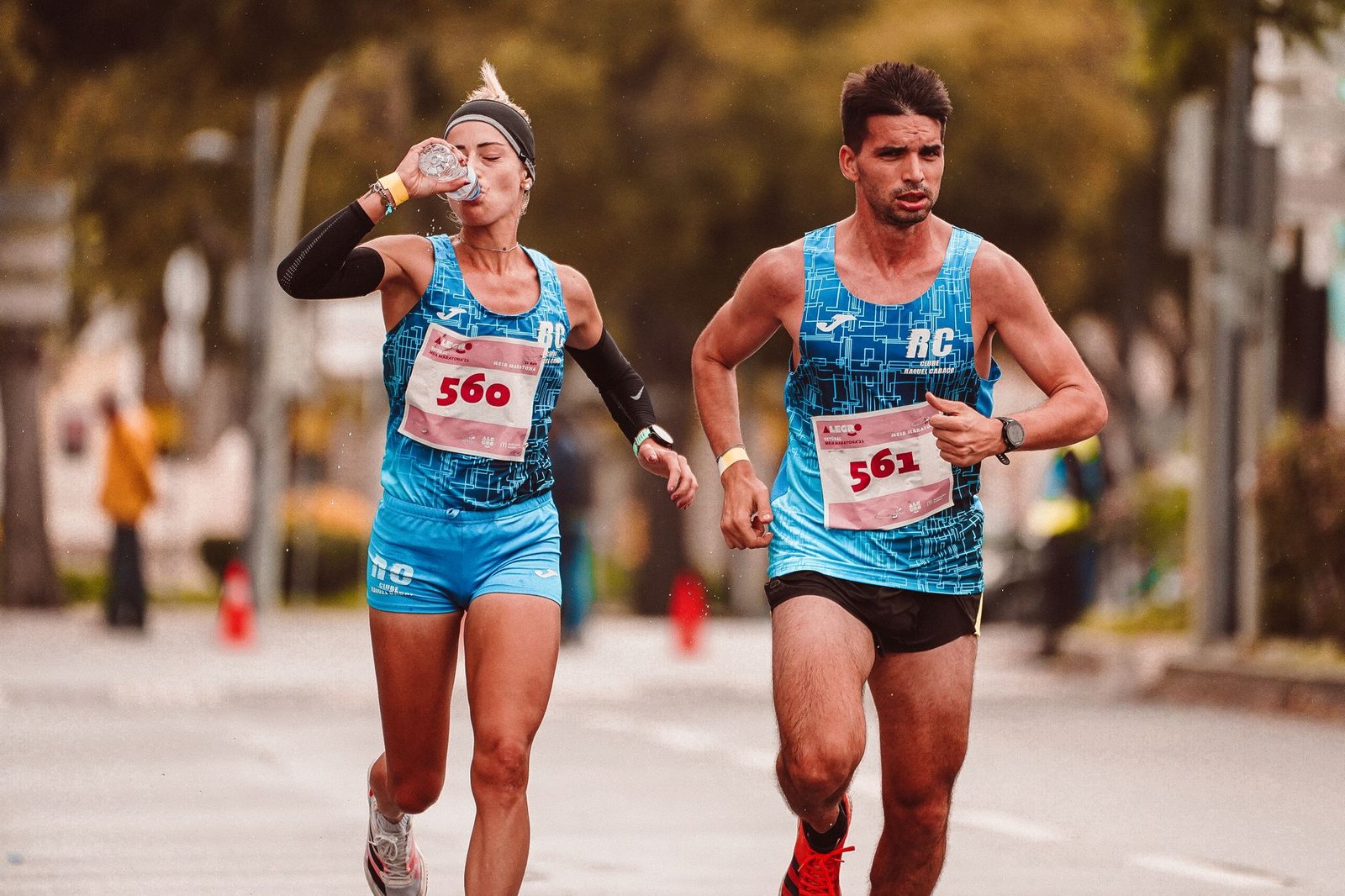
Two marathon runners hydrating and maintaining focus during the race on a city street.
Within the first few hours, eat a meal or snack containing carbohydrates and protein. The amount of carbohydrate can range from 1 to 2 grams per kilogram of body weight, depending on the size and demands of the run and what you need to do next. A sandwich with yogurt, cereal with milk, or rice with eggs can work, and a post-run meal gives your muscles something to use while your appetite is still manageable.
Drink according to thirst and the conditions rather than forcing one fixed amount. Body size, sweat loss, weather, and thirst all affect how much you need. Spread drinks through the rest of the day instead of taking a large volume at once. If you weighed yourself before and after the run and found substantial fluid loss, replace that measured loss gradually over the next 2 to 4 hours, include sodium in food or a drink, and avoid forcing fluids when the estimate is uncertain.
Carbohydrates for Another Hard Session
Ordinary recovery does not require a special powder or a tightly timed formula. Eat normally through the rest of the day after your carbohydrate-and-protein meal or snack, and drink to thirst. The lower end of the carbohydrate range suits a day when you can rest and your appetite is small; a demanding run or a substantial session soon afterward may call for more.
A tighter training schedule changes the food plan. If another hard session is scheduled within about a day, take 1.0 to 1.2 grams of carbohydrate per kilogram per hour with about 0.3 grams of protein per kilogram during the first 4 hours after the run. This concentrated intake is for rapid glycogen replacement, not for every weekend long run. Rice with eggs, fish, or tofu is one practical combination because it supplies easy-to-eat carbohydrates with protein; add vegetables or a salty ingredient if you want a fuller meal.

Thai-style omelette presented alongside heart-shaped rice for a playful presentation.
Fluids follow the same distinction. For ordinary recovery, drink to thirst and spread fluids across the rest of the day. After heavy sweating or a warm run, include sodium through food or a drink, especially if your before-and-after weight showed a meaningful loss. Do not turn an estimate into a reason to drink beyond comfort.
Gentle Movement the Same Day
Stretching should leave you feeling looser rather than prove how sore you are. In the first few hours, spend 5 to 10 minutes on gentle movements for the hamstrings, hip flexors, piriformis, and lower back. Hold each position comfortably, and stop if it causes sharp pain, tingling, or a worsening ache. A short walk around your home may be enough if sitting makes your legs stiff.
Slow body-weight movements can also help, but only while they remain easy. Do not bounce into a stretch or push a tight muscle until it hurts. A normal recovery day may include stiff stairs and heavy legs, and those symptoms should gradually settle with food, fluids, rest, and sleep. Sharp pain, a limp, faintness, chest pain, unusual shortness of breath, or worsening swelling needs medical attention instead of more stretching or easy cycling.

Man stretching outdoors near a modern building, demonstrating commitment to fitness.
The day after a long run, choose a short walk, easy cycling, gentle swimming, or gentle yoga if it feels comfortable. Cut the session back or stop if fatigue, pain, dizziness, or another symptom increases. Return home and rest when movement makes you feel worse rather than trying to push through it.
Sleep After a London Run
A nap can reduce perceived fatigue, but it cannot replace a full night of sleep. If you need one, set it for 30 to 60 minutes and take it early enough to preserve your normal bedtime. A late-afternoon nap can leave you awake at night, reducing the rest you need later.
Sleep is an important part of recovery, so leave enough time to eat, shower, prepare for the next day, and let your body slow down. Keep the bedroom cool, dark, and quiet. In a bright central London flat, blackout curtains or an eye mask may help, while traffic noise may call for earplugs or steady background sound.
Caffeine can remain in gels, sports drinks, coffee, tea, and energy products used during the run. Avoid late-afternoon and evening caffeine if it disrupts your sleep. A product labelled for endurance can still interfere with bedtime when it contains a stimulant.
Normal Fatigue and Warning Signs
Mild fatigue after a long run can last a few hours or the rest of the day. Food, fluids, rest, and sleep should help it improve. Heavy legs alone do not mean you must stop all movement, but worsening symptoms despite rest call for more caution.

Man sleeping peacefully in a sunlit room with warm natural light.
The effort’s size changes how soon normal training can resume. A harder or unusually long run can affect you for several days, while a marathon places a much larger load on your muscles and energy stores.
| Run Type | Typical Recovery Window | Activity Guidance |
|---|---|---|
| Ordinary long run | 24-48 hours | Comfortable walking or easy movement |
| Harder or unusually long effort | 3-5 days | Easy movement only while symptoms improve |
| Marathon | At least 1-2 weeks before running | Short, easy restart after soreness settles |
Use the longer end of the relevant range when the route included steep hills, the weather was hot, you finished much faster than usual, or your sleep and appetite remain poor. You do not need to wait for every trace of tiredness to disappear before walking, but worsening symptoms are not ordinary soreness to train through. Severe pain, dark urine, confusion, fainting, or trouble breathing requires urgent medical care.
Checks Before Running Again
Before an easy run, walk at your normal pace without limping, use stairs without sharp pain, and move gently without worsening symptoms later that day or the next morning. If any of those checks fails, keep walking or choose another comfortable activity. Repeating the checks after 24 hours gives your body time to show whether it is settling, rather than relying only on how you feel when you first get out of bed.
Some runners may need 1 to 2 weeks before running feels appropriate after a marathon. When you restart, choose a short, easy effort on a flat route. Leave hills, intervals, tempo work, and long mileage until soreness has substantially settled and easy running does not make you feel worse later.
Your first run back should feel almost too easy. Keep the route close to home so you can stop without turning the return into another endurance test. If the run increases fatigue or pain later that day or the next morning, return to walking, easy cycling, swimming, or another movement that feels comfortable, and progress only when the checks are comfortable again.
Make Recovery Part of the Run
A Simple Long-Run Recovery Workflow in London: Steps, Fluids, and Sleep works best when it fits the route, weather, and demands of your next training session. Before your next long run, place a ready-to-eat carbohydrate-and-protein snack in your running bag so recovery starts before you reach the kitchen.

I am Ozan, a London-focused running writer and marathon enthusiast with a passion for helping people discover the city’s best races, running routes, walking trails, and fitness events. I research and write practical, up-to-date guides covering marathons, race preparation, training tips, running gear, and everything related to staying active in London.
My goal is to create reliable, easy-to-follow content that helps runners and walkers of all experience levels explore London with confidence, whether they’re preparing for their first 5K or their next marathon.