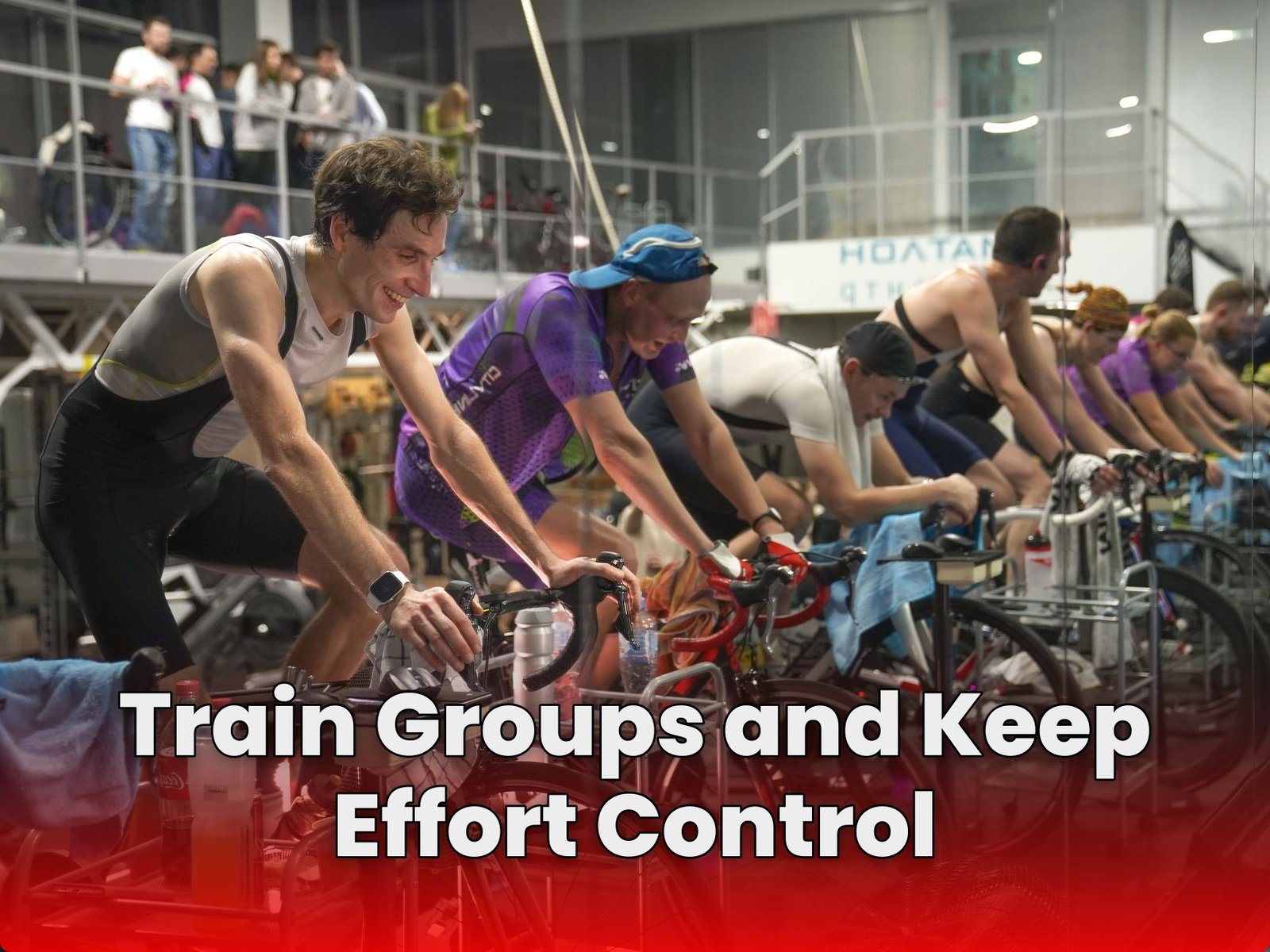
Backing off early is a performance advantage, not a weakness. If you want to get better in real London training, learn How to read your body in London training, know when to back off as an intelligence skill: notice what you feel, pause, and decide what the signal actually means.
The problem is people confuse “uncomfortable” with “dangerous.” When sensations feel like controlled effort and your breathing, balance, and form stay solid, you can continue with smarter intensity. When something feels awkward or too hard but not truly threatening, you should reduce the load, shorten your range of motion, slow your pace, switch the variation, or take more rest instead of treating fatigue as permission to power through.
Stop immediately for sharp or worsening joint pain, pain that does not warm up, dizziness or nausea, chest discomfort, numbness or swelling, loss of control, or form collapse that does not improve with rest. For strength work, if your squat, hinge, or push-up technique breaks, end the set. For cardio, use whether you can speak briefly and whether your overall effort stays in a sustainable zone, leaving a couple of good reps in reserve and checking in before, during, and after workouts so recovery does not get sacrificed.
Body Reading Is a Skill Not a Vibe
If you want how to read your body in London training and know when to back off, you need more than grit. You need a repeatable skill for interpreting signals while you move, not after you limp home. That is the difference between smart training and romantic suffering.
Hardcore culture tells you to ignore feedback and “see what happens.” But what happens is often predictable: form degrades, tissues get irritated, and the session turns into expensive damage. Why gamble when your body already gives you real-time data?
Body reading is not weakness. It is how you stay in the sport long enough to get stronger, fitter, and more resilient. The goal is simple: push only when discomfort is compatible with controlled effort.
Controlled Effort Has a Signature
Controlled effort feels like work, not harm. The discomfort is usually gradual, tracks with intensity, and respects your mechanics. You can often explain it with neutral terms like burning, muscular fatigue, pressure, or exertion.
In contrast, warning signals tend to change suddenly, escalate fast, or behave “wrong” for a given exercise. The pain may be sharp, localized to a joint, or accompanied by loss of stability. If your body is trying to protect you, do you really want to negotiate?
Controlled effort improves with warm breathing, solid positioning, and time under controlled intensity. Warnings do not respect those rules. Your job is to tell the difference quickly and act without drama.

Breathing and Tension Tell the Truth
Before you even judge pain, judge the basics. If breathing stays organized and you can keep tension where it belongs, your nervous system is working with you. If breathing collapses into panic or you feel unable to control your output, that is a signal to back off.
Look for patterns: do you get more stable as you warm up, or does the discomfort tighten its grip? Does your body calm down when you reduce intensity, or does the sensation intensify anyway? Those responses are more informative than the “toughness” story you might want to tell yourself.
Breathing control and tension control are your early warning dashboard. If they go, the set should go with them.
Form Stability Is Your First Safety System
Technique is not optional when you are reading your body. In strength work, the moment form becomes unreliable, the session stops being targeted training and starts being random stress. If your squat, hinge, push-up, or press loses its spine position, alignment, or controlled tempo, you are beyond “working hard.”
Some people argue that form breakdown is just part of getting stronger. But strength progresses because you can repeat good patterns under manageable loads. What you call progress is often just accumulation of micro-injury when you cannot brace, stabilize, or move through a consistent range.
Ask yourself: can you own your movement without flailing, collapsing, or compensating? If the answer is no, the next rep is not a victory. It is a risk.
Use the Backoff Loop Every Set
The backoff loop is simple and ruthless: notice what you feel, pause or reduce intensity, adjust load or range of motion or pace or rest, then decide whether to continue or stop. Treat it like a decision cycle, not an emotion.
Start by asking whether the signal looks like controlled effort or a warning. Then adjust the variable that is easiest to change without trashing your basics. Reduce weight, shorten range of motion, slow down the eccentric, swap to a variation you can control, or add rest.
Here is the real standard: push only when discomfort is manageable and your fundamentals stay solid. If your basics fail, stop pushing. If something feels awkward but not dangerous, modify early instead of quitting the whole session.
Discomfort Rules Should Be Written Down
If you rely on memory, you will forget the rule when you are breathing hard and proud. Make your standards explicit so your decisions do not wobble mid-set. That is how you turn “knowing your body” into consistent behavior.

Good training cultures teach clear stop points: sharp or worsening joint pain, pain that does not warm up, dizziness or nausea, chest discomfort, numbness or swelling, loss of control, or form collapse that does not improve with rest. For practical perspective, training guidance can help you frame those signals as actionable data, not subjective vibes.
And yes, some will say, “But I’ve pushed through worse.” That is survivorship bias. Your body is not a moral test. It is a system, and the smartest athletes protect it.
Signals and Actions Make the Decision Easy
You do not need a long philosophy. You need a fast mapping between sensation and response. When you practice the loop, you stop guessing and start acting with confidence.
| Signal You Notice | Meaning | Backoff Action |
|---|---|---|
| Burn in muscle, stable breathing, 6-7/10 effort | Controlled effort | Keep intensity, leave 2-3 reps in reserve |
| Tightness at end range, improves after warm-up | Manageable load | Shorten ROM 10-20% or reduce weight |
| Sharp pain in a joint, worsens as you go | Warning | Stop set, switch variation, add 30-60s rest |
| Brace fails, form collapses, tempo breaks | Safety breach | Reduce load 10-20%, reset technique |
| Numbness, swelling, chest discomfort, dizziness | Danger | Stop immediately and seek help |
That table is not the point. The point is that your body already communicates categories. Once you learn the categories, how to read your body in London training becomes practical and repeatable.
Strength Work Ends When Technique Breaks
For strength work, heart-rate readouts are not your judge. Your judge is technique under load. If your squat, hinge, push-up, or press breaks, you end the set. No extra reps to prove toughness.
The “leave 2-3 good reps in reserve” rule exists for a reason. Chasing failure turns training into test day for tissues that were not ready. When your technique deteriorates, you are no longer training the movement. You are training compensation.
But won’t stopping early slow progress? Only if you stop too soon. Stop when form fails, not when effort gets uncomfortable. Work hard, protect the pattern, and your progress will be steadier.
Cardio Pacing Runs on Speaking and Effort
Cardio is where many people misread signals because fatigue feels like a finish line. Use pacing cues instead of fantasy metrics. If you can speak briefly, you are in a safer intensity zone. If speech becomes impossible and breathing becomes unstable, back off.
Overall effort guides you better than blind intensity chasing. A workout should feel demanding, but you should maintain enough control to adjust pace. If dizziness, nausea, or chest discomfort appears, the session is over. That is non-negotiable.
Smart pacing also respects recovery. If you feel unusually drained, shaky, or wiped out, prioritize recovery. Hard sessions are for the days your body earns them.
Check In Before During and After Training
Reading your body is not one moment. It is a sequence: before, during, and after. Before training, check sleep quality, soreness vs pain, focus, breathing comfort, stability, and how you expect to feel 24 hours later.
During training, run the backoff loop continuously. Pause after a few reps if you need to. Adjust while the session is still salvageable. You do not need to wait until the end to correct a bad direction.
After training, evaluate the next-day response. Being sore from training is often normal. But unusually painful sensations, new instability, or worsening symptoms mean you should back off and recover. Your body is telling you what your plan will cost if you ignore it.
Modify Early So You Keep Training
Some of the best “backoff” decisions are not stoppages. If something feels awkward or too hard but not dangerous, modify instead of quitting the session. Reduce weight, shorten range of motion, change variation, slow down pace, or increase rest.

This approach protects consistency, which is the real driver of long-term gains. Cutting a session entirely can feel righteous, but it often creates catch-up cycles that delay progress. What if you could train the intent without forcing a risky expression of it?
When modifications let you keep technique solid, your training stays productive. You respect warning signs without turning every discomfort into a crisis.
Stop Immediately for Red Flag Pain
There is a line you do not cross. Stop immediately for sharp or worsening joint pain, pain that does not warm up, dizziness or nausea, chest discomfort, numbness or swelling, loss of control, or form collapse that does not improve with rest. Those are not “push through” moments.
The counterargument is always the same: “I can’t afford to stop.” But what does stopping protect? It protects your ability to train tomorrow, next week, and next month. Ignoring red flags can turn a training block into a recovery year.
Read your body like London weather. If the signal is dangerous, you change course fast. Controlled effort builds performance. Warning signals demand respect.
Reading Your Body in London Training: How to Know When to Back Off
How Can You Read Your Body During London Training to Know When to Back Off?
Use a simple loop: notice what you feel, pause or reduce intensity, adjust load or range of motion, and then decide whether to continue or stop based on whether the sensation feels like controlled effort or a warning.
What Signs Mean Your Discomfort Is Normal Controlled Effort, Not a Warning?
Controlled effort feels like challenging work with stable breathing and form, manageable muscle strain, and no sharp, worsening pain, swelling, dizziness, numbness, or loss of control.
When Should You Modify Instead of Quitting During Strength Sessions in London Training?
If something feels awkward or too hard but not dangerous, keep the basics solid and modify—reduce weight, shorten range of motion, slow your pace, switch the variation, or increase rest—rather than fully stopping.
What Red-Flag Symptoms Require You to Stop Immediately and Back Off?
Stop right away for sharp or worsening joint pain, pain that doesn’t warm up, dizziness or nausea, chest discomfort, numbness or swelling, loss of control, or form collapse that doesn’t improve with rest.
How Do Technique and Breath Help You Read Your Body in Strength vs Cardio Work?
For strength, prioritize technique over fitness trackers: if your squat, hinge, or push-up form breaks, end the set and reset. For cardio, use your ability to speak briefly and your overall effort level as guides.
How Should You Check In Before, During, and After Workouts to Decide Whether to Push or Recover?
Check sleep, soreness versus pain, breathing, stability, focus, and how you feel the next day; if you’re only sore but stable you can usually proceed, but if you feel unusually drained, shaky, painful, or wiped out, back off and prioritize rest, food, water, and sleep.
Back Off Before It Becomes A Problem
How to read your body in london training, know when to back off is a skill, not a guess, and you should treat warning signals as data. Use a simple loop in every session: notice what you feel, adjust intensity or range, and decide based on whether the discomfort is normal controlled effort or a real warning. Keep your basics sharp, modify early, and stop immediately for sharp or worsening pain, numbness, swelling, dizziness, chest discomfort, or any loss of control that does not improve with rest. Train hard, but back off on time, and your progress will outlast your ego.

I am Ozan, a London-focused running writer and marathon enthusiast with a passion for helping people discover the city’s best races, running routes, walking trails, and fitness events. I research and write practical, up-to-date guides covering marathons, race preparation, training tips, running gear, and everything related to staying active in London.
My goal is to create reliable, easy-to-follow content that helps runners and walkers of all experience levels explore London with confidence, whether they’re preparing for their first 5K or their next marathon.