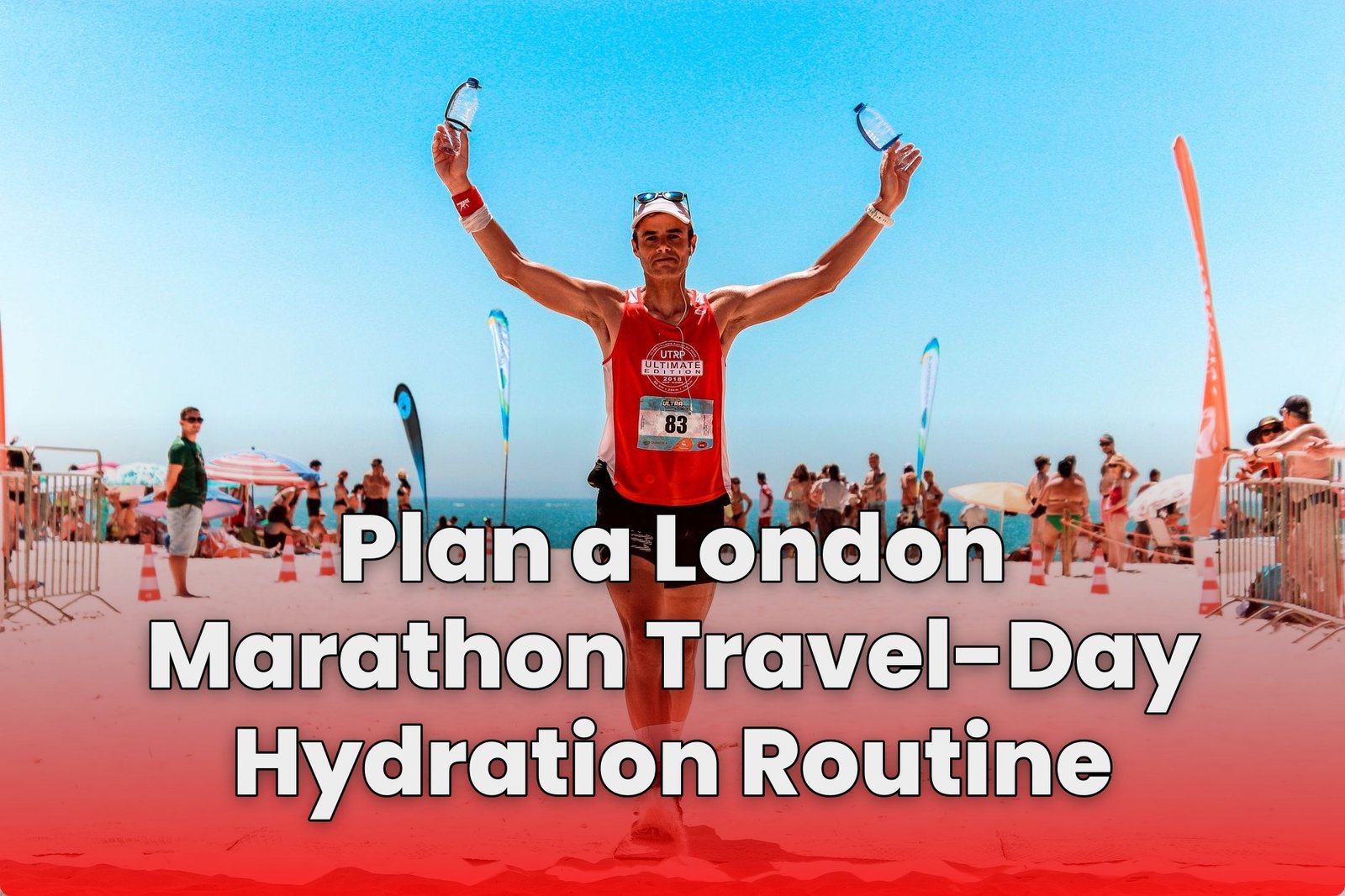
Most runners sabotage their hydration before they ever reach the start line. They obsess over race-day gels and pacing, then show up dehydrated because “travel” somehow feels separate from “training.” It is not, and you should treat the hours before the first mile as the start of your performance plan.
A smart London Marathon travel-day hydration routine starts earlier than you think. Begin the week well hydrated so you learn what “settles” in your gut and what triggers stomach sloshing, and aim for pale-straw urine because real thirst is often already a warning sign. Skip alcohol for the two days before race day since it is dehydrating, and do not rely on guesswork once you are on the move.
On event day, keep things boring and proven. Sip regularly instead of chugging, and practice any on-run drinking during training so you know whether you will tolerate the course water and electrolytes or whether you should bring your own. If you respect what your training has already proven, you lower the odds of both underdrinking and dangerous overdrinking, and you finish the day ready to execute, not recover from a preventable hydration mistake.
Start Training Week to Set Your Travel-Day Baseline
Building a London Marathon travel-day hydration routine starts long before you board a train, bus, or flight. The only fair test is the one you control: training week. If you do not learn what your gut tolerates, how can you expect race-day nerves to help?
Begin well hydrated, then practice different intake amounts during normal runs. Track what “settles” in your stomach and what triggers sloshing. This is not obsessive note-taking. It is risk management for your gut, your pace, and your finish.
Pale Straw Targets and What Thirst Really Means
Thirst is not a friendly early warning. By the time you feel it, you may already be behind. Your baseline check is simple: aim for pale-straw urine as a practical signal that hydration is on track.
On average, total daily fluid needs are roughly 3.7 L/day for men and 2.7 L/day for women, including fluids and water-containing foods. If your day is already running low, no amount of last-minute sipping will fix the deficit cleanly.
Alcohol Cuts That Dehydrate Before You Can Catch Up
If you want dependable remote work productivity level focus on race execution, protect your hydration the same way you protect sleep: remove the sabotage. Avoid alcohol in the two days before race day. Alcohol pushes you toward dehydration while you are busy traveling, eating, and stressing.
But I’m only having one drink. One drink can be “only” in quantity and still costly in effect, especially when your schedule already includes long transit and inconsistent food timing. Do you want your race to start with a correction?
Don’t Turn Transit Into Trial Day
Travel day is not the moment to experiment with new hydration strategies, new sports drinks, or weird “hacks” you saw online. Transit comes with motion, cramped seating, and limited bathroom access. Those conditions amplify every mistake.
Keep it boring. Start the day with fluids you already know you tolerate. Sip consistently through the day instead of waiting until you’re thirsty and then trying to catch up in one push. Gulping trains your stomach to rebel later.
Build a Sip Schedule From the Morning Backward
Your pre-start plan should be written like a timeline, not a vibe. Evidence-based starting points often land around 2–4 mL per pound of bodyweight in the 2–4 hours before exercise. Then you stop the bulk intake before you feel pressure building.
As a common race-morning anchor, many runners do well with about 16 oz (often with some sodium or a sports drink) around 2 hours before the start, or closer to 4 hours before if your start is later. The key is sips, not chugs. Why flood your system when steady intake can do the job?
Checklist That Prevents Overthinking on Travel Day
You do not need more opinions. You need a repeatable routine you can follow under pressure. A solid building a london marathon travel-day hydration routine, before you ever run means you know what you will do at each time point, even if your hotel room Wi-Fi fails and your train runs late.
Use this as a backup map when your mind starts spiraling.
| Time Window | Target Amount | How to Take It |
|---|---|---|
| 2 to 4 hours before start | 2–4 mL per lb | Measure sips, not guesses |
| ~2 hours before start | ~16 oz | Include sodium or sports drink |
| 0 to 2 hours before start | Minimal top-ups | Small sips only |
| During race | 4–6 oz per hour | Stop short if nauseous |
| After finish | Gradual over 24–48 hours | Salt with food and electrolytes |
When you follow numbers like these, you reduce the need for last-minute decisions. That is how you protect both your stomach and your confidence when the start line feels chaotic.
The Two-Hour Cutoff That Protects Your Stomach
There is a simple rule worth respecting: cut off bulk drinking around 2 hours pre-start. You want hydration to support performance, not create a bathroom emergency or a stomach wave when the course tightens.
Some runners still chase “just a little more” too close to the start. That impulse feels responsible, but it can backfire. If you have to debate it, you probably should not add more. Stick to your proven plan and let the body do the rest.
Practice Your Intake Choices on Real Runs
The best race-day hydration routine is the one your body has already accepted. Practice timing, fluid type, and sip size during training, not just distance. If you plan to drink water and electrolytes on course, rehearse that choice before it counts.
Consistency beats cleverness. hydration guidance from experienced marathon nutrition writers aligns with the same principle: start well, sip regularly, and do not make big changes on Event Day.
On-Course Drinking Limits and the Hyponatremia Risk
Overdrinking is not harmless. Too much fluid can dilute sodium and trigger dangerous hyponatremia. That is why your plan must include a ceiling, not just a target.
Many runners do well with small, frequent sips at aid stations, commonly around 4–6 oz per hour. Slower runners should generally not exceed about 500 mL per hour, while faster runners on warm days may need up to about 1 L per hour. You earned those numbers through training, not guesswork.
How to Choose Water and Electrolytes Without Guesswork
Water alone is not always enough, especially when you sweat salty and you are running long. If your training showed that electrolytes improve comfort or reduce cramps, then “just water” on race day is a downgrade.
Decide now what you will take on course. Will you rely on provided supplies, or bring your own bottle to match your training rhythm? If you cannot answer that confidently, you are not ready. Travel-day preparation should remove uncertainty, not create it.
Rehydrate After the Finish Without Gulping
The race ends, but dehydration does not disappear. Rehydrate gradually over the next 24–48 hours and avoid large water gulps right after finishing. Your digestive system needs a calmer return to normal.
Include salty food and electrolytes to replace salt, water, and glycogen. Plain water helps, but it is the pairing that restores balance. If you only drink, you may still feel “off” because the electrolyte story is unfinished.
Make Your Hydration Routine Part of Your Marathon Identity
Here is the truth: the strongest marathon performers are not the ones with the most dramatic plans. They are the ones with repeatable routines that work when stress rises and timelines compress.
When you commit to building a London Marathon travel-day hydration routine before you ever run, you stop treating hydration as a last-minute decision. You start treating it like training. And once you do, what can go wrong?
How Can You Build a London Marathon Travel-Day Hydration Routine Before You Ever Run?
How should you start building a London Marathon travel-day hydration routine before race week?
Start during training week so you learn what “settles” in your stomach and how much fluid you tolerate without sloshing, then use those learnings to plan travel-day and race-day sipping strategies rather than guessing on Event Day.
What should good hydration look like on travel day for a London Marathon?
Begin well hydrated because thirst can mean you’re already behind; aim for pale-straw urine and remember that your overall daily intake (including water-containing foods) is roughly 3.7 L/day for men and 2.7 L/day for women as a baseline.
Should you avoid alcohol when building a London Marathon travel-day hydration routine?
Avoid alcohol in the two days before race day since it’s dehydrating, and focus on consistent fluids leading into the start so you’re not playing catch-up when it’s time to run.
How do you time pre-race sips without making big changes on event day?
Use evidence-based timing and your training proof: in the 2–4 hours before exercise, a common starting point is about 2–4 mL per pound of bodyweight, then cut off around ~2 hours pre-start to prevent overloading, and on race morning take about 16 oz (often with sodium/sports drink) around 2 hours before, keeping it as sips not chugs.
How much should you drink during the London Marathon to prevent hyponatremia?
Cap race-day intake by what you’ve proven in training and use small, frequent sips at aid stations (often ~4–6 oz per hour), with a key safety rule: don’t overdrink, because too much can be dangerous and lead to hyponatremia.
What’s the best way to rehydrate after the finish as part of your London Marathon travel-day routine?
After you finish, rehydrate gradually over the next 24–48 hours, avoid large water gulps, and include salty foods and electrolytes to replace salt, water, and glycogen rather than relying on plain water alone.
Hydration Starts Before Race Day
Building a london marathon travel-day hydration routine, before you ever run is the smart, safer way to protect your stomach, your sodium balance, and your finish, because the only plan that matters is the one you have already tested in training. Start the week with steady drinking so you learn what “settles” and what overdoes it, begin race day well hydrated with pale-straw urine, skip alcohol in the two days prior, and on event day stick to small regular sips instead of big changes or gulping. For the race, cap your intake by what you proved you tolerate, using aid-station sipping and not chasing every cup, then rehydrate gradually afterward with fluids plus salty foods or electrolytes. Do the work before travel, and you will run with confidence instead of guessing under pressure.

I am Ozan, a London-focused running writer and marathon enthusiast with a passion for helping people discover the city’s best races, running routes, walking trails, and fitness events. I research and write practical, up-to-date guides covering marathons, race preparation, training tips, running gear, and everything related to staying active in London.
My goal is to create reliable, easy-to-follow content that helps runners and walkers of all experience levels explore London with confidence, whether they’re preparing for their first 5K or their next marathon.