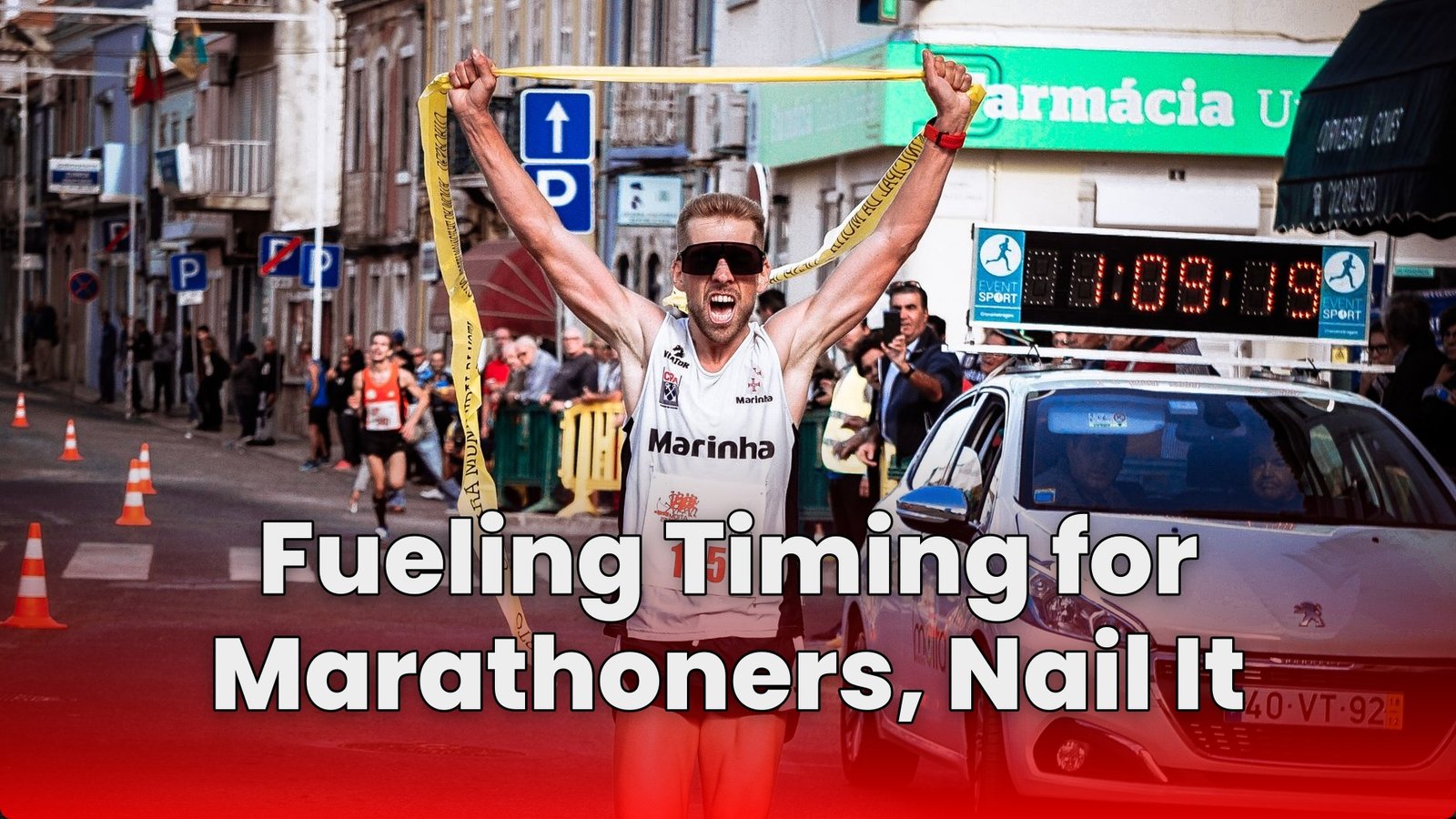
Don’t gamble on gel brands on race day, because your stomach will decide whether your fuel becomes speed or suffering. The smarter approach is to choose gel types by how you personally handle carbs, sweetness, and texture under pressure, especially in London’s long middle miles.
If you tend to get bloating or slosh during training, go for hydrogel-style options that are designed to be gentler to absorb. If you swallow gels better when they feel “ready,” isotonic gels can be easier, but you should still plan water and use small, consistent sips rather than choking down a lump of sugar.
Your plan should also match your fueling target, not just what seems popular. Aim for steady intake across the run, avoid testing anything new on race day, and be extra cautious with caffeinated gels if you are sensitive, because stomach problems from stimulants can ruin even a perfect pacing strategy.
Start With Your Carbs Goal, Not Brand Loyalty
London race day starts with arithmetic, not marketing. Most runners aim for roughly 30–60 g carbs per hour, and a common simplification is taking a gel that typically provides ~20–25 g carbs every 20–30 minutes (or every 30–40 minutes for lower targets). If your target is higher, you may prefer gels that deliver ~40 g per gel so you take fewer packets.
If you cannot state your hourly carb goal, how can you choose between a 20 g gel and a 40 g gel? That is the real decision point. Gel choice without carb math is guesswork.
Hydrogel Versus Isotonic Is a Stomach Strategy
When you are matching gel type to your stomach, texture matters because digestion matters. Hydrogel options are often described as gentler since they form a gel matrix that can be absorbed with less stomach upset. If you are prone to cramps, nausea, or “sloshy” discomfort, hydrogel should be your first serious consideration.
Isotonic gels are typically easier to swallow because they come pre-mixed with water, and some athletes can take them without an extra drink. But convenience is not the same as comfort. Your stomach’s job is absorption; your job is to feed it the format it tolerates.
Your stomach does not care about your gel’s logo. It cares about how it handles carbs and texture.
Match Gel Texture to Your Gut’s Response
Do you get bloating when you swallow thick gels? Do you feel burning or heaviness when carbs hit fast? Then you should treat gel texture like a variable you control, not a fixed trait you endure. For sensitive stomachs, the most consistent path is to select hydrogel styles and keep your carb load steady.
And if you are the kind of runner who handles liquids easily but struggles with thick consistencies, isotonic formats may be the better match. The point is simple: choose the gel your body can reliably process at marathon pace, not the one that felt fine once in training.
Water Logistics Decide Whether You’ll Actually Take the Plan
People love to talk about carbs, but marathon gels are swallowed in the real world, where distances, crowds, and course handoffs force decisions. If you choose a gel type that requires meticulous washing down but your plan depends on perfect timing, you are setting yourself up for missed intakes.
Regardless of brand, aim to take gels with water to aid absorption and reduce the risk of sugar overload. If you want a gel that can be swallowed with minimal fuss, isotonic styles can help, but do not treat them as a substitute for water when water is available.
Plan for London Handouts and the Carry You Can Avoid
London Marathon logistics are not a minor detail. There is a reason many runners build their nutrition around what the course provides. One frequently cited advantage is that Maurten hydrogel is the only gel handed out on the course, around miles 14 and 19. That alone should matter if you are trying to stay consistent under race pressure.
Convenience can also reduce what you must carry. Lucozade Sport Energy Gel is often highlighted as a London option because it can be picked up at two points. Less carrying means more peace of mind, and peace of mind makes adherence more likely.
Use a Stomach Tolerance Matrix Before You Buy Anything
Stop asking “Which gel is best?” and start asking “Which gel will my stomach tolerate at the moment I need it most?” A simple matrix can guide that decision by linking gel style to measurable expectations like carbs per packet and how aggressively you can target your hourly intake.
| Gel Style | Carb Per Gel | Fit for Sensitive Stomachs |
|---|---|---|
| Hydrogel | ~20–25 g | Often gentler texture |
| Isotonic Gel | ~20–25 g | Easier to swallow |
| High-Carb Gel | ~30–40 g | Use only if you handle volume |
| Caffeinated Gel | ~20–25 g | Only if caffeine suits you |
| Training-Ready Gel | ~10–20 g | Good for pacing practice |
Once you map your tolerance, you can set a realistic plan. If your stomach is sensitive, a steady ~20–25 g gel strategy taken on schedule is often safer than trying to “solve” nutrition with higher-carb packets that arrive too fast.
Don’t Let Caffeine Pick Your Fuel Strategy
Caffeine can help, but it can also wreck a stomach that is already working overtime. Caffeinated gels vary widely, roughly ~20 mg to ~150 mg caffeine. If you are sensitive to stimulants, your “best gel” might be the one with no caffeine at all until you prove you tolerate it under long-run stress.
Even when runners want extra kick, the priority is gastrointestinal consistency. You want to feel urgency in your legs, not nausea in your gut. If you need a concrete reference point for how gels are commonly used in training and on race day, gel timing guidance can help you align intake with effort.
Practice the Exact Gel, Not Just the Concept
Never trial a new gel on race day. That rule is not dramatic; it is practical. Your stomach’s tolerance is personal, and marathon pacing turns small discomfort into a full-blown problem. If you have never eaten the same texture under sustained effort, why would you gamble with London?
Use training to rehearse your full routine: gel texture, water pairing, and timing. If you might take gels at mile 4–5 and then repeat every 20–30 minutes (or 30–40 minutes), simulate that cadence before the race. Your plan must be familiar enough that your stomach stops negotiating.
Timing Works Only If Your Intake Matches Your Digestion
Gels are not magic bursts you can postpone. If you wait too long, you can arrive at your next fuel window already depleted, and that is when stomach issues spike. A common approach is starting around mile 4–5 and then taking gels at intervals that fit your carb target.
But the deeper truth is this: digestion is part of timing. If your stomach prefers slower assimilation, start early and keep packets consistent rather than overcorrecting with bigger, less tolerated gels later.
Wash Down Correctly, Not Competitively
People sabotage themselves by “chasing” gels with the wrong fluid. Your goal is absorption, so take gels with water. Sports drinks can be tempting as a follow-up, but using them as the wash-down can push total sugar higher than your stomach can comfortably handle.
And do not treat gels like shots. Aim to sip rather than gulp, especially if you are prone to slosh or reflux. The race will not reward boldness; it will reward the runner whose fueling feels boring.
Choose Packet Size Based on Tolerated Volume, Not Hope
Higher-carb goals do not automatically mean higher-carb packets. Yes, some athletes use ~40 g gels so they need fewer packets, but fewer packets also means each packet carries more carbs through your system at once. If your stomach is sensitive, larger packets can increase the risk of discomfort even when the math looks correct.
So match packet size to tolerated volume. If you can take ~20–25 g reliably every 20–30 minutes, that plan is often safer than switching to high-carb gels just to reduce counting.
Common Mistakes That Ruin Gut Comfort
Most race-day stomach disasters come from predictable mistakes: taking gels too fast, skipping water at handouts, changing gel brands at the worst moment, or chasing intensity with extra caffeine. When a runner says, “It just didn’t agree with me,” the real question is why the system was not tested and matched to their tolerance.
- Using water inconsistently even when water is available
- Switching gel texture mid-race to compensate for missed intakes
These errors do not feel like nutrition problems until they become one. You can prevent them by choosing gel types for London race day with your stomach in mind from the start.
Build a London-Ready Gel Kit That Your Stomach Trusts
Here is the standard you should hold yourself to: your kit should contain gel types you have already matched to your gut, plus a plan for London handouts that does not force you into new textures. If you are sensitive, prioritize hydrogel-style options. If you need easier swallowing, consider isotonic gels, but keep water and timing non-negotiable.
So what should you do next? Create a simple race checklist: your hourly carb target, your gel style choice, your timing cadence, and your water pairing. Then practice until the routine feels automatic. That is how remote minds and busy schedules turn into a stomach that cooperates on the day you cannot afford mistakes.
How to Choose the Right Energy Gel Type for London Race Day, Based on Your Stomach?
How do you match gel carbs and timing to your stomach on London race day?
Aim for roughly 30–60 g carbs per hour, then pick a gel that fits your packet size (often about 20–25 g carbs per gel) so you can take one gel about every 20–30 minutes, or use a simpler rhythm of every 30–40 minutes; if you target higher carbs, choose ~40 g gels so you take fewer packets, and start around mile 4–5 so your digestion is used to fueling before the hardest stretches.
Should you choose hydrogel or isotonic gels for London, based on how your stomach tolerates them?
If your stomach is sensitive to gels or carbs, lean toward hydrogel options because they’re often described as gentler and easier to absorb, such as Maurten Gel 100; if you prefer convenience and smoother intake, isotonic gels (pre-mixed with water) can be easier to tolerate and may be taken without water, but it’s still wise to have water to wash down and reduce irritation.
Which gel texture options help when you feel nausea or stomach cramps during training runs?
Texture matters when you’re trying to absorb quickly under stress, so test before race day: if thick gels trigger discomfort, try a hydrogel-style option or a brand that mixes consistently; practice taking gels slowly with water available, sip rather than gulp, and keep an eye on what works for you (brands like GU Roctane are commonly used for endurance, while options such as NeverSecond C30 can help if you specifically need more carbs per gel).
How do you choose caffeinated versus non-caffeinated gels if you’re sensitive to stimulants?
Check the label for caffeine content (it can range roughly from 20 mg to 150 mg per gel) and match it to your tolerance, because stimulants can worsen jitters or GI upset; if you’re unsure, start with low-caffeine or non-caffeinated gels during training and then decide your race-day plan based on what you’ve already proven, rather than switching on the day.
What London race day gel options should you plan for so your stomach isn’t surprised?
Plan around what you can realistically get on course: London Marathon handouts are commonly noted to be Maurten hydrogel (often around miles 14 and 19), and Lucozade Sport Energy Gel is highlighted as available at two points, so choose gels you already tolerate well and build your fueling strategy around those specific options.
How should you test and carry gel types for London so your stomach tolerates race day fueling?
Never trial a new gel on race day—practice with the exact gel type, carb amount, and timing you plan to use, including your water routine; carry enough packets for the sections where you won’t rely on handouts, and keep a simple plan like taking gels on schedule with water nearby so you reduce sugar overload and improve absorption when your digestion is working hard.
Match Your Gels to Your Stomach and Race With Confidence
When you’re figuring out how to choose gel types for london race day, match to your stomach, don’t guess on race morning. Pick the gel texture and carb load that your gut has already proven it can handle, favor hydrogel options if you’re prone to upset, and keep to a steady timing plan so you reach each aid point feeling in control. Train with the exact options you will use, and you will turn fuel into momentum instead of stomach stress.

I am Ozan, a London-focused running writer and marathon enthusiast with a passion for helping people discover the city’s best races, running routes, walking trails, and fitness events. I research and write practical, up-to-date guides covering marathons, race preparation, training tips, running gear, and everything related to staying active in London.
My goal is to create reliable, easy-to-follow content that helps runners and walkers of all experience levels explore London with confidence, whether they’re preparing for their first 5K or their next marathon.