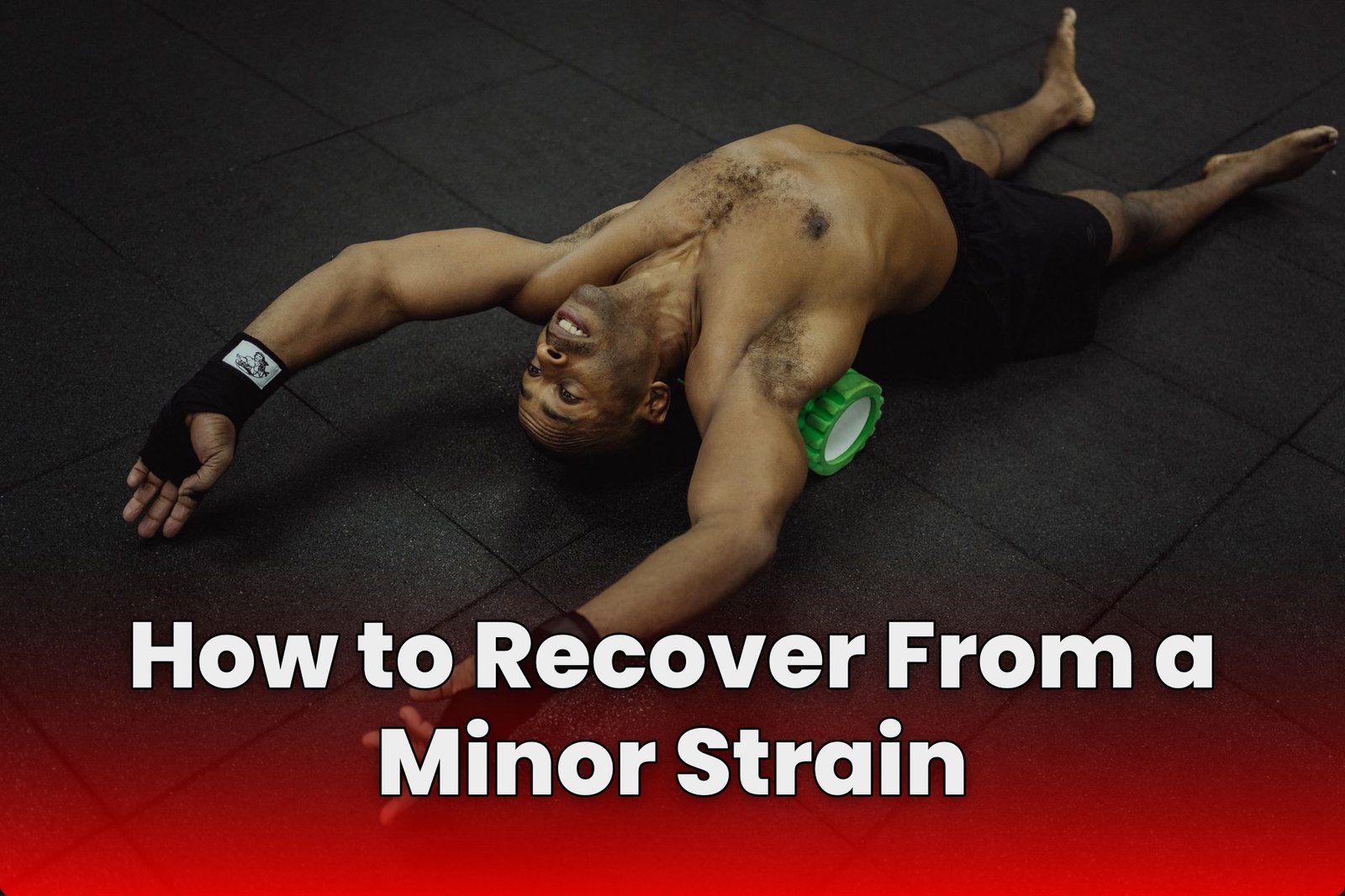
Pushing through a minor strain is the fastest way to turn a quick tweak into a longer injury. If you have been training through that first “something feels off” moment, it is worth being strategic instead of stubborn. This article tackles how to recover when you get a minor strain in training with a plan that actually matches how tissue repair works.
The best early move is simple: briefly back off from the exact painful movement and let the area calm down, then protect it as you bring it back gradually. Use RICE in the first day or two, then shift toward gentle, pain-free range of motion before adding controlled strengthening, like easy isometrics, so the muscle relearns safe effort.
The real win comes from not rushing the return to intensity. Prioritize sleep, hydration, and enough protein, and reload slowly while pain and function improve. If you heard a pop, developed severe pain or significant bruising, or symptoms worsen or fail to improve after a few days, get medical advice instead of guessing.
Stop Treating Pain as Permission to Push Through
If you want to know how to recover when you get a minor strain in training, start with a hard truth: pain is not a motivational metric. It is a signal that tissue has been irritated or partially damaged. The fastest way to “get back” is to stop forcing the exact motion that re-injures the area.
Yes, athletes hate downtime. But “pushing through discomfort” turns a manageable strain into a longer rehab arc, because you keep repeating the injury mechanism. Ask yourself: are you training to improve, or are you using willpower to ignore biology?
Minor strains heal quickly when you protect the tissue. They drag on when you treat pain like a challenge.
Back Off the Exact Painful Moves for 1 to 2 Days
After a minor muscle strain, your first job is to briefly reduce the triggers. Back off from the exact painful movements for about 1–2 days, and keep activity non-intense. That means no sprints, no heavy eccentric work, and no “just one more set” that replicates the strain.
This short pause is not surrender. It is a targeted reset that helps the irritated tissue calm down. When you keep moving through the same painful range, you bleed time from the recovery window you need to make progress.

What should you do instead? Choose low-impact movement that does not increase pain, and let daily life help circulation without re-stressing the damaged fibers.
Use RICE With Purpose, Not Ritual
RICE is still a reliable framework: Rest and take a temporary break from strenuous exercise, Ice the injured spot for about 15–20 minutes every 2–3 hours for the first day or two, Compression with an elastic bandage, and Elevation if possible.
Even if you feel tough, follow the basics. Trusting adrenaline instead of swelling control is how minor strains turn into lingering problems. And even clinical guidance emphasizes that protection early matters more than heroics.
Compression should be snug, not tight. Loosen it if you feel numbness or see bluish discoloration. Ice is useful for the early swelling phase, but heat can be reasonable later if it feels better after the initial swelling settles.
Let Range of Motion Return Before You Chase Toughness
Once pain is no longer escalating, begin gentle, pain-free range-of-motion and light stretching or mobility as swelling decreases. The rule is simple: you should feel movement restoring function, not sharp discomfort proving toughness.
If a stretch hurts during the movement, that is not “good stress.” It is a warning that you are loading irritated tissue before it can handle it. Start small, stay controlled, and stop before symptoms spike.
How do you know you are ready to progress? You can often tell by the next day. If mobility work leaves you worse later, the dose was too high. Recovery is not a straight line, but it should not trend steadily downward.
Strength Comes Back Through Isometrics and Controlled Loading
When pain allows, add controlled strengthening before you return to full training. Early strength work is about tolerating load, not proving you can suffer. Easy isometrics are a smart bridge: short 10–30 second muscle squeezes with good form.
Then advance gradually to light, pain-limited activity. Include controlled movements, not chaotic reps. If you can’t keep the motion smooth, you are not ready for the intensity you want.
Counterargument time: some athletes insist that “more stretching fixes it.” But stretching cannot replace progressive strength and tissue tolerance. You rebuild capacity by dosing it, not by guessing.
Track Your Rehab Steps So You Do Not Guess
Most delays happen because people rely on memory instead of structure. A simple checklist keeps you honest: you protect early, restore motion next, then reload strength and training only when symptoms calm and function improves.
Here is a practical, measurable way to organize your return. Use it as a guardrail, not a rigid schedule, and adjust based on pain response.
| Phase | What You Do | Measurable Target |
|---|---|---|
| First 24–48h | Avoid exact painful moves, rest, ice | Pain does not spike during daily use |
| When swelling eases | Gentle, pain-free ROM | Range improves within 3–5 days |
| Early mobility | Light stretching and controlled movement | No next-day flare |
| Strength bridge | Isometrics 10–30s, then easy sets | Discomfort stays mild and stable |
| Return to training | Gradual loading, monitor symptoms | Pain stays at or below 2/10 |
Once you have these targets, you stop asking “Do I feel better?” and start asking “Did my function actually improve?” That is the difference between recovery and wishful thinking.
Sleep, Protein, and Hydration Are Not Optional
Training injuries heal through the same inputs that build performance. Aim for about 7–9 hours of sleep nightly, because recovery biology depends on it. Poor sleep increases inflammation, slows tissue repair, and makes your pain threshold unreliable.
Protein matters too. A practical target is roughly weight in pounds × 0.36 grams per day, adjusted for your preferences and diet quality. Hydration supports normal circulation and tissue recovery processes.
Does nutrition feel “boring” compared with workouts? Sure. But boring is what works. If you want faster return, you cannot starve the repair system while demanding it perform.
Choose Low-Impact Active Recovery Without Resetting Symptoms
As long as symptoms do not worsen, add low-impact active recovery such as walking, biking, or swimming. The goal is to keep blood flow moving and maintain general fitness, not to re-trigger the injured fibers.
Think of active recovery as a bridge, not a test. If your strain starts to feel sharper during or after the session, you overshot. Back off the dose immediately and return to the last symptom-safe level.
Skipping movement entirely can feel safer, but complete inactivity can reduce mobility and prolong stiffness. The right answer is controlled activity that respects pain and helps you re-enter training smoothly.
Grade the Strain So You Stop Expecting Miracle Timelines
Not all minor strains are equal. Mild, grade 1 strains may ease back after a few days, but only with slow reloading. Moderate, grade 2 strains often need about 2–3 weeks or more of rehab.
If you pretend every strain is identical, you will either push too soon or panic too late. The better approach is to judge by symptoms and function: pain level, bruising, range limits, and strength tolerance.
So what happens when you “feel fine” early? You might still lack load-bearing capacity. Feeling okay is not the same as being ready.
Know the Red Flags That Demand Medical Care
Urgent care is not an overreaction when the warning signs show up. Seek medical help if pain is severe, you heard or felt a “pop,” you cannot move the muscle, or bruising and swelling are significant.
Also get checked if symptoms worsen or do not improve after a few days to a week, or if you develop numbness, tingling, or weakness. Those signals can point beyond a simple strain and need proper assessment.
When recovery stalls or neurologic symptoms appear, self-treatment stops being smart.
Avoid the Common Mistakes That Prolong Recovery
Several habits keep strains alive. Heat too early, aggressive stretching in the painful range, ignoring bruising, and “testing” the injury with high-intensity sessions before it is ready are the big culprits. Another mistake is treating rehab as optional once pain fades.
Also watch how you ice and compress. If you ice too broadly or too long, you may irritate tissues rather than help them. If compression is too tight, you risk circulation issues. Recovery needs precision, not random tinkering.
Counterargument: some people say rest is best and everything else is unnecessary. But complete rest without gradual restoration of motion and strength can prolong stiffness and reduce return-to-training confidence. The goal is protection first, then progression.
Return to Full Training Gradually and With Clear Rules
When pain is calming and function is improving, return to intense workouts gradually. Start with reduced volume, reduced intensity, and controlled technique. Do not jump straight to the same weights, sprint speed, or range that triggered the strain.
Set rules you can actually follow: stop a session if pain climbs, do not “chase” through discomfort, and keep monitoring how you feel the next day. If the injury responds well, you progress. If it reacts poorly, you scale back.
This is how you turn a minor strain into a temporary detour rather than a recurring setback. Train smart, protect the tissue, rebuild capacity step by step, and let recovery do the job you cannot bully with grit.
How Do You Recover When You Get a Minor Strain in Training?
When should you back off from painful movements after a minor strain in training?
For 1 to 2 days, stop the exact movements that cause sharp pain and avoid intense activity, while doing only light, pain-free activity so the area can calm down before you re-load it gradually.
How do you use RICE to recover after a minor muscle strain during training?
Use RICE for the first 1 to 2 days: rest the injured area, ice the sore spot for about 15 to 20 minutes every 2 to 3 hours (use heat only if it feels better once swelling settles), apply compression with an elastic wrap snug but not tight, and elevate if possible.
When can you start gentle range-of-motion and stretching after a minor strain?
Begin gentle, pain-free range-of-motion and light mobility as swelling decreases and pain allows, stopping before discomfort increases, and keep stretching controlled and comfortable rather than forcing it.
What rehab exercises help you recover from a minor strain without pushing too hard?
Once basic movement is comfortable, add controlled strengthening such as easy isometrics (short 10 to 30 second muscle squeezes) and then progress to light, pain-free loading and mobility work before returning to harder training.
How long does recovery usually take, and when can you return to full training after a minor strain?
Many mild strains improve in a few days when you re-load slowly, while more moderate strains can take about 2 to 3 weeks or longer; return to intense training only when pain is calming and function is improving, and avoid “pushing through” discomfort.
What warning signs mean you should get medical care after a minor strain in training?
Seek urgent care if pain is severe, you heard or felt a “pop,” you can’t move the muscle normally, bruising or swelling is significant, symptoms worsen or don’t improve after a few days to a week, or you develop numbness, tingling, or weakness.
Recover Smarter and Get Back to Training
If you’re wondering how to recover when you get a minor strain in training, stop treating it like a badge of toughness and start treating it like a repair job. Back off from the exact painful movement for a day or two, use RICE early, protect the area, then reload gently with pain-free motion and light strengthening before you touch full intensity again. The quickest path back is disciplined recovery, not pushing through, because the muscle heals on schedule or it heals later.

I am Ozan, a London-focused running writer and marathon enthusiast with a passion for helping people discover the city’s best races, running routes, walking trails, and fitness events. I research and write practical, up-to-date guides covering marathons, race preparation, training tips, running gear, and everything related to staying active in London.
My goal is to create reliable, easy-to-follow content that helps runners and walkers of all experience levels explore London with confidence, whether they’re preparing for their first 5K or their next marathon.