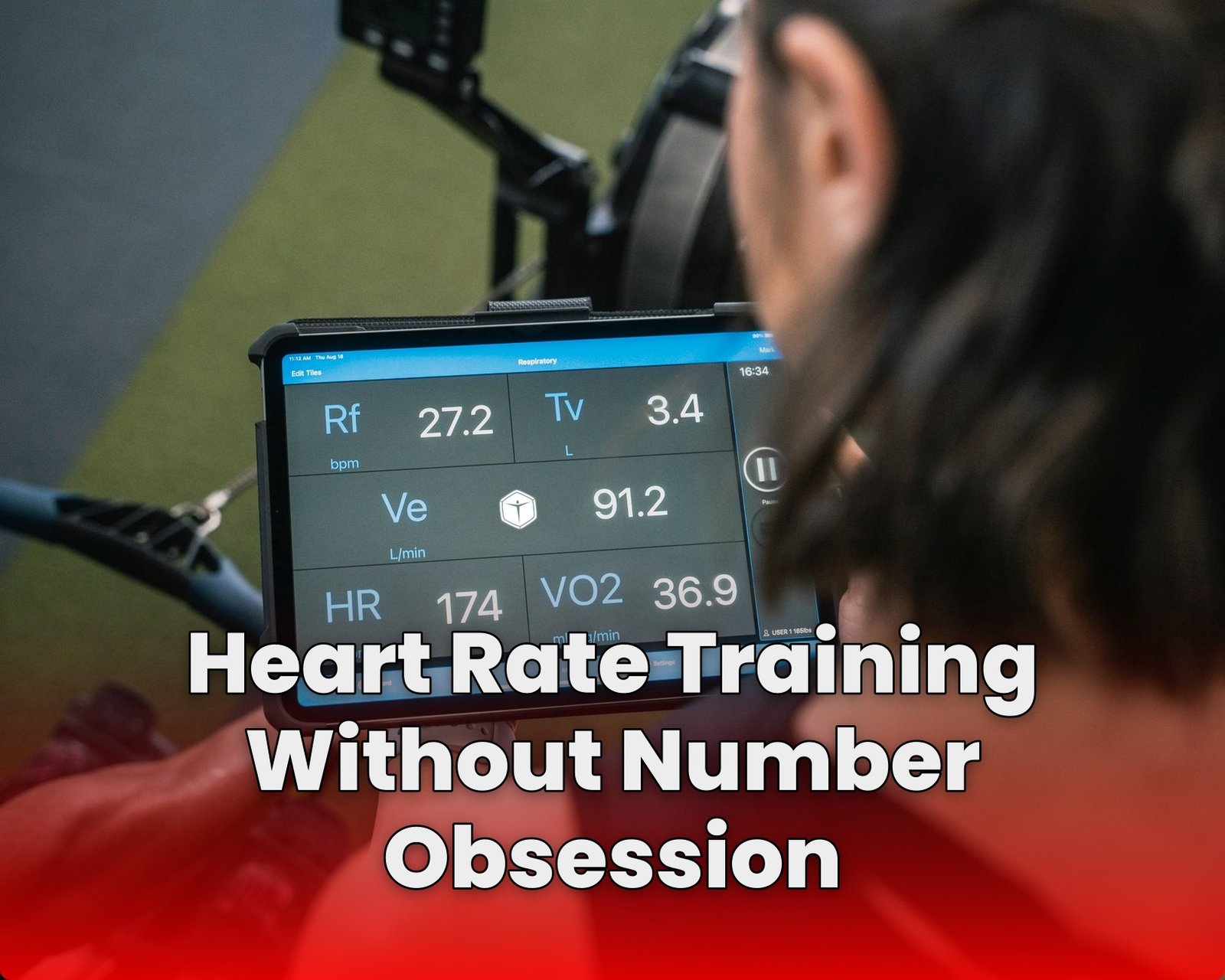
Heart rate is a guide, not a boss. If you track every beat and wait for “the right” number before you move, you will spend more energy managing metrics than training your body. The goal is simple: use heart rate training to inform decisions while staying in control of effort, rhythm, and recovery.
Here is the practical mindset shift that keeps you free. Treat heart rate and training zones as context, then cross-check with how you feel, especially breathing and relaxation. When it is supposed to be easy, make it genuinely easy, with conversational effort and calm breathing. When something feels off, use heart rate to explain anomalies such as heat, poor sleep, stress, or fatigue, rather than automatically forcing your pace to chase a target.
Finally, stop judging your day by one strange run. Heart rate becomes useful when you look at patterns over weeks, like lower heart rate for the same pace or steady pace progress without abnormal spikes. If you train in places where heart rate can be misleading, like trails, steep terrain, altitude, or heat, let your perceived effort anchor the workout first, then let the numbers confirm whether you landed in the right intensity.
Heart Rate Is Context, Not a Command
People ask how to use heart rate training without becoming a slave to numbers because wearable data feels like authority. It is not. Heart rate is a readout of how hard your body is working to support effort, shaped by heat, stress, sleep, terrain, and pacing. Treat it like weather, not a verdict.
If you let HR dictate every move, you will chase the instrument instead of training the athlete. Ask a harder question: what are you trying to improve, and what effort did you actually deliver? Heart rate can help explain that effort, but it cannot replace the judgment of what your body experienced.
Use RPE as the Primary Anchor
Your most reliable guide is how the work feels. RPE, conversational cues, breathing rhythm, and relaxation tell the truth that zones and algorithms often miss. Why trust a zone band when your fatigue, hydration, and mental state can shift your physiology in minutes?
Let feel choose the intensity first, then use heart rate to confirm you landed in the right neighborhood. If RPE says “easy,” but HR says “hard,” which signal should you question? The better move is to inspect the mismatch: environment, recovery debt, or pacing too fast.
Make Easy Days Easy by Breathing Tests
If you want easy to work, you have to protect its defining features. Easy should feel conversational, breathing should stay relaxed, and you should leave the session feeling like you could do more. Tension is the giveaway that “easy” turned into an undercover workout.
Use simple checks. Can you speak in full sentences without straining? Is your breathing smooth rather than clipped? When you train easy days with real ease, heart rate becomes a supportive mirror instead of a nagging antagonist.
Explain Anomalies Instead of Punishing Yourself
Unexpectedly high heart rate happens. Heat and humidity, poor sleep, pre-race anxiety, and even a tough workday can elevate HR without reflecting a sudden drop in fitness. The goal is not to blame your engine. The goal is to read the situation.
When HR spikes but RPE stays steady, treat it as information. You might simply need to reduce pace, extend warm-up, or swap the day’s intensity. Conversely, if HR is low and you feel great, you can keep the workout honest by maintaining effort quality.
Expect Late Effort Drift and Still Execute
During long efforts, heart rate often drifts upward as fatigue accumulates and biomechanics become less efficient. That drift is not automatically a failure. It is physiology doing what physiology does: accounting for declining freshness while you keep moving.
So what do you do when HR climbs late? You do not reflexively pull the plug unless your RPE and form degrade. Keep the session focused on the target effort window, then let HR drift teach you how your body behaves when tired.
Trust Trends, Not Single Sessions
One workout is noisy. A week is clearer. Use trends over weeks to decide whether your training load is working. If the same pace repeatedly produces lower HR, that is a sign of improved efficiency. If the same HR produces lower pace, that can signal improved fitness or better pacing. If both get worse, it may be time to recover.

| Observed Pattern | Likely Context | Action |
|---|---|---|
| Same pace, HR down | Better efficiency | Maintain or progress |
| Same HR, pace up | Improving execution | Keep RPE target |
| Easy RPE, HR high | Heat or sleep loss | Slow down, breathe |
| Hard RPE, HR normal | Good adaptation | Stick with workout |
| HR higher across days | Accumulated fatigue | Deload and recover |
Trends prevent the common trap: reacting to one bad day like it proves you are broken. Heart rate training without slavery means you respond to patterns, not emotions.
Calibrate Your Zones With Your Own Physiology
HR zones on paper are starting points, not laws. Two runners can wear the same chest strap and live in different realities because of fitness level, resting HR baseline, sensor placement, and individual cardiovascular response. If your zones never match how workouts feel, the problem is usually the calibration, not your effort.
Calibrate by pairing feel with HR during controlled sessions. Pick a repeatable pace or terrain, run with consistent effort cues, and observe where your HR lands. Then adjust your interpretation, not your identity.
Use Terrain and Weather to Keep HR Honest
In trails, technical terrain, altitude, and steep climbs, heart rate can be skewed by movement mechanics and breathing efficiency. Your HR may rise for reasons that do not map neatly to training intensity. If you let zones police you there, you will either overrun your easy days or undercook your hard work.
RPE keeps you honest when data gets distorted. Use HR to describe the cost of effort, not to override the effort itself. When terrain changes, your body’s signals change too. Train the athlete, not the chart.
Design Workouts With Feedback Loops
Instead of “run until HR hits X,” structure workouts around planned effort and allow heart rate to guide fine-tuning. A feedback loop looks like this: set the goal effort using RPE, monitor HR for confirmation or mismatch, then adjust pace modestly to land the intended intensity.
For intervals, choose a target breathing pattern. If you planned controlled intensity but HR balloons early, you started too fast. If HR runs low but RPE is climbing, your pacing is too conservative. The point is not perfect tracking, it is accurate execution.
Reduce Data Fixation With Checkpoint Rules
Constant monitoring invites constant doubt. If you glance at HR every minute, you will second-guess pacing and turn the workout into a negotiation with numbers. Why train if you cannot fully participate?
Set rules like: check HR at the start, at the midpoint, and near the end. Or use modes that show only essentials during the session. You can even do skill-focused days where you run by feel first, then review the HR after the fact.
Pair HR With Recovery Signals Without Chasing Peaks
Resting HR and HRV can add context, but they can also create another form of slavery if you treat them like trophies or alarms. Recovery metrics often move with stress, travel, hydration, and illness exposure. The smarter approach is to interpret changes in relation to your training load and how you feel in daily life.
When recovery readings worsen, consider total burden before you cut yourself down. Resting HR can rise for reasons unrelated to fitness, and endurance lab findings emphasize that context beats chasing peaks. Use the data to adjust load decisions, not to panic.
Override the Numbers When Feel and Form Diverge
Here is the rule that prevents HR tyranny: if your feel and biomechanics contradict your HR readout, trust the contradiction. If RPE says controlled and posture is stable, do not surrender to a temporarily elevated number. If RPE says you are falling apart, do not hide behind a “correct” HR range.
Heart rate belongs to explanation, not obedience. When you override numbers in the right moments, you do more than protect sanity. You train better decisions, and better decisions create better adaptation over time.
How to Use Heart Rate Training Without Becoming a Slave to Numbers?
How can you use heart rate training as context instead of a strict effort meter?
Treat heart rate and zones as information about what’s happening in your body, not as a command to instantly change pace; use how you feel, your breathing, and your relaxation level as the primary guide, and use heart rate to confirm or explain what you’re already doing.
Why aren’t heart rate zones universal, and how should you account for them?
Heart rate zones vary by individual, fitness level, stress, hydration, sleep, and testing method, so they aren’t perfectly consistent workout-to-workout; start with zones as rough references, then “calibrate” them using your feel (RPE, breathing, and steadiness) rather than treating them as fixed rules.
How do you pair heart rate training with RPE so you don’t become obsessed with numbers?
Use RPE as your anchor: on easy days aim for conversational effort and relaxed breathing, and let heart rate be a cross-check; on harder days decide the intensity by feel first, then use heart rate to see whether that feel matches your expected response.
What should you do when your heart rate spikes due to heat, stress, or fatigue?
If heart rate runs unexpectedly high, adjust based on the situation—heat and dehydration, poor sleep, travel stress, or accumulated fatigue can all elevate HR without meaning you’re “overreaching”; compare to how you feel, then scale the workout or recovery accordingly instead of forcing pace targets.
How can you rely on trends over weeks rather than single-run heart rate noise?
Focus on patterns: over multiple sessions, a lower heart rate for the same pace or a higher pace for the same heart rate can indicate improved fitness or recovered load, while random spikes from conditions are normal; single workouts are too noisy to use as a daily “score.”
When should you limit heart rate data or train without a visible screen to reduce number fixation?
Limit how often you check numbers when it starts to distract you, and consider training without a visible HR screen—especially on easy runs—so you can execute the workout by effort and breathing; for trail or ultra prep, define an effort context with RPE first, then use heart rate only to help confirm where that effort lands.
Train Smarter Not Harder To Numbers
When you’re figuring out how to use heart rate training without becoming a slave to numbers, the goal is simple: treat heart rate as context, not a boss. Use it to verify what your body is already telling you, make easy days truly easy, and judge trends over time rather than reacting to every spike. If you want faster progress and fewer setbacks, let your feel and your breathing lead, and let heart rate support the decision, not replace it.

I am Ozan, a London-focused running writer and marathon enthusiast with a passion for helping people discover the city’s best races, running routes, walking trails, and fitness events. I research and write practical, up-to-date guides covering marathons, race preparation, training tips, running gear, and everything related to staying active in London.
My goal is to create reliable, easy-to-follow content that helps runners and walkers of all experience levels explore London with confidence, whether they’re preparing for their first 5K or their next marathon.