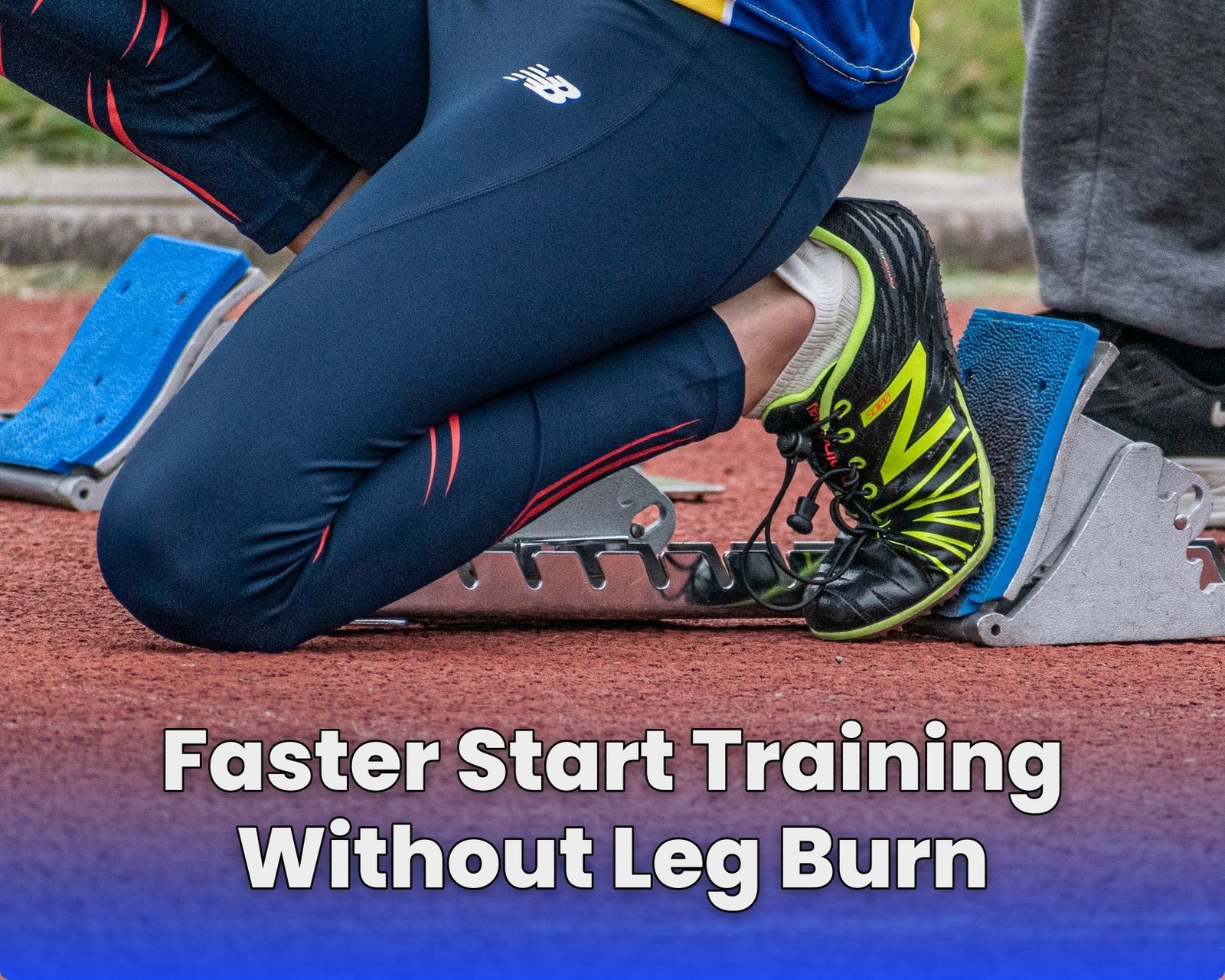
Most sprinters burn their legs because they rush the start, not because they need harder training. The fix is not mystery, it is control. You have to build an engine that can handle speed, then practice “fast” in a way your legs can absorb without turning every session into a fight for survival.
Start with a warm-up that actually prepares your body to accelerate. Give yourself enough easy running time to get warm, then add movement that reinforces mechanics: leg stiffness, ankle snap, and coordinated drive. If you jump into full-speed work after a short warm-up, your first steps will feel explosive and wrong, and your hamstrings will pay for it.
Then dose your start practice so fatigue rises gradually. Use intervals where you feel the speed without letting your form crumble, and track effort rather than chasing pace when your legs feel heavy. After the opener, build toward the finish by simulating the final push, then recover long enough to repeat the quality the next rep. That combination of preparation, mechanics, controlled intensity, and real recovery is how you get faster starts without the brutal leg burn.
Your Legs Burn From Speed You Demand Too Early
Burning legs during faster starts is not a mystery. It is the predictable result of hitting high intensity before your mechanics are stable and before your system has been warmed into the work. Ask yourself this: why do you get great first steps in practice but a paste-like feel at race speed on tired days?
If you start a session by sprinting “for time” at full bite, you load the front leg hard while your stride pattern is still adjusting. That mismatch turns normal sprint stress into a burning, acidic grind. You can chase speed, or you can earn it step by step.
The fix is simple: control how fast you go while you build the ability to tolerate fatigue, then only increase intensity after your start mechanics look repeatable.
Warm-Up Must Do Work, Not Just Check a Box
A warm-up that only makes you feel loose often fails at the one thing that matters for starts: it does not prepare your nervous system to coordinate a quick, forceful push. For faster starts without burning your legs, warm-up has to include movement quality and short accelerations that progressively resemble the demand.
Build your warm-up around 10 to 20 minutes of easy running plus dynamic form work. Include drills and short sprints inside the build so your first hard repetitions are not your first hard repetitions of the day.

When your legs feel good but your first 10 to 20 meters still look ragged, the warm-up was too gentle or too uniform. Warm-up should move you from easy rhythm into purposeful acceleration.
Mechanics Pay the First Interest on Every Sprint
You can survive a hard workout once. You cannot survive bad mechanics every rep. If your starting position collapses or your first-step drive is delayed, you force the body to “catch up” with extra effort, and that extra effort is what burns your legs.
Train the cues that keep force application efficient: a “10-in” stance with the back knee set near the front toe, strong front-leg loading, long upper body, and a back arm that drives forward with an elbow bend around 90 to 110 degrees. Add aggressive knee drive, not frantic arm flailing.
Some athletes think mechanics are a separate workout. That belief is why they burn. Mechanics are the reason your acceleration tolerates intensity instead of turning it into injury risk and leg burn.
Use Progressive Intervals to Build Controlled Fatigue
The fastest way to burn your legs is to keep intensity fixed while fatigue rises. The athlete who stays composed uses intervals that raise fatigue gradually, so the later reps feel fast because the body is already ready, not because it is desperate.
A start-specific pattern works well: run an 800 m at about 90 to 94 percent of your 800 m race pace, rest or transition about 1 minute, then run a 2-mile tempo toward the top end of your tempo zone while you settle into rhythm despite fatigue. Repeat this as two sets, with about 5 minutes of recovery plus light movement between sets.
If you want a clean structure, borrow fast start tempos and keep your first rep honest instead of heroic.
Dial Intensity by Heart Rate and Effort
Pace targets can punish you when you are tired, sleeping poorly, or coming off a tough week. For how to train for faster starts without burning your legs, you need an intensity dial that respects your current physiology.
Use heart rate and effort. Start around 85 to 87 percent of max HR and cap progression around 92 percent if breathing turns heavy. If you are fighting your lungs, add recovery time instead of forcing the same pace.
What happens when you manage effort instead of chasing a number? You finish with usable legs, and your next session starts from a better place. That is how you get faster without paying in flames.
A Session Template You Can Repeat Without Guessing
The mistake most athletes make is inventing the workout each time. You do not need creativity. You need a repeatable recipe that trains starts, tolerates fatigue, and protects recovery.
| Training Block | Intensity Target | Measurable Outcome |
|---|---|---|
| Warm-Up Build | 10 to 20 min easy plus drills | Quick posture at first accelerations |
| Start-Specific Interval | 800 m at 90 to 94% race pace | Stable first steps under effort |
| Tempo After Start Work | 2-mile tempo at top-end zone | Rhythm stays even as fatigue rises |
| Optional Finish Push | Last 200 to 400 m faster | Finish speed without collapse |
| Recovery Sprint Add-On | 10 x 10-second uphill on 8 to 12% | Quick ground contacts, no grind |
Run two sets when the work calls for it, then stop when the mechanics stop matching the plan. Repeat what you can execute with quality, not what you can survive once.
Practice the Finish Without Ruining the First Steps
You do not need to sprint your finish at the cost of your start. You need a controlled surge late, when your body can convert fatigue into speed instead of turning it into sloppy footwork.

In the intervals described earlier, keep the second 800 and the tempo consistent, then simulate the finish by pushing the last 200 to 400 meters. That push trains race feel without wrecking your ability to accelerate early in the session.
Counterargument: “If I do not suffer early, I will not adapt.” Wrong. The adaptation you want is faster acceleration under stress, not a session that turns your legs into sand before the real work even starts.
Sprints Alone Cannot Fix Starting Power
If your starts are fast in fresh conditions but decay when you are a little tired, you need power and acceleration capacity that is not tied only to one punishing run. Low-volume, well-controlled power work builds the ability to push without overloading the same tissues in the same way.
Add plyometric and coordination drills such as single-leg broad jumps, falling starts, skips and drives, or banded sprints. Keep volume modest so quality stays high and your legs are not cooked for the next start session.
Some athletes skip drills because they feel like “extras.” But if your first steps lack pop, you are asking speed work to do a job power work should do.
Train on Track or Turf to Protect the Brake Pads
Hard starts create high impact forces, and your body pays for them through calves, shins, hips, and feet. Training surfaces change the stress you experience, so surface choice matters when your goal is faster starts without burning your legs into injury.
Prefer track or turf over concrete when possible. Asphalt can make you feel “fast” because of stiffness, then punish you with soreness that follows you into your next acceleration session. The goal is repeatability.
If you are getting frequent calf tightness or achilles irritation, the problem is not motivation. It is accumulated load and poor stress management.
Rest Is Part of the Training, Not a Luxury
Most leg burn escalates because the athlete keeps training through fatigue instead of shaping it. Recovery is not a reward after suffering. It is the condition that lets the next session produce adaptation rather than breakdown.
Use appropriate recovery between sets and reps. For the two-set start-specific structure, include about 5 minutes with light movement and water between sets. For add-on reps, stop when you feel your stride shortening or your front-leg loading getting sloppy.
Counterargument: “Hard days make you tough.” Tough is doing the work with control. Tough is also knowing when controlled work is over and when you need to back off.
Progress Starts Through Measurable Markers
If you train starts without measurement, you will keep repeating the same mistake with new enthusiasm. Progress requires markers tied to acceleration quality, not just how sore you feel afterward.

Track simple outputs: first-step posture, consistency of early stride length, and whether your later surge steals form from the first steps. Use session targets like maintaining stable effort for the second 800 and staying within your tempo rhythm despite fatigue.
When you log these markers, you can answer the real question: are you getting faster because your mechanics are better, or are you just more tired?
Know When You Are Getting Faster, Not Just Tired
Faster starts show up as repeatable power, not as chaos. You want a controlled fast pace that you can reproduce across reps and sets while your legs feel ready, not cooked.
That is why the session should include “dial-in” work with controlled fast intensity and a finish simulation that does not steal your early mechanics. If intensity creates heavy leg burn, switch from pace targets to effort and heart rate, then add recovery time until breathing and form settle.
Remember: the goal is to train faster starts without burning your legs. If your session ends with the sense that you cannot accelerate the next day, your current intensity plan is wrong, and the adjustment is part of the training, not a compromise.
How Do You Train for Faster Starts Without Burning Your Legs?
How Do You Build a Warm-Up to Reduce Leg Burn During Sprint Starts?
Warm up for 10 to 20 minutes with easy running, then do dynamic form work and short build-up accelerations so your hips, hamstrings, and calves are ready before you push hard, ending with a few full-intensity practice starts at controlled effort.
What Sprint Mechanics Help You Get Faster Starts Without Overworking Your Legs?
Use a forward-lean stance with strong front-leg loading, drive the back arm forward to support posture, keep the torso long, and snap the knee drive early so you accelerate smoothly through the first 10 to 20 meters rather than “chopping” and burning out.
How Should You Schedule Start Intervals So Fatigue Builds Slowly?
Choose intervals where exertion ramps up gradually, such as running an 800 m at about 90 to 94 percent of your 800 m race pace with roughly one minute of rest, then settling into a controlled tempo for a longer follow-up segment, repeating for two sets with several minutes of easy recovery between sets.
How Can You Use Effort and Heart Rate Instead of Pace to Prevent Burning Your Legs?
Start by targeting effort, using heart rate as a guide, for example working around 85 to 87 percent of max heart rate at first and backing off the pace if your legs start to feel heavy or your breathing gets too hard, then add recovery time before you raise intensity.
What Alternative Workouts Improve Acceleration Without Causing Heavy Leg Burn?
Use easier-to-dose options like 4 to 6 repeats at a cruise interval pace with about 200 meters of jog or walk recovery, or 10 repeats of 10-second uphill sprints on an 8 to 12 percent incline with 2 to 3 minutes of easy recovery so you train speed without excessive overload.
Which Plyometric and Coordination Drills Strengthen Acceleration While Protecting Your Legs?
Add low-volume plyometrics and coordination work such as single-leg broad jumps, falling starts, skips, sprint drives, or banded sprints, progress intensity gradually, train on track or turf instead of concrete, and keep rest high enough that you are not piling up strain from sessions that feel too hard.
Train Smarter For Faster Starts
To answer how to train for faster starts without burning your legs, you need more than willpower. Build a thorough warm-up, nail sprint mechanics, then practice starts with controlled intensity so fatigue rises gradually instead of exploding your legs early. Use pace when you can, but switch to effort-based targets when your legs feel hot or your breathing goes frantic, and protect recovery so the next rep actually improves the first step. Treat each session like a calibration, and your acceleration will feel sharper without paying for it in the first seconds.

I am Ozan, a London-focused running writer and marathon enthusiast with a passion for helping people discover the city’s best races, running routes, walking trails, and fitness events. I research and write practical, up-to-date guides covering marathons, race preparation, training tips, running gear, and everything related to staying active in London.
My goal is to create reliable, easy-to-follow content that helps runners and walkers of all experience levels explore London with confidence, whether they’re preparing for their first 5K or their next marathon.