A gentle 20-minute routine can lower pre-race stress during London Marathon week without adding training load. It gives your mind a familiar task, settles rushed breathing, and helps you protect the work you already completed.
Use breathing you have already tolerated, relax your body without forcing a stretch, and rehearse race decisions you made during training. Hard workouts, unfamiliar recovery gadgets, and new fuel have no place in the final week. This routine can reduce small decisions that may grow into major worries, especially when you prepare your equipment before race morning.
Key takeaways
- Physiological sighs can be a useful opening when you want a short, familiar pattern: take two nasal inhales and one long mouth exhale for 5 minutes.
- Runners who find it comfortable can use legs supported up a wall as a low-effort way to relax during the taper.
- When the breathing pattern starts to feel forced, return to ordinary breathing and lie still rather than pushing through it.
- A shakeout run belongs the day before only if you have tolerated it in training; keep it to 10 to 20 minutes at an easy pace.
Prepare Familiar Practices and Race Equipment
Start with the practices you already know. Write down the breathing pattern, relaxation position, and race visualization that felt comfortable in training. The final week is for repeating familiar signals, not testing whether a new method can change your marathon in a few days.
Set aside your race equipment before the last morning. Put these items together in one bag or on one clean surface:
- Race shirt, shorts, socks, and weather layers
- Shoes you have already worn on long runs
- Bib and safety pins
- Watch and charging cable
- Gels, sports drink, and water bottle
- Hat, sunglasses, sunscreen, and other small items you already use
Check each fueling product against your training history. If a gel or sports drink caused stomach trouble during a long run, leave it out of your London Marathon plan. Race week is the wrong time to introduce a replacement product, even if another runner says it works well.
The same rule applies to shoes and recovery methods. Do not buy new racing shoes, start a hard strength program, or try an unfamiliar massage tool during the taper. Use the easy pace, breathing exercise, and equipment that your body has already handled.
Having clothing, a bib, a watch, and fuel ready also protects your sleep. Race morning then has fewer decisions waiting for you, which helps when excitement makes ordinary tasks feel harder than they should.
Build the Breathing and Relaxation Session
Five minutes of physiological sighs can be a useful opening because the pattern is short and easy to remember. Take two consecutive inhales through your nose, then make one long exhale through your mouth. The second inhale tops up the breath before the longer exhale, so keep the movement gentle instead of pulling in as much air as possible.
| Method | Time | Role |
|---|---|---|
| Physiological sighs | 5 minutes | Settle rising tension |
| Resonance breathing | 10-20 minutes | Slow the breathing rhythm |
| Legs supported up a wall | 10-15 minutes | Relax without active effort |
The wall position is the simplest choice when you want physical rest, while resonance breathing can give you a longer breathing practice.
For a full breathing session, spend the first five minutes on physiological sighs, then use resonance breathing for the remaining 15 minutes. Resonance breathing often uses about 6 breaths per minute, with roughly 5-second inhales and exhales. Let the breath move quietly. You do not need to take unusually deep breaths.
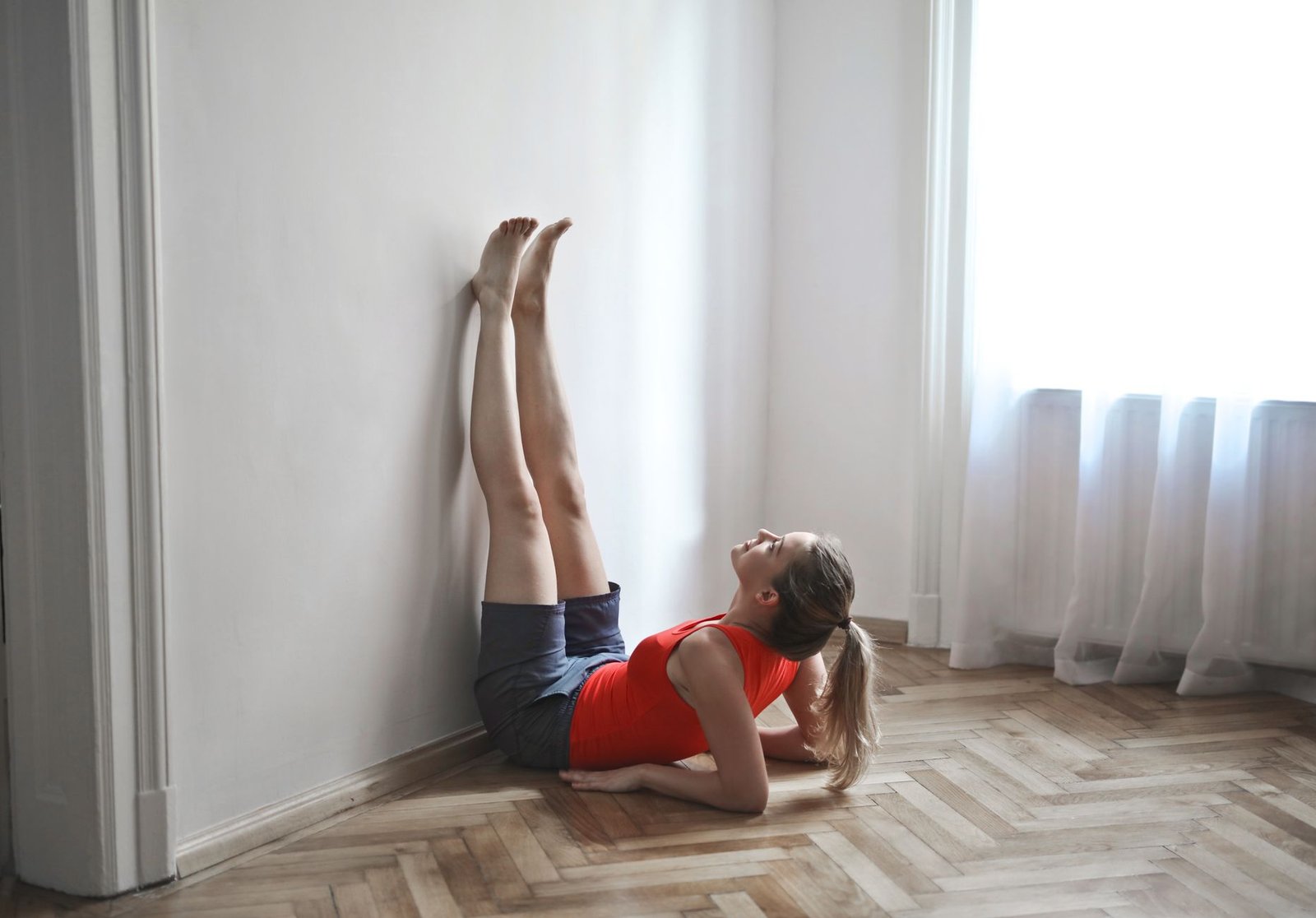
Runner resting with legs supported against a wall
A body-focused session pairs the five-minute sigh practice with 10 to 15 minutes of your legs supported against a wall. Lie on your back, place your hips a comfortable distance from the wall, and let your legs rest upward. Let your knees stay soft. This is relaxation, not a hamstring stretch, so move farther from the wall if the position pulls behind your legs.
For runners who find the position comfortable, spend 10 to 15 minutes with your legs supported up a wall as a low-effort relaxation option during the taper. You can also practice resonance breathing as its own session for 10 to 20 minutes when you want more time with the rhythm. Separate it from harder training and do it seated or lying down somewhere quiet.

Muscular man relaxing and breathing deeply in a sunset field.
Keep the Breathing Calming
Breathing practice should feel quieter by the end, not like another task you have to complete. Finish the session if you become lightheaded, uncomfortable, or more anxious. Sit normally, return to your usual breathing, and give yourself a few minutes before deciding whether to try again. If a five-second inhale feels strained, shorten it slightly and let the exhale stay easy. You can stop counting and breathe normally for a minute before returning to the pattern.
Do not add breath-holding, fast breathing, or repeated deep breaths to make the exercise feel more powerful. Those changes can make you dizzy or keyed up, especially when you are already watching your body for signs of race-day nerves. The goal is a calm signal, not a test of control.
Use these checks during the session:
- Your shoulders stay loose rather than lifting with each inhale.
- Your jaw stays unclenched.
- Your breathing remains quiet enough that you do not need to gulp air.
- Your thoughts may wander without forcing them away.
If the method feels forced after two or three minutes, switch to ordinary breathing and lie still with your legs supported. You have not failed the exercise; you have noticed that the chosen version is adding effort during the taper.
A short, familiar practice often works better than a dramatic one. You are trying to lower the volume of the worry, not erase every thought about the marathon. The race will still matter, and some nerves are a normal response to an event you trained hard to reach.
Rehearse Your London Marathon Plan
Mental rehearsal works best when you picture decisions you have already practiced. Sit or lie comfortably, close your eyes, and run through the early part of the race at a controlled pace. See the start area, hear the crowd, and imagine yourself holding back while other runners move around you.
Then picture the points that can make race day feel less unknown:
- Cross the start line without sprinting.
- Settle into your planned pace after the opening excitement.
- Take fuel and fluids at the aid stations you already planned to use.
- Respond to a difficult section by slowing slightly, relaxing your shoulders, and returning to your next simple cue.
Make the rehearsal practical. Do not invent a new pace, a different fueling plan, or a heroic response to fatigue. If you have practiced running by effort instead of pace, rehearse that. If you have a set gel schedule, picture following it. Your mind should recognize the plan when the race becomes noisy or uncomfortable.
Include one moment that does not go perfectly. Picture the pace feeling harder than expected, then imagine the response you have already practiced: ease your effort, take the next drink, and focus on reaching the next aid station. This gives you a response to use when worry starts predicting disaster.
A short conversation with another runner can replace hours of private worrying about the race. Talk about travel, the start area, pacing, or where you plan to meet afterward. Shared preparation can settle the mind, while frightening race predictions may raise tension instead.
Use the rehearsal once a day for a few minutes, perhaps after your breathing routine. A steady opening pace gives you a simple image to return to when the crowd makes the first miles feel faster than planned.
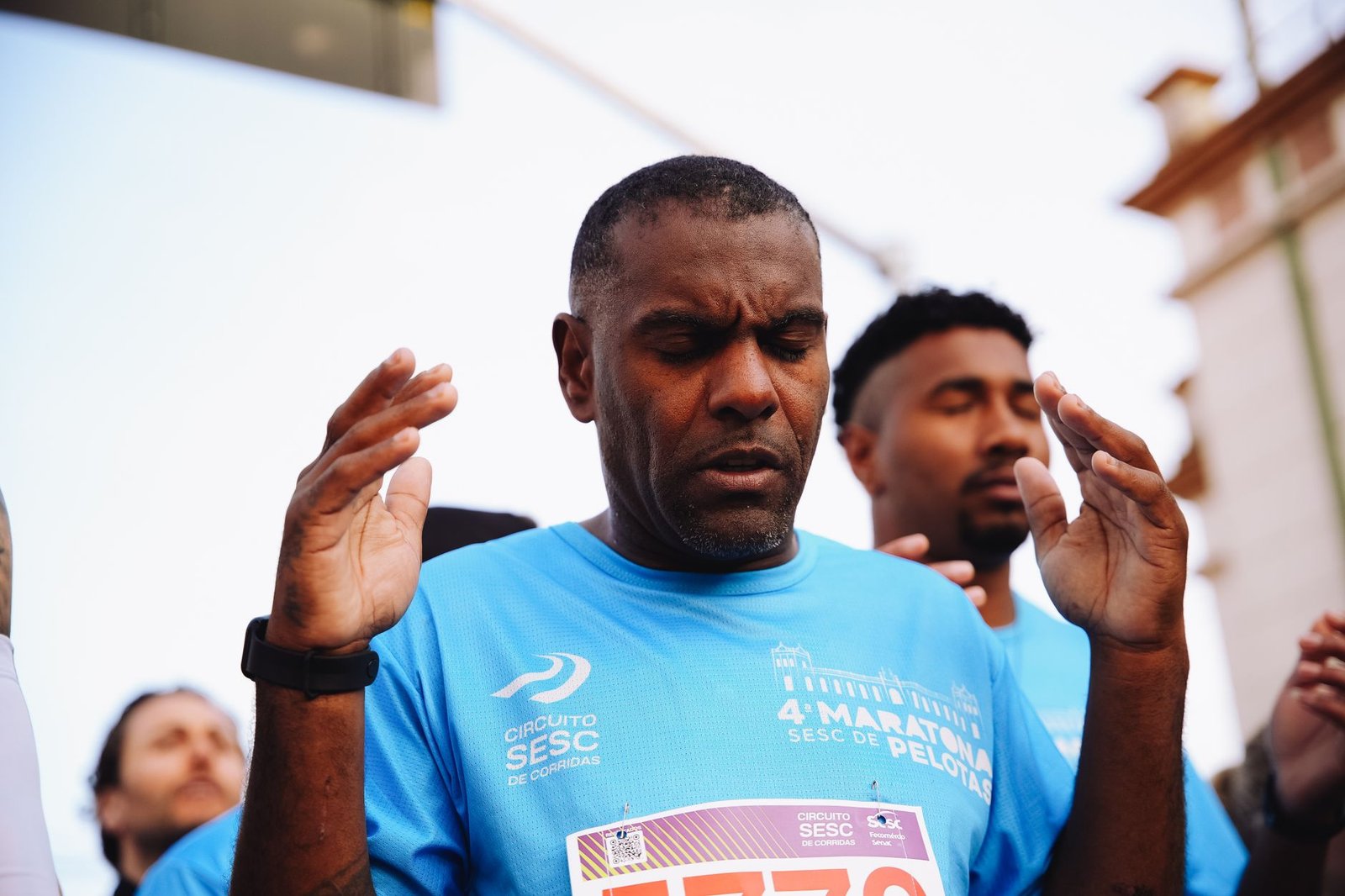
Runner concentrating and raising hands before the marathon race.
Shake Out and Set Up the Day Before
The day before the marathon should feel quiet and familiar. If you want a shakeout run and have tolerated it in training, keep it to about 10 to 20 minutes at an easy pace and use it the day before the race. Keep the effort gentle enough that you could speak in full sentences, and stop while your legs still feel fresh.
Do not add strides, hills, intervals, or a longer loop. The shakeout is unlikely to build useful marathon fitness overnight, but turning it into a final workout can leave you tired. If running makes you tense or your legs feel sore, walking briefly and resting is the better choice.
Use the rest of the day to remove practical decisions. Your clothing, shoes, bib, watch, fuel, and weather layers should already be in the order you will use them. Put the items you need first where you can reach them without searching through a bag.
Check your race plan once, then leave it alone. Your gels and sports drink should be products you have already tolerated in training, and your shoes should be the pair you have already used at the intended race effort. Do not let a last-minute tip persuade you to change a plan that your stomach, feet, and legs already know.
If nerves return, use the same calm breathing pattern you practiced earlier, then return to ordinary breathing and let the familiar plan carry you to the start.
London Marathon Week Pre-Race Stress Relief You Can Trust
London Marathon Week Pre-Race Stress Relief works best when it gives you a clear response to nerves instead of asking you to eliminate them. The aim is to reach the start with fewer loose ends and a plan your mind recognizes. Before bed, place a small card beside your alarm with your planned pace and first aid station written on it.
Frequently Asked Questions
Can this routine prepare me for the full London Marathon?
A marathon is 42.2 kilometers, or 26.2 miles, so this routine cannot replace marathon training. Use it during race week to support recovery and calm while relying on the training you have already completed.
What should I do if one stressful night leaves me feeling unprepared?
A single stressful night does not require a new training session or a major change to your plan. Return to your familiar routine and protect the remaining time before the race.

I am Ozan, a London-focused running writer and marathon enthusiast with a passion for helping people discover the city’s best races, running routes, walking trails, and fitness events. I research and write practical, up-to-date guides covering marathons, race preparation, training tips, running gear, and everything related to staying active in London.
My goal is to create reliable, easy-to-follow content that helps runners and walkers of all experience levels explore London with confidence, whether they’re preparing for their first 5K or their next marathon.