How to keep your neck and upper back relaxed during the final miles is not a “stretch later” problem, it is a form problem you can fix while you run. Most runners tighten their traps because their posture collapses when fatigue hits, and that tension travels up to the neck fast.
You will feel it the moment you start looking down at your phone, hiking your shoulders, or letting your chin drift forward. Instead, keep your head tall with your eyes on the horizon, let your elbows drop back so your hands stay near your belt line, and maintain a loose arm swing without crossing your midsection. If your shoulders creep up, you are already losing the battle, so treat that as a prompt to reset posture immediately.
When your neck or upper back starts to burn, do not power through the shrug, reset. Take a deep breath, shake out your arms for a second, then gently roll your neck forward and back and to the sides while you breathe slowly. After that, stabilize through your core by drawing your lower belly in so your upper back does not have to carry the workload at the end.
Relaxation Is a Form Decision, Not a Mood
During the final miles, neck and upper back tension often feels like a personal failure. That is a comforting myth. Tension is mechanical. It happens when your head drifts forward, your elbows creep up, your grip tightens, and your core stops steering your stride.
If you wait to feel relaxed, you will arrive exhausted with your traps already on duty. The fix is to treat relaxation like technique: visible, repeatable, and trainable under fatigue.
Late-race calm comes from setup cues, not willpower.
So the question is simple: will you run the final miles with awareness of where your head, shoulders, and arms are, or with blind faith that pain will stay away?
Stack Your Head and Stop the Phone Habit
Holding your head high is not about posture perfection. It is about reducing the leverage that forces your upper back to work overtime. Aim for stacked posture: eyes on the horizon, chin neutral, and no looking down at a phone or GPS.
When your gaze drops, your neck extends and your upper traps compensate. That compensation may feel small in mile 20, then becomes obvious in mile 24. In the final miles, your body does the easiest thing first: it tightens whatever keeps you upright.
Pick one reference point. Keep it steady. If you need a check, do it by seconds, not minutes. Ask yourself after each stride, “Is my chin creeping down?”
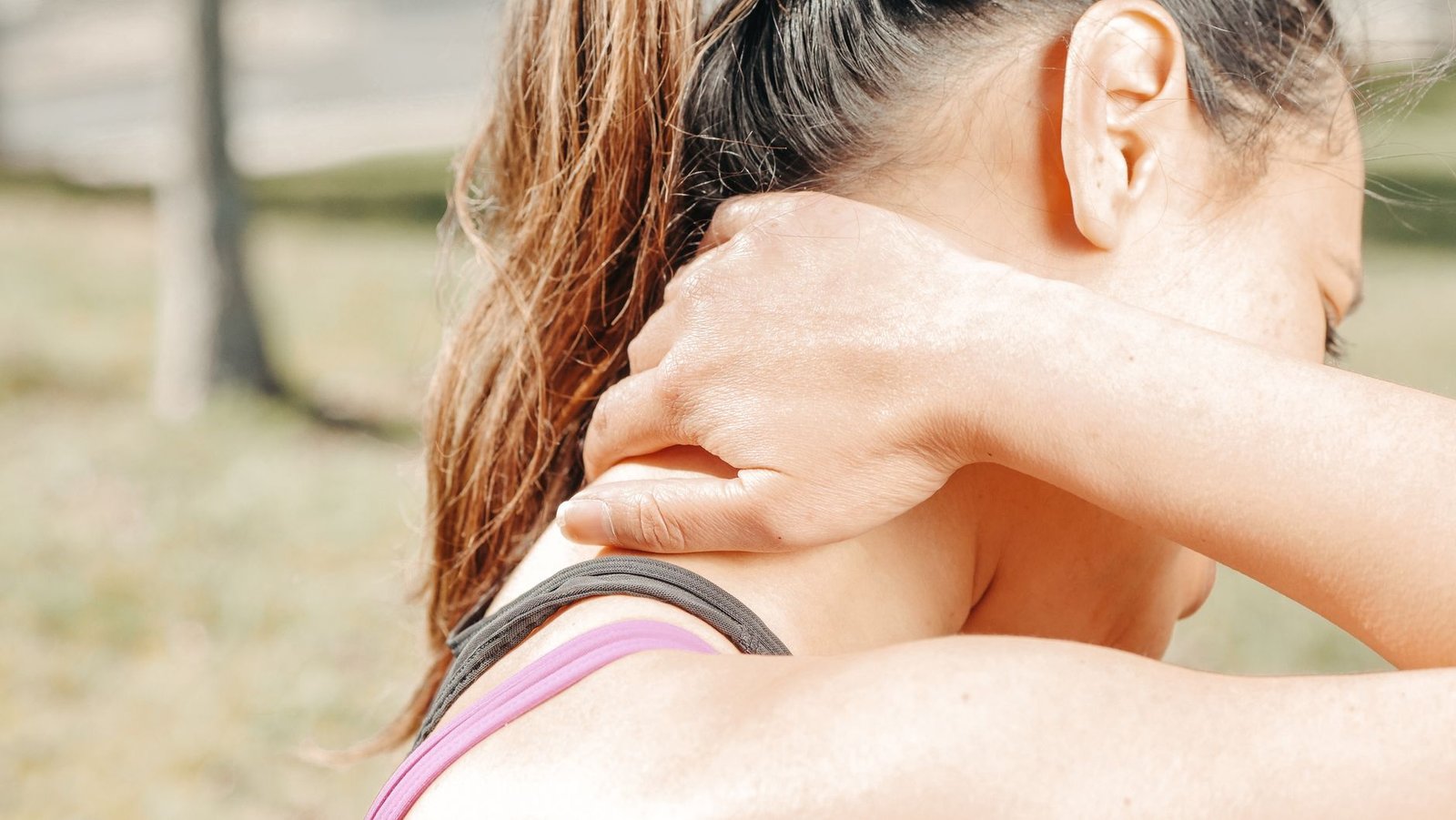
Drop Your Elbows Back to Take Load Off Traps
Many runners relax their shoulders and still feel strain because their elbows are too high or too forward. The cue in the final miles is specific: drop the elbows back so your hands sit in front of your belt line instead of creeping upward.
That elbow position changes how your arm swing loads your shoulder girdle. Higher elbows encourage shrugging. Lower, rearward elbows let the upper back stop fighting for stability while you run.
If you want a quick self-audit, glance at your shoulder line while running. Are your shoulders rising to meet your hands, or staying quiet as your elbows swing?
Loosen the Grip, Let the Arms Swing
Tight traps love a tight grip. When your fingers clamp down, your forearms rotate, your shoulders follow, and your neck begins to brace. In the final miles, you should feel your hands working like a metronome, not like a handle.
Try a simple rule: fists relaxed and the pinky grazing the top of your pocket. Keep your arm swing steady at your sides, with roughly a 90-degree bend and no crossing your midsection.
- Relaxed hands reduce shoulder lift
- Clean side swing keeps neck load from spiking
Some people will argue that a death grip adds power. Power comes from forward drive and efficient mechanics, not from borrowing tension from your neck and then “hoping” it stays localized.
Use Shoulder Checks to Catch Tension Early
You cannot correct what you do not notice. The final miles are where people stop monitoring their form because the effort is already high. That is exactly when you need a routine check.
Routinely glance at your shoulder position while running. If one shoulder rides higher, if elbows creep up, or if your head drifts forward, correct it within a few seconds. Small corrections beat big collapses.
Make the check automatic the way you check breathing. Do you feel a shoulder tightening every time the pace dips? Then your “tension habit” is already running the show.
Breathing Resets the Neck Faster Than Brute Force
When the neck tightens, many runners try to outmuscle the discomfort with stronger strides. That is backwards. You can disrupt the tension loop with breath. A deep inhale expands the rib cage, gives the neck a stability job it no longer needs, and shortens the time your traps stay engaged.
A guide on running relaxation tips explains how controlled breathing can keep form from spiraling under fatigue. Use it as an interruption, not a reward.
During strain, take one deep breath, let your shoulders drop, and shake out your arms for a few seconds. Then return to your cues. The goal is not to relax forever. The goal is to prevent tension from accumulating.
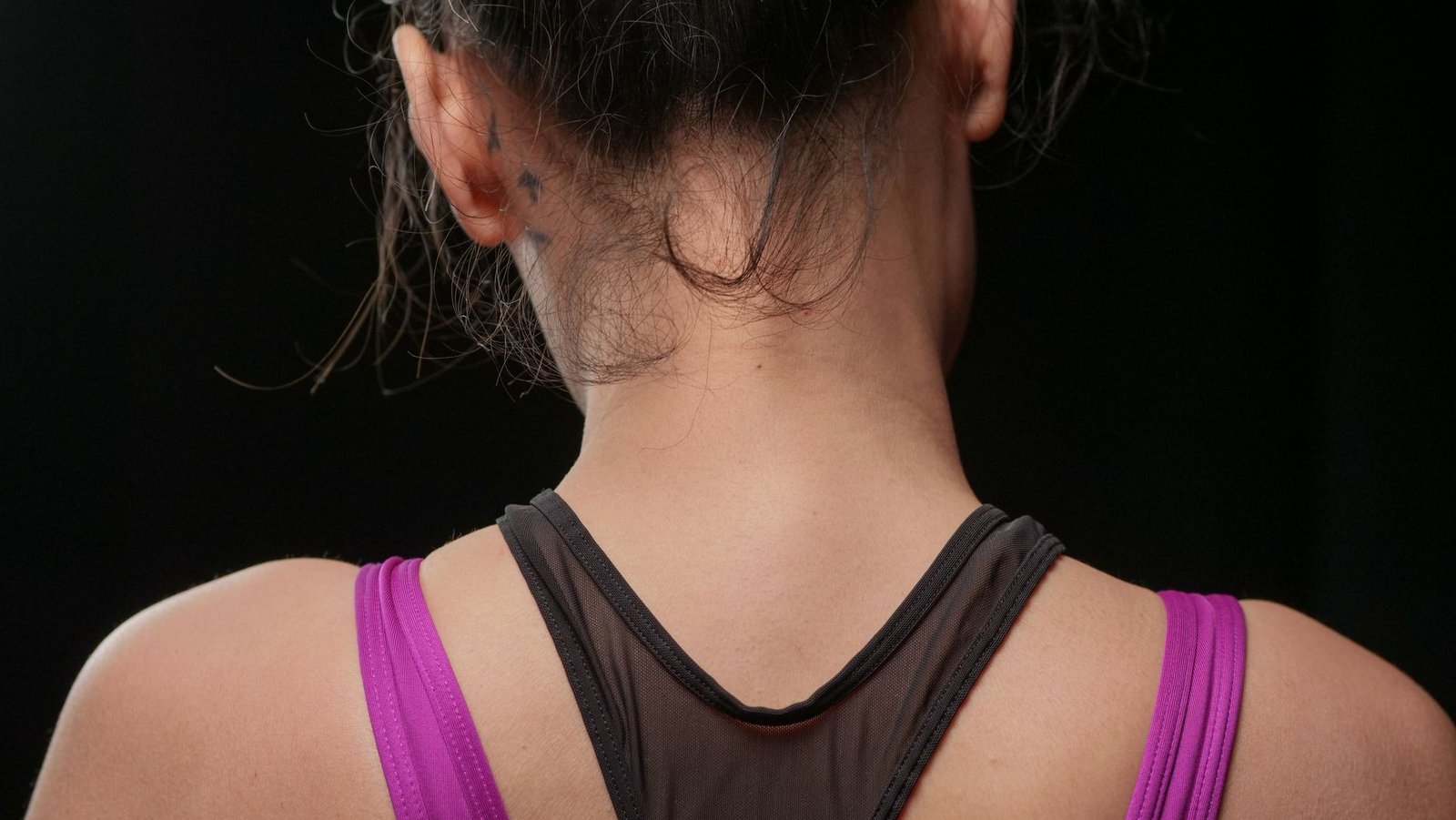
Micro-Mobility Between Mile Splits
At the end of a race, you do not need a long stretching session. You need micro-mobility that resets the joints while you keep moving. If strain builds, roll the neck gently forward then back, and to the sides while breathing deeply.
Short, controlled motions reduce the “stuck” sensation that makes runners clamp down. The traps tighten when the neck feels restricted. Ease the restriction, and the rest of your posture follows.
Is this faking confidence? No. It is using anatomy. Tiny mobility checks between mile splits give your nervous system permission to stop bracing.
Core Stabilization Lets the Upper Back Rest
The upper back feels the workload when the core stops coordinating. That is why the final miles punish runners who rely on upper-body endurance alone. If your trunk wobbles, your neck and traps create compensation to keep your head and shoulders from tilting.
Stabilize through the core by drawing your navel in toward your spine. That cue reduces the need for upper back effort so you can keep your head stacked and shoulders quiet.
| Cue | Measured Effect | When to Use |
|---|---|---|
| Navel Draw-In | Less shoulder lift | After each mile split |
| Exhale Control | Lower tension | Every 2 to 3 breaths |
| Rib Cage Neutral | Steadier head | After surges |
| Foot Strike Quiet | Reduced bracing | On hills |
| Relax Hands | More relaxed shoulders | During discomfort spikes |
Think of core stabilization as the switch that tells your upper back, “You do not carry everything.” Once that signal is clear, your neck can stay long and your shoulders can stay down.
Pacing for Late Miles Beats Any Stretch
Neck and upper back tension spikes when fatigue forces your form to compensate. That means pacing is part of the solution, not just an optional strategy. If you start the final miles already overloaded, you will chase relaxation with cues while your mechanics keep breaking.
Run the last segment with control. Shorten the stride slightly, keep cadence steady, and let the body do the work it can handle. When you prevent earlier collapse, late tension becomes a cue to manage, not a problem to survive.
Ask yourself before the last mile, “Can I keep my head position without fighting?” If the answer is no, you started too hot for your neck and traps to stay relaxed.
Train the Cues Before You Need Them
Cues under stress are only useful if you have rehearsed them. During training runs, practice the exact checks: horizon gaze, elbow position, relaxed grip, shoulder rise, and the breath reset. Repetition makes these actions automatic.
In the final miles, you will not have time to invent technique. You will have time to execute what your body already knows. That is why a few focused workouts matter more than one inspirational “race day mindset.”
- Practice horizon gaze for 10-minute blocks
- Use shoulder checks every 5 minutes
Some runners dismiss this as overthinking. But overthinking is attention without feedback. Cues with feedback are training, not anxiety.
When Tension Starts Change the Plan
Discomfort in the neck can be a warning light. If your shoulders creep up and your chin drops, that is your body asking for intervention. Waiting until the pain becomes “normal” usually turns a manageable tension pattern into a persistent strain.
Change the plan immediately. Take one deep breath, shake your arms out briefly, roll your neck gently, then reset elbow height and grip. If needed, adjust pace for 30 to 60 seconds to regain stable posture before you push again.

Late-race discipline is not stubbornness. It is responsive pacing and quick mechanical correction.
Make Relaxed Running Your Competitive Edge
Relaxation in the final miles is not soft. It is efficient. When your neck and upper back stay quiet, you preserve stamina that can go into cadence, foot strike rhythm, and steadier forward motion.
Use the cues as your toolkit: stacked head, neutral chin, elbows dropped back, relaxed hands, shoulder checks, breath resets, micro-mobility, and core stabilization. These are controllable levers when everything else feels uncontrollable.
So keep asking the same question through the last miles: Are my shoulders doing work my core and legs should handle? If you insist on that answer, you will finish with more than distance. You will finish with control.
How to Keep Your Neck and Upper Back Relaxed During the Final Miles
How Can You Maintain Stacked Posture to Relax Your Neck and Upper Back During the Final Miles?
Keep your head tall and your spine stacked, so your chin stays neutral and your shoulders sit down and relaxed. Focus on length in your neck rather than pushing your head forward, and let your upper back stay quiet instead of tightening as the miles feel harder.
Should You Keep Your Head Up and Avoid Looking Down at a Phone or GPS While Running?
Yes. When you look down at a phone or GPS, your neck flexes and your upper back tightens to compensate. Aim your eyes at the horizon, and if you need to check a device, do it briefly while you steady your posture.
What Arm Position Helps Prevent Tension in Your Upper Back and Shoulders in the Final Miles?
Let your elbows move back naturally and keep your hands in front of your belt line. Keep your arm swing at your sides with about a 90 degree bend, and avoid shrugging or letting your arms drift across your midsection.
How Do You Loosen Your Traps and Release Your Grip Without Losing Control?
Keep your fists relaxed and your grip light, with no white knuckles. Try to keep your shoulders away from your ears, and use a smooth, steady arm swing so your upper traps do not have to work to stabilize your head and shoulders.
What Quick Breathing Reset and Neck Movement Helps When Your Neck Feels Tight in the Final Miles?
Take a deep breath and exhale fully, then gently shake your shoulders or roll them back once or twice. If your neck still feels tight, move it slowly forward, back, and to each side while you breathe, and return to running with your eyes on the horizon.
How Does Core Stabilization Reduce Work for Your Upper Back Late in a Run?
Engage your core so your upper back does not carry the effort. Think about drawing your navel slightly toward your spine and keeping your ribcage steady as you fatigue, which helps you maintain posture and reduces neck and shoulder strain.
Your Final Miles Depend On Relaxed Form
Learning how to keep your neck and upper back relaxed during the final miles is simple: stack your posture, keep your chin from jutting, let your elbows drop back, and run with a light grip so your shoulders stay quiet. When strain shows up, breathe, loosen with a quick shake, and reset your head position before your form locks in. Commit to that routine for the last stretch and you will finish smoother, faster, and with less carryover tension than you ever would by forcing pace.

I am Ozan, a London-focused running writer and marathon enthusiast with a passion for helping people discover the city’s best races, running routes, walking trails, and fitness events. I research and write practical, up-to-date guides covering marathons, race preparation, training tips, running gear, and everything related to staying active in London.
My goal is to create reliable, easy-to-follow content that helps runners and walkers of all experience levels explore London with confidence, whether they’re preparing for their first 5K or their next marathon.