Real distractions turn dull miles into useful training. You should not treat a long run like an autopilot loop, because the point is to build fitness and focus under changing conditions. When your route includes lights, crowds, and turns, you stop coasting mentally and start practicing the kind of adaptation real life and races demand.
Real distractions keep your brain awake and your body responsive. Varying pace and effort around turns, negotiating pass-through moments near pedestrians, and reacting to changing visibility forces micro-adjustments in how you breathe, brace, and run tall. That mental engagement matters because boredom slows decision-making, while variety helps you stay present long enough to get a deeper training effect.
Of course, this is only smart if it is safe. Prioritize good lighting and visibility, choose low-traffic routes with room to move, plan hydration and restroom access, and check weather and air quality before you go. If you expect crowds, use a familiar route with clear “checkpoints,” keep your eyes up, and manage your plan with situational awareness so the run stays challenging, not risky.
Autopilot Ruins Long-Run Benefits
That is the core of why your long-run route should include real distractions, lights, crowds, and turns: the body adapts best when the run demands attention, not when it hypnotizes you into sameness. A long run is supposed to create durable fitness, not a meditative commute.
If every mile is identical, your nervous system learns a single routine and stops treating the run as a training stimulus. The result is familiar, but not always desirable. Why chase “easy mileage” if your mind and mechanics coast on autopilot?
Distractions are not the enemy of performance. They are the ingredient that keeps you responsive, so your aerobic work turns into real, transferable conditioning.
Real Distractions Make Your Brain Show Up
Remote from the office routine, your attention becomes the limiting factor on a long run. When the road is predictable, your mind drifts and your body follows. You feel “fine,” but you are not sharpening the skills that protect efficiency when conditions change.
Training that ignores reality turns into a weaker version of you.
Lights, crowds, turns, pedestrians, and shifting sidewalks force constant micro-decisions. You adjust cadence around stop-and-go moments, refine foot placement around side-steps, and practice staying smooth when your usual lane disappears.

Lights, Turns, and Crowds Train Real Adaptation
Physiology responds to novelty. When you are forced to change effort and posture repeatedly, your body keeps recruiting different motor patterns and stabilizers instead of settling into one groove. That is how a long run becomes more than “time on feet.”
Crowds and turns create short bursts of demand: you slow to navigate, accelerate out of sightlines, and maintain form while weaving. Over 90 minutes or more, those micro-adjustments stack into a meaningful training effect.
Opponents argue that crowds just add stress. But stress is not automatically bad. The question is whether you are adapting calmly and safely, or panicking and losing mechanics. A controlled dose of real conditions lets you build the calm response you will need on race day.
Varied Terrain Builds Race-Stable Strength
Even if your goal is a road race, the body benefits from uneven inputs. Hills, grass, gravel, gravel-to-asphalt transitions, and softer sand teach your stride to stay organized when traction and ground feel shift.
Think of it as strength training without a gym. Your glutes and calves must work differently on each surface, and your balance systems get regular reps. Use route planning basics to map loops that naturally include these transitions.
When the route matches real conditions, your long-run fitness transfers better. Your cadence stays under control, your steps stay efficient, and your legs do not rely on one surface to “carry” you.
Crowd Readiness Beats Fantasy Simulations
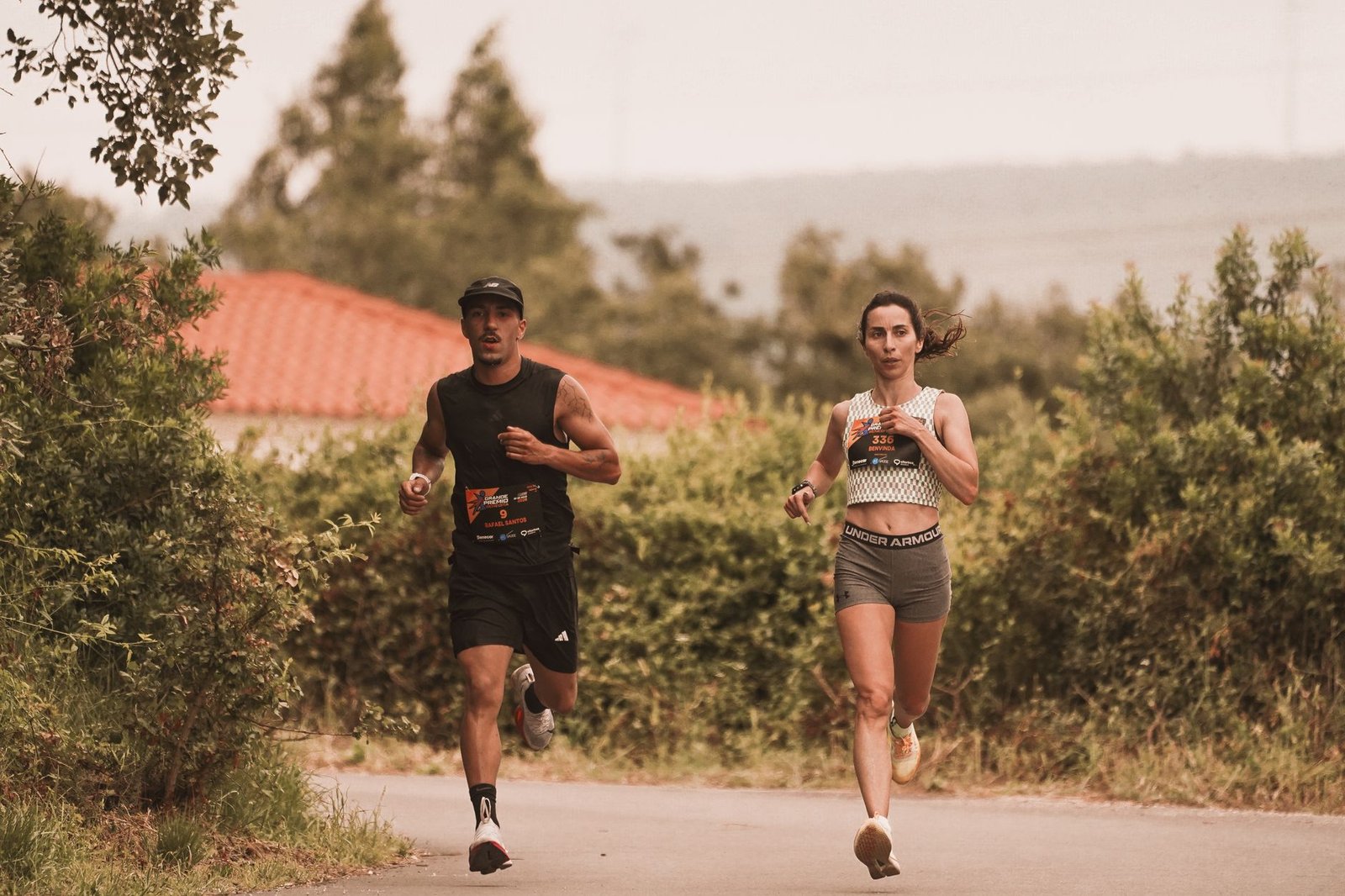
Many runners train long runs as if the world is empty. Race day is not empty. You will share space, dodge elbows, absorb surges, and choose lines around slow runners. If your route never includes people, you arrive underprepared for the cognitive load.
Running through crowd-like conditions also trains restraint. You learn not to chase the loud pace, to read body language, and to pass efficiently without turning every interaction into a sprint.
Yes, some runners worry that weaving through pedestrians teaches bad habits. The counter is simple: you choose crowds that allow a safe flow, keep situational awareness high, and practice passing decisions with control rather than aggression.
Visibility Is Productivity for Your Legs
In low light, you are not just “being safe.” You are protecting the quality of every stride. When you can see the path clearly, your brain reduces uncertainty and your mechanics stay consistent. When you cannot, you shorten your stride, grip the ground harder, and waste energy.
Use a concrete checklist for low-light accuracy before you leave the house.
| Safety Feature | Measurable Target | Practical Payoff |
|---|---|---|
| Reflective gear | Visible at ~100 m | Drivers notice you sooner |
| Front light | 2-3 hr runtime | Stable line-of-travel |
| Rear light | 300-500 m visibility | Reduced surprise approaches |
| Wide shoulder route | ≥ 1.5 m clearance | More recovery space |
| Preplanned turns | Next turn in view | Less braking at intersections |
With visibility handled, lights and turns stop being a threat and become part of the training. You can run with purpose instead of scanning wildly.
Traffic Rules Decide Whether You Earn the Run
Real distractions do not mean risky distractions. If your route forces you into narrow lanes, unpredictable merges, or heavy vehicle flow, you trade fitness for near-misses. That is not a training plan. It is a gamble.
Choose safer patterns: wide shoulders or dedicated running lanes, routes that keep you moving away from oncoming cars, and times when traffic is lighter. You are training long-run efficiency, not street survival.
Some will say that “you just have to be tough.” But toughness without control breaks form. When you keep exposure low and predictability high, your long run stays productive even when the route includes turns and crowds.
Checkpoints Turn Chaos Into Manageable Effort
When heavy activity is likely, a good route includes structure. A simple loop with “checkpoints” stops you from improvising when the environment changes. You decide the effort, then you execute it.
Instead of wandering, you mark points where you can reassess: a water station, a park entrance, a quiet crossing, a turnaround. Those checkpoints help you absorb crowds without letting them rewrite your pace.
- Start effort at a planned baseline, not off the first wave of people.
- Recheck form at each checkpoint, especially cadence and breathing.
Do you want long-run confidence or long-run uncertainty? Checkpoints give you the first one.
Hydration and Restrooms Are Performance Insurance
Distractions often trigger timing issues. A crowd makes you slow at intersections. A turn changes your rhythm. Suddenly you are thirstier and farther from help than you planned.
Build the route so hydration and restroom access are not “maybe.” Plan stops at realistic distances and durations. If your long run is 75-120 minutes, schedule fluids so you are never chasing them at mile 11 with a dry mouth and a wobble.
Smart planning also protects your mental focus. When you are confident about water and facilities, you stop bargaining with the run. You stay in control, and the route can keep challenging your responsiveness.
Weather and Air Quality Set Your Ceiling
Lights, crowds, and turns can be demanding, but the bigger limiter might be air. High humidity, poor ventilation, and smoke or smog can make the same route feel like a different sport entirely. Your lungs do not negotiate.
Check weather and air quality before you commit. If the air is unhealthy, choose a different route, reduce intensity, or switch to an indoor option. That is not quitting. It is training decisions that match the conditions.
When you protect your recovery capacity, you turn environmental stress into productive adaptation rather than a forced drop in form.
Situational Awareness Beats Phone Daydreams
A long run with real distractions is already cognitively busy. If you add a phone habit, you overload attention and invite sloppy line choices. Your goal is to keep your eyes up when it counts: intersections, curbs, and crowded sidewalks.
Keep tracking practical. Use your watch or phone for pacing and distance, but avoid reading at decision points. If you need navigation, glance briefly, then commit to the path. Turns should not turn into distractions you create.

Critics claim that technology helps safety. It can, but only when used as a tool, not as a lifestyle. Awareness is the skill. Treat it like one.
Share Your Plan and Carry Small Safety
When your route includes crowds, lights, and turns, the unexpected happens. That is exactly when you want backup. Share your plan with someone who will notice if timing slips or you stop responding.
Carry a phone and basic emergency items. Keep it accessible, not buried. If you run in low light, consider a small light strategy beyond what you started with, and keep your route simple enough that a quick adjustment is possible.
Real distractions can make long runs more mentally engaging and physiologically useful. But they only earn that benefit when you treat safety as non-negotiable. You do not need a perfect world. You need a competent one.
Why Your Long-Run Route Should Include Real Distractions, Lights, Crowds, and Turns
Why should your long-run route include real distractions like lights, crowds, and turns?
Real distractions keep your mind engaged and help your body adapt to changing effort and conditions, instead of settling into autopilot on a monotonous route.
How do lights, crowds, and turns make long runs more mentally engaging and training-effective?
Lights and turns force frequent micro-adjustments in pace, stride, and focus, while crowds add unpredictable movement cues that help you stay alert and mentally present throughout the run.
What types of route variation best prevent boredom on long runs with different terrains and scenery?
Mix road with off-road, and combine terrain such as hills, grass, gravel, or sand, while alternating scenery like parks, waterfronts, loops, and out-and-backs to sustain motivation and effort variety.
How can you choose safer long-run routes when running near lights and crowds?
Prioritize strong visibility and lighting with reflective gear (and a light if needed), choose low-traffic roads or running lanes with wide shoulders, and run facing away from oncoming cars when possible.
How should you plan hydration, restrooms, and checkpoints on distraction-heavy long-run routes?
Use a familiar route with planned stops, set checkpoints for water and restroom access, and stay mindful of your surroundings so you can keep moving while managing interruptions.
When should you adjust your long-run plan due to weather, air quality, or busy pedestrian traffic?
Check weather and air quality before you go and avoid high-smog periods or areas; if conditions are poor or crowds are unmanageable, switch to a safer alternative route or an indoor option.
Run Smarter With Real-World Interruptions
That is the point behind why your long-run route should include real distractions, lights, crowds, and turns: your body and mind prepare for the messy reality of race day, not a perfect treadmill fantasy. Choose routes that stay safe and visible, keep traffic and crowds manageable, and let changing conditions force real pacing and real attention. Commit to variety on purpose, and your long runs will build confidence that holds up when the course gets complicated.

I am Ozan, a London-focused running writer and marathon enthusiast with a passion for helping people discover the city’s best races, running routes, walking trails, and fitness events. I research and write practical, up-to-date guides covering marathons, race preparation, training tips, running gear, and everything related to staying active in London.
My goal is to create reliable, easy-to-follow content that helps runners and walkers of all experience levels explore London with confidence, whether they’re preparing for their first 5K or their next marathon.