Running through rain, wind, and heat is not “mental toughness,” it is a skills-and-prep problem. When you step outside without a weather plan, you end up fighting conditions that could have been managed with a few practical decisions. This matters because the goal is consistency, not getting punished by the forecast.
To weather-proof your training, start before you lace up: check the forecast closely, and treat lightning, hail, and strong winds as hard stop signs, not inconveniences. Then build a real warm-up so your muscles and joints handle temperature swings and slippery footing, and avoid low-light risk with reflective gear when visibility drops.
Finally, dress and plan for traction, comfort, and recovery. Choose moisture-wicking layers, use a breathable windproof and rain-ready outer when needed, protect your extremities, and prevent chafing with simple anti-friction habits. Afterward, change out of wet clothes quickly, cool down, hydrate, and thoroughly dry your shoes so your next run starts with you ready, not compromised.
Weather Proofing Is Training, Not Excuses
If you treat weather as a nuisance, you will miss sessions and then call it “real life.” If you treat it as a variable you can manage, running in rain, wind, and heat becomes part of your system. That is what weather proofing your training is: preparation that protects performance and consistency, not bravado.
Consistency beats occasional hero runs. When conditions shift, your job is to adjust so your body keeps doing the work it was built to do. Ask yourself: are you preparing your plan, or just hoping the forecast behaves?
Check the Forecast Like Your Pace Depends on It
The fastest way to lose fitness is to show up unprepared and then abandon the run halfway. Your weather-proofing starts before you lace up, by checking specifics, not vibes. Look for lightning, hail, strong winds, and the heat-index type of heat that turns comfort into danger.

- Lightning within striking distance means immediate shelter, not “one more mile.”
- Strong wind and gusts can turn a controlled effort into an energy drain.
- Heat plus humidity is where cramps and heat illness start to climb.
Safety is not a detour. It is part of training.
Lightning Changes the Rules Immediately
When lightning is possible or thunder is audible, the risk is not theoretical. It is immediate. Running outdoors under those conditions is a gamble with a very bad payoff, even if you feel strong and your route is “almost done.”
Choose shelter or switch to a treadmill or controlled cross-training. If you plan for that option before you leave home, the decision becomes automatic instead of emotional. What is tougher, finding indoor minutes on a bad forecast or risking a serious incident for a time you will never get back?
Warm Up to Match the Environment, Not Your Ego
Cold rain can stiffen muscles, wind can sap breathing efficiency, and heat can mask fatigue until it is too late. A good warm-up is how you tell your body what conditions to expect, so your first mile does not become a survival test.
Use dynamic moves first, then a brief walk or jog to raise temperature gradually. In extreme cold or sudden wet conditions, your warm-up should feel purposeful and steady, not frantic. If you skip it, you will “pay interest” later with reduced form and increased chafing risk.
Dress in technical Layers That Manage Water and Heat
Technical, moisture-wicking layers beat cotton every time. Cotton stays wet, chills your core, and increases the chance you will feel miserable enough to quit early. Your goal is to manage moisture and temperature so your body keeps working efficiently.
Use a light wicking first layer, then add warmth with a middle layer if needed. Finish with a breathable, waterproof, windproof, packable shell that handles rain without trapping you into a sauna. Overdressing backfires because overheating increases sweating, which makes you wetter and more prone to chafing.
Traction Beats Toughness When Surfaces Turn Mean
Rain and wind may look dramatic, but the real performance threat is often the ground beneath you. Wet pavement and slippery trail sections reduce grip, increase micro-corrections, and raise the chance of slips that end a season.
Use gear that matches the surface, and treat traction as a measurable variable, not a feeling. Here is a practical pairing guide:
| Condition | Target Gear Choice | Practical Metric |
|---|---|---|
| Light rain on roads | Water-shedding running shoes | Allow 2 to 3 extra minutes for caution |
| Heavy rain and puddles | Deeper lugs or grippy outsole | Plan 1 to 2 pace levels more conservatively |
| Slick trail mud | Trail shoes with aggressive tread | Expect 5 to 10% shorter stride length |
| Slippery edges near streams | Winter cleats or traction aids | Increase contact points by added grip units |
| Wind-driven spray | Quick-drying socks and breathable uppers | Keep feet dry to avoid blister time loss |
Yes, you can tough it out. But smarter traction preserves your rhythm, your joints, and your willingness to train again tomorrow.

Wind Strategy Wins Against Wasted Energy
Wind is not just discomfort. It is resistance that changes your biomechanics, especially in gusty conditions. Instead of fighting it blindly, use a strategy: warm up running with the wind, then switch direction once you are warm so you do not spend your best energy getting battered.
When gusts spike, shorten your stride slightly and keep your effort smooth. The goal is stability, not dramatic hero posture. If you cannot maintain control, that is your cue to slow down or modify the route.
Prevent Chafing Before It Takes Your Week
Wet conditions do not only soak fabric. They increase friction. When skin stays damp, it chafes faster, and small hotspots can become week-ending problems. Weather proofing your training includes friction control, not just weatherproof fabric.
Apply anti-chafe lubricant such as body glide or vaseline to rub-prone areas before you start. Focus on where wet layers move: inner thighs, underarms, bra line, sock seams, and any spot where fabric tension changes when you sweat. Why wait until you feel pain mid-run when prevention is quick and cheap?
Stay Visible in Low Light or Falling Weather
Rain often reduces contrast and makes drivers less able to judge distance. Wind and darkness shorten your margin for error. If you run in low light, reflect when it matters and make it easy for others to see you.
Use reflective gear and consider a headlamp so you can navigate hazards. Do not rely on “the route being familiar.” Puddles, slick patches, and sudden visibility drops turn known paths into traps.
Heat Requires Hard Limits, Not Just Motivation
Heat and humidity are where training logic breaks down. The body works harder to cool itself, and the cost shows up as cramps, exhaustion, and heat illness. If conditions are dangerously oppressive, do not pretend discipline will outmuscle physiology.
Adjust your plan: reduce duration, slow pace, or move the session to a cooler time window. The best weather-proof runners treat heat as a measurable risk, not a mood.
Hydrate and Cool Down Like You Mean It
In warm conditions, hydration is training fuel, not a casual habit. Start with a sensible plan for water access and timing, and keep sipping so you avoid getting behind on fluids. If you wait until you feel thirsty, you are usually already late.
Afterward, cool down with light stretching and keep moving gently long enough to help your system return to baseline. Then towel dry and get out of wet gear fast so your recovery does not become an all-day damp problem.
After the Run Dry Out Everything That Can Ruin Recovery
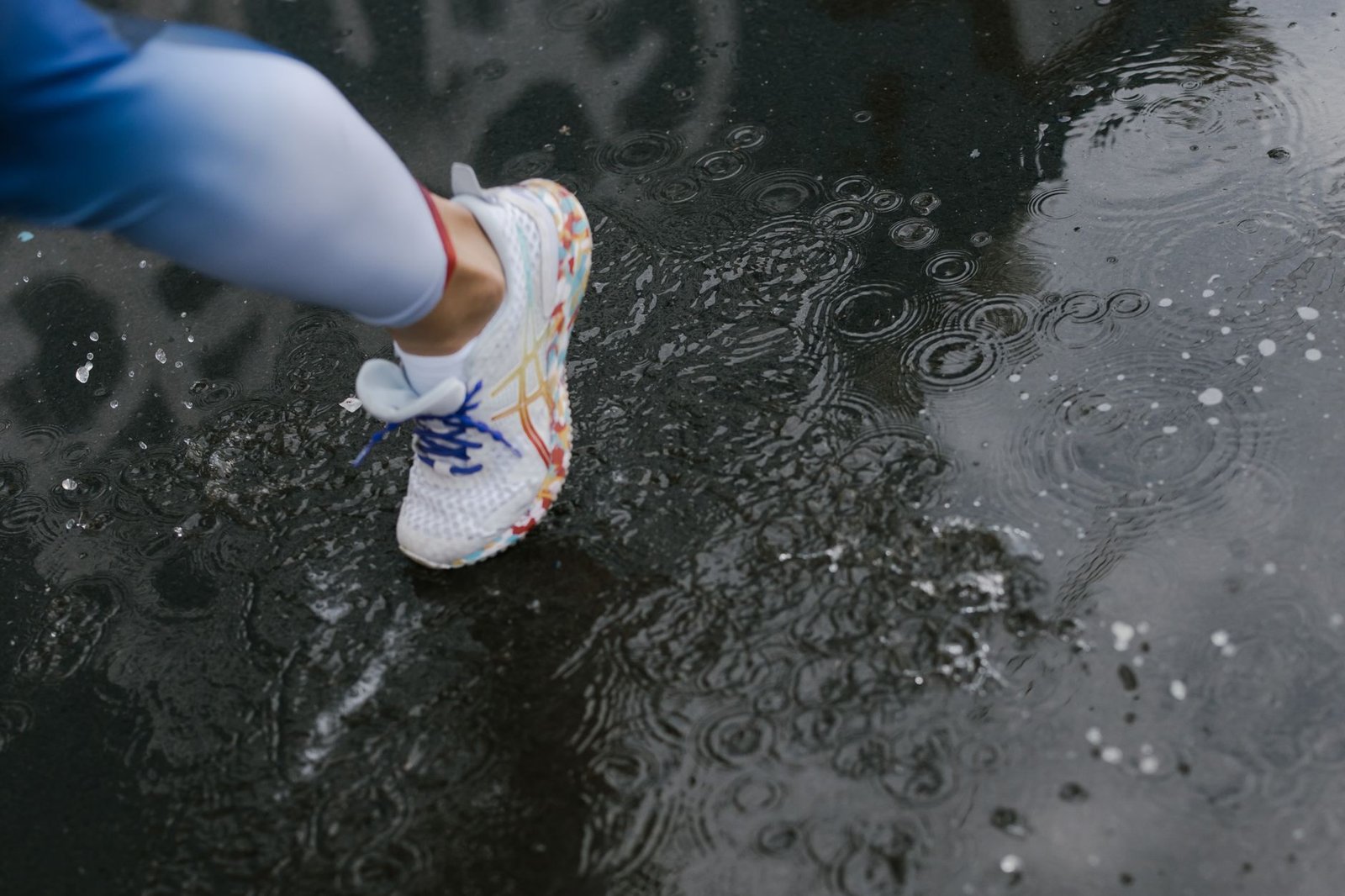
Wet clothes and damp shoes extend recovery time. Change out of wet gear immediately, towel dry thoroughly, and keep your shoes ventilated. Air dry shoes instead of tumble-drying, which can damage materials and trap moisture where it should not sit.
If you need to store equipment, protect it from staying soaked. Waterproof pouches or smart wrapping prevents your training kit from turning into a recovery-lag machine and lets you run again without carrying yesterday’s water into today.
Build a Backup Plan That Keeps You Training
Weather-proofing your training is not only about surviving conditions outside. It is about making sure your week stays intact when outdoor plans fail. Decide in advance what you will do when lightning shows up, when wind becomes unsafe, or when heat crosses your limit.
That means having a treadmill session ready, a cross-training substitute lined up, and a route you know well for hazards like puddles and traffic danger. You cannot control rain, wind, and heat, but you can control your response. Which kind of runner are you choosing to be: the one who cancels, or the one who adapts?
How to Weather-Proof Your Training for Running in Rain, Wind, and Heat?
How can you weather-proof your running training before you head out in rain, wind, and heat?
Check the forecast before you go, especially for lightning, hail, and strong winds, and plan a safer alternative like a treadmill if conditions turn dangerous or thunder is audible.
What clothing and layering should you use for weather-proofing your training in rain, wind, and heat?
Choose technical, moisture-wicking layers, avoid cotton, add a warm mid-layer when needed, and top with a breathable, waterproof, windproof, packable shell that handles rain without overheating you.
How do you stay visible and safe when weather-proofing your training for rainy and windy runs?
Run on routes you know, use reflective gear or a headlamp in low light, and protect your head and face with a quick-drying hat or cap so you can keep your awareness high.
How should you adjust technique for traction and comfort when running in rain and wind?
Wear quick-drying socks and shoes with strong tread, consider traction aids for slick surfaces, and reduce chafing risk with anti-chafe lubricant on areas that rub.
How can you weather-proof your training for running in heat and humidity?
Avoid outdoor runs when heat and humidity feel dangerously oppressive, slow down if you start to overheat, and prioritize hydration and cooling to lower the risk of cramps and heat illness.
What should you do after a rainy, windy, or hot run to support recovery?
Change out of wet clothes right away, towel dry, cool down with light stretching, hydrate, and fully dry shoes and gear—air-dry shoes and never tumble-dry.
Run Smarter In Any Conditions
Weather proofing your training: running in rain, wind, and heat means you do the boring prep and safety checks first, then dress for the conditions, manage traction and chafing, and make the call to change plans when storms or dangerous heat show up; train consistently, but treat the weather like part of the workout, not an afterthought.

I am Ozan, a London-focused running writer and marathon enthusiast with a passion for helping people discover the city’s best races, running routes, walking trails, and fitness events. I research and write practical, up-to-date guides covering marathons, race preparation, training tips, running gear, and everything related to staying active in London.
My goal is to create reliable, easy-to-follow content that helps runners and walkers of all experience levels explore London with confidence, whether they’re preparing for their first 5K or their next marathon.