
Stretching after a marathon is supposed to help you recover, not turn soreness into a punishment. The difference comes down to having a real post-race stretching routine for marathon recovery, not random stretches you copy from the internet. You will move better, feel tighter in the right places, and recover faster when you follow a simple, deliberate sequence.
Start with a 5 to 10 minute cooldown like easy walking or light jogging so your heart rate drops while your muscles are still warm. Then shift into mainly static stretching with controlled holds, targeting the groups that usually tighten most: hamstrings, quads and hip flexors, calves and Achilles, glutes, outer and inner hips, and even your feet. Typical holds are about 30 seconds per side for hamstrings, 20 to 30 seconds for standing quads, and roughly 15 to 30 seconds for hip-flexor and lunge-based stretches.
Keep it smart and safe by stretching to the edge of your normal range without forcing, breathing slow and steady, and treating comfort as a guide. If a stretch feels better as active, use short active reps instead of long holds, like holding 2 to 3 seconds, releasing, and repeating 10 to 12 times for the area that feels worst. With consistency, about 15 to 20 minutes daily for the week usually beats one long session, and soreness should generally settle within about 24 hours, not linger as a warning sign.
Cooldown First Or You Stretch The Wrong Problem
For post-race recovery, you do not begin with stretching. You begin with a 5 to 10 minute cooldown of light jogging, walking, or easy aerobic work. Why? Because muscles feel stiff after a marathon, and stiffness is not always tightness. A brief cooldown lowers heart rate and keeps tissues warm, so stretching actually reaches the range you can use tomorrow.
Skipping the cooldown tempts you into forcing end range too early. Then you end up with angry soreness that feels like “progress,” but functions like damage. If you want remote control over recovery, give your body the right starting conditions first.
Static Stretching Beats Random Wiggling
Once you are warm, the core of a post-race stretching routine for marathon recovery should be mostly static stretching with controlled holds. This is not a vibe, it is a method. Static stretching lets you apply steady tension long enough to influence tolerance in the tissues that likely tightened during the run.
Random bouncing in and out of stretches often turns the session into irritation. Controlled positions and consistent breathing tell your nervous system that this is a safe range, not a sudden threat.
Target The Tight Zones That Actually Took The Hit
Your legs do not all tighten equally after 26.2 miles. Prioritize the groups that commonly fatigue and feel stiff: hamstrings, quads and hip flexors, calves and Achilles, glutes, outer and inner hips, plus the feet. If you only stretch one or two areas, you might feel temporarily better while ignoring the real bottlenecks.
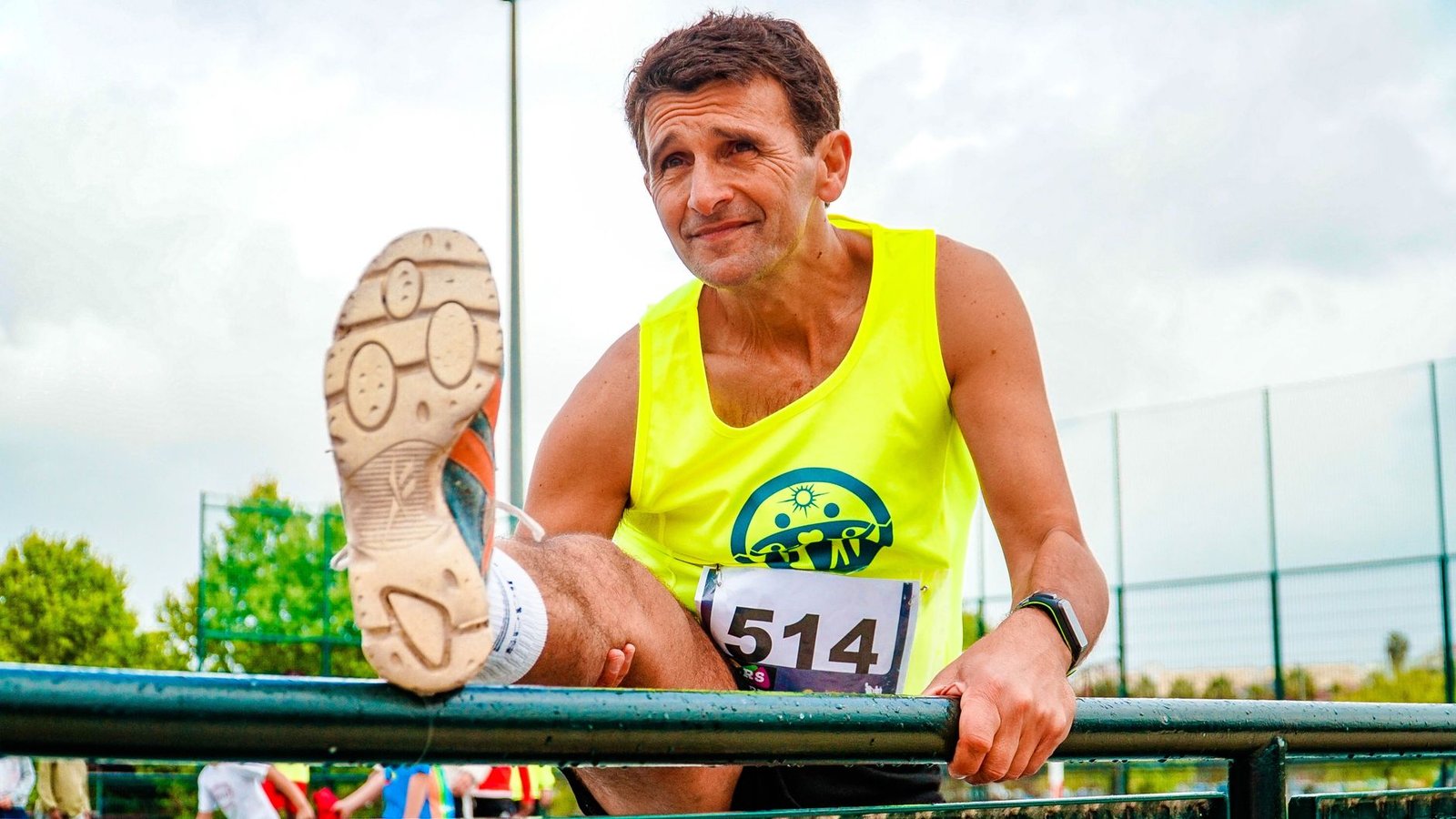
Use a simple priority rule. Pick a stretch for each major group, move in sequence, and spend the same total time per side so you do not “fix” one leg at the expense of the other.
- Hamstrings held about 30 seconds per side
- Quads held about 20 to 30 seconds per side
- Hip flexors held about 15 to 30 seconds
Stretch To The Edge Of Comfort, Not To Punishment
If a stretch feels better as you ease toward your normal range, you are doing it right. If it feels sharp, unstable, or aggressively forced, you are doing it wrong. Stretch to the edge of your normal range without chasing a deeper position just because the body can physically reach it.
That “more is better” mindset is how recovery becomes a second injury. The goal is improved comfort and mobility, not a new baseline of pain tolerance.
Hold Times Decide Whether You Recover Or Irritate
Most people need a straightforward schedule for static holds. A typical session can use about 30 seconds per stretch for major tight areas like hamstrings and adductors, with shorter holds for areas that feel sensitive. If you are new to stretching, start smaller with 10 to 15 second holds and build toward 45 to 60 seconds over a few weeks.
This progression matters because the marathon already created stress. You do not need maximum intensity right now. You need repeatable work that you can do daily.
Active Stretching For The Spots That Won’t Let Go
Some areas feel especially sore. For those, active stretching can be a smarter tool than one long hold. Use short active movements in multiple reps, because they can teach the joint and muscle to tolerate motion without overstaying in a painful position.
Here is a practical template you can plug into your routine.
| Target Area | Active Stretch Pattern | Measurable Goal |
|---|---|---|
| Calves | 2 to 3 seconds, release | 10 to 12 reps |
| Hamstrings | 2 to 3 seconds, release | 10 to 12 reps |
| Hip Flexors | 15 to 20 seconds lunge | 1 set after walk |
| Glutes | 2 to 3 seconds, switch sides | 10 to 12 reps total |
| Adductors | 2 to 3 seconds, controlled | 2 sets if sore |
If a stretch feels better as active, keep it active. Add a second set only for the especially sore areas, not across the whole body. Consistency beats maximal effort.
Breathing Is Not Optional
Slow, steady breathing is a performance tool during stretching. When you inhale and exhale deliberately while holding positions, you reduce sympathetic drive and help your range of motion feel more available. You are training your body to relax into the stretch, not to brace against it.
Try this: breathe slowly in the position, and let your exhale be the moment you settle a little deeper within your comfort range. If your breathing turns frantic, back off. That feedback loop is the point.
A 15 To 20 Minute Daily Minimum Beats One Big Hero Session
Recovery improves when you show up. Aim for at least 15 to 20 minutes each day during the week after the marathon. That is not an arbitrary fitness influencer demand. It is a rational approach: small daily inputs keep tissues calm and mobile while you return to normal life.
One long session once a week can feel productive, but it often leaves too many gaps. Ask yourself: do you want a single afternoon of temporary relief, or steady progress over seven days?
The 24 Hour Rule Keeps You Honest
After stretching, mild discomfort can be normal. But soreness that lingers beyond about 24 hours usually signals too much force. Your body is sending a message: you overreached for intensity instead of supporting recovery.
Use that rule like a thermostat. If soreness is escalating or persisting, shorten hold times, reduce range, and choose more active reps. Recovery is not supposed to feel like punishment.
Don’t Copy The Internet If Your Body Is Different
Yes, many guides list common stretches. But your post-race stiffness is shaped by your pace, terrain, training load, and even footwear. If one stretch consistently feels wrong, substitute a similar position that targets the same muscle without irritating you.
Even expert running stretch guides emphasize that stretching should be tolerable and progressive, not rigidly identical for everyone. Your routine should respect your symptoms and your timeline.
Make It Practical In Real Life
A strong stretching plan survives contact with schedules. If mornings are rushed, do a quick warm walk and a shorter stretch sequence after you eat. If nights are your quiet window, do longer holds in the evening. The method stays the same: warm first, stretch controlled, breathe slow.
Your goal is repeatable recovery work, not a perfect calendar. Build a routine you can do on your worst day, not just your best one.

Stretching Works Best When You Treat Recovery Like A System
Stretching is not a magic eraser. If sleep is short, hydration is low, and legs are under-fueled, stretching becomes a bandage over an untreated problem. Combine your post-race work with sensible recovery basics so your tissues have what they need to adapt.
Prioritize sleep, hydration, and a return to normal nutrition. Then stretching can earn its role: restoring comfort, improving movement, and preparing you for the next training cycle without turning the marathon into a lingering setback.
Stop Chasing Flexibility And Aim For Function
The real win after a marathon is not proving you can touch your toes. It is getting back to walking smoothly, climbing stairs without grimacing, and resuming training without compensations. A post-race stretching routine for marathon recovery should serve those outcomes by targeting the muscles that tightened and by respecting recovery signals.
Stretch with structure, measure your response, and keep sessions consistent. If you do that, you will feel better sooner, move easier, and avoid the trap of “recovering” by making your body pay twice.
What Is a Post-Race Stretching Routine for Marathon Recovery?
How Do You Start a Post-Race Stretching Routine for Marathon Recovery?
Begin with a 5–10 minute cooldown (easy walking or light jogging) to lower your heart rate while muscles are still warm, then move directly into gentle stretching without forcing range.
Which Muscle Groups Should You Target in a Post-Run Stretching Routine for Marathon Recovery?
Focus on the areas that typically tighten most after a marathon: hamstrings, quads/hip flexors, calves/Achilles, glutes, outer and inner hips, and your feet, using stretches that open both legs and supporting muscle groups around the hips and ankles.
How Long Should Static Stretch Holds Last During Marathon Recovery?
Use controlled static holds, typically around 20–30 seconds per side for major groups, and about 30 seconds for hamstrings or similar tight areas, breathing slowly while holding at the edge of your comfortable range.
Can Active Stretching Improve Post-Race Marathon Recovery When Muscles Feel “Stuck”?
If a stretch feels better when you move, use shorter active stretching in multiple reps (hold 2–3 seconds, release, repeat 10–12 times), and consider a second round for areas that feel especially tight.
How Often Should You Do a Post-Race Stretching Routine for Marathon Recovery?
Aim for consistency in the first week after your marathon by stretching most days, roughly 15–20 minutes per session, because a little daily work often helps more than one long session.
What Safety Limits Should You Follow for Soreness and Stretching in Marathon Recovery?
Stretch to the edge of your normal range without forcing; expect soreness to settle within about 24 hours, and stop if you feel sharp pain or worsening symptoms, while beginners should start with shorter 10–15 second holds and gradually build toward longer holds over several weeks.
Stick With the Right Recovery Routine
Your post-race stretching routine for marathon recovery should be simple, consistent, and controlled: cool down gently, then use mostly static holds for the key tight areas without forcing range, breathe steadily, and keep sessions daily rather than one big stretch day. Do that, and your body will repay you with better mobility and faster bounce-back, while pushing through pain or lingering in soreness for days is just a fast track to setbacks.

I am Ozan, a London-focused running writer and marathon enthusiast with a passion for helping people discover the city’s best races, running routes, walking trails, and fitness events. I research and write practical, up-to-date guides covering marathons, race preparation, training tips, running gear, and everything related to staying active in London.
My goal is to create reliable, easy-to-follow content that helps runners and walkers of all experience levels explore London with confidence, whether they’re preparing for their first 5K or their next marathon.