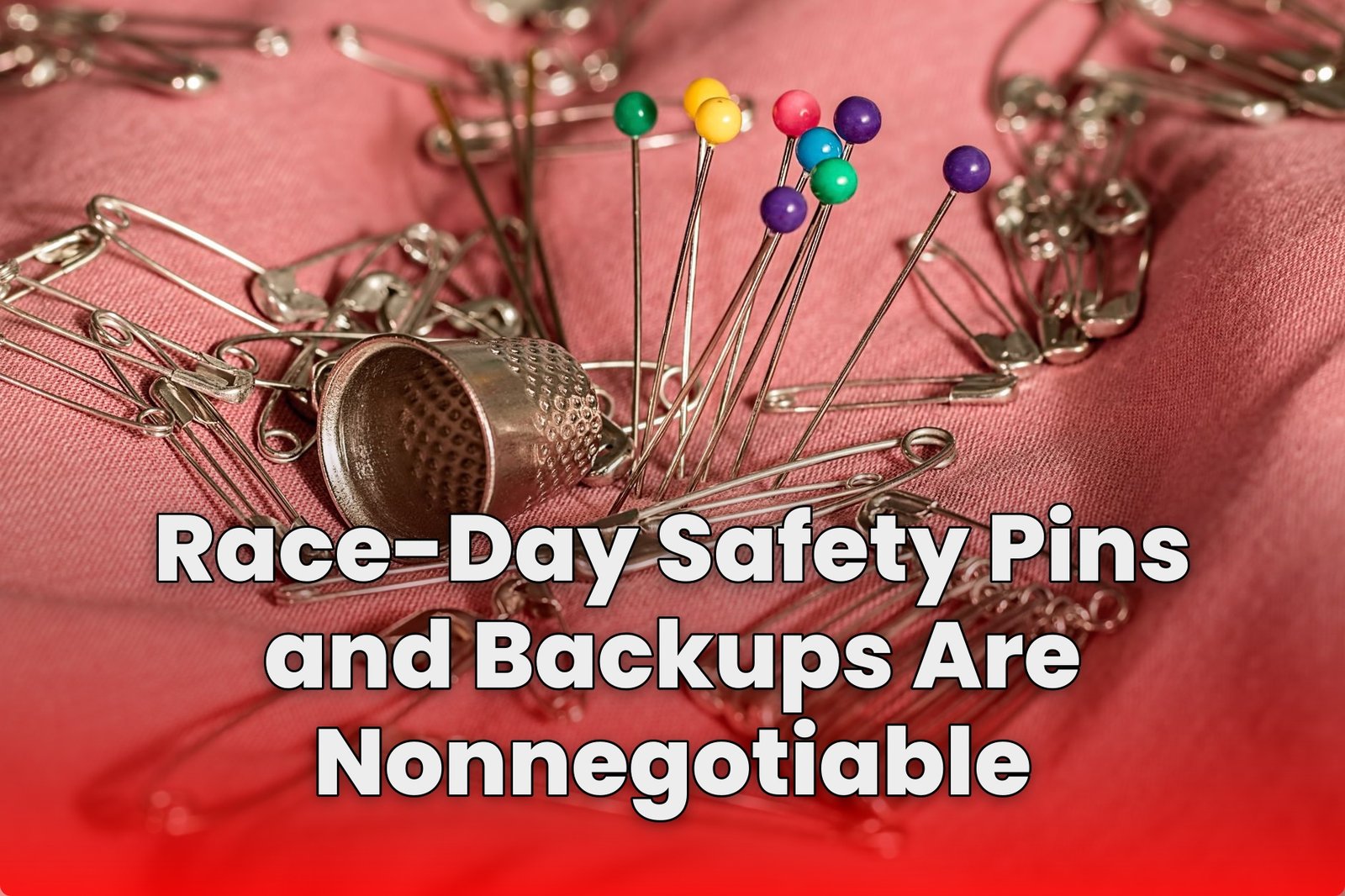
Race-day confidence is built the night before, and nothing proves that like having a real backup plan for your bib. The idea behind the ultimate guide to packing race-day safety pins and backups is simple: if one pin fails, your race does not have to. This article argues that “I’ll figure it out later” is how runners lose time, get distracted, and sometimes even risk a messy start when their bib starts flapping or shifting.
Start with the non-negotiables you can control: pack your race bib and timing chip the night before, then treat them like they are already final. When you attach the bib, pin it using all four corners so it lies flat and does not flap, and do not cover the timing chip. If your timing chip is separate, secure it properly to your shoelaces so it stays positioned through the whole run.
Then prepare for reality, because race-day organizers can only do so much and conditions can get wet fast. Carry at least six sturdy safety pins so you can re-secure your bib quickly, handle small kit or garment repairs, or help another runner who forgot pins. If you are worried about bib security in rain, a race belt can be a more reliable backup, but pins still deserve a spot in your bag, ideally stored in a small zip-lock so they do not vanish into gels, wipes, or electronics.
Pin It the Night Before or Pay in Chaos
Race day punishes procrastination, and safety pins are the simplest fix you can prepare long before the start horn. Pack your safety pins the night before as non-negotiables, alongside your race bib and timing chip. If you wait until morning, you will discover that “I have some around” is a myth.
Attach the bib early so you are not wrestling fabric while your adrenaline spikes. Prepare your timing chip plan too. Wet pavement, loose clothing, and hurried organizers create the exact conditions where a prepared runner looks unbothered.
Four Corners Flatness Beats Flapping Every Time
Pinning is not just fastening. It is positioning. Use all four corners so your bib lies flat and does not flap into your stride, your comfort, or your finish. A bib that swings can distract you, wrinkle against skin, and even shift your chip placement.
Make the attachment method predictable. One runner should not have to reinvent pinning under pressure. What is the point of showing up fit if your race setup falls apart in the first mile?
Carry Enough Pins to Outlast Bad Odds
One or two pins are wishful thinking. The reliable baseline is at least six sturdy safety pins in your race-day bag. That number matters because you may need to re-secure a corner, fix a snag, or handle an emergency repair for your own kit.
Yes, some races hand out pins. They often provide too few or the flimsy kind that bends when you need them most. Better to overpack pins than to hunt for them at a time when focus should be on pacing.
Match Pins to Fabric and Use Correct Tension
Safety pins work best when the fabric grips without fighting. If your top or shorts are thin, you still need a firm hold, not a loose pin that slides. If you are pinning to thicker material, use a sturdy pin and make sure the clasp is fully engaged.
Do not yank the pin through and hope for the best. Use controlled tension: secure, check the flatness, and confirm the bib sits where it should. That is how you prevent corner drift that turns into a mid-race annoyance.
Timing Chips Need Direct Exposure, Not “Close Enough”
Your timing chip should never be covered in a way that blocks the reading. If your chip is separate, attach it securely to your shoelaces and keep it positioned consistently for every step. If it is integrated into a bib system, follow the organizer’s intended placement exactly.
Because timing systems vary, treat the chip like a precision tool, not a decoration. When you rush, you tend to tuck it, hide it, or cover it inadvertently. Is it worth risking your results for a mistake you can prevent in five minutes?
Backups That Let You Fix Problems in Seconds
Backups are not a slogan. They are the difference between “one small issue” and “a ruined morning.” Pack your pins in a way that they stay together, stay accessible, and do not vanish among gels, wipes, and electronics.
To keep your kit functional, use a simple allocation approach that you can replicate every event.
| Item | Recommended Amount | What It Solves |
|---|---|---|
| Sturdy Safety Pins | 6+ | Re-secure bib corners |
| Zip-lock Bag | 1 small | Stop pins from getting lost |
| Race Belt | 1 backup | Wet-weather bib stability |
| Needle Thread | 1 mini | Quick kit stitch repair |
| Emergency Towel | 1 | Dry slippery fabric before pinning |
Then rehearse the “two-minute fix” mentally. If a corner pops or your bib twists, you should know exactly where the pins are and how you will re-secure the attachment without tearing your shirt.
Wet Conditions Reward Belts and Honest Planning
When rain hits, pins can behave like they have opinions. Bib fabric becomes slick, pins can shift, and corners lift. That is why a race belt is a smarter backup when you expect wet conditions. It creates consistent tension and reduces reliance on fabric friction.
Still carry pins. A belt may help, but it is not immune to strap slippage or fit issues on a specific outfit. Your goal is redundancy that works across weather, not a single point of failure.
When Something Snags, Move Fast and Stay Calm
If a pin catches a seam or your bib twists, do not panic and do not rip at the fabric. Pause, straighten the bib, and re-secure the corners using fresh pins from your backup stash. A fast correction prevents the problem from multiplying into a larger distraction.
Look at it like triage: fix the placement first, then check the chip. If your timing chip placement changes, your results become a gamble. Keep your process orderly so you stay in control.
Sharing Pins Helps Others and Protects Your Own Focus
Occasionally, another runner will forget pins, or their supply will fail in the first stretch. Carrying extra allows you to help without turning the moment into a long interruption. A small contribution can keep someone else steady and let you both move on.
Use boundaries that make sense. Give one pin or a small set from your extras, not your entire plan. Your preparation is still about your race, but generosity is part of being a competent runner on the same course.
Keep Pins Secure So Your Bag Does Not Become a Pinball Machine
Safety pins vanish because bags are messy. Zippers open, pockets spill, and items get tossed together with gels and wipes. If you want reliability, store pins in a small zip-lock bag so you can grab them fast and so they do not scatter across your belongings.

Think about retrieval speed. When you need a pin, you need it immediately. The easiest way to turn a fix into a delay is to rummage for tiny metal pieces while your race clock runs.
Test the Setup Once Before You Leave Home
Do a quick attach test before race day commitments stack up. Pin your bib, confirm flatness, and verify that your timing chip will remain exposed and stable. The point is not perfection, it is preventing surprises when nerves are highest.
If you are the kind of runner who trusts memory, ask yourself: how reliable is that memory at 6:10 a.m. under stress? A short rehearsal beats a tense scramble every time.
Follow the Checklist Mindset and Protect Your Results
The real enemy is not effort. It is avoidable setup failure. Even if your bib looks fine, borrow race-day readiness advice and do a final check of pin tightness and chip exposure right before you head out.
This is the ultimate guide to packing race-day safety pins and backups because it treats race day like a system. You do not wait for the system to fail. You build redundancy in advance so the only thing that changes is your pace crossing the finish line.
You Can Pack Race-Day Safety Pins and Backups With This Ultimate Guide
Why Should You Pack Race-Day Safety Pins as Real Backups?
Because bibs can loosen and organizers may provide too few or flimsy pins, packing race-day safety pins as backups helps you re-secure your race bib quickly, handle small emergency repairs, and even support another runner who forgot pins.
How Many Race-Day Safety Pins Should You Bring for Your Race Bib?
Bring at least six sturdy race-day safety pins so you have enough for re-pinning around all corners and for quick fixes if one bends or fails while you’re racing or checking gear.
Where Should You Attach Safety Pins to Keep Your Race Bib Secure?
Pin your race bib to your racing top or shorts using all four corners so it lies flat and doesn’t flap, and make sure the pins don’t interfere with the timing chip or any designated chip area.
What Should You Do If Your Timing Chip Is Separate From the Bib?
If your timing chip is separate, attach it securely according to the event instructions—many runners use a reliable placement on shoelaces—so it stays fixed during motion and you don’t rely on the bib pins alone.
Should You Use a Race Belt Instead of Pins in Wet Conditions?
In heavy rain or very wet conditions, a race belt can be a more reliable backup than pins for bib stability, but you should still carry race-day safety pins to attach or fix anything on the spot.
How Can You Store Race-Day Safety Pins in Your Bag So They Don’t Get Lost?
Store your race-day safety pins in a small zip-lock bag or dedicated container to keep them together and prevent them from getting lost among gels, wipes, and electronics, while still keeping them easy to reach.
Pack Smart, Stay Ready
The ultimate guide to packing race-day safety pins and backups is simple: treat safety pins as non-negotiable insurance, pack at least six sturdy backups, and secure your bib and timing chip so they cannot fail when things get sweaty or chaotic. You do not need luck on race day, you need preparation.

I am Ozan, a London-focused running writer and marathon enthusiast with a passion for helping people discover the city’s best races, running routes, walking trails, and fitness events. I research and write practical, up-to-date guides covering marathons, race preparation, training tips, running gear, and everything related to staying active in London.
My goal is to create reliable, easy-to-follow content that helps runners and walkers of all experience levels explore London with confidence, whether they’re preparing for their first 5K or their next marathon.