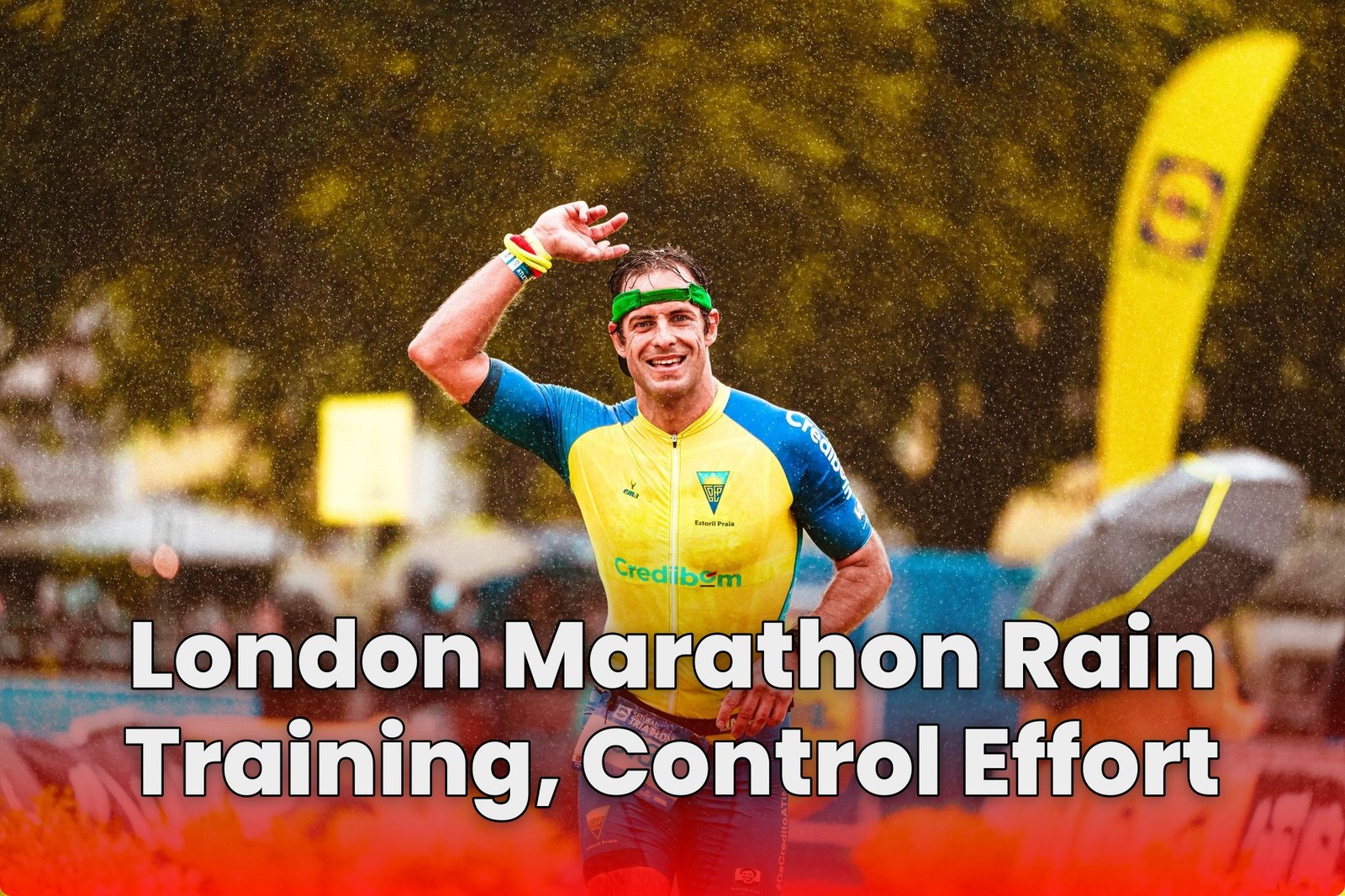
Trying to “hold pace” in the rain is how runners ruin a perfectly good long run. The weather changes traction, heat loss, and how your legs feel, so chasing numbers turns into an early overreach that shows up later as exhaustion and cramped form.
That is why London Marathon rain preparation should be built on effort control, not rigid pacing. Start workouts and long runs at an easy “feels like” level, or within a conservative heart-rate range, and only consider nudging closer to your threshold after you have evidence you are still in control.
Comfort also protects effort. Use sweat-wicking layers, plan for overheating as conditions swing from warm rain to cooling air, and keep fueling consistent because shivering and stress can increase the energy you need.
Stop Chasing pace in Rain
In London Marathon training when it rains, the biggest mistake is treating the wet forecast like a personal challenge. Your job is not to “win” the weather by going faster. Your job is to keep effort control so you arrive at race day intact and ready to work.
If the rain makes you chase pace, it will collect the bill later.
Wind, slick roads, and lower visibility punish fast starts. So do not ask your legs to perform a dry-day job in a wet-day body. Start easy, then earn any intensity once the session still feels controlled.
Use Feels Like Effort Over Ego Speed
“Remote work productivity” is not your issue here. Your issue is decision-making in the first 20 minutes of a run when emotions run hot. Effort control means you pick a target you can actually trust in rain: perceived effort, not your watch.
Train at an easy “feels like” level of about 4 to 5 out of 10, or roughly a conservative 3 to 5 effort equivalent if you work in a 5-point mental scale. Why? Because rain steals traction and adds fatigue without giving you the courtesy of a pace increase.
You can always move faster later. You cannot refund a blow-up caused by early bravado.
Heart Rate Helps, But Only If It Stays Calm
Heart rate can guide London Marathon training when it rains, but only when it is stable enough to reflect effort rather than sensor chaos. Cold wet conditions and sweat can disrupt readings, so treat HR as a check on control, not a command.

Run within a conservative heart-rate zone that matches your planned easy effort. If your HR is climbing unreasonably fast while your breathing stays manageable, you may be dealing with measurement noise. Adjust by returning to the effort target, not by forcing pace to “fix” the number.
The goal is consistency: controlled effort now, not data whiplash that drives you into a strategy you never agreed to.
Rain-Proof Your First Hour, Not Your Ego
Nothing derails effort control faster than spending the early miles regulating temperature instead of running. Wet conditions change how your body feels minute by minute, so you need a clothing plan that prevents overheating and chilling.
Wear sweat-wicking base layers and light technical fabrics. In warmer rain (around or above 18°C), skip a heavy jacket; a simple top or arm sleeves can be enough. In colder rain, a lightweight waterproof shell early can help, but keep under-layers minimal so you do not overheat after you settle in.
Expect to feel about 5 to 10°C warmer once you’re moving. That means the warm-up should stay close to the start, not spill into a long pre-run where you sweat, cool, and start the main work behind schedule.
Golden Rule Stays Golden on Race Day
“Nothing new on race day” is not superstition. It is a strategy for effort control in London Marathon conditions when it rains. If your clothing, socks, or shoe setup changes, you are not just risking comfort, you are risking distraction and chafing that slowly erodes pacing decisions.
Practice the same HR and effort approach you will use on race day, including how you interpret perceived effort when the ground is slick and your confidence is lower. If you have been successful keeping 4 to 5 out of 10 in rain training, that is the playbook to follow.
The fastest way to lose your rhythm is to create new variables you cannot manage under pressure.
Turn Rain Uncertainty Into a Checklist
Effort control works because it gives you a repeatable decision framework. When the sky changes, you should not renegotiate the plan from scratch. Use the same targets, and adjust only what the weather forces you to adjust.
Here is a simple guide for London Marathon training when it rains, focused on what to control first: comfort, warmth management, and the effort level you can sustain.
| Rain Temperature Band | Effort Target | Gear Priority |
|---|---|---|
| Below 10°C | RPE 4 to 5 | Light shell early |
| 10 to 13°C | RPE 4 to 5 | Wicking base |
| 13 to 16°C | RPE 3.5 to 4.5 | Single technical top |
| 16 to 20°C | RPE 3.5 to 4.5 | Skip heavy jacket |
| Above 20°C | RPE 3.5 to 4.0 | Vent and stay dry |
Once comfort is under control, then you can decide whether to nudge intensity later. The checklist is not a cage. It is a way to prevent early overreaching.
Only Nudge Toward Threshold If It Still Feels Controlled
There is a reason many runners wait until around mile 20 to consider pushing closer to lactate threshold in rain. Early intensity can feel “fine” until it is not, and rain makes that transition happen faster.
So keep effort control first. If the long run still feels controlled later, then you may nudge intensity. If it does not, you do not “force” the session. You complete it at the controlled level you practiced.
Your training quality is measured by whether you finish strong, not whether you peaked early.

Fuel Like the Weather Can Steal Heat From You
When you train in London Marathon training when it rains, you are not only battling discomfort. You are increasing the chance of shivering, and shivering can raise carbohydrate needs. That means your fueling plan should not assume dry-day efficiency.
Protect hydration and fueling as you normally would, then consider extra fuel when the rain makes you cold. A simple principle works: if your body is working to stay warm, it burns the stored work of carbs you were counting on for the later miles.
Effort control and fueling are linked. Under-fueling does not just reduce performance. It changes how effort feels, and then your ability to stick to your targets collapses.
Chafe Control Is Performance Control
Chafing is not a minor annoyance. In rain, it becomes a slow leak in your concentration and stride mechanics. Once you start adjusting mid-run, you are no longer running a plan. You are negotiating pain.
Lubricate chafe-prone areas before you get moving: armpits, under bra straps, between toes, and inner thighs. Anti-chafe balm is one of the most direct tools for maintaining effort control, because fewer distractions means steadier decisions.
Ask yourself this: if you have to keep stopping or slowing to manage hotspots, how could you possibly hold back early when the session requires patience?
Warm-Up Timing Beats Layering Panic
Rain training tempts runners into a common trap: start too cold, then add layers, then overheat. The cycle is exhausting and it makes perceived effort targets harder to trust. Instead, plan the warm-up so you transition into the run without getting sweaty first.
Keep the warm-up closer to the start. If you warm up early and then wait in wet air, you are effectively increasing the risk of chilling right when you want controlled effort.
Expect that once you begin running, you may feel 5 to 10°C warmer. Design your clothing decisions around that truth, not around the emotion of the moment.
Practice the Rain So Pace Stops Being a Guess
The simplest way to reduce surprise is to train in the rain. Not once as a novelty, but enough that your clothing, socks and shoes, and fueling habits are road-tested under wet conditions.
When you have already experienced what rain does to traction and your breathing, you stop treating pace as destiny. You make a better choice sooner, and that protects London Marathon training when it rains by keeping effort control intact across the session.
The best test is practical, and rain training guidance backs the value of getting reps in the conditions you will actually face.
Plan for Waiting, Shelter, and Sacrificial Warmth
During race-day rain conditions, your first battle is often not the miles. It is the time you spend exposed while you are waiting. If you cannot get warm and dry while you wait, your body pays for it with extra effort later.
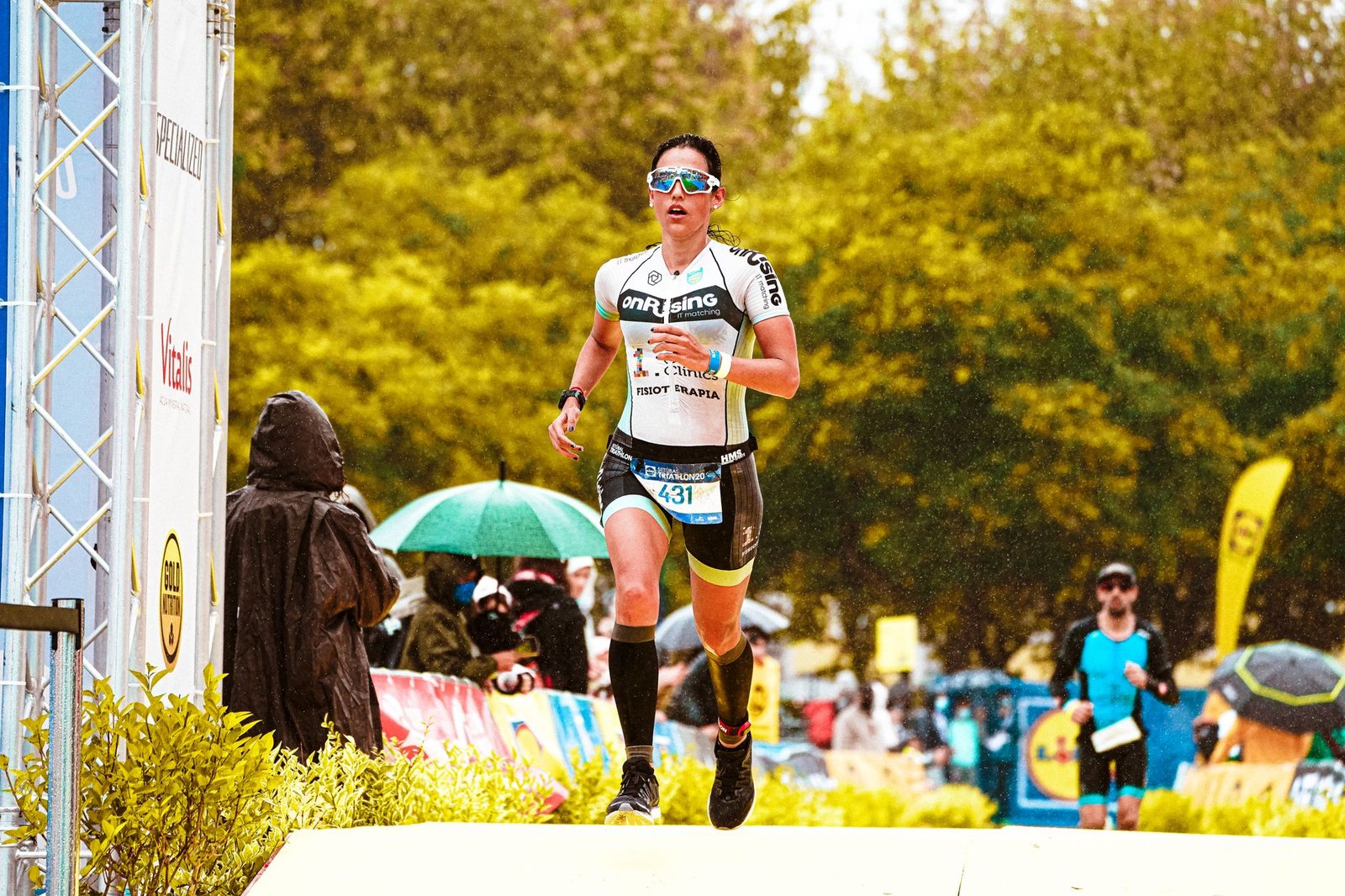
Use shelter when possible, and even if it costs you a garment, treat it as an investment in staying warm and dry as long as possible. A shivering body increases fatigue risk and makes your planned effort targets harder to hit.
In that environment, controlled effort is not just training discipline. It is a survival skill that prevents the early miles from turning into a gamble.
Finish Strong by Committing to Controlled Starts
Effort control is the through-line for every smart decision in London Marathon training when it rains: pace discipline, RPE targets, stable heart-rate interpretation, and gear choices that prevent overheating or chilling. Each one supports the same outcome, finish strength.
When runners ignore control and chase pace, the rain becomes an accelerant for fatigue. But when you commit to starting easy at about 4 to 5 out of 10, then only nudge later if the session remains controlled, you build a marathon plan that can survive wet roads.
So what should you do the next time dark clouds roll in? Keep the effort quiet, and let the work arrive on schedule.
London Marathon Rain Training: How to Keep Effort Control
How Should You Control Effort During London Marathon Training When It Rains?
Keep your effort lower than usual by using a “feels like” approach and staying in a conservative intensity range, so you don’t overcook early and fatigue before later segments of the session.
What Perceived Effort Level Should You Use for Rainy Long Runs and Workouts?
Aim for an easy perceived effort (roughly 4–5 out of 10) for most rain sessions, or an even more conservative effort (around 3–5 out of 10) if the weather is colder or the routes are slick and mentally demanding.
When Can You Raise Intensity Closer to Lactate Threshold in Wet Conditions?
If the workout still feels controlled early on, you can gradually nudge intensity later—often after about 20 miles or the later third of a session—rather than starting fast just because the rain makes it feel like you’re going slower.
How Do Clothing Choices Support Effort Control in London Marathon Training When It Rains?
Use sweat-wicking base layers and lightweight technical fabrics to manage moisture, avoid heavy outerwear in milder rain, and consider a light waterproof shell in colder rain while keeping under-layers minimal to prevent overheating after you warm up.
What Warm-Up Strategy Helps You Avoid Sweaty, Then Chilled Feeling in the Rain?
Shorten the gap between warm-up and starting by getting moving sooner, using practical transitional clothing for waiting, and monitoring body heat so you arrive at the start warm but not soaked.
Should You Adjust Fueling and Hydration for London Marathon Training in Rainy Cold Weather?
Stick to your normal fueling and hydration plan, but consider bringing extra fuel for the risk of increased carbohydrate needs if you’re shivering or running colder than expected; protect against chafing with anti-chafe balm to stay comfortable and consistent.
Keep Your Effort Steady In Rain
When you’re doing london marathon training when it rains, keep effort control by starting every session with a deliberately easy perceived effort and only adjusting later if you are still fresh, because chasing pace early is how rain turns a plan into an overcooked race. Dress for warmth without overheating, protect against chafe, and fuel as normal or slightly extra if you are shivering, then trust what you have practiced. The rain will test your patience, so meet it with controlled effort and you will arrive ready to run your marathon, not survive it.

I am Ozan, a London-focused running writer and marathon enthusiast with a passion for helping people discover the city’s best races, running routes, walking trails, and fitness events. I research and write practical, up-to-date guides covering marathons, race preparation, training tips, running gear, and everything related to staying active in London.
My goal is to create reliable, easy-to-follow content that helps runners and walkers of all experience levels explore London with confidence, whether they’re preparing for their first 5K or their next marathon.