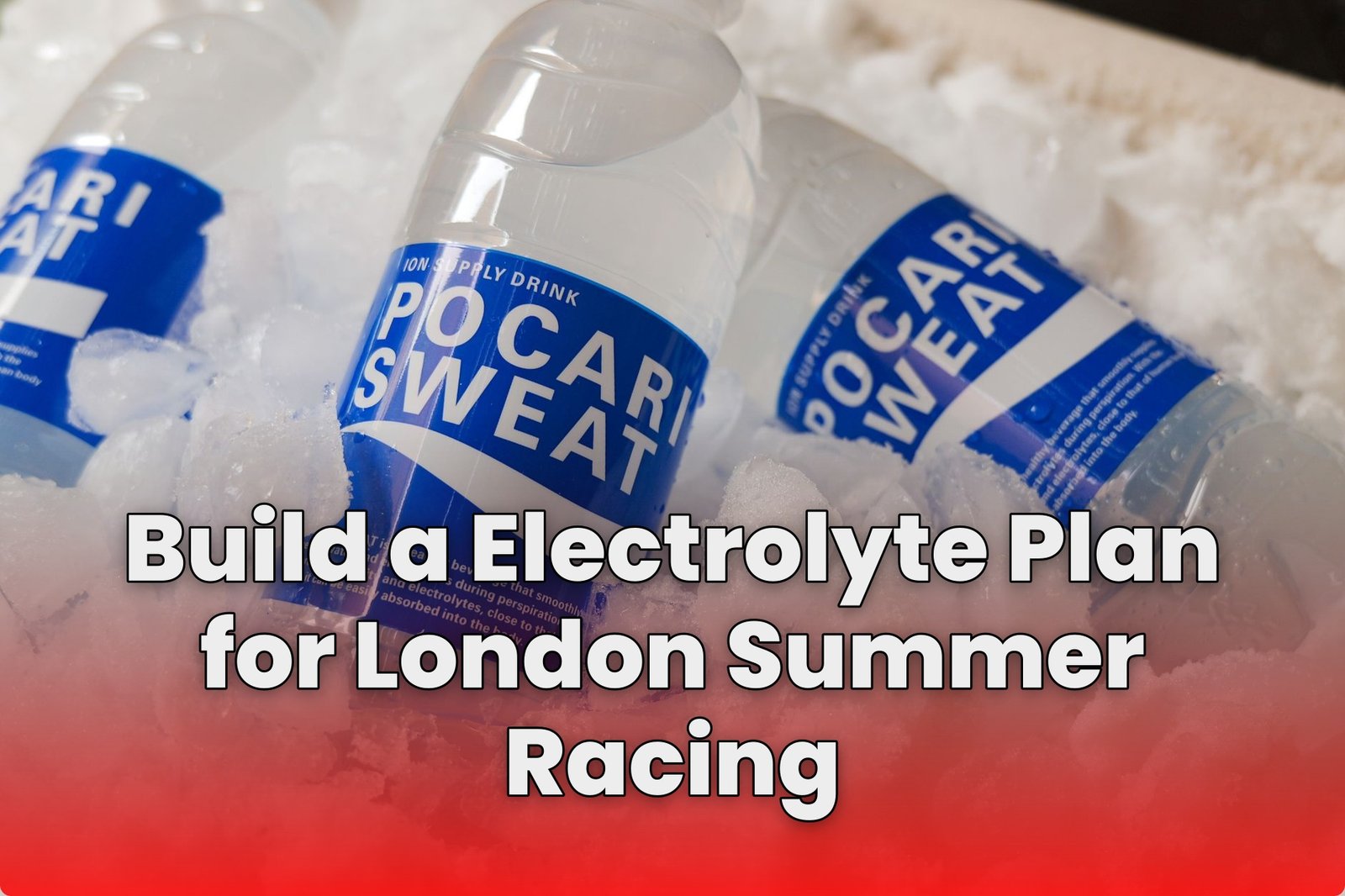
London summer racing does not punish you for “not trying hard enough,” it punishes you for guessing. If your hydration is random and your sodium is an afterthought, you will feel it in the last third of the race, even if your pacing plan is perfect.
The fix is simple: build an electrolyte plan around your actual sweat and your actual conditions. Weigh yourself before and after a 1-hour run at target pace without drinking to estimate sweat loss, then increase sodium and hydration needs by roughly 15 to 20 percent for typical UK summer warmth. Then show up well-hydrated, and start electrolytes 60 to 90 minutes before the gun with at least about 400 mg of sodium.
During the race, stop relying on “when you feel like it” and take electrolytes on a schedule every 45 to 60 minutes, using an electrolyte drink or tablet dissolved in water, plus small regular sips of water at stations. After finishing, prioritize recovery immediately with electrolytes and carbs plus protein, and rehydrate based on what you lost so your body can bounce back instead of just surviving.
Stop Guessing and Build From Sweat
If you want how to build a simple electrolyte plan for London summer racing, the first rule is brutal: stop guessing. Your body does not care about marketing labels or generic “sports drink” advice. It reacts to your sweat rate, your sodium loss, and the timing of intake.
How do you quantify that? You measure. Then you calculate. That is the only honest pathway to remote like consistency in race-day fueling, because the variables do not negotiate with willpower.
Measure Sweat Rate With One Hour and a Scale
Do a simple sweat-rate test during training at your target pace. Weigh yourself naked right before a 1-hour run without drinking anything. Then weigh naked right after.
Use the rule: 1 kg lost ≈ 1 L fluid lost. That gives you your hourly fluid loss baseline, which is the starting line for your electrolyte plan.
Still tempted to rely on “feels like” thirst? You should not. Thirst lags behind dehydration and sodium depletion, especially in humid pockets of London summer.

Make Sodium the Main Character
Electrolytes are not a buffet you toss into your bottle. For performance and comfort, sodium is the driver. Potassium and magnesium can be helpful, but if your sodium intake is off, you will pay in cramping risk, sluggish gut tolerance, and late-race flattening.
When choosing an electrolyte product, prioritize one with meaningful sodium content and allow the formula to carry potassium and magnesium where appropriate. A plan that hits sodium targets beats a plan that just “has electrolytes.”
Adjust for UK Heat With a Realistic Buffer
Once you know your sweat rate, adjust your hydration and sodium needs for London summer conditions. A practical benchmark is to increase needs by about 15–20% for UK summer conditions.
If the forecast nudges above 18°C, consider ≥20% higher pre-loading. And if it is >20°C and your race is >40 minutes, don’t treat race day like a mild afternoon. Consider a small electrolyte product before the start and aim for roughly 600 mg pre-race sodium.
Hydrate Before the Gun, Not After It Hurts
Race-day hydration starts well before the start line. Check your urine color: aim to start the race day well-hydrated, with pale yellow urine, not clear.
Timing matters just as much as total volume. If you begin electrolytes too late, you miss the window where sodium helps you retain and use the fluid you drank.
Pre-Race Timing and a Simple Sodium Map
Begin electrolytes 60–90 minutes before you race. Use an electrolyte drink or tablet dissolved in water, and aim for at least ~400 mg sodium. In hotter scenarios, you can push pre-loading higher, because sodium needs rise as sweat rises.
| Time Window | Target Sodium | Fluid Aim |
|---|---|---|
| 60–90 min pre-start | ~400 mg | Small sips |
| Hot day pre-start | ~600 mg | As tolerated |
| Mile 4–5 | ~250–350 mg | Station drinks |
| Mile 7 when hot | ~200–300 mg | Small amounts |
| Mile 9–10 | ~250–350 mg | Station drinks |
Use this as a starting map, not a rigid law. The correct plan is the one that matches your sweat test and the forecast. If you know your personal sodium needs, you can adjust upward or downward without drama.
In-Race Dosing Every 45 to 60 Minutes
During the race, take electrolytes every 45–60 minutes. Do not wait until you “feel like it.” By then, your performance loss has already started, and your gut may be trying to reject what you suddenly demand.
For practical electrolyte guidance in the UK, electrolyte guidance can help you cross-check product labels and sodium amounts. But you still need your own timing and targets, because a generic recommendation will never fit every sweat profile.
Use Water Smartly With Small Regular Sips
Water is not the enemy, but the delivery method matters. At stations, take small, regular sips rather than large fast gulps. Large volumes quickly can trigger gastric distress, especially when electrolytes are also present.
The goal is steady intake and comfort. Your gut is your performance engine. Treat it like one.
Convert Sweat Into Numbers You Can Act On
Here is a practical rule of thumb for long training and races: around 700–900 mg electrolytes per litre of fluid. If you want to simplify further for sodium specifically, target roughly ~500–1,000 mg sodium per hour for marathon-level efforts, then adjust by sweat rate and conditions.
Want fewer calculations? Start with your sweat test to estimate your fluid loss, then apply the sodium-per-hour target. That turns your plan from a hope into a protocol.
Recovery Counts More Than People Admit
After finishing, the recovery window is real. Have an electrolyte drink within 20–30 minutes. Ideally include carbohydrate + protein so you replenish energy while you restore fluid balance.
Then continue rehydration based on what you lost. A common target is roughly 500 ml in the first 30 minutes, followed by mouthfuls every few minutes until you are back to normal.
Common Mistakes That Ruin Otherwise Smart Plans
People often sabotage themselves in three ways. First, they underdose sodium because they think “water is enough.” Second, they dose too late because they follow thirst instead of timing. Third, they overdo volume at stations, then spend the final miles fighting a heavy stomach.
Is it safer to do less? Sometimes, but under-racing sodium on a hot London day is not a small mistake. It is a predictable performance penalty.

Practice the Plan Before Race Day
Your electrolyte plan must survive real training. Test your product, dose timing, and gut response in runs that resemble race conditions. If a tablet makes you nauseous in training, it will not magically become kind on race morning.
Then lock in consistency. When you know exactly when you will take electrolytes and how much water you will tolerate, you stop bargaining with the clock.
Run the Protocol and Let the Forecast Back You Up
A simple electrolyte plan is not complicated. It is measured sweat rate, sodium-first dosing, and a schedule that matches how long you can perform before your body demands more. In London summer, you must add buffer for heat and humidity and start before you feel any problem.
Follow the steps: sweat test, 15–20% heat adjustment, pale yellow hydration, electrolytes 60–90 minutes pre-race, dose every 45–60 minutes, and recover within 20–30 minutes. That is how you build confidence that lasts past mile ten.
How Do You Build a Simple Electrolyte Plan for London Summer Racing?
How can you estimate your sweat rate and fluid needs for London summer racing electrolyte planning?
To estimate sweat rate, weigh yourself (naked if possible) before a 1-hour run at your target pace without drinking, then weigh again right after; about 1 kg of body weight loss equals roughly 1 L of fluid lost, and you can use that sweat rate to set your hydration target for race day before adding electrolytes.
How much sodium should you include before your London summer race?
Build the plan around sodium first, ideally using an electrolyte product that also includes potassium and magnesium; start race day well-hydrated (urine pale yellow, not clear) and begin electrolytes about 60–90 minutes before with at least ~400 mg sodium, then increase by about 15–20% for typical UK summer conditions.
When should you take electrolytes during London summer racing, and how often?
During the race, take electrolytes every 45–60 minutes rather than waiting for thirst, using an electrolyte drink or a tablet dissolved in water, and take small regular sips of water at stations to avoid large fast gulps that can upset your stomach.
What simple sodium range should you aim for per hour in London summer racing?
A practical rule is roughly 700–900 mg total electrolytes per litre of fluid, or more directly about ~500–1,000 mg sodium per hour for marathon-level efforts, then adjust upward if it is hotter and if your measured sweat rate is high.
How should you adjust your electrolyte plan for hotter London conditions and longer events?
If the forecast is above 18°C, consider pre-loading by about 20% higher; in heat above 20°C plus races over 40 minutes, consider a small electrolyte product before the start and target around ~600 mg pre-race sodium, then keep your in-race dosing consistent every 45–60 minutes while matching your fluid intake to sweat rate.
What should you do for electrolyte recovery after London summer racing?
Use the recovery window by taking an electrolyte drink within 20–30 minutes, ideally with carbohydrate and protein, and continue rehydration based on what you lost (a common target is about 500 ml in the first 30 minutes, then mouthfuls every few minutes until you feel back to normal).
Get It Done the Simple Way
How to build a simple electrolyte plan for london summer racing comes down to one straightforward rule: measure your sweat, start race day already hydrated, then pair steady sodium and fluids before and during the effort with planned doses rather than guesswork. If you follow that, your stomach stays happier and your performance stays sharper when the London heat hits.

I am Ozan, a London-focused running writer and marathon enthusiast with a passion for helping people discover the city’s best races, running routes, walking trails, and fitness events. I research and write practical, up-to-date guides covering marathons, race preparation, training tips, running gear, and everything related to staying active in London.
My goal is to create reliable, easy-to-follow content that helps runners and walkers of all experience levels explore London with confidence, whether they’re preparing for their first 5K or their next marathon.