Surges do not have to steal your breath; you can regain control fast with the right recovery breathing. In London races, that moment after a sudden push feels brutal, and most runners respond by sprinting harder or staring at the ground while their breathing spirals. Take a breath strategy instead, and the “blown out” feeling becomes temporary.
Start recovery the second the surge ends: slow to an easy jog or walk, then switch to diaphragmatic belly breathing so your inhale lifts your belly and your exhale stays longer and controlled. Next, change the breathing rhythm so you are not repeatedly stressing the same mechanics on each step. Try a simple 5-step pattern, inhale for 3 steps and exhale for 2, and if you are still at a quicker pace, shift to a 3-step pattern with a shorter inhale and an even steadier exhale until it feels comfortable.
For an even quicker reset, prioritize calming “nose low and slow” breathing: inhale through the nose, exhale slowly through pursed lips or the mouth with a longer exhale. Do it for 1 to 2 minutes, for example inhale for about 4 to 5 seconds and exhale for 6 to 8 seconds, and keep your posture upright with a slight forward lean if it helps. If you need an emergency button, use the physiological sigh by taking a deep nasal inhale, then a short top-up nasal inhale, followed by one long slow mouth exhale for about 6 to 8 seconds, repeating 2 to 3 times.
Recover Starts the Moment You Feel Blown Out
That breathless, blown-out feeling after a surge in a London race is not a mystery. It is a fast mismatch between what your legs are asking for and what your breathing mechanics can supply. So why wait for the next mile marker to respond?
The right move is immediate: slow to an easy jog or walk, then switch your effort focus from pushing speed to restoring airflow. Your goal in the first seconds is simple: make exhalations longer than inhalations and let your system regain control.
Switch to Diaphragmatic Belly Breathing Right Away
When you are oxygen-debt-ish, your body often shifts into chest breathing. That can feel strong for a few seconds, then it turns into short, frantic breaths. Instead, deliberately breathe so your belly rises on the inhale and your exhale stays controlled and longer.
Try this cue: inhale to expand the abdomen first, then let the ribs follow. Exhale as if you are gently lowering pressure, not forcing air out. This is the fastest practical way to regain remote breathing rhythm under stress, even while your legs are still cooling down.
Use a Step Breathing Pattern So Mechanics Stop Repeating
Surges often make you lock into a single breathing rhythm that keeps colliding with the same step mechanics. That repetition can keep you stuck in the same stress loop. The fix is to change the timing so your breathing pattern does not keep repeating the same stress points.
Use a 5-step pattern as your default recovery template. Inhale for 3 steps, exhale for 2 steps. If you need an even calmer cadence, switch to a 3-step pattern. Inhale for 2 steps, exhale for 1 step, and adjust until it feels comfortable. What matters is the pattern changing your system’s rhythm, not finding the “perfect” number.
Go Nose Low and Slow for the First Minute
After hard effort, your job is to bring heart rate down and reduce the sense of panic in your chest. The most reliable tool is recovery-focused nasal breathing with a longer exhale. Breathe in through the nose and out slowly through pursed lips or the mouth, aiming for that longer release.
Use a concrete target: inhale 4–5 seconds and exhale 6–8 seconds for 1–2 minutes. This “nose low and slow” approach works because it stabilizes airflow and encourages the nervous system to settle. Why fight your biology when you can steer it?
Try the Physiological Sigh for a Rapid Reset
Sometimes you need relief faster than your pacing can produce. That is when the physiological sigh becomes valuable. It is designed to clear the breathing system and reduce the sharpness of the sensation that keeps you over-breathing.
Do it like this: take a deep nasal inhale to about 80–90% lung fill, add a short nasal top-up inhale, then make one long slow mouth exhale of 6–8 seconds. Repeat 2–3 times for acute relief. If needed, continue up to 1–2 minutes until breathing normalizes.
Use Posture to Make Exhalations Easier
Even with correct breathing technique, posture can sabotage you. If you slump or lift your shoulders, you often shorten your exhale and tighten the front of your torso. In recovery mode, you want the breathing pathway to feel open and the ribs to move without strain.
Stand upright or use a slight forward lean while keeping your hands on hips. Then keep your attention on the exhale. If the exhale shortens, the panic usually returns. Adjust immediately by relaxing the jaw and letting air leave more slowly, not more forcefully.
Time Your Recovery Window to Avoid Another Surge Spiral
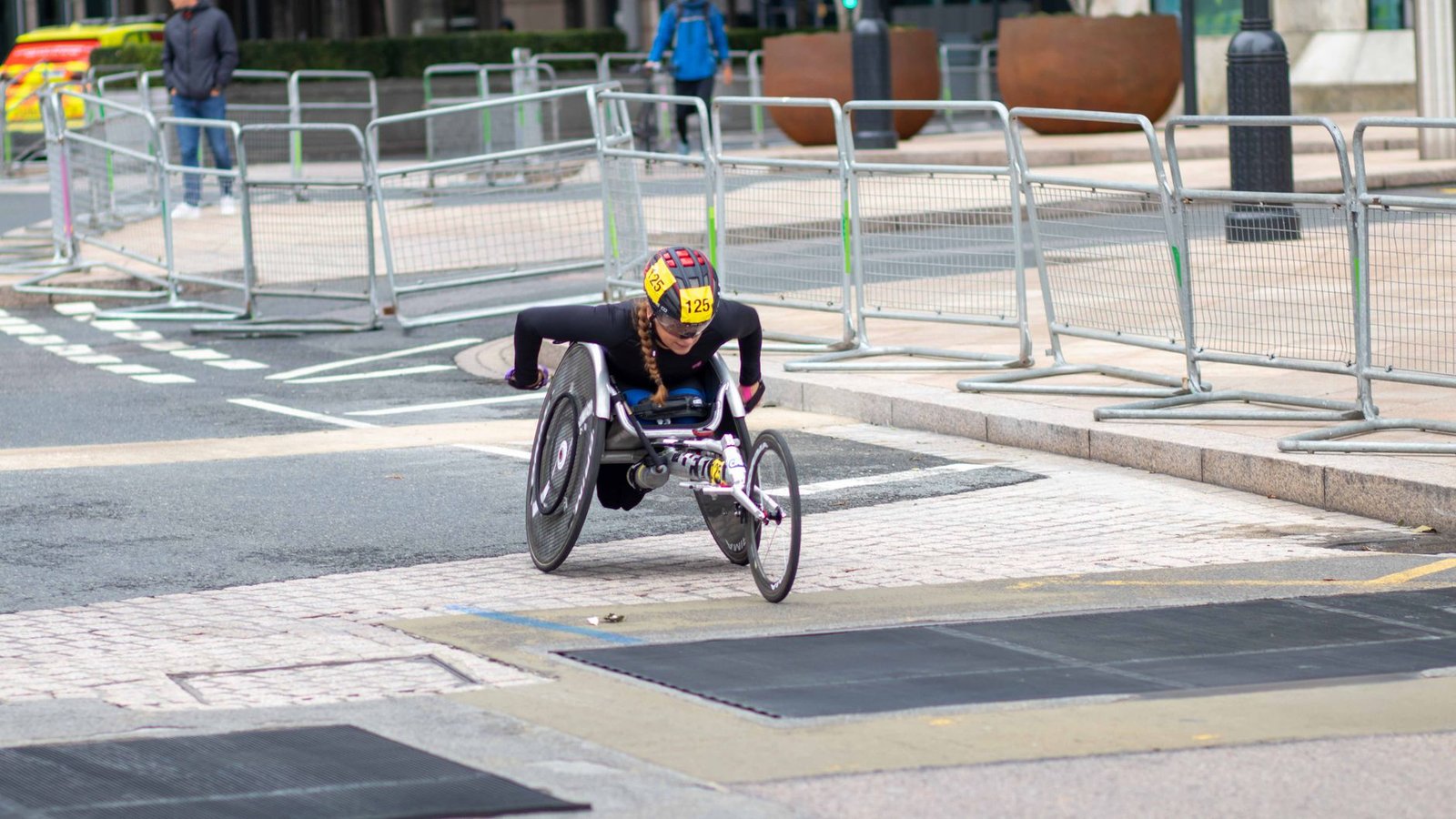
Most runners recover too late. You feel better and then you surge again, not realizing your breathing system never fully reset. The result is a cycle: surge, blow out, jog, then a partial recovery that collapses under the next push.
So treat the first 60–120 seconds after a surge as a controlled window. Prioritize recovery breathing during that phase before you decide whether to re-accelerate. You can race fast and still control your breathing. But you cannot “willpower” your way out of repeated over-breathing.
Turn Breathing Into a Simple Checklist During Race Day
In the middle of chaos, the brain forgets nuance. That is why you need a short, repeatable checklist you can execute while slowing down. The point is not to manage your entire physiology. The point is to stop the emergency loop.
Use three cues. First, slow to regain control. Second, belly inhale and longer exhale. Third, switch to a short exhale-focused pattern until it feels steady again. If you want outside runners breathing basics, this reinforces that simple mechanics matter more than complicated strategies.
Pick the Right Tool for the Severity of the Breathless Moment
Different breathless moments call for different actions. Mild blowouts respond well to pacing down and belly breathing. Severe panic, where exhale feels impossible, needs a faster reset like the physiological sigh. The best recovery plans match intensity to technique.
Here is a quick reference table you can memorize:
| Breathless Level | Primary Tool | Target Tempo | Expected Outcome |
|---|---|---|---|
| Light | Belly Breathing | Long exhale | Airflow feels easier |
| Moderate | Step Pattern | 5 steps inhale 3 exhale 2 | Rhythm stabilizes |
| High | Nose Low and Slow | In 4 to 5 out 6 to 8 sec | Heart rate settles |
| Severe | Physiological Sigh | 2 to 3 repeats | Immediate reset |
| Very Severe | Walk Break | Exhale leads | Panic fades |
Notice what is consistent across the table: exhale control. Even the “rapid” tools are still about lengthening and smoothing the release of air.
Practice the Recovery, Not Just the Speed
Race-day breathing is not a one-time talent. If you never practice recovering your breathing after surges, your body will treat it like a sudden threat. That means shallow breathing, shoulder tension, and a longer return to normal.
Include short surge intervals in training, then immediately rehearse your recovery routine: slow down, belly breathing, a changed step pattern, and longer exhales. Keep it honest. If you can recover quickly in training, you can recover under pressure in London.
Don’t Ignore Warning Signs That Require Slower Action
Technique helps, but safety matters more. If you experience dizziness, sharp chest pain, wheezing that does not settle, or confusion that increases as you try to breathe through it, you should stop trying to “breathe it away.” Recovery breathing is for restoring controlled airflow, not for pushing through medical red flags.
When symptoms escalate, change strategy immediately: walk, seek medical support if needed, and avoid repeating the surge. The smartest racing choice is still the one that keeps you healthy enough to finish strong tomorrow.
Improve Recovery Quality by Tracking a Simple Signal
You do not need a lab to measure recovery. Pick one signal that reflects whether breathing is returning to normal: for example, can you keep an exhale longer than the inhale for several cycles without gasping? If not, your recovery is incomplete and any re-acceleration will likely trigger another blowout spiral.
After each surge you practice, ask a direct question: How long did it take for breathing to feel stable? Then shorten that time by refining one variable at a time, usually longer exhales, calmer posture, or a faster reset tool.
How Can You Recover Your Breathing After Surges During London Races?
What should you do right after a surge during London races when you feel breathless?
Slow immediately to an easy jog or walk, then switch into recovery breathing by relaxing your effort and focusing on controlled, steady breaths until your breathing settles.
How does diaphragmatic belly breathing help you recover after surges in London races?
Use belly breathing—inhale so your belly rises, then exhale longer and more controlled—so your breathing mechanics shift to deeper, calmer ventilation while you recover.
Which breathing rhythm patterns work best to recover your breathing after surges in London races?
Try a step-based pattern to avoid stressing the same mechanics: use a 5-step cycle (inhale 3 steps, exhale 2), or if you need it faster, a 3-step cycle (inhale 2 steps, exhale 1), and adjust until it feels comfortable.
How can “nose low and slow” breathing calm you after a hard surge during London races?
Prioritize a longer exhale for 1–2 minutes: breathe in through your nose and out slowly through pursed lips/mouth, aiming for something like inhale 4–5 seconds and exhale 6–8 seconds to help bring your heart rate down.
What is the physiological sigh technique for a rapid breathing reset after surges in London races?
Do a rapid reset by taking a deep nasal inhale (about 80–90% lung fill), a short nasal “top-up” inhale, then one long slow mouth exhale of about 6–8 seconds, repeating 2–3 times or up to 1–2 minutes until breathing normalizes.
Where should you position your body to recover breathing after surges during London races?
For best results, recover while standing upright or with a slight forward lean and relaxed shoulders (hands on hips is often helpful), so you can breathe more effectively and reduce tension during the reset.
Get Your Breath Back and Stay In Rhythm
If you want the answer to how to recover your breathing after surges during london races, slow immediately to an easy jog or walk and switch to diaphragmatic belly breathing with a longer, controlled exhale, then change your breathing rhythm using a simple pattern like inhale 3 steps and exhale 2 (or inhale 2 and exhale 1 when moving faster) so you stop repeatedly stressing the same mechanics, then calm the system with nose-in and longer exhale breathing for a minute or two and, when you need a rapid reset, use the physiological sigh with one deep nasal inhale, a short top-up inhale, and one long slow exhale repeated until normal breathing returns. The real win is acting fast and making recovery automatic, not hoping your lungs catch up.

I am Ozan, a London-focused running writer and marathon enthusiast with a passion for helping people discover the city’s best races, running routes, walking trails, and fitness events. I research and write practical, up-to-date guides covering marathons, race preparation, training tips, running gear, and everything related to staying active in London.
My goal is to create reliable, easy-to-follow content that helps runners and walkers of all experience levels explore London with confidence, whether they’re preparing for their first 5K or their next marathon.