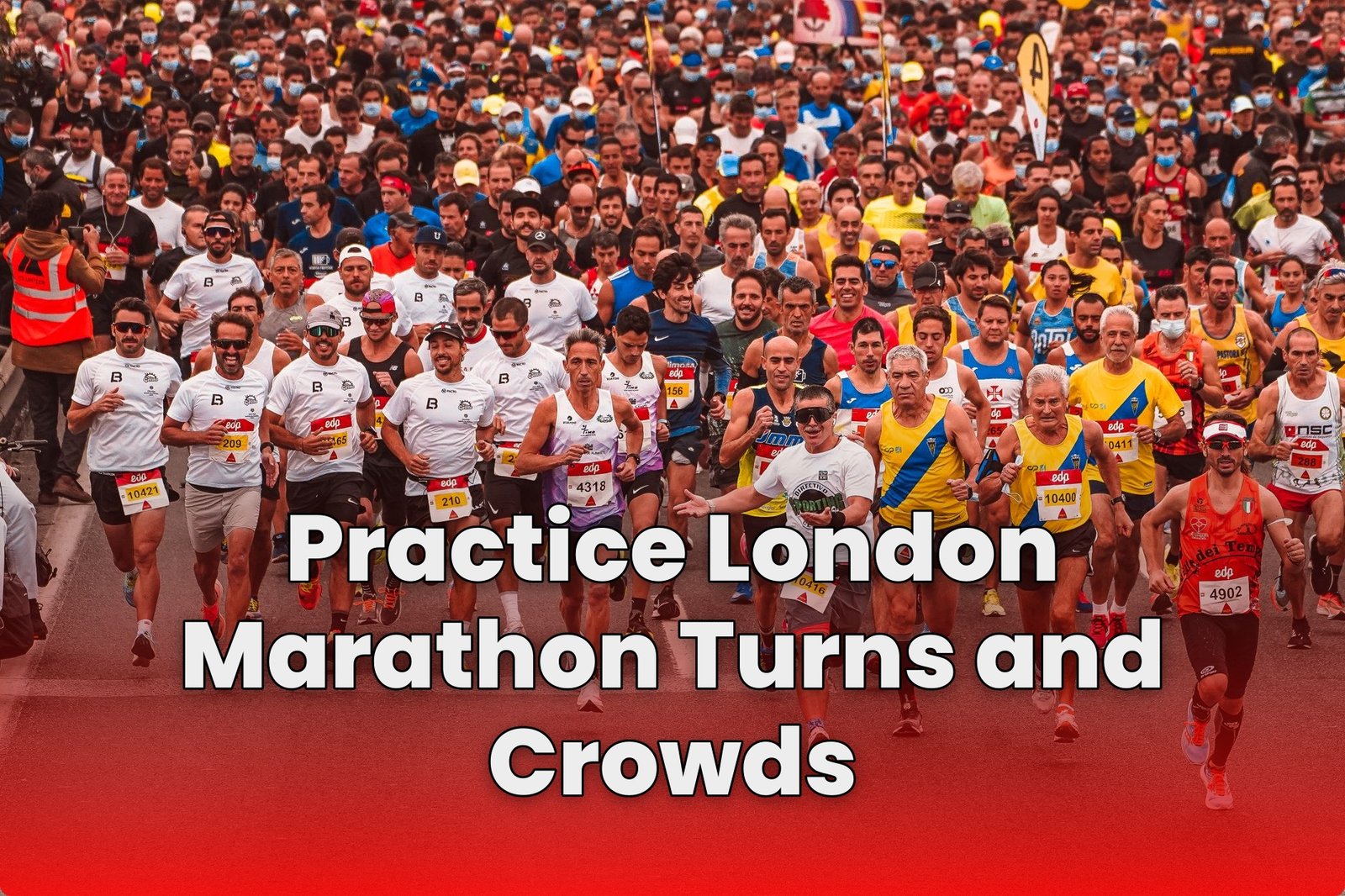
You do not need to “hope” your way through London’s turn-heavy sections and dense pack running, you need a plan that treats positioning and pace discipline as training. Most runners lose time not because they are unfit, but because they get pulled into weaving, wrong tangents, and chaotic decisions that break rhythm.
The smart approach is to practice how you will move, not just how fast you will run. Study the course geometry ahead of race day, then rehearse controlled overtakes and passing lanes in practice runs so you can stick to your target pace even when the field compresses, especially around predictable merges and narrowings where traffic builds.
Finally, train your execution under pressure: arrive early to sort out start logistics, fuel calmly so you are not sprinting between cues, and use simple pacing checks that do not spike your stress when GPS drifts. When turns and crowds stop being surprises, you stop wasting energy and you start saving it for the parts of the race that actually decide your finish.
Pace Discipline Beats Pack Chaos
London Marathon crowds are not a reason to abandon your plan. They are the reason to protect it. If you start reacting to every surge and brake, your race becomes a series of accidental workouts, and your finish suffers.
So when the start feels fast and the group around you won’t stop accelerating, you must stay locked to the pace you trained for. Remote work productivity may be the topic in other corners of life, but in London racing the principle is the same: performance comes from consistent execution, not from constant adjustment.
When you control the pace, the crowd becomes scenery instead of a weapon against you.
Treat London Turns Like A Geometry Test
Turns are not just “lots of stopping.” They are distance, angles, and recovery time. In a packed field, every extra meter paid on the outside of a corner becomes another minute you cannot buy back later.
Build your training around the shape of the course, not just the weekly mileage. Look at where the route bends, where it pinches, and where it offers temporary clear lanes. Then practice running those sections with the same intent you will use on race day.
Ask yourself: are you training your legs, or training your decisions? The second one matters more when roads narrow and runners compress.
Memorize Landmarks Before You Memorize Miles
If you walk into London without a mental map, you will spend the race reacting to what you did not prepare. That reaction is costly in crowds because it turns small hesitations into lost positions.
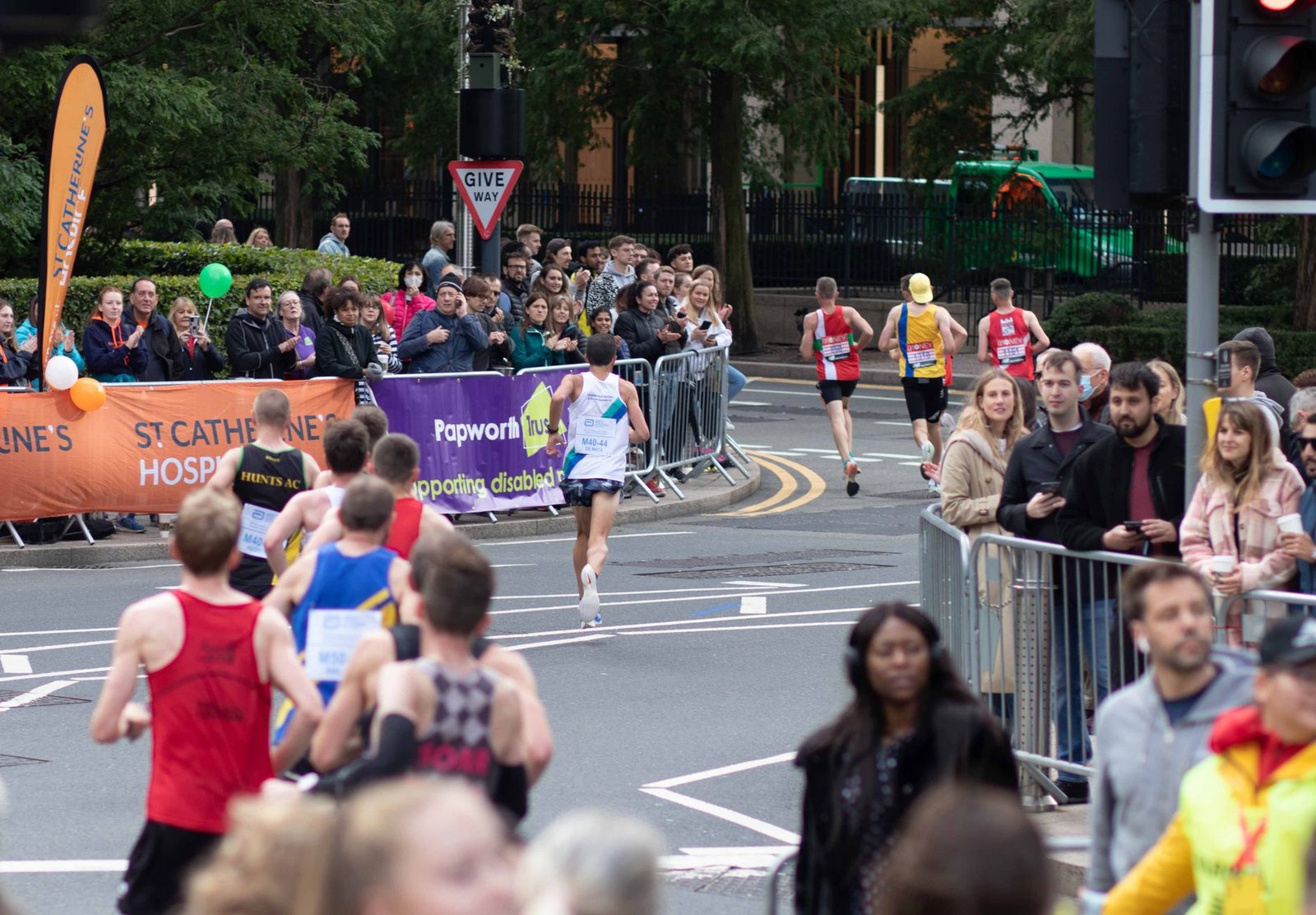
Before your long run sessions, identify key landmarks, turns, and water stops. Then rehearse them the same way you rehearse splits. You want the environment to feel familiar enough that your only job is rhythm.
One reason London feels harder than other marathons is that confusion multiplies when you are surrounded by strangers moving at different speeds. Preparation shrinks that chaos.
Train Tangents And Stop Guessing Distances
Most runners do not lose time because they cannot run fast. They lose time because they drift wide while negotiating bodies. The fix is deliberate practice of tangents, the straightest practical line you can run without forcing unsafe passes.
Use your training runs to learn how your stride behaves when you aim for a line through a crowd bottleneck. A helpful habit is to pick two points in front of you and try to “hold” the corridor between them while others surge.
Course notes from experienced runners can sharpen your expectations, like London course strategy that many people treat as a checklist. Don’t copy their plan blindly, but steal their awareness.
Simulate Traffic Bottlenecks With Real Constraints
London is full of predictable “traffic points” where space disappears. If your training only includes open-road running, you will be shocked by how often pace must slow, then rebuild.
To practice this honestly, stage constraints in training. Run at your target effort, then add controlled “traffic” moments: narrow lanes with cones, groups of slower runners, or a planned slow-down zone you pass through with composure.
- Pick 3 to 5 bottleneck reps during a long run.
- Re-enter your target pace within a set distance, not by emotion.
This is how to practice marathon turns and crowds in london training without pretending the environment will cooperate on race day.
Practice Positioning Through London Merge Points
Merge points decide whether you pass efficiently or waste energy fighting for a gap that never opens. The crowd will not distribute itself fairly, so your job is to arrive at merges with enough options to stay calm.
Practice this with a drill that forces decisions: hold position, then rotate to a new lane only when a real opening forms. The goal is not dominance. The goal is clean movement.
| Drill | Frequency (per week) | What You Measure |
|---|---|---|
| Turn-Sequence Repeats | 1-2 | Time loss per section |
| Crowd Shuffle Intervals | 1 | Cadence stability |
| Tangent Line Holds | 2 | Distance drift |
| Merge-Point Lane Switch | 1 | Gap creation time |
| Fuel Timing Under Delay | 1-2 | Pace steadiness after gel |
After the reps, review outcomes. Did you gain meters efficiently, or did you spend energy bouncing between pockets of space? Adjust your positioning strategy for the next session, not just your pace.
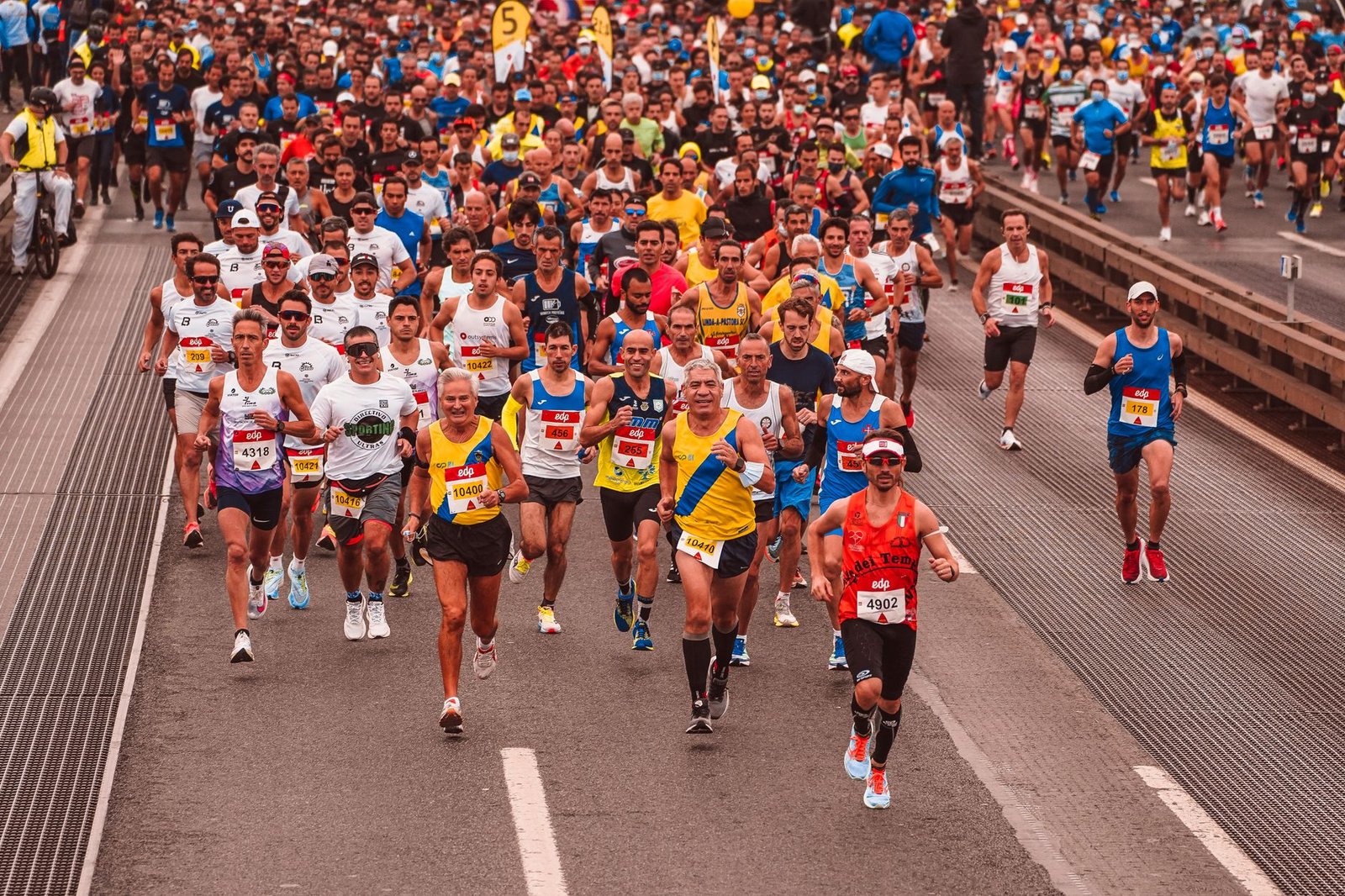
Footwork For Curbs, Edges, And Sudden Pavement Changes
In crowds, your body will be pulled toward the nearest “safe” strip of pavement, even when it is uneven. Curbs, edges, and temporary surface changes demand deliberate footwork practice, not luck.
During training, rehearse stepping onto and off small changes in surface. Keep your posture slightly forward, shorten your stride when your footing changes, and focus on stable contacts rather than speed.
Opponents of this idea argue that you should just stay on the main line. But in London, “main line” is often occupied. Your fitness must include the ability to adapt without turning every minor step into a stumble.
Know When Weaving Helps And When It Ends
Weaving looks heroic until it becomes exhausting. Every lateral move costs momentum, forces braking, and increases the chance of contact. If you weave continuously, you will feel busy while actually losing race rhythm.
So set rules. For example: only change lines when you can see space opening for a few seconds ahead, and slow down when the course narrows instead of fighting for passes that force you into near-contact.
Ask yourself a hard question: are you making progress, or just changing your position relative to other runners? Real progress is forward, measurable, and repeatable.
Fuel Early So Crowds Do Not Steal Your Energy
Crowds amplify fueling mistakes. If you wait too long for gels and then reach a congested stretch, you will miss your window or rush your intake at the worst moment.
Train your fueling timing to be boring. Take fuel consistently in training long runs, including during planned “traffic” moments. This teaches your gut and your legs that steadiness beats panic.
The reward is psychological. When you know you have fuel on board, you stop making frantic decisions about position and timing. That calm is performance.
Arrive For Toilets And Pens, Not For Vibes
London’s logistics can decide whether you start focused or flustered. If you cut it too close, queues and delays will push you into an adrenaline run before you even hit your first proper mile.
Plan arrival early enough to handle toilets calmly and to enter your correct starting pen. Being in the wrong pen creates crowd pressure you did not earn, including forced weaving and sudden pace changes.
Want a simple target? Use extra buffer time for the steps that are mostly outside your control: walking routes, queues, and finding your line.
Use GPS Carefully Then Trust Manual Sanity Checks
GPS can be erratic in dense crowds and around sharp turns. If you chase a fluctuating screen, you will adjust pacing too late and too aggressively.
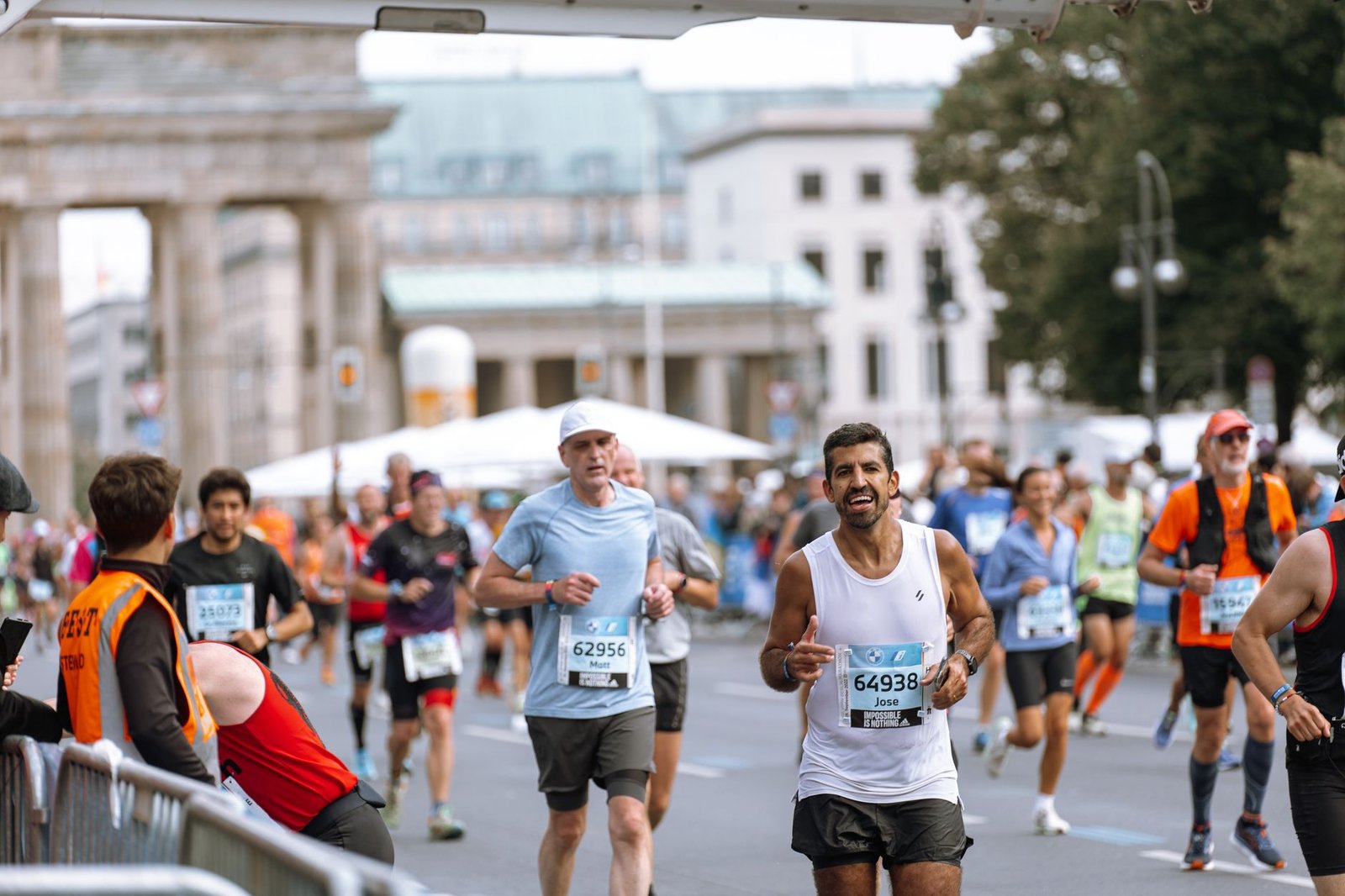
Instead, simplify monitoring. Combine GPS sanity checks with manual pacing at mile markers. Focus on whether your time matches your plan within a small tolerance, then let the crowd do what it does.
In a crowded race, the scoreboard is your friend, but mile markers are your anchor.
Your Crowd Plan Should Produce Confidence, Not Stress
Every runner hears the same advice: stay relaxed, stay strong, adapt. That is true, but it is also vague. You need a concrete crowd plan that tells you what to do when the field compresses and the route pinches.
Decide in advance how you will handle early surges, how you will approach merges, and when you will stop trying to gain position at all costs. Then practice the decisions in training so your body learns them before race day.
If your plan is specific, London’s crowds become a solvable problem. If your plan is generic, the crowd will choose for you.
How to Practice Marathon Turns and Crowd Handling in London Training?
How should you plan your London Marathon pace around turns and crowds?
Base your plan on pace discipline, aiming for a controlled early effort so you don’t surge in the bustle; when the course narrows or slows, adjust smoothly rather than forcing passes, and use a negative-split mindset to regain rhythm once you’re back on target.
What course geometry and landmark practice helps you run efficient tangents on London turns?
Study the course in advance and memorize key landmarks, water stops, and street features so you can execute straighter lines through bends; if there’s a clearly marked tangent line and it’s safe and uncrowded, practice following it to reduce unnecessary distance.
How can you train footwork and positioning for turn-heavy London sections and bottlenecks?
Practice staying stable on changing surfaces and edges by rehearsing smooth deceleration and re-acceleration before and after turns, while working on positioning drills that keep you clear of the worst compression points where roads and street furniture create delays.
How do you manage overtakes safely when the field merges and crowds get dense in London?
Prioritize safe, minimal weaving by passing only when there’s clear space and grip, and be willing to lose a moment when the route constricts; think “controlled adjustments” instead of chaotic threading, and slow slightly through tight sections to avoid unsafe movement.
What fueling and timing strategy helps you handle London crowds without rushed decisions?
Stick to a pre-planned fueling schedule during training and rehearse race-day intake so you’re not making urgent calls while navigating people; also arrive early enough to handle queue-heavy logistics like toilets and getting to your correct starting pen without starting stressed.
Should you use GPS or mile-marker checks to keep your turn strategy on track in London?
Use a simple monitoring approach that doesn’t overreact to crowded conditions: confirm progress at mile markers and sanity-check with GPS if needed, since GPS can drift, and keep your focus on pacing and execution so small turn delays don’t derail the overall plan.
Master the Turns and the Traffic
How to practice marathon turns and crowds in london training is straightforward: train your pace discipline and your positioning, then rehearse the course geometry you will face so you can hold form, follow efficient lines, and avoid exhausting detours when the pack thickens. If you plan turns, fuel, and bottlenecks in advance, London will feel like a test you can execute, not chaos you have to survive.

I am Ozan, a London-focused running writer and marathon enthusiast with a passion for helping people discover the city’s best races, running routes, walking trails, and fitness events. I research and write practical, up-to-date guides covering marathons, race preparation, training tips, running gear, and everything related to staying active in London.
My goal is to create reliable, easy-to-follow content that helps runners and walkers of all experience levels explore London with confidence, whether they’re preparing for their first 5K or their next marathon.