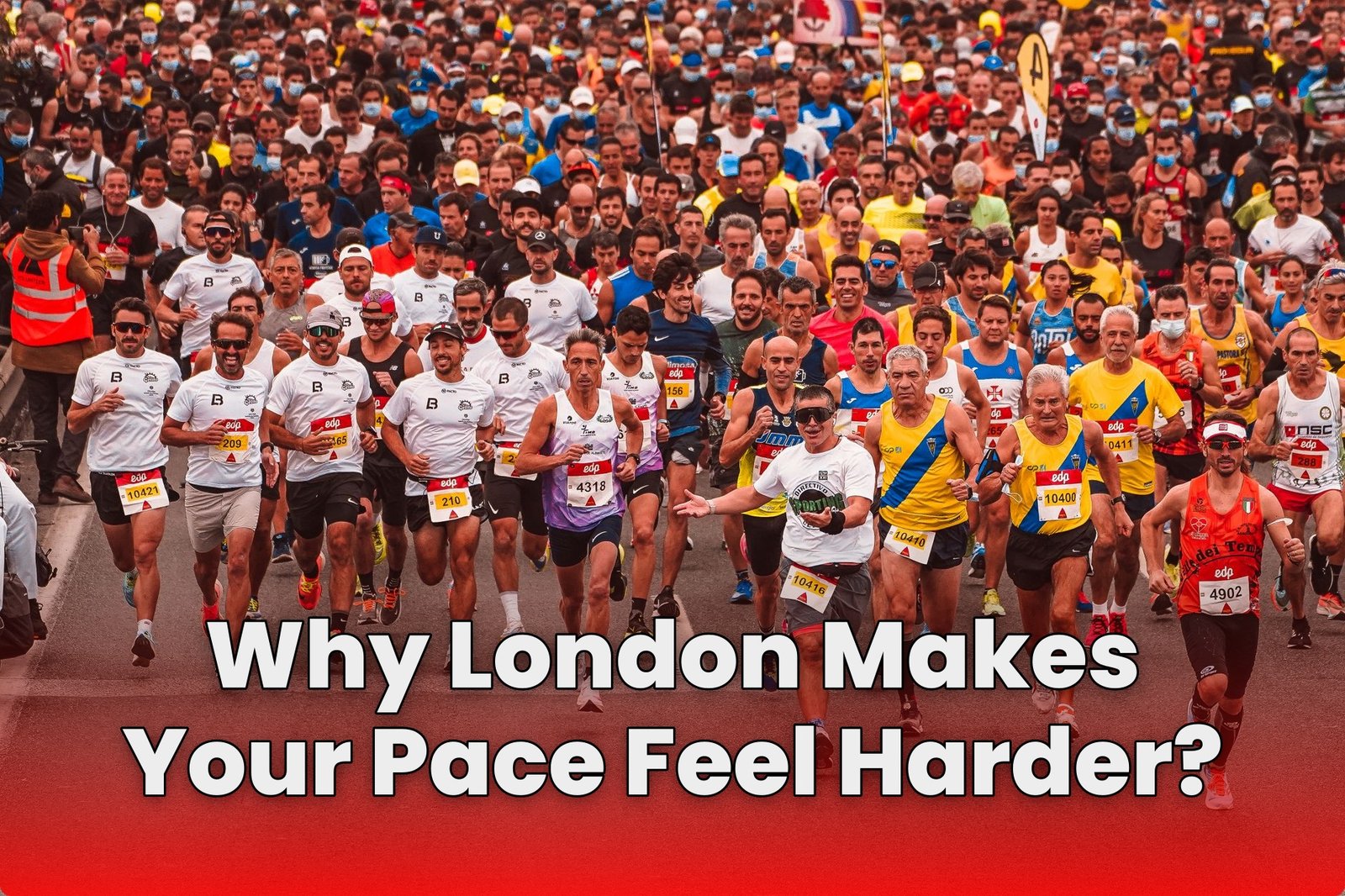
Your fitness is probably fine, but London makes the same marathon pace feel harder sooner. That is the real answer behind why your marathon pace feels harder than expected in london, and it is usually not because you “forgot how to run.” It is because London quietly raises your physiological workload early.
Even if you have trained in similar temperatures, heat from pavement, crowds, and dense streets can force your body to work overtime to shed heat, so holding your planned pace feels like you are suddenly going faster. On top of that, a small drift above your marathon-zone heart rate can turn a controlled effort into accumulating fatigue long before the halfway point.
Then the course punishes early optimism. The Charlton descent encourages “banking time,” but it can stress your quads, while efficiency can drop after sustained marathon-pace effort and fueling gaps increase technique breakdown. If you control effort downhill, match target splits by time not “leg feel,” and fuel consistently, London stops feeling like a surprise and starts feeling like a plan.
London Converts Comfort Into Hidden Heat Stress
When you step into London with the “same conditions as training” in mind, you miss a brutal detail: the city often adds physiological load before your legs register it. Sun-baked surfaces, glass and concrete, and a warm, stagnant microclimate can make discomfort arrive early, even if the thermometer says you should be fine.
Your body has to work harder to dissipate heat. That means holding marathon pace feels like running faster in added stress. Why does it matter? Because discomfort that arrives early steals the oxygen and energy reserves you planned to spend later.
Crowds and City Roads Add Resistance You Feel Early
London is not a clean, empty treadmill. Crowds compress the rhythm of your stride, sidewalks and barriers nudge your line, and the constant need to adjust foot placement creates extra mechanical work. That work is small per step, then it stacks like interest.
If you have ever wondered why the same pace feels “jerkier” in a major city, that is the answer. Fatigue is not only biological. It is also logistical. The watch shows pace, but the road steals smoothness.
Your Heart Rate Runs the Show, Not Your Watch
It is tempting to treat pace as the boss and ignore heart rate. In London, that habit backfires because conditions shift the cost of each minute. If your heart rate drifts above your intended marathon zone, you are paying a higher metabolic price for the same split.
Once that happens, fatigue accumulates sooner and your wall arrives early, not because you are less fit, but because your effort was mispriced from the start.
When heart rate rises without your permission, pace becomes a liar.
Carbohydrates Vanish So Efficiency Falls Before You Think
Marathon fatigue begins earlier than many expect when carbohydrate availability drops in the most efficient muscle fibers. Then your body must rely more on other fuel sources, which changes how hard it feels to move at the same tempo.
At that point, technique and economy deteriorate. The question is not whether you trained hard enough. The question is whether your race plan protects the specific fuel and mechanics that keep pace stable.
Marathon Fatigue Changes Form and Costs Oxygen
As fatigue accumulates, runners often lose the ankle “spring” that helps keep movement economical. The nervous system also works harder to activate tired muscles, turning coordination into another form of effort.
And when the body leans more on fat, the energy delivery costs more oxygen. So even if your motivation stays high, your efficiency declines after about an hour at marathon-pace effort, especially if you start too fast. The pace did not change first. Your physiology did.

The Charlton Descent Trains Your Quads to Fail
The course profile amplifies early damage. The Charlton descent between km 5 and 7 drops roughly 44 meters off the Blackheath plateau, and that is not just a fun downhill. It changes loading patterns through your knees and quads at speed.
Running “banking time” by feeling fast downhill can wreck your strength before later stages even arrive. You can literally feel it later at km 31-34 when the cumulative cost turns every bridge and modest climb into a grind. The fix is to control effort on the descent and resist the urge to chase a pace that only looks good in the moment.
Bridges and Embankment Cliffs Punish Positive Banking
London often turns your early decisions into your final outcome. Around km 31 to 34, the Embankment and Westminster Bridge area brings brutal sensations: even modest climbs and structures feel harder than expected if you entered them with a positive bank from downhill over-speed.
To make the tradeoffs concrete, use this quick map of what the course does to your body and what you should adjust. It is not about being cautious. It is about spending your strength correctly.
| London Section | Measured Load | Smart Adjustment |
|---|---|---|
| km 5–7 Charlton | ~44 m drop | Cap effort on downhills |
| Early heat exposure | Early discomfort | Match effort to HR zone |
| Mid-race fatigue | Efficiency drops | Fuel before you feel “late” |
| km 31–34 Embankment | Climbs and bridges | Reduce pace if HR jumps |
| Late stage mechanics | Less ankle spring | Shorten stride slightly |
The real point is uncomfortable: London does not care what your plan predicted. It reacts to your early execution. If you banked time by going too hard on the wrong segments, your late splits will pay the bill with interest.
Pace Banking Turns Into Pace Debt
People love the romance of “banking time,” but that strategy treats your legs like a bank account instead of a failing system. Downhill speed, faster starts, and adrenaline can all feel like advantage while you are still fresh.
Then the moment you need efficiency most, the debt compounds. The result is that your marathon pace feels harder than expected in London because it is effectively costing you more than the same number of minutes promised. Want to avoid the trap? Stop using feel as your calculator.
Fuel Timing Beats Fuel Amount
Fueling is not only about total carbohydrates. It is about timing relative to when your body starts to pull back from efficient muscle fiber use. If you wait until you feel low, you are already in the phase where efficiency drops and technique suffers.
Regular carbohydrate intake during the race helps protect durability, so your body does not have to negotiate every minute with a depleted engine. The best fueling plan is the one that keeps your effort consistent, not one that tries to rescue you after you break rhythm.
Use Target Effort, Not Leg Feel
If you run by leg feel, London will punish you. Weather, crowds, and profile changes alter the cost of movement, so “this feels okay” can mean very different physiological loads at different points in the course.
Run effort to match your intended splits rather than what your legs happen to offer early. Trust the plan, especially on the descent, and treat any early rise in heart rate as a signal to adjust. If you cannot keep your effort disciplined, your pace targets are just wishful numbers.

Training Similar Weather Still Misses London’s Load Curve
You can train in heat and still be shocked, because training conditions rarely replicate London’s shape of stress. In London, the load curve changes minute by minute. The course amplifies early physiological strain through heat and friction, while the profile adds mechanical impact where you least expect it.
So why does training “in similar temperatures” fail? Because similar temperature does not mean similar resistance, similar microclimate, or similar timing of where the body gets pushed into inefficient fuel use. London is a different system.
Make Your Strategy Match the Course, Not the Fantasy
If you want a race where marathon pace feels predictable, you need a strategy designed for London’s specific traps. Start with the discipline to control effort on the Charlton descent, then protect your engine with regular carbohydrates so you do not allow early fuel depletion to change mechanics.
And when conditions shift, treat pacing like an instrument panel, not a scoreboard. Many runners report that race-day pacing guidance helps them keep the right zone longer, which is exactly what prevents the late-stage collapse.
- Control effort early, especially on downhills
- Match target splits using effort and HR, not excitement
- Fuel regularly to maintain durability and mechanics
Why Does Your Marathon Pace Feel Harder Than Expected in London?
How do London’s heat, crowds, and road conditions make your planned marathon pace feel harder sooner?
In London, the course environment can quietly raise your physiological load—sun-baked streets, dense crowds, and stop-start sensations can increase heat strain and discomfort early, so holding the same pace feels like you’re working harder than you planned.
Can heat and humidity make you feel like you’re running faster than your actual marathon pace?
Yes—when your body has to spend more effort dissipating heat, your perceived exertion rises and the effort required to maintain pace increases, even if you’ve trained at similar temperatures.
Why does heart-rate drift cause fatigue to accumulate before you reach your expected marathon wall?
If your heart rate moves above your intended marathon zone, you’re likely spending more aerobic capacity than planned; that extra strain increases fatigue buildup and makes it easier to hit a wall earlier.
Why does marathon fatigue begin earlier in your race than many runners expect?
Marathon fatigue can start sooner because carbohydrate availability drops in the most efficient muscle fibers, running technique can change (less ankle “spring”), and the nervous system works harder to activate tired muscles—reducing efficiency and raising oxygen cost, especially after about an hour of marathon-pace effort.
How does London’s course profile, including the Charlton descent, affect pacing and quad fatigue?
London’s early terrain can amplify early damage: the Charlton descent between roughly km 5–7 can encourage “banking time” by running fast downhill, which may overload your quads and make later pace feel progressively harder.
What pacing and fueling adjustments help keep your marathon pace controlled in London?
To protect durability, control effort on the Charlton descent, match target splits rather than “leg feel,” and fuel with carbohydrates regularly so you reduce the risk of early fatigue when the race cost ramps up around the later sections (often near km 31–34).
Fix The Pace, Don’t Blame Your Training
Why your marathon pace feels harder than expected in london is usually not mystery fatigue, it is math: heat and crowds raise your physiological load, early effort and heart-rate drift steal endurance, fueling timing fails to protect durability, and London’s profile turns “banking time” on the Charlton descent into quad damage you pay for later. Control effort on the downhill, match target splits by pace and heart rate rather than “leg feel,” and fuel like it matters, because the marathon will always charge interest on the minutes you overspend early.

I am Ozan, a London-focused running writer and marathon enthusiast with a passion for helping people discover the city’s best races, running routes, walking trails, and fitness events. I research and write practical, up-to-date guides covering marathons, race preparation, training tips, running gear, and everything related to staying active in London.
My goal is to create reliable, easy-to-follow content that helps runners and walkers of all experience levels explore London with confidence, whether they’re preparing for their first 5K or their next marathon.