The best pre-race dinners in London are simple, familiar, and built around easy-to-digest carbohydrates. A plate of tomato pasta, plain udon, or white rice with lean protein will usually serve you better than a rich restaurant meal designed to impress.
Carbohydrate loading takes place across the 24 to 48 hours before your race, not through one enormous dinner. Your evening meal should give you enough fuel without leaving your stomach unsettled overnight.
Choose food you have already tolerated during training, keep the portion sensible, and leave enough time before bed. The right dinner supports your race without creating a problem you discover at 5 a.m.
Key takeaways
- Carbohydrate loading works across the day, so spread carbohydrates over meals and snacks instead of forcing them into dinner.
- When extra bulk has caused gas or urgent bathroom trips, choose white pasta, white rice, or sourdough over whole-wheat versions.
- If tomato acidity gives you reflux, skip Lina Stores’ Pomodoro and order another meal you have already tested.
Pre-Race Dinner Criteria That Matter
Your dinner is one part of the day’s carbohydrate intake, not the whole plan. During a 24- to 48-hour carbohydrate load, aim for 8 to 12 grams of carbohydrates per kilogram of body weight per day. A 150-pound runner, for example, may need roughly 545 to 818 grams across the day, depending on the race and the wider fueling plan. Spread carbohydrates through breakfast, lunch, snacks, and dinner so each meal remains comfortable. A giant bowl of pasta at night is not required to meet the day’s target.
A lower-fiber meal is often easier to handle before a race. White pasta, white rice, and sourdough provide less fiber than whole-wheat versions, which can help if extra bulk tends to cause gas or urgent bathroom trips. Fat and spice can create different problems. Heavy dairy sauces, fatty cuts of meat, and very spicy dishes can sit heavily or irritate a stomach that is already sensitive before a hard effort. Fat can take several hours to leave the stomach, so a rich meal may be a poor match for an early start.
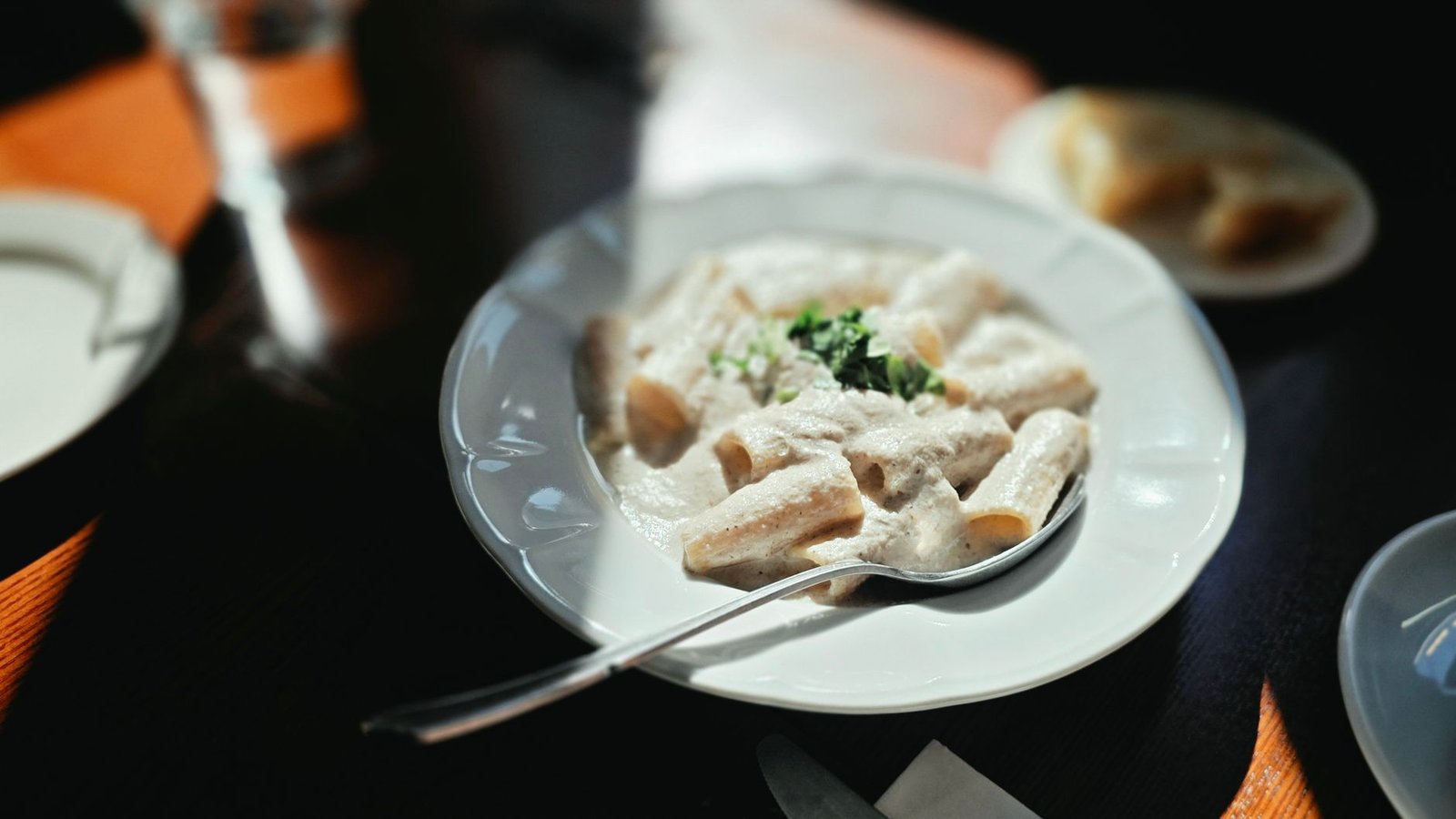
Rigatoni pasta in creamy sauce garnished with fresh parsley.
Pick a carbohydrate base you have eaten before a long run, keep the sauce light, and use a portion you already tolerate. Skip ingredients that have caused cramps, reflux, or urgency during training. A dinner that feels plain on an ordinary night can be exactly right before a race.
London Restaurant Options for a Lower-Risk Dinner
| Option | Main carbohydrate | Fat risk | Control over extras |
|---|---|---|---|
| Lina Stores Pomodoro | White tagliolini | Lower | Moderate |
| Marugame Udon Kake | Wheat udon | Lower | High |
| White rice with lean protein | White rice | Low | High |
Lina Stores
Lina Stores serves tomato-based tagliolini with Pomodoro among its simple pasta dishes. The pasta supplies a familiar carbohydrate base, while the tomato sauce avoids the heavy dairy and butter found in carbonara or Alfredo. This suits you if you already tolerate wheat pasta and tomato sauce and want a conventional Italian dinner. Keep the order close to its simple form. Extra cheese, rich sides, fried starters, and a large dessert can turn a manageable meal into a slow-digesting one.
The lower-fat sauce may make it easier to add carbohydrates elsewhere in the day without making dinner overly rich. If tomato acidity gives you reflux, choose another option you have tested rather than experimenting before the race.
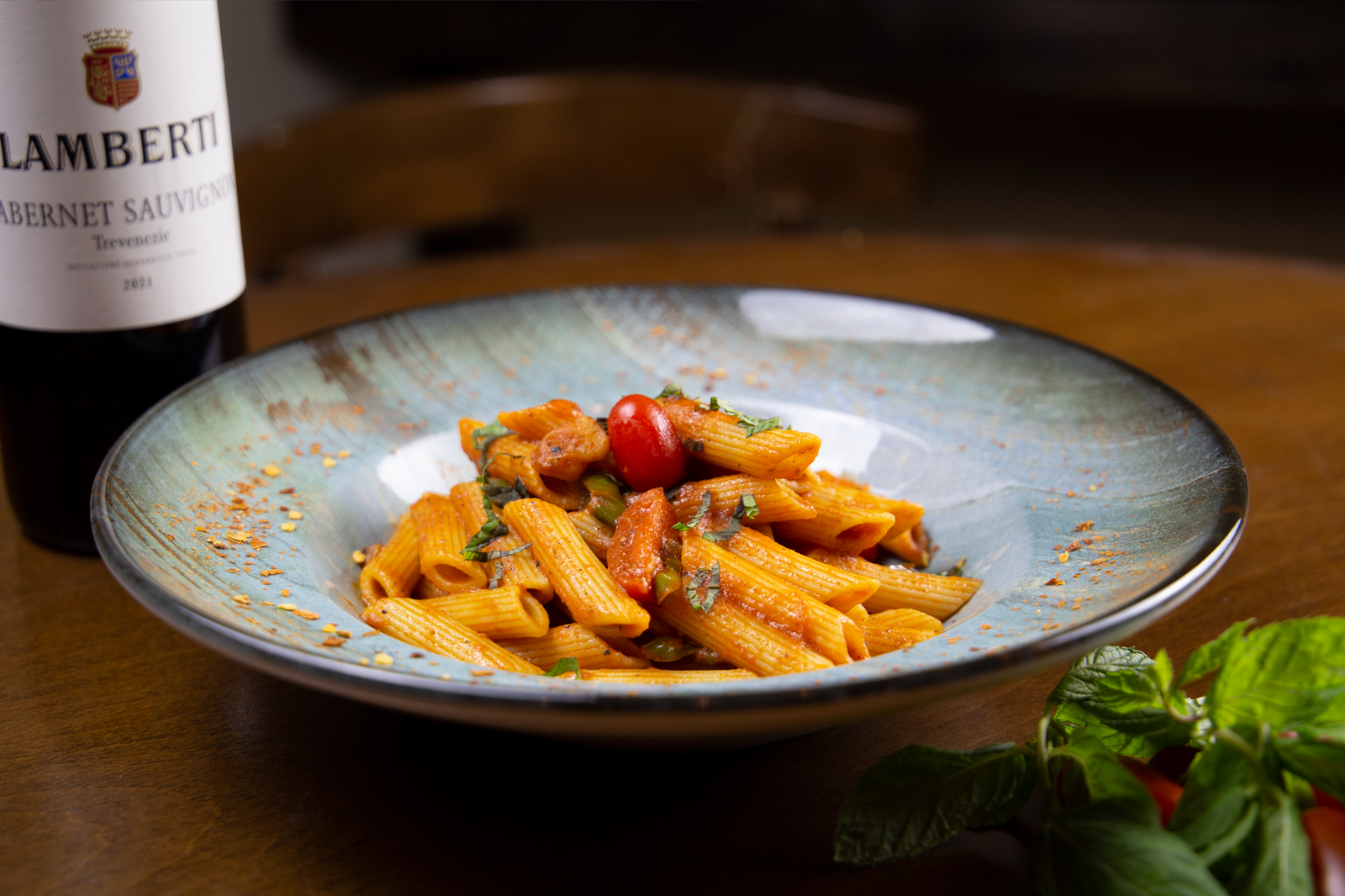
Classic Italian pasta dish accompanied by Cabernet Sauvignon.
Marugame Udon
Marugame Udon serves Kamaage and Kake udon made with wheat flour, water, and salt. That short ingredient base suits a runner who wants a plain bowl of noodles without a thick sauce or a complicated mix of toppings. Kake udon is the more straightforward choice when you want noodles in broth. Kamaage keeps the noodles simple and lets you control how much dipping sauce you use. Ask for fewer toppings if onions, chili, fried pieces, or unfamiliar ingredients tend to upset your stomach.
Udon fits a runner who prefers a warm, light bowl over pasta, provided the dish is already familiar. Even a mild meal can cause trouble before a hard effort when your body has not practiced with it.
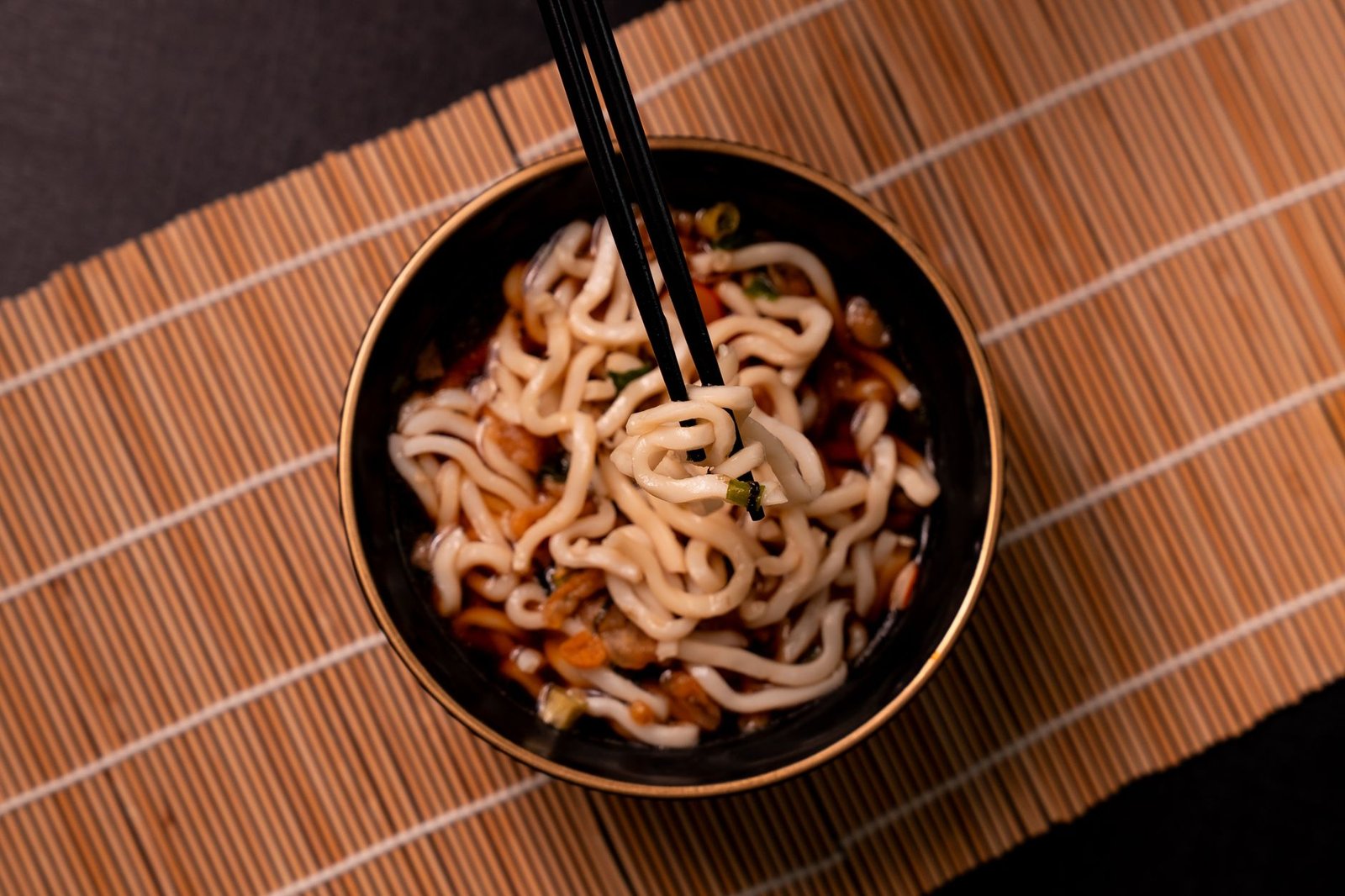
Plain udon noodle bowl with scallions and broth
Plain White Rice With Lean Protein
Steamed white rice with lean protein gives you the most control over the meal. Choose a plain rice base, select chicken or another familiar lean protein, and avoid butter, heavy oil, strong spice, and rich sauces. Ask for the rice plain and request the protein grilled or steamed if the kitchen allows it. Keep the seasoning mild.
A small rice side may not replace a full dinner, so use the portion you normally tolerate. Add a familiar carbohydrate snack earlier in the evening if your daily intake is falling short.
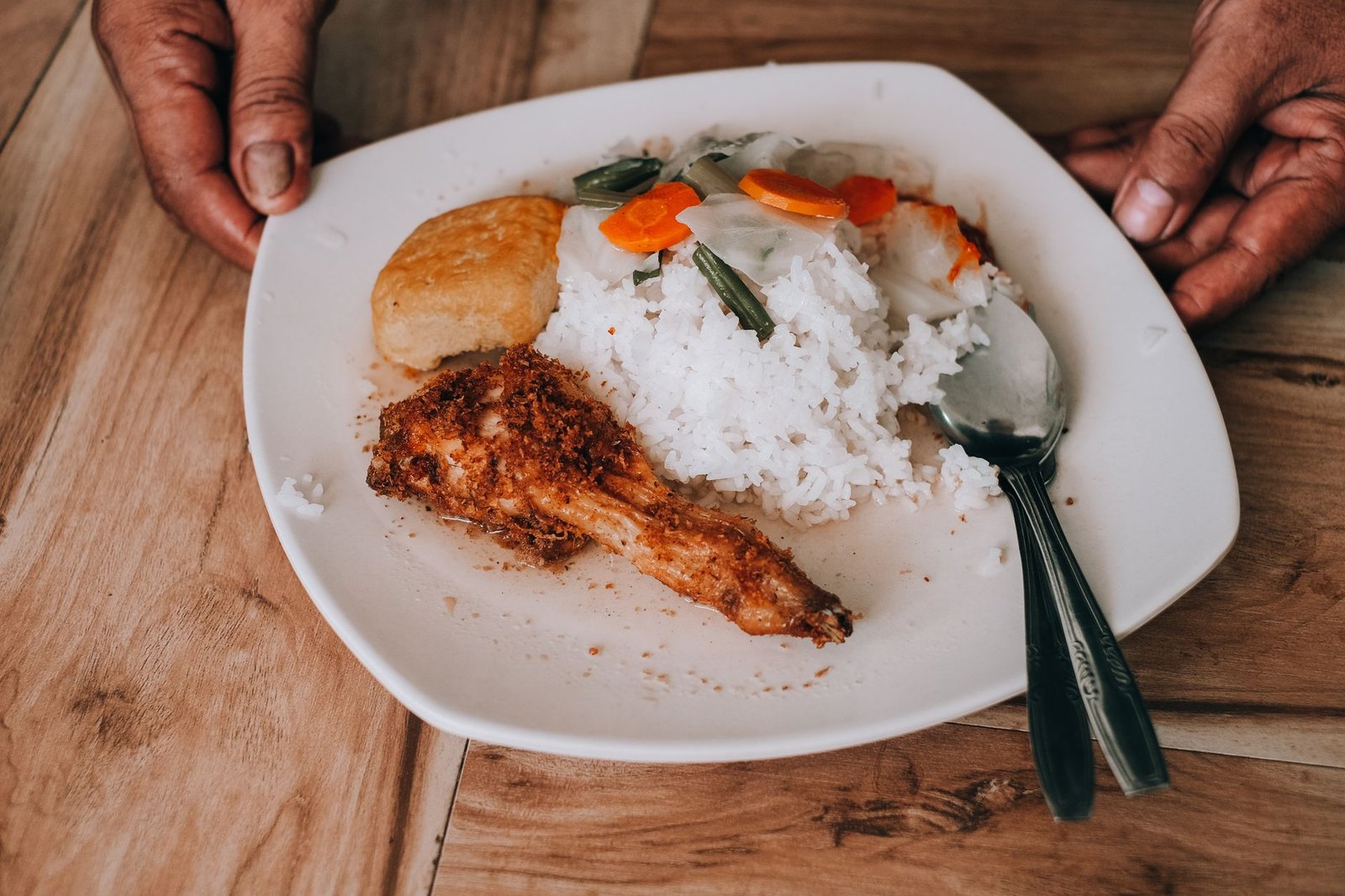
Grilled chicken served with rice and vegetables on a white plate.
What to Avoid Before an Early Start
A pre-race meal becomes risky when it combines too much fat, fiber, spice, or novelty. These foods are not automatically bad, but race night is a poor time to test how your body reacts.
A useful rule is to eat foods you have practiced with, in portions close to your training portions. A dish that feels fine after a relaxed dinner may cause problems when you lie down soon afterward and wake up for an early race.
Cream Sauces And Fatty Meat
Carbonara, Alfredo, and similar cream-based dishes can contain a large amount of dairy and fat. High-fat cuts of steak, sausage, duck, and heavily oiled meat dishes create the same concern. They may slow digestion and leave you feeling full when you need to sleep.
Make the practical swap before the order reaches the table:
- Choose tomato sauce instead of cream sauce.
- Choose lean chicken instead of a fatty meat cut.
- Choose grilled or steamed food instead of fried food.
- Leave off extra butter, oil, and cheese.
Spicy Or Unfamiliar Food
Spicy food can irritate your stomach or increase the chance of reflux, loose stools, and discomfort. The risk is higher when you have not tested the dish during training.
That includes more than chili. A new curry, a heavily seasoned noodle bowl, an unfamiliar hot sauce, or a dish packed with garlic can all create uncertainty before race morning. Your normal tolerance matters more than a restaurant’s reputation for bold flavor. Order a mild version of something you already know. A dish you have eaten before long runs without trouble is a stronger choice than a supposedly healthy meal you have never tried.
High-Fiber Versions
Whole-wheat pasta, brown rice, beans, large salads, bran-rich sides, and heavy vegetable portions can add more fiber than you want before a race. Fiber has a useful place in your normal diet, but extra bulk can increase gas, bowel movements, or stomach pressure during an early effort.
Choose the lower-fiber format when you need a calmer dinner:
- White pasta instead of whole-wheat pasta.
- White rice instead of brown rice.
- Sourdough instead of a dense, high-fiber bread.
- A moderate cooked vegetable serving instead of a large raw salad.
You do not need to remove every plant food from the meal. Avoid a sudden increase in fiber compared with what you eat during training.
Carbohydrate Loading Before The Dinner
The evening meal cannot repair a day of under-eating. Plan carbohydrates across the day instead of saving every serving for dinner. Smaller portions spread across breakfast, lunch, snacks, and dinner may be easier to tolerate than one oversized plate at night.
Build the day around foods you already know:
- Use a familiar carbohydrate at breakfast.
- Add a dependable carbohydrate to lunch.
- Take a snack you have used before training.
- Choose the simple dinner that matches your stomach and bedtime.
- Keep race-morning food separate from any new experiment.
Do not double the dinner portion simply because the race is close. Extra food helps only when you can digest it and sleep normally. A familiar portion of white pasta may help more than a larger serving of whole-wheat pasta that leaves you bloated. A good carbohydrate choice meets your intake while being less likely to change how your stomach behaves.
Eating Dinner Before Bed And Race Morning
Aim to finish dinner 2 to 3 hours before bed, allowing more time if larger meals normally sit heavily. For an early race, that timing may push dinner earlier than usual. If you need to be asleep by 9:30 p.m., aim to finish eating by 6:30 to 7:30 p.m., depending on your usual digestion.
If you are still hungry later, use a small, familiar carbohydrate snack instead of adding a second heavy meal. The food should leave you comfortable enough to lie down without reflux, pressure, or repeated bathroom trips.
Keep a short note after the race:
- Record the dinner and approximate portion.
- Note when you finished eating.
- Write down any cramps, reflux, urgency, or bloating.
- Change one factor before the next race.
If the meal causes digestive discomfort after you tried an untested, unusually rich, spicy, or high-fiber dish, change both the food and its timing for your next event. Your next dinner should be a tested choice finished 2 to 3 hours before bed, with enough time left for your stomach to settle.
Make London Race-Night Choices Early
Treat Best Pre-Race Dinner Options in London: What to Eat, What to Avoid as a menu-planning task, not a last-minute choice. Before race week, save one plain order and confirm the restaurant still lists it; that small check turns a familiar meal into a dependable plan.

I am Ozan, a London-focused running writer and marathon enthusiast with a passion for helping people discover the city’s best races, running routes, walking trails, and fitness events. I research and write practical, up-to-date guides covering marathons, race preparation, training tips, running gear, and everything related to staying active in London.
My goal is to create reliable, easy-to-follow content that helps runners and walkers of all experience levels explore London with confidence, whether they’re preparing for their first 5K or their next marathon.