Marathon socks should move moisture away from your skin, hold your heel securely without pressure, and leave your toes room to spread as your feet swell. The right pair depends on your shoe volume, how heavily you sweat, the weather, and the kind of blister that usually ends your runs.
Cotton can retain moisture and increase friction. Quick-drying synthetic blends suit warm races and heavy sweating, while merino wool suits cool or changing conditions such as a damp morning in London.
A sock cannot correct a cramped shoe or a loose heel. Test the fit on a long run, match the construction to the place that rubs, and replace the pair when its shape, grip, or cushioning fades.
Key takeaways
- Merino wool fits cool or changeable training, while quick-drying synthetic blends suit warm races and runners who sweat heavily.
- Runners with recurring heel or forefoot hotspots should consider double-layer socks; those with blisters between the toes should try toe-separating socks.
- When comparing cushioning, check that the shoe has enough room: targeted heel or forefoot padding can help, but extra bulk in a close shoe adds pressure.
- A dry spare pair in a drop bag helps runners whose socks may become saturated from rain or heavy sweating.
Sock Fit Inside the Running Shoe
Sock thickness changes the space inside your shoe. A thick pair in a close-fitting shoe adds pressure over the toes and forefoot, while a thin pair in a roomy shoe can let your foot slide forward and backward. Put on the shoes and socks you plan to race in, then stand normally and press your thumb above the longest toe. Leave enough room for your foot to swell without forcing your toes into the front, especially before a downhill section where your foot moves forward. Stop if a toe touches the front or the forefoot feels compressed.
Run through this check before you judge the sock:
- Lace the shoe as you will on race day.
- Walk downhill or use a treadmill incline for several minutes.
- Spread and curl your toes inside the shoe.
- Stop if the sock bunches.
Heel slippage can increase blister risk, so the sock should fit securely without pressure. Walk, jog, and make several sharp turns in the shoes. Your heel should stay seated while the fabric remains smooth under the arch. If the heel moves on each stride, change the sock, adjust the lacing, or use a shoe with a better heel hold.
The sock and shoe work as one fit. Start with the space your foot has, then use a thin, medium, or cushioned sock that keeps your foot steady without squeezing it.
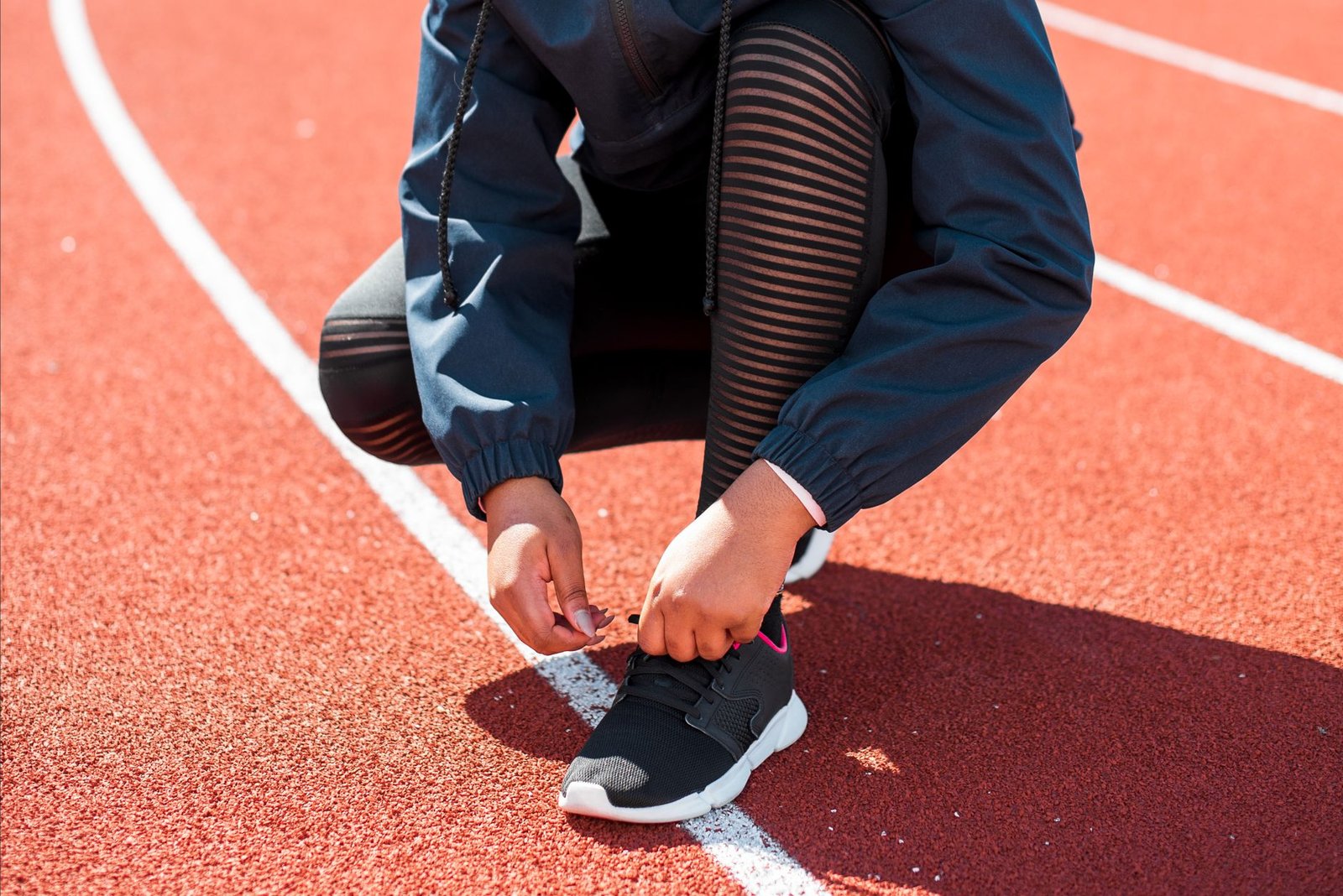
Athlete tying sneakers on a track in daylight.
Fabric, Seams, and Cushioning for Marathon Distance
Synthetic running socks move sweat away from the skin and dry quickly, which helps in warm races and during heavy sweating. Wet fabric can increase rubbing, and a saturated sock may wrinkle under the ball of the foot. Merino wool helps regulate temperature and manage moisture when training conditions change or stay cool. It can insulate during a cold morning and breathe as the temperature rises.
Late in a marathon, a raised toe seam can become a pressure point as your feet swell. Look for a flat or low-profile seam, especially if you have felt rubbing across the tops or sides of your toes before.
Cushioning and thickness are separate choices. A sock can add padding under the heel and forefoot without filling the whole shoe with bulky fabric, but the best thickness depends on the shoe’s available room and your preference. Use less overall thickness when the shoe already feels close, and add heel or forefoot cushioning when those areas take repeated impact. A smooth, breathable upper helps when your feet run hot.
Sock Construction for Common Blister Patterns
The construction should answer the problem your feet actually have. A design for heel shear will not necessarily stop blisters between the toes, while toe separation may add little if your only trouble is a slipping heel.
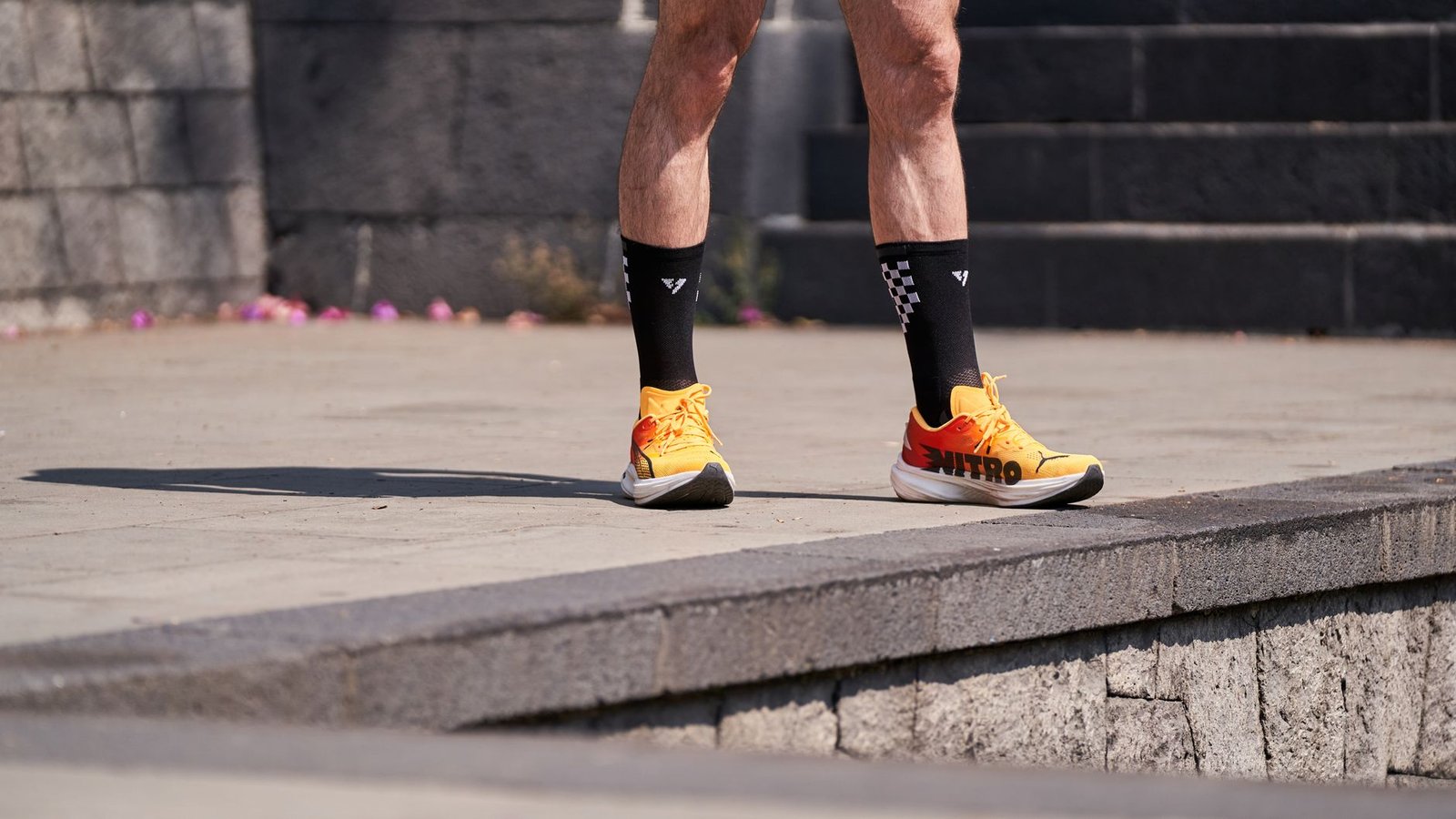
Runner’s legs in bright orange shoes and black socks.
Double-Layer Socks for Heel and Forefoot Hotspots
Hilly Twin Skin uses two fabric layers that move against each other to reduce shear on the foot. This construction suits recurring heel or forefoot hotspots, especially after you have corrected the shoe fit. It works best when both layers stay flat, since a tight shoe can compress them into a thick, hot patch. The flat toe seam, arch grip, and ventilated upper address pressure, movement, and heat without adding a toe pocket between each pair of toes.
Wear the pair on a long run before race day. If the hotspot still heats up, bunches, or changes location, inspect the heel lock and shoe volume before adding more padding.
Toe-Separating Socks for Between-Toe Blisters
Toe socks place moisture-wicking fabric between neighboring toes, reducing skin-on-skin rubbing and helping manage dampness in those spaces. They suit runners who repeatedly develop blisters between particular toes. Each toe pocket should lie flat; a folded pocket can create its own pressure point. Wear them during shorter training runs first if the separate pockets feel unfamiliar.
Flat-Seam and Secure-Fit Socks
Flat toe construction helps when swelling makes a raised seam press into the toes late in a race. A secure heel and close arch fit keep fabric from sliding, folding, or gathering under the foot. Look at the seam while standing and walking downhill, then inspect the heel after a run. Redness at the seam, damp wrinkles under the arch, or a hot patch at the heel shows where the design is failing.
Arch grip or a close heel fit can limit movement inside the shoe, but neither can compensate for a shoe that is too loose or too short.
Four Marathon Socks Compared
| Product | Price per pair | Construction | Support or cushioning |
|---|---|---|---|
| Injinji Toe Socks | $15 | Toe-separated fabric | Arch-support band |
| Stance Run Light | $9.80 | Reinforced heel and toe | Targeted shoe contact |
Injinji Toe Socks
Injinji Toe Socks suit runners whose main problem is rubbing between the toes. Each toe sits in its own moisture-wicking fabric pocket, so neighboring skin has less direct contact and dampness can escape from the spaces between the toes. The mesh top lets heat leave the foot, while the arch-support band helps the sock stay in place during the stride. A heel tab gives you a grip point when putting it on and helps hold the back in place.
At $15 per pair, this is a focused choice for a specific blister pattern. Look inside every toe pocket before a long run; a fold or tight spot means the sock is not ready for race day.
Hilly Twin Skin
Hilly Twin Skin fits runners who repeatedly develop hotspots under the heel or forefoot. Its two layers move against each other to reduce shear, while the flat toe seam limits pressure as the foot swells. The arch grip helps hold the sock steady, and the ventilated upper lets heat and moisture escape. Wear it with the race shoe and watch whether the hotspot stays cool during a long downhill section.
Stance Run Light
Stance Run Light suits runners who need firm contact between the foot, sock, and shoe. Reinforced heels and toes protect areas that take repeated wear, and moisture and odor control help during long, sweaty sessions. Targeted contact with the shoe can help when the foot slides in a loose-feeling setup, but the forefoot must still have enough room.
At $9.80 per pair, it costs less than Injinji Toe Socks and focuses on reinforcement and shoe contact rather than separating the toes.
Versus Active Crew
Versus Active Crew uses merino wool for cooler or changing conditions. The material helps insulate the foot in cold weather while allowing it to breathe as the day warms. All-around arch support keeps the sock settled, and medium cushioning under the foot adds comfort without making the entire sock heavy. Match that cushioning to the shoe’s available volume before you race in it.
Testing Socks Before Race Day
Treat a race sock as part of your equipment. Wear it on a 90- to 120-minute long run in the planned shoes, with the same lacing and the same type of clothing you expect to use on race day. During the run, look for rubbing at the toe seam, bunching under the arch or forefoot, a heel that lifts or twists, or a hot pressure point that grows with each mile. A sock that feels fine for twenty minutes can fail after your feet warm and swell. Stop and inspect your feet after the run, then decide whether the problem comes from the sock, the shoe, or both.
A thin layer of lubricant can reduce friction on a known hotspot with unbroken skin. Apply only enough to make the area lightly slick, because too much can make the foot slide inside the sock and shoe. For a hotspot with no open skin, use one barrier that stays in place:
- A thin layer of lubricant
- Athletic tape
- A blister pad
If a blister has already formed, cover it with a secured protective dressing. Do not keep rubbing the area to test it, and do not apply lubricant over broken skin as a substitute for a dressing.
Wet-Race Backups and Sock Replacement
Rain and heavy sweating can saturate even a good pair. If your socks feel soaked, wrinkled, or cold during the race, a dry backup pair in a drop bag may reduce further rubbing and restore comfort. Pack the spare where you can reach it without searching through other gear, and change when wet fabric has softened the skin or a hotspot is growing.
Replace running socks when the fabric loses its original shape, the heel or arch no longer grips, or the cushioning feels flat. A stretched cuff, a sliding heel, thin patches under the forefoot, and permanent wrinkles show that the pair has finished its useful life.
Before the next marathon, use the pair that passes the long-run test, fits the shoe without pressure, and keeps your skin dry enough to stay comfortable. If rain or heavy sweating is likely, put the dry replacement pair in the drop bag before leaving for the start.
A Better Start for Marathon Socks in London
The right pair should earn its place through how it handles your own feet, shoes, and weather over distance. Compare Hilly Twin Skin with your current pair on the same training route, using one on each foot.
Frequently Asked Questions
How should I wash technical running socks?
Wash technical running socks on a cool cycle at around 20°C because repeated hot washing can shrink them and make them harder to pull on. A cooler wash helps preserve their fit.
Why should I rotate several pairs of running socks?
Using one pair for repeated long runs accelerates wear. Keep several pairs in rotation so each one can dry fully between runs and washes.

I am Ozan, a London-focused running writer and marathon enthusiast with a passion for helping people discover the city’s best races, running routes, walking trails, and fitness events. I research and write practical, up-to-date guides covering marathons, race preparation, training tips, running gear, and everything related to staying active in London.
My goal is to create reliable, easy-to-follow content that helps runners and walkers of all experience levels explore London with confidence, whether they’re preparing for their first 5K or their next marathon.