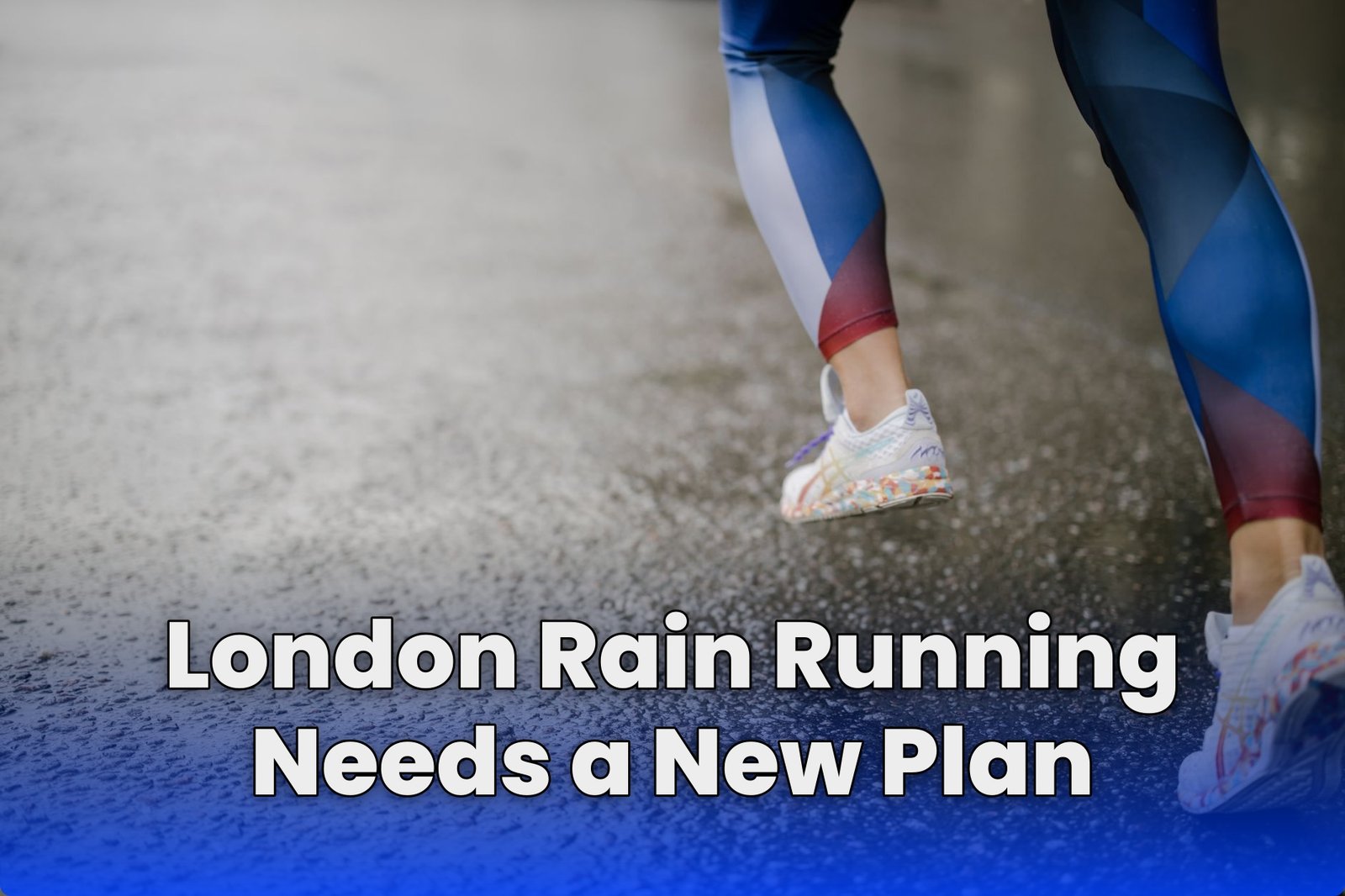
Running in London rain is manageable when you change the plan before leaving, not halfway through the first soaked mile. Check the hourly forecast, separate a passing shower from steady rain, and cancel the run when lightning, dangerous wind, or flooding makes the route unsafe.
Wet weather changes what you wear and how you move. A light jacket may be enough for a brief shower, while steady rain calls for better protection, safer shoes, shorter strides, and a slower pace.
Key takeaways
- A light shower may not justify full waterproof kit, which can add more bulk than value; use a water-resistant windbreaker and breathable shoes with good grip.
- When rain comes with colder temperatures, add a thin technical layer or fleece, but leave it off on mild wet days if you would overheat.
- Speed sessions and personal-best attempts belong on a dry route because wet asphalt gives you less grip; keep a wet-weather run easy instead.
- On wet pavement, choose sticky rubber; for muddy paths or suitable uneven ground, lugged outsoles can give better bite.
Check London’s Hourly Rain Forecast
A daily rain icon tells you very little about the hour when you plan to run. Check the Met Office or BBC Weather hourly forecast about 60 minutes before you leave, then look at the rain chance and expected intensity for the full time you expect to be outside.
A day marked with rain may contain one short shower and several dry hours. If the hourly view shows a brief burst followed by a dry period, wait and run through the gap. Steady rain across the whole window calls for wet-weather clothing and slower footing instead of an expectation that the pavement will dry. The Met Office rainfall map shows whether rain is moving toward your route or passing away from it. Watch the map for about 10 minutes and look for a clear gap. Use that gap only when the wind, visibility, and route conditions are safe.
A brimmed cap can keep water out of your eyes when the shower arrives faster than expected. For practical ideas about rainy-day London plans, build your route around places where you can stop and get indoors, but do not treat an indoor escape as a reason to ignore a dangerous forecast.
Stop for Lightning, High Winds or Flooding
Thunder or lightning ends the decision immediately. Move the run indoors or postpone it. Do not wait for the storm to reach your street, and do not continue because the lightning appears far away.
Wind needs a similar hard limit. Skip an outdoor run when winds reach 40 mph or more, since branches, signs, loose construction material, and other debris can make a familiar route unsafe. A sheltered park may still contain falling branches, so switch to a treadmill, indoor track, or another day.
Flooded paths are also a reason to stop, even when the water looks shallow. You cannot see whether a drain cover has lifted, how deep the water is, or whether the ground beneath it has washed away. Turn around when water covers the path, and choose a route that stays above standing water.
You do not gain useful training by forcing a run through a hazard. A missed session is easier to recover from than a fall, a collision, or an injury caused by debris.
Choose Layers for Rain and Temperature
Clothing should match both the rain and the temperature. A jacket that works well in a cold downpour can make you overheat during a mild shower, so avoid wearing the heaviest waterproof gear by default.
Full rain protection may add more bulk than value in a light shower; the other choices add protection as rain, temperature, route length, or exposure increases.
| Weather pattern | Outer layer | Shoe choice | Extra item |
|---|---|---|---|
| Passing shower | Water-resistant windbreaker | Breathable shoes with grip | Brimmed cap |
| Steady rain | Lightweight waterproof jacket | Water-resistant shoes | Technical base layer |
| Cold rain | Lightweight waterproof jacket | Water-resistant shoes | Long-sleeve layer or thin fleece |
| Heavy rain | Lightweight waterproof jacket | Waterproof shoes | Spare synthetic socks |
Polyester, polyamide, or merino next to your skin will usually manage moisture better than cotton. Cotton can hold water, rub against damp skin, and leave you cold during a run. A moisture-wicking base layer is usually enough on a mild day, especially when the forecast shows short showers. Add a lightweight long-sleeve technical layer or thin fleece when the rain comes with colder temperatures. On a mild wet day, skip that extra layer if it would make you overheat.
A jacket also needs to fit your movement. Choose one that covers your lower back, closes at the neck, and has enough room for your arm swing without flapping. Do not confuse a water-resistant windbreaker with a waterproof jacket. The first suits a short shower; the second handles rain that continues for most of the run.
Pick Shoes and Accessories for Wet Routes
Shoes should match the surface as much as the forecast. Breathable shoes with good grip work for light showers and clean pavement. Water-resistant or waterproof shoes suit heavy rain, long runs, trails, or routes with puddles.
Look at the outsole before you leave. Sticky rubber often grips wet pavement better than a smooth, worn tread, while lugged outsoles can provide more bite on muddy paths or suitable uneven surfaces. Lugged outsoles can be less suitable on smooth wet pavement. Neither design makes standing water safe, so avoid puddles when you cannot see the ground beneath them.
Carry spare synthetic socks if the run is longer than 45 minutes or the forecast calls for heavy rain. Changing out of wet socks reduces discomfort and friction. Reflective or high-visibility clothing and accessories also help when rain or low cloud makes you harder for drivers to see. Keep your phone in a water-resistant pocket rather than an exposed jacket pocket, and use gloves only when cold rain makes your hands numb.
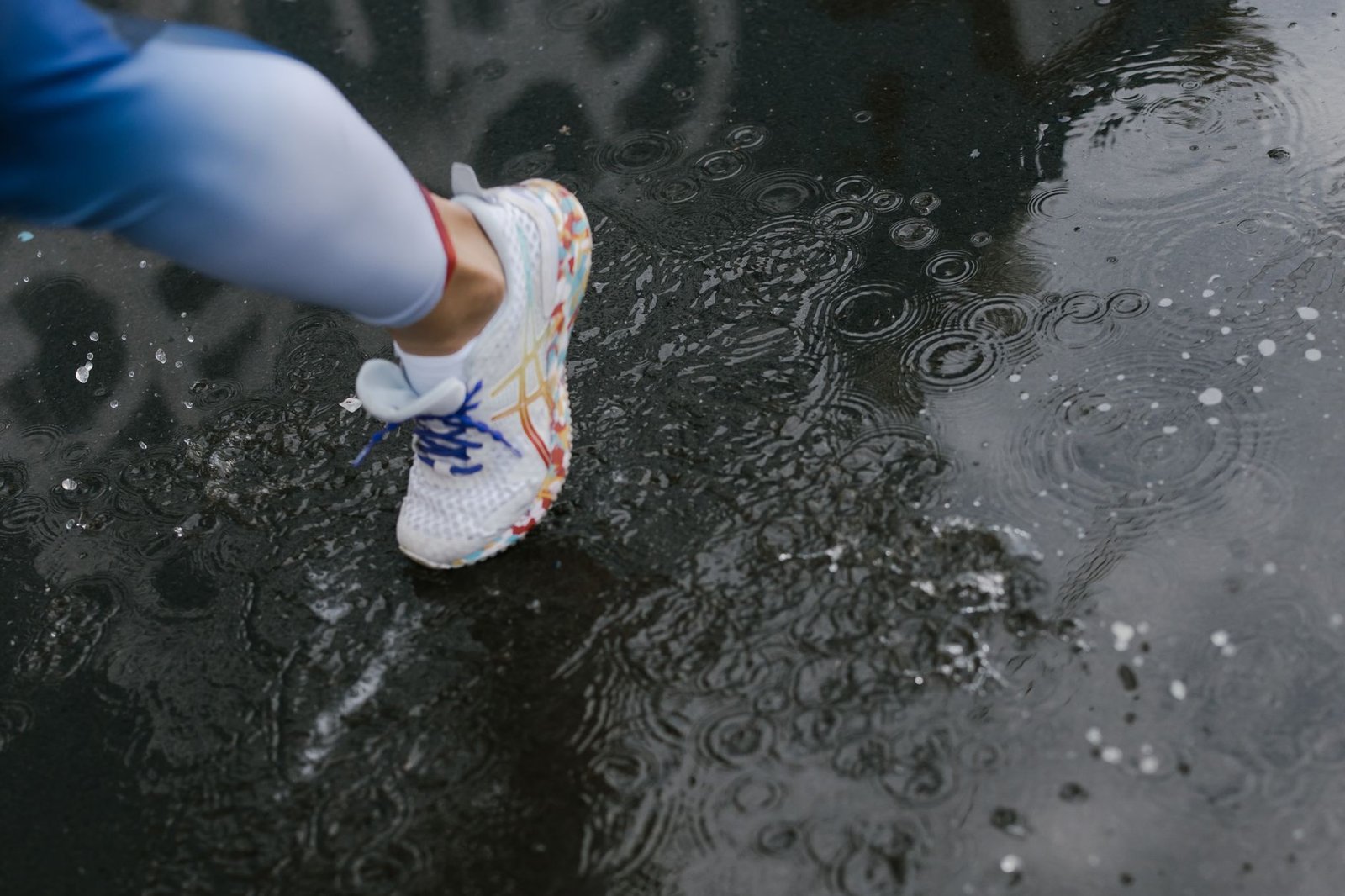
Runner’s shoe creating a splash in a puddle.
Wet socks increase friction, especially when grit enters through the shoe opening. Change into dry synthetic socks as soon as you finish a long or heavily wet run. If you cannot change immediately, remove the wet pair and dry your feet before putting on clean socks.
Rain can darken clothing, and headlight glare can reduce visibility. Place reflective material where it moves as you run, such as on your arms, ankles, or outer layer.
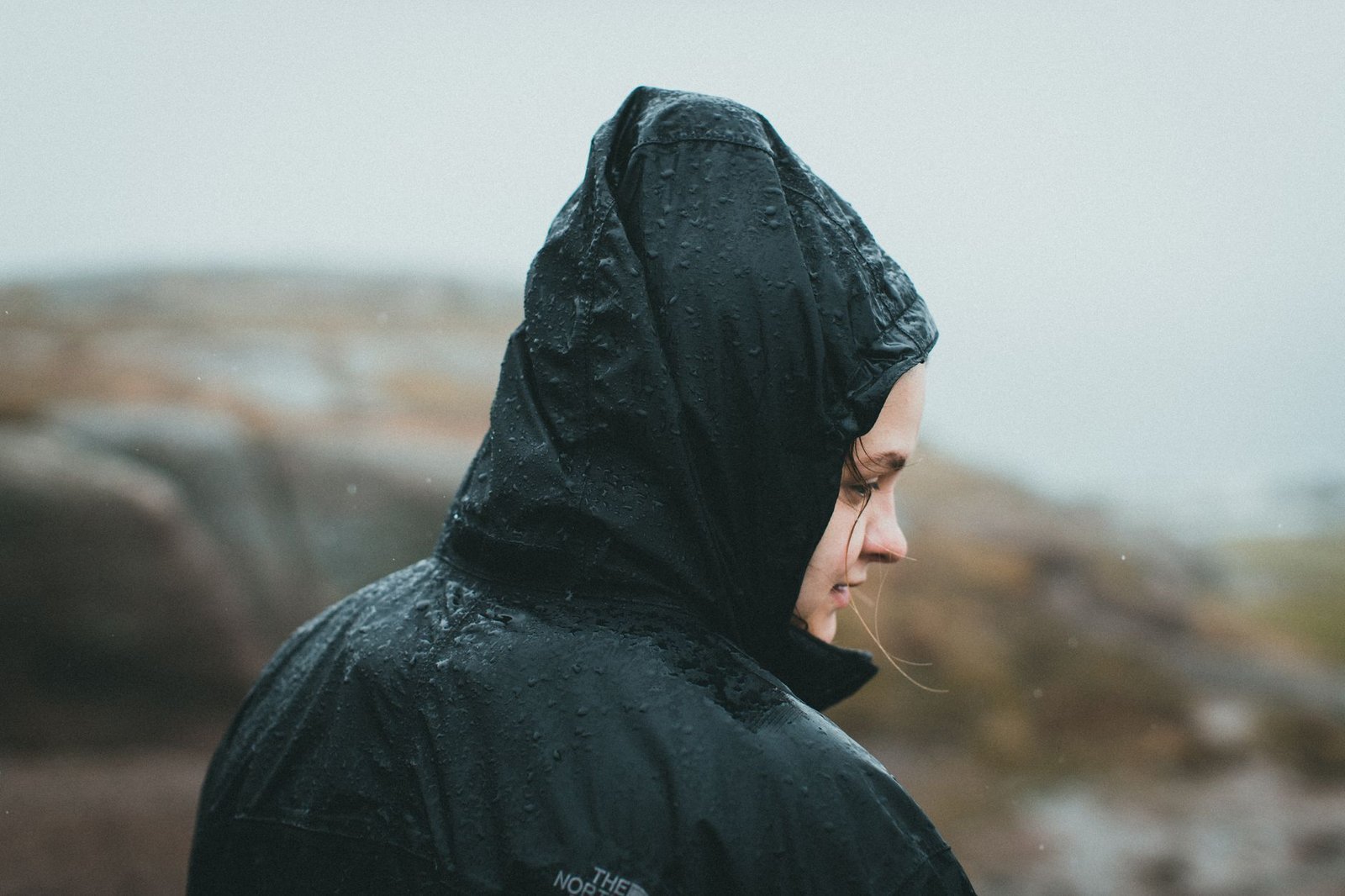
Runner wearing a waterproof jacket in steady rain
Adjust Pace and Stride on Slick Surfaces
Wet pavement reduces grip, so change your running form before the first slick section. Shorten your stride, lower your pace, and keep your feet landing closer beneath your body. This can reduce the force of each step and give you more time to react.
Pay extra attention to surfaces that become slippery without looking dangerous:
- Wet leaves at the edge of a curb
- Painted road markings and crosswalks
- Metal covers and drain grates
- Smooth paving stones
- Puddles hiding uneven ground
- Mud at the edge of a trail
Do not leap across a puddle if the landing area is covered by leaves or paint. Slow down, step around it, or turn back. A few seconds saved is not worth a twisted ankle.
Postpone speed sessions and personal-best attempts when the pavement is wet. Faster running increases the force you put through each foot, while slick asphalt gives you less grip to control that force. Save intervals, hill sprints, and hard finishes for a dry route.
You can still complete an easy run in rain if the route stays clear and your footing feels predictable. Use a flat loop near home instead of an unfamiliar trail, and keep the opening part easy enough to notice whether your shoes and clothing are working. Stop if you begin slipping, shivering, or losing control of your stride.
Dry and Store Wet Running Gear
Remove the insoles from wet shoes and loosen the laces so air can reach the inside. Stuff saturated shoes loosely with plain paper, then replace the paper once it becomes wet. Leave them at room temperature until they are dry.
Do not put running shoes on a radiator or directly beside a fan heater. Strong, focused heat can weaken the glue that holds the midsole to the outsole and can harden or distort foam. A warm, ventilated room works more slowly but protects the shoe.
Rinse mud from lugged outsoles before it dries. Use a soft brush for the tread and wipe the upper with a damp cloth. Avoid putting technical jackets or shoes in a hot dryer unless the care label specifically allows it.
Hang the jacket fully open rather than leaving it crumpled in a gym bag. Empty wet pockets, remove any soaked cap or gloves, and let each item dry separately. Pack the gear only after it feels dry inside and out.
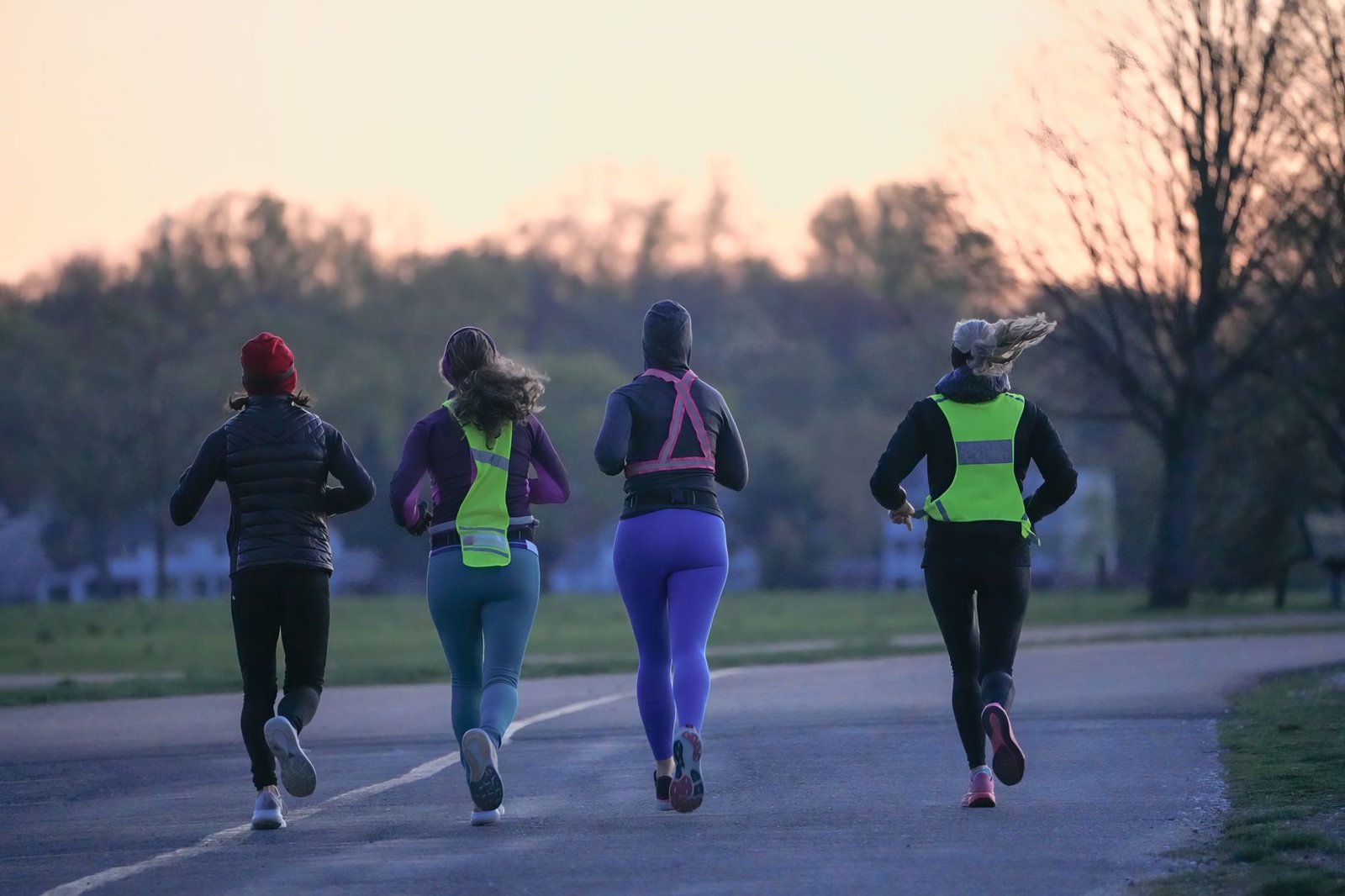
Four runners in activewear and reflective gear at dawn.
Make the Forecast Part of the Routine
Rain changes more than what you wear; it changes how much control you have over the route and the surface. Keep the London Rain Running Checklist: What Changes When the Forecast Turns beside your running shoes, and save the Met Office rainfall map as a shortcut on your phone.
Frequently Asked Questions
Can waterproof running shoes still get wet inside?
Waterproof running shoes can still let water in over the ankle, which can leave the inside wet. Gaiters can help block water from entering at the shoe opening, and a shorter route can limit how long your feet stay wet when puddles are unavoidable.
Is a jacket hood enough to keep rain out of my face?
A jacket hood can restrict your peripheral vision or catch the wind while you run. A brimmed running cap can keep rain out of your eyes even when the jacket has a hood.
How safe is my route once the rain has stopped?
Muddy paths, standing water, and slippery surfaces can remain hazardous after the rain has stopped. Check the route again before running, because drying weather does not remove every wet-weather danger.

I am Ozan, a London-focused running writer and marathon enthusiast with a passion for helping people discover the city’s best races, running routes, walking trails, and fitness events. I research and write practical, up-to-date guides covering marathons, race preparation, training tips, running gear, and everything related to staying active in London.
My goal is to create reliable, easy-to-follow content that helps runners and walkers of all experience levels explore London with confidence, whether they’re preparing for their first 5K or their next marathon.