Heat adaptation is not built in a single “tough” session, and the article you should follow is london summer heat acclimation for runners: a week-by-week approach. In London, runners lose time when they either ignore the heat entirely or chase fitness by forcing speed too early. The better approach is to treat acclimation like training, with controlled stress that your body can learn from.
The reason a week-by-week structure works is simple: early days are supposed to feel rough, then the body starts improving its cardiovascular efficiency and its sweat and thermoregulation signals. Pushing hard from day one makes you pay in fatigue, dehydration risk, and bad sessions. A smart plan uses easier, heat-exposed running first, then gradually increases duration and intensity only if warning signs stay away and recovery looks normal.
Expect the first week to focus on steady exposure and pacing that is clearly slower than usual, with strict attention to heat illness warning signs. Expect the second week to earn the right to include workouts with tempo or sharper segments, but only when heart rate and effort behave as expected. If you do this consistently for the right window, you get something London heat is happy to take from runners: confidence that your cooling systems and race-day rhythm are ready.
Stop Treating Heat Like Luck
London summer heat acclimation for runners is not a vibe, it is training. If you wait for race day to “see how you feel,” you are guessing with physiology that has a timetable. Heat adaptation follows repeated heat exposure over roughly 10 to 14 days, and the gains decay if you do not maintain the work. Why hand yourself an avoidable handicap?
The point of a week-by-week approach is simple: you build the right stress early, deepen it mid-cycle, and then confirm readiness when conditions feel like the start line. That means running in heat on purpose, accepting slower paces at first, and tracking how your body responds at the same effort.
The First 3 Days Are About Stress Control
Days 1 to 3 should feel unambitious because your body is doing the first draft of adaptation. You often see early stress with limited adaptation in this window, especially if you push intensity. That is not failure. It is a signal that you are asking the right system to update.

Run easy, conversational, and keep the session short enough to finish feeling steady. In practical terms, aim for 30 to 40 minutes in heat, and treat heat as the main workout. Expect paces to slow by about 20 to 30 seconds per kilometer, and let that be normal.
Days 4 to 6 Train Your Cardiovascular System
Between days 4 and 6, the cardiovascular response starts to improve. At the same perceived effort, heart rate often drops, and the strain becomes more manageable. That is why these days matter: you are teaching the heart to work smarter under heat rather than teaching willpower under discomfort.
Stay easy to moderate and extend the duration to 40 to 50 minutes. Add nothing fancy yet. If you feel good, you can keep the run conversational and steady, letting the heat do the learning.
Days 7 to 14 Lock In Sweat and Core Stability
Near complete adaptation of core-temperature regulation and sweat response typically approaches by about days 7 to 14. By then, you are less likely to spike, and you usually tolerate heat with less drama. That does not mean you can ignore the plan. It means you can start confirming that the adaptation is real for you.
Run with intention, but do not chase intensity too early. Your goal is to keep heat exposure consistent, hydrate properly, and watch the physiological signals: steadier effort tolerance and less heart-rate drift.
Pacing Slower Is a Feature, Not Failure
Heat punishes fast pacing with higher cardiovascular strain. So when your pace drops, your plan should protect you, not shame you. In London summer conditions, accepting slower paces of 20 to 30 sec per km during early sessions helps you avoid the common trap: going “by pace” and accidentally going “too hard.”
Use effort and heart rate trends instead. If heart rate stays high for a given effort, you back off. If heart rate falls as you repeat similar heat sessions, you are collecting adaptation.
Days 8 to 10 Build the Heat Stress With Planful Tempo
Days 8 to 10 are where you move from acclimating to accumulating. You deepen heat stress with easy to moderate running for 50 to 70 minutes. If you feel well, you can include 15 to 20 minutes at tempo, but only if it feels controlled and heat is not stealing your form.
To keep this week honest, match the session structure to the adaptation you are trying to buy. For a compact checklist, heat acclimation protocols align with the physiology timeline you are training.
| Block | Heat Exposure Target | Likely Adaptations |
|---|---|---|
| Days 1 to 3 | 30 to 40 min easy | Initial stress response |
| Days 4 to 5 | 40 to 50 min easy | Cardiovascular efficiency |
| Days 6 to 7 | 50 to 60 min gentle tempo optional | Sweat and thermoregulation setup |
| Days 8 to 10 | 50 to 70 min incl 15 to 20 min tempo | Core temp control improves |
| Days 11 to 12 | Tempo or intervals, controlled | Lower strain at same effort |
If you hear the counterargument that tempo in heat “ruins” adaptation, ask yourself this: are you doing tempo because you want to chase speed, or because you want controlled exposure at higher demand? The difference is effort management and monitoring heart-rate drift.
Days 11 to 12 Match Race Effort and Track Drift
On days 11 and 12, you return closer to normal workout structure with harder efforts like tempo or intervals. But this is not a free-for-all. The test is whether your heart rate drops at the same effort compared with earlier heat sessions.
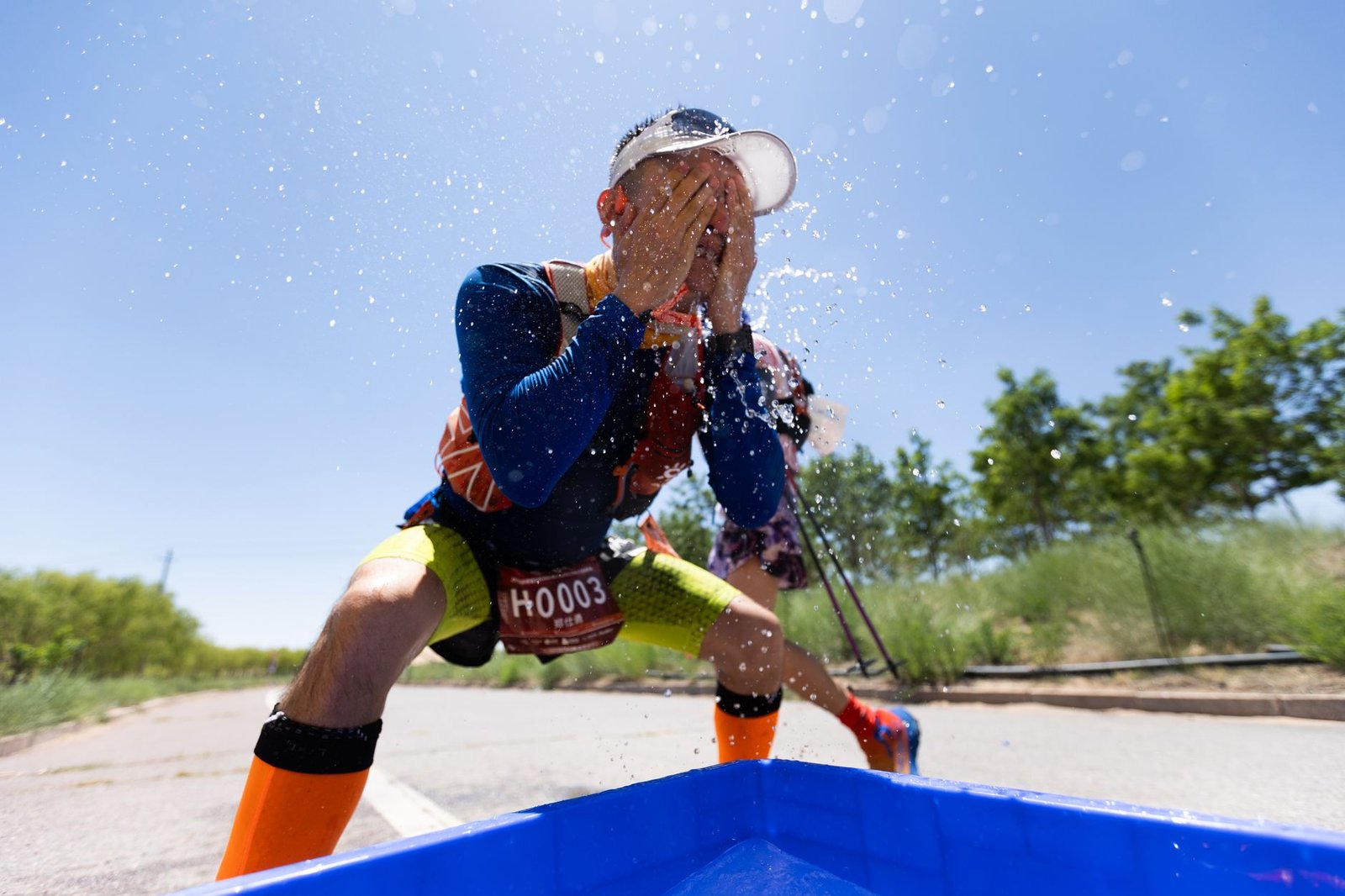
Why does that matter? Because adaptation shows up as less strain for the same output. If the heart rate climbs higher than expected, you pull back. You are building race readiness, not stacking fatigue on top of heat stress.
Days 13 to 14 Confirm Readiness in Similar Weather
Days 13 to 14 are confirmation days. You use normal training loads when your psychological comfort and performance markers are close to normal. If you can, keep the environmental stress similar to race conditions, such as higher wet-bulb globe temp values around 30°C when feasible.
Here is the editorial truth runners resist: acclimation is not “done” when you feel tougher. It is done when the body behaves predictably. If you are still unusually uncomfortable at race effort, you did not complete the window. Slow down and protect the last two days.
Hydration and Sodium Are Part of Training, Not a Rescue
Heat acclimation training fails when hydration is improvised. Plan for fluids and sodium during sessions, and rehydrate afterward. The goal is to prevent dehydration and support the sweat process you trained your body to improve.
Think in systems, not moments. If you start a run under-fueled, you will pay twice: once in comfort and again in performance. On hot days, water alone often is not enough. Your sweat loses sodium, and you need to replace it.
Safety Rules Heat Illness Ends Sessions Fast
Let comfort be a guide, not a negotiator. Heat exposure is effective when it is safe, and it becomes dangerous when warning signs appear. Do not be heroic in London summer. If you experience dizziness, confusion, fainting, or severe headache, stop and treat it as urgent.
- Stop for dizziness, confusion, fainting, or severe headache
- Reduce intensity immediately if you feel suddenly off balance
Heat training is not earned by suffering. It is earned by repeating safe exposure long enough for the body to adapt.
Travel and Timing Decide Whether Acclimation Works
If you are traveling, timing is everything. To get full acclimation, arriving 10 to 14 days early is the cleanest way to complete the window. If you land one week before race day and expect full adaptation, you are asking for miracles that physiology cannot deliver.
Try to keep at least one training session in similar heat each day of the window, and do not swap heat exposure for another stress entirely. Even a great plan falls apart if the days are inconsistent.
If You Have Limited Time Use Smart Exposure Tactics
Sometimes schedules are unforgiving. If you have less than the ideal window, partial options exist. You can double daily heat exposure, or add a post-run sauna or hot bath for 15 to 20 minutes, when it is safe and supervised by your own recovery limits.
But do not pretend it equals the full method. The biggest benefits come from the 8 to 14 day window, because that span gives your thermoregulation and sweat response time to consolidate. When time is short, your job is to compress safely, not to improvise recklessly.
Heat Adaptation Is Training Literacy
London summer heat acclimation for runners: a week-by-week approach is ultimately about training literacy. You learn how your body responds in heat, you plan progressive exposure, and you stop guessing. That is why the plan begins easy, escalates mid-cycle, and confirms at the end with conditions that resemble race day.
So ask yourself: do you want to win on race strategy, or do you want to gamble on how heat treats you that day? Choose the week-by-week work, accept slower paces early, monitor heart-rate drift, and arrive ready for the start line.
London Summer Heat Acclimation for Runners: A Week-By-Week Approach
How Does Heat Acclimation Work for Runners in London Summer, and Why Use a Week-By-Week Approach?
Heat acclimation improves sweat rate and thermoregulation after repeated exercise-heat exposure, with the biggest changes building over about 7 to 14 days and then slowly fading if you stop repeating the stimulus, so a structured week-by-week plan helps you progress stress safely while matching the adaptation timeline.
What Should Runners Do in Week 1 for London Summer Heat Acclimation on Days One to Seven?
Start with easy, conversational runs in the heat for 30 to 40 minutes on days 1 to 3, then move to 40 to 50 minutes on days 4 to 5, and finish days 6 to 7 with 50 to 60 minutes plus only optional very gentle tempo segments if you feel well, accepting slower paces of about 20 to 30 seconds per kilometer and stopping at any warning signs of heat illness.
How Should Runners Progress in Week 2 for London Summer Heat Acclimation on Days Eight to Fourteen?
Deepen heat stress with easy-to-moderate running for 50 to 70 minutes on days 8 to 10 and, if tolerated, include 15 to 20 minutes at tempo, then return on days 11 to 12 to your normal workout structure with harder efforts like tempo or intervals while checking that heart rate drops at the same effort, and use days 13 to 14 as confidence and confirmation runs with loads closer to normal when comfort and performance markers feel steady.
How Much Daily Heat Exposure, Hydration, and Sodium Should Runners Target During London Summer Heat Acclimation?
A practical target is at least about 60 minutes per day of exercise-heat exposure across the 8 to 14 day window, using fluids during sessions and rehydrating afterward, and including sodium in your hydration plan because sweating increases salt losses and can worsen heat strain if you only drink water.
What Warning Signs Mean You Should Stop a London Summer Heat Acclimation Run?
Stop immediately if you feel dizzy, confused, faint, or develop severe headache, and treat those as serious heat illness warning signs rather than a normal “push through” moment, then seek urgent medical help if symptoms do not settle quickly with cooling and rehydration.
If You Have Less Time or Are Traveling to London, How Can You Adapt a Heat Acclimation Week-By-Week Plan?
If you cannot complete the full 10 to 14 days, you can compress the process by adding a second heat exposure each day such as an extra hot shower or sauna session for 15 to 20 minutes after your run, but the safest gains usually come from the 8 to 14 day window, and when traveling aim to arrive 10 to 14 days early for full acclimation so your final week training matches London conditions.
Commit To A One-Week Start Then Repeat Heat
London summer heat acclimation for runners: a week-by-week approach works because your body needs repeated heat exposure over 10 to 14 days, with the first days staying easy and the later sessions earning the harder efforts. Follow the Week 1 build, deepen it in Week 2, hydrate, and treat warning signs like dizziness or confusion as a stop sign, every time. If you want reliable performance in London summer, stop improvising and lock in the plan early enough to let adaptation catch up.

I am Ozan, a London-focused running writer and marathon enthusiast with a passion for helping people discover the city’s best races, running routes, walking trails, and fitness events. I research and write practical, up-to-date guides covering marathons, race preparation, training tips, running gear, and everything related to staying active in London.
My goal is to create reliable, easy-to-follow content that helps runners and walkers of all experience levels explore London with confidence, whether they’re preparing for their first 5K or their next marathon.