

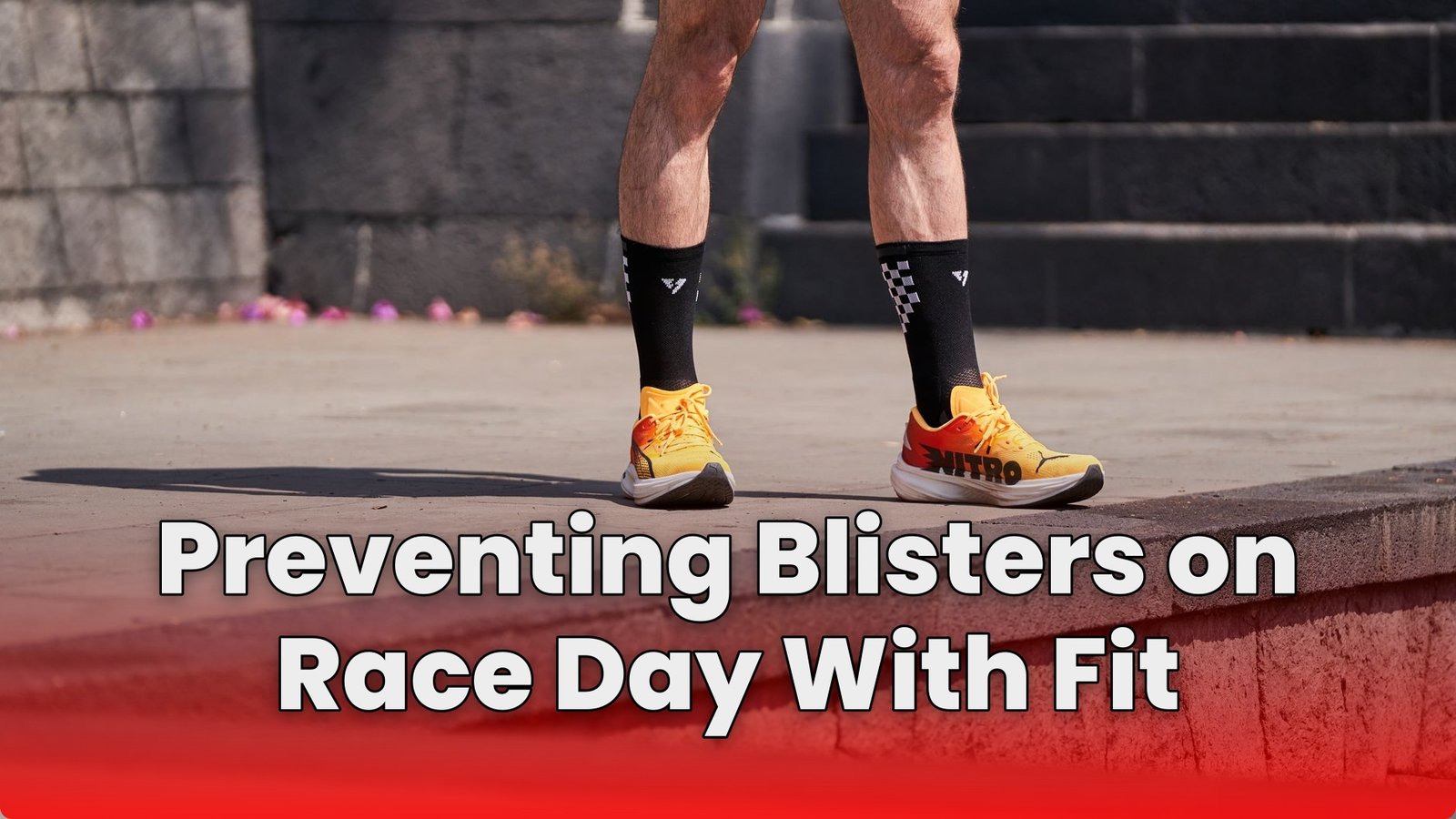
Blisters on race day are not inevitable; they are a preventable failure of friction control. If your feet slide, stay damp, or get squeezed just enough to create pressure points, the skin will eventually give up. The good news is that the right plan makes “last-minute blister luck” irrelevant.
Start with socks that actively manage moisture, because wet skin breaks down faster and turns normal rubbing into painful hot spots. Choose moisture-wicking materials and ensure the fit stays smooth, not bunched, since wrinkles and seams create micro-friction that builds at exactly the worst moments.
Then get serious about tape and fit, because both act like a protective barrier where pressure and rubbing would otherwise win. Address likely areas early with pre-taping, confirm your shoes allow room for swelling without excessive sliding, and always test your setup in training so you do not discover problems at mile three.
Blisters Are Not Fate They Are Friction, Moisture, Pressure
Blisters on race day are not a surprise and they are not bad luck. They are the predictable result of friction rubbing skin, moisture softening it, and pressure forcing layers to separate. If you manage those three causes, blisters stop being a threat.
Control friction, moisture, and pressure, and you control the outcome of race day.
That means your plan cannot be vague. You cannot “hope” your feet adapt. You need a system with socks, tape, and fit, tested before the starting gun.
Socks Choose Your Skin Chemistry
Start with the material because it shapes what happens between sock and skin. Wear moisture-wicking socks made from synthetic or merino. Avoid cotton like it is poison on a long run. Cotton holds water, swells, and increases friction as the sock loses shape.
Wicking does not just keep you dry. It reduces the “pruning” effect where softened skin tears more easily under movement. If your sock fabric stays functional, your skin pays less of a penalty.
So choose socks for performance, not comfort after the race. If the sock performs in training, it will perform when your pace and sweat spike.
Fit Beats Fashion Stop Wrinkles From Becoming Ridges
Even the best fabric fails if the sock fit is wrong. Wrinkles, bunching, and rolled cuffs create micro-creases that act like sandpaper. On race day, tiny ridges compound quickly because your foot repeatedly accelerates, rotates, and flexes.
Make socks fit snugly without wrinkling. Then test them in the exact kind of sessions you will run on race day. If you feel a seam early in training, you will feel it again at mile 10, only louder.
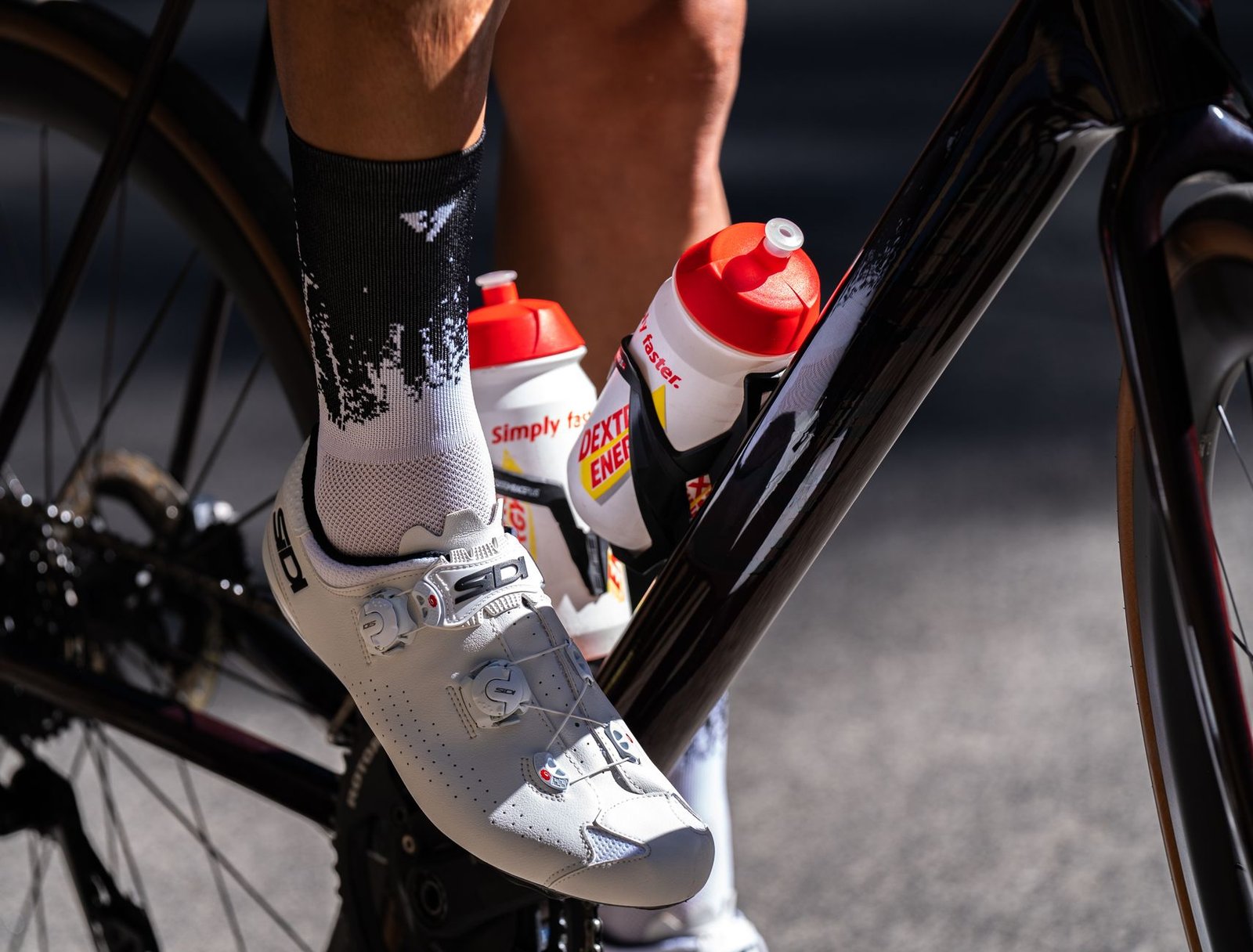
Yes, you want comfort. But comfort without stability is how blisters start. Stability is the point.
Between-Toe Friction Demands Toe Socks When Needed
For some runners, the worst rubbing happens between toes. When skin slides against skin inside a standard sock, you get hotspots that feel like a small burn and then escalate fast.
Toe socks, such as Injinji-style designs, reduce between-toe contact by separating digits. That separation directly targets friction, one of the three blister causes you cannot ignore.
If you have a history of macerated toe skin or blackened nails, prioritize this strategy. You are not overreacting. You are reacting to what your feet already told you.
Inspect Daily Hot Spots Before They Become Open Wounds
Blisters do not appear out of nowhere. You get warning signs first: redness, a warm patch, or a tight spot that feels “off” when you start moving. Inspect your feet daily in the days leading into race day, not just the night before.
When you find a hot spot, treat it immediately. Use lubricant and/or tape before the skin layers separate. Waiting turns a fixable irritation into a mechanical failure.
This is the difference between prevention and emergency care. Why negotiate with a problem that you can stop early?
Taping Works Only With Timing, Clean Skin, and Real Adhesion
Tape is not a talisman. It works when it is applied to the right place, on clean dry skin, with enough time to settle. Apply it to the area you know is blister-prone and do it early enough to let the adhesive bond.
For taping to succeed, you need pre-planning. If you already know the common hotspots, pre-tape the night before so the tape conforms while you sleep. Then apply or reinforce with fresh tape in the time window before you run.
Even runners who follow blister prevention tips still win or lose on one boring detail: preparation. Clean, dry skin beats assumptions every time.
| Hot Spot Area | Prevention Tool | Action Timing |
|---|---|---|
| Heel slip zone | Heel tape or moleskin | Pre-tape night before |
| Ball of foot rub | Athletic tape | Apply at least 15 minutes before |
| Forefoot pressure | Moleskin pad | Test in training first |
| Skin that sweats | Moisture-wicking socks | Reapply only if it lifts |
| Persistent hot spot | Lubricant under tape | Address immediately at onset |
Choose products you know work for you. Medical-grade athletic tape or purpose-built blister prevention layers can hold up, but only if you apply them correctly and avoid last-minute improvisation.
Never Tape Between Toes That Trap More Heat
Some runners think more tape means more protection. The opposite is often true. Taping between toes can increase friction by changing how the digits move against each other and by trapping moisture.
Use toe separation strategies instead, and keep your taping focused on areas that actually rub from shoe structure or sock seams. If you feel a burn between toes, you are not looking at a “missing layer” problem. You are looking at a friction geometry problem.
Protect the skin you need to protect, not the places you assume are risky. Precision beats bulk.
Race Shoes Must Feel Locked In Not Loosely Promised
Fit is blister prevention, plain and simple. Your shoes should feel secure without squeezing. A loose shoe allows sliding that turns friction into skin damage. A tight shoe creates pressure points that also force layers to separate.
Break in your race shoes before race day and check how they behave when your feet swell during the effort. Many runners need about a half-size up to accommodate swelling without adding extra sliding.
Do not run race day in a fit you only “tolerate.” You need a shoe that behaves predictably at pace, not a shoe that adjusts after you suffer.
Heel Slip Is a Lacing Problem Solve It With Heel Lock
Heel slip is one of the most common blister triggers because it creates repeated backward and forward motion that scrapes skin. If your heel moves, you are manufacturing friction every step.
Use tried-and-tested lacing techniques, especially heel lock strategies. Adjust tension so the heel is held firmly while the forefoot still has room to flex. If you get hot spots at the heel, treat it as a fitting defect, not a training flaw.
Ask yourself a blunt question: if your heel is sliding in training, why would it stop sliding when you are more tired?
Moisture Control Is Lubrication Plus Wicking Not One Trick
Moisture softens skin and makes friction more damaging. Socks reduce sweat at the fabric level, but lubricant addresses the skin-to-material interface directly. If you skip one, you increase the chance that friction reaches the threshold where blisters form.
Use lubricant on known friction zones and on hot spots you have identified during inspection. If your taping routine includes benzoin, apply it as part of that routine so the adhesive can grab and stay put.
Consistency matters. Your feet respond to patterns. When you change the pattern on race day, you create unpredictable friction and moisture exposure.
Race Day Consistency Beats Last-Minute Experiments
Race day is not the time to introduce new shoes, new socks, or a new taping or lubrication product. The gear you bring should match the gear you tested when it mattered. If you swap products, you do not prevent blisters. You gamble with skin.
Keep your kit simple and proven. Pack the socks that performed, the tape type that stayed stuck, and the lubricant that you know does not irritate your skin. The best strategy is not maximal effort. It is repeatable success.
Want fewer surprises? Then remove variables. That is the entire game.
When a Hot Spot Starts You Act Immediately or Pay Later
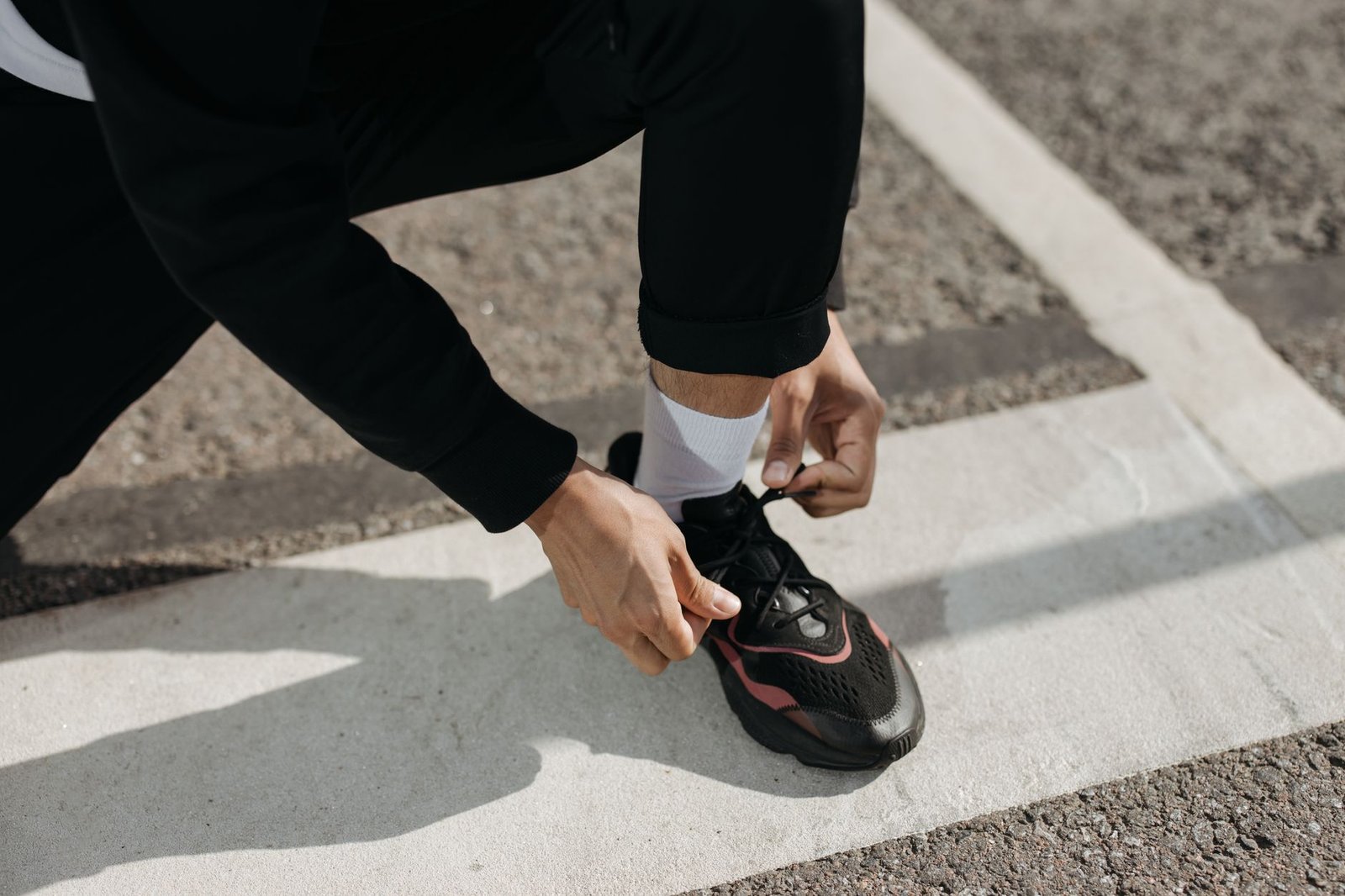
Hot spots are time-sensitive. When redness appears or a patch feels sharply warm, stop pretending it will “toughen up.” Address it immediately with lubricant and/or tape before the skin layers separate.
Carry a small blister kit so you can reapply mid-race if the situation escalates. Most people lose because they wait until pain forces a decision. You should decide early, calmly, and mechanically.
If you take one lesson from race day, make it this: prevention is control, and control requires action on time.
How Can You Prevent Blisters on Race Day With Socks, Tape, and a Proper Fit?
How do friction, moisture, and pressure cause blisters on race day?
Blisters form when friction rubs skin, moisture softens it, and pressure concentrates stress, so preventing all three early helps you avoid hot spots from turning into open sores.
Which race-day socks help prevent blisters, and how should they fit?
Choose moisture-wicking synthetic or merino socks (never cotton), make sure they fit snugly without wrinkles, and consider toe socks to reduce between-toe friction, while also testing the exact socks in training.
How can you use tape and moleskin to prevent blisters during a race?
Pre-tape known blister-prone areas the night before so the tape settles, apply to clean, fully dry skin with enough time to adhere, and use medical-grade athletic tape or moleskin while avoiding taping between toes where friction can increase.
What shoe fit changes reduce sliding and pressure that lead to blisters?
Break in your race shoes, aim for minimal movement in the heel and forefoot, consider a half-size up if swelling is likely, and use secure lacing or a heel-lock technique if you experience heel slip.
When you feel a hot spot, what should you do immediately to prevent blistering?
Inspect your feet daily and address hot spots as soon as they start by reapplying lubricant and/or adding a small piece of tape or moleskin before the skin layers separate.
How do you test socks, tape, and fit before race day to prevent blisters?
Train with the same socks, shoes, and taping or lubrication routine so your skin adapts, and never introduce new products on race day since changes can alter friction, moisture control, and pressure points.
Race Day Blisters Are Preventable If You Do the Basics Right
Follow how to prevent blisters on race day: socks, tape, and fit like it is a checklist, not a hope, because most blisters come from friction, moisture, and pressure that you can control before you ever start running. Pick moisture-wicking socks that are already proven in training, pre-tape or protect hot spots with skin that is clean and dry, and lock in a shoe fit that minimizes sliding, then be ready to treat trouble fast with a small blister kit. Your finish time is built on preparation, so trust the plan and protect your skin before the race even begins.

I am Ozan, a London-focused running writer and marathon enthusiast with a passion for helping people discover the city’s best races, running routes, walking trails, and fitness events. I research and write practical, up-to-date guides covering marathons, race preparation, training tips, running gear, and everything related to staying active in London.
My goal is to create reliable, easy-to-follow content that helps runners and walkers of all experience levels explore London with confidence, whether they’re preparing for their first 5K or their next marathon.





6 thoughts on “Preventing Blisters on Race Day With Fit”