
Race-day rhythm is not luck, it is a system you rehearse. Most runners overthink workouts and under-plan the real variables that decide how smooth the marathon feels, like turns, elevation cues, and where you will actually take fuel.
This is what long-run route rehearsal is for: you practice the exact flow, not just the mileage. You match timing by starting around the same hour as the race, test your fueling logistics by placing aid where you will need it, and rehearse your refills on a clock so your body learns the schedule before race day does.
Then you lock in rhythm by running the route in segments, using your target effort method, and taking notes on what breaks your pace through hills, friction, or missed stomach logistics. When you iterate on the long run, surprises shrink, confidence grows, and your plan finally feels repeatable instead of theoretical.
Long Runs Are Not Vibes They Are Rehearsals
If you want race-day logistics and rhythm to feel automatic, you must rehearse the exact long-run route with the seriousness of a dress rehearsal. Many runners treat the long run as mileage plus hope. That approach can work until it does not, and the failures are rarely mysterious. They are predictable: wrong timing, wrong fueling, wrong clothing, wrong pacing response to hills, and wrong bathroom planning.
Here is the hard truth: your body cannot memorize a race day schedule you never practiced. The mind also cannot calm itself with “I’ll figure it out later” when you are already fatigued and moving through unfamiliar routines. So if you are asking how to rehearse your exact long-run route for logistics and rhythm, start by accepting this principle: precision during training buys freedom on race day.
But what about spontaneous runs and “feeling good”? Feeling good is not a training plan. It is a mood. Rehearsal is how you turn mood into repeatable performance.
Match the Course, Not Just the Distance
Distance alone will not simulate race conditions. You need the same elevation profile, the same road surfaces, and the same curve-and-crunch rhythm your race will demand. If the course includes grinding climbs, roller sections, and technical downhills, then your long run must include those features at realistic intensity and cadence.
Start by planning the route with elevation awareness. Use mapping tools to verify climb totals and segment lengths, then adjust until your training run resembles the race. If you can safely practice close to the actual course, do it. If you cannot, build a substitute that matches grade and repetition, not just the final number on the watch.
Train the transitions, not merely the time spent running. The gap between “I finished the long run” and “I nailed race-day rhythm” is often the moment you hit the first hill, the first fueling decision, or the first change in footing.
Start at Race Time or Simulate It Perfectly
Most runners underestimate time-of-day effects. A later start changes digestion, sleep inertia, bathroom timing, and even how your first 10 minutes feel in your legs. If you start your race at 7:30 a.m., starting your long run at 11:00 a.m. is not “close enough” when logistics are the point.

Therefore, rehearse the start window. Wake up early enough to create the same pre-run routine and begin at the same clock time. If travel makes that impossible, simulate it by shifting your entire day so the fueling and warm-up happen under the same internal conditions.
When the start time is wrong, everything downstream becomes a guess.
Protect Flow by Designing for No Interruptions
Route flow matters more than most people admit. Stoplights, crosswalk waits, sudden detours, and surprise crowds turn your long run into stop-and-go intervals. Race day rarely feels like a perfect loop, but you can still rehearse with the same intention: keep movement steady and minimize interruptions you cannot control.
Choose routes with predictable segments: loops, trails, or roads where you can repeat reliably. Avoid planning that depends on random factors like “maybe the park path will be clear.” If your run is blocked by construction at 9:00 a.m., you do not learn anything. You just collect frustration.
Flow rehearsal means you are practicing the rhythm your body will rely on: steady motion, consistent effort, planned transitions, and minimal mental overhead.
Fueling Logistics Are a Schedule, Not a Bag of Gels
If your fueling plan is vague, your run will be chaotic at the exact moment you most need calm. Rehearse fueling like a timed operation: decide the exact gels or gummies, the exact drinks, and the exact hydration schedule relative to time and effort.
Do not treat fueling as “whatever is available.” Treat it as an engineered system with checkpoints. long-run rehearsal tips emphasize the same idea: test your intake plan under conditions that match race day so your gut learns the sequence, not your optimism.
On the long run, you should be able to answer, without thinking, what you take at hour 1, hour 2, and hour 3, and what drink matches each moment.
Engineer Aid Stations with Drop-Point Precision
Race day aid can be reliable, but it is rarely convenient. You might need a central refill point for calories, a consistent sports drink, or a backup plan if stomach tolerance changes. That is why you should design a drop-point logistics plan that mirrors your race aid intervals.
Rehearse the exact return timing: if you will hit aid every 60 to 75 minutes, practice the same cadence by placing supplies where you can come back on schedule. The goal is not only hydration, but also the rhythm of stopping, consuming, and resuming without losing your pacing mindset.
| Aid Logistics Choice | Race-Day Target | Long-Run Check |
|---|---|---|
| Fuel timing | Every 60 min | Clock-aligned intake |
| Sports drink use | After gels | Sips timing match |
| Water access | One cup per 45–60 min | No missed pulls |
| Central drop point | Refill 2 times | Swap takes under 3 min |
| Temperature control | Sunscreen at start | Reapply every 2–3 hr |
After you run this route once, compare what you planned to what actually happened. Did you arrive at the drop point early and feel rushed? Did you arrive late and feel under-fueled? Your job is to correct the schedule, not to blame the day.
Pace by Effort so Hills Do Not Hijack Your Timing
If you pace by raw speed, hills will punish you. You might “hit the same pace” on flat segments while your cardiovascular system is quietly bleeding. The long run is the place to practice pacing with a target method that holds steady across terrain.
Convert your plan into an effort-based metric such as heart rate, perceived exertion, or a combined approach. Then practice dialing pace/effort rather than chasing numbers that only make sense on one kind of road. When a hill hits, your job is to maintain effort rhythm and let speed float.
Effort consistency creates race-day confidence. When you know how your body responds to grades, you stop panicking and you stop improvising.
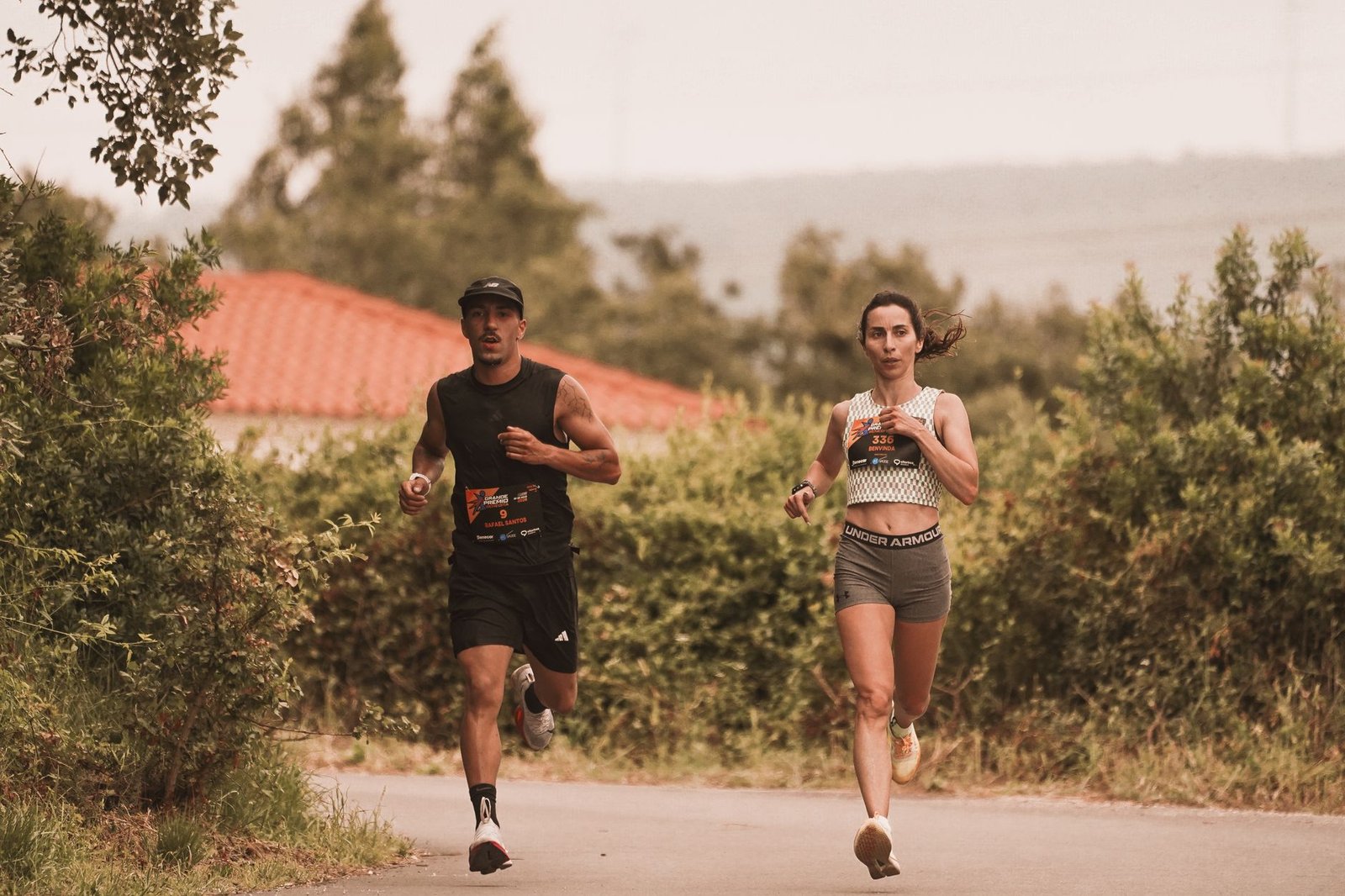
Dress Rehearse Your Gear and Your Skin
The route is only half the rehearsal. The other half is what you wear and what you do to prevent problems. Anti-chafe routines, blister prevention, sunscreen, and even sock thickness and shoe lacing strategy all change how your run feels after hour two.
Test the same shorts, shirt, jacket, socks, and shoes you will use on race day. Lay out everything ahead of time like you are preparing equipment for a mission. Then verify the small details: where seams rub, how socks behave after sweaty miles, and whether your sunscreen routine survives the time on your skin.
“But I want to keep the long run easy.” Ease does not mean neglect. You can run controlled effort while still using the exact gear that race day will ask you to tolerate.
Run the Route in Pieces Until It Feels Inevitable
You do not need perfect memorization. You need reliable recognition of what comes next. Break the route into sections that match how you will actually think during the race: first quarter, first tough stretch, fueling checkpoint, late-mile mental drop-off, and final-return segment.
Practice running those pieces and note what changes: where your stride tightens, where your breathing shifts, and where your fueling timing feels “natural” versus forced. The point is to reduce cognitive load when fatigue arrives. You cannot think clearly at mile 20. So you must prepare your brain earlier.
Chunking transforms a long route into a series of manageable rehearsals. That is how logistics stops feeling like paperwork and starts feeling like rhythm.
Take Notes Like a Coach Will Watch Your Splits
Most runners remember how the long run ended, not how it unfolded. That is a mistake. You need notes that map decisions to outcomes: what you took, when you took it, how your stomach responded, how pacing changed with hills, and where discomfort started.
Write short, measurable observations. Record whether your gels sat well or caused slosh. Record whether the drop-point refill took longer than planned. Record whether you felt steady heart rate behavior in climbs. Then use those notes to adjust the next rehearsal.
- Mark fueling moments with time and what you consumed.
- Mark discomfort start points with distance and surface.
When you treat the long run like data, race day stops being a mystery.
Iterate Before Race Day with Intentional Changes
Rehearsal is not a single event. It is a feedback loop. If you discover that your drink timing is too aggressive or that your loop choice creates annoying traffic, you do not shrug and move on. You iterate.
The temptation is to “keep everything the same” because change feels risky. But the real risk is repeating what failed. Iterate small variables while keeping the big system intact: fueling timing windows, refill interval timing, pacing method, and gear choices.
Change only what the long run proves is change-worthy. Your goal is fewer surprises, not more experimentation on race week.
Rehearse the Full Day-of Chain, Not Just the Miles
Race day success is a chain: pre-race routine, commute or travel cushion, bathroom stops, food-to-start interval, and sleep conditions. If any link in that chain is different from your rehearsal, your “race-day rhythm” will be compromised before you even reach the starting line.
Therefore rehearse variations that affect the full day. Practice your wake-up timing, your breakfast or pre-run meal plan, and your arrival schedule. If you travel, rehearse sleep under those conditions. If your routine includes porta-potty stops, include them in your simulation so you do not have to improvise while stressed.

“I will handle it on the day.” You might. But the point of rehearsal is to win the moments you cannot afford to gamble.
Test Variations on the Long Run to Eliminate Late Surprises
If weather changes, you will feel it in your pacing, your skin, and your hydration. If your carrying system changes, you will feel it in your rhythm. That is why you should test variations during long runs, not on race day. Do controlled experiments with the variables you are most likely to face.
Test fuel-water combinations, carrying gear versus drop handling, and rain gear use. If you might need sunscreen reapplication or anti-chafe adjustments due to heat and sweat, rehearse that too. Keep the experiments close enough to the race that the results transfer.
Rehearse your exact long-run route for logistics and rhythm by treating each long run as a rehearsal increment. You are not “training for mileage.” You are training for repeatability.
How Do You Rehearse Your Exact Long-Run Route for Logistics and Rhythm?
How Can You Plan Your Long-Run Route to Match Race-Day Elevation and Logistics?
Pick a route that mirrors the race’s elevation profile as closely as possible, and if you can, practice near or directly on the course so terrain, climbs, and turns feel familiar when you start executing.
How Do You Rehearse the Same Start Time and “System” to Lock In Rhythm?
Run the long run using the same start-time routine you’ll use on race day, including waking up early enough to begin at the race start time or a realistic simulation, so your body transitions in the same rhythm.
How Can You Choose a Repeating Route That Preserves Flow Without Disrupting Rhythm?
Select loops, trails, or road segments you can repeat reliably and minimize avoidable interruptions like stop lights, since smooth, consistent flow helps you dial in pace and effort without sudden resets.
What Fueling and Aid Logistics Should You Test on Your Long-Run Route?
Treat the run as a dress rehearsal by testing exact gels or gummies, hydration choices, and your anti-chafe or blister prevention routine, and practice refill timing by placing an aid point where you can return on schedule.
How Should You Rehearse Pacing on Your Exact Long-Run Route Using Effort-Based Metrics?
Use the same pacing method you plan to race with—such as perceived effort or heart-rate targets—so hills don’t throw your timing, and focus on dialing pace-to-effort rather than chasing raw speed.
How Do You Rehearse Day-of Timing Details, Including Travel and Weather Variables?
Run variations of your full timing chain—pre-race routine, commute buffer, restroom stops, food-to-start interval, sleep conditions if traveling, and gear choices like carrying equipment or rain protection—so surprises get removed before race day.
Rehearsal Beats Guesswork Every Time
If you want race day to feel repeatable, follow the discipline in how to rehearse your exact long-run route for logistics and rhythm and treat it like a real dress rehearsal, not a casual workout. Plan the course and elevation, match the timing and fueling plan, run it using the same effort-based pacing system, and test every variable that can ruin flow so you arrive confident and composed. Commit to the practice, and the race becomes execution, not improvisation.

I am Ozan, a London-focused running writer and marathon enthusiast with a passion for helping people discover the city’s best races, running routes, walking trails, and fitness events. I research and write practical, up-to-date guides covering marathons, race preparation, training tips, running gear, and everything related to staying active in London.
My goal is to create reliable, easy-to-follow content that helps runners and walkers of all experience levels explore London with confidence, whether they’re preparing for their first 5K or their next marathon.