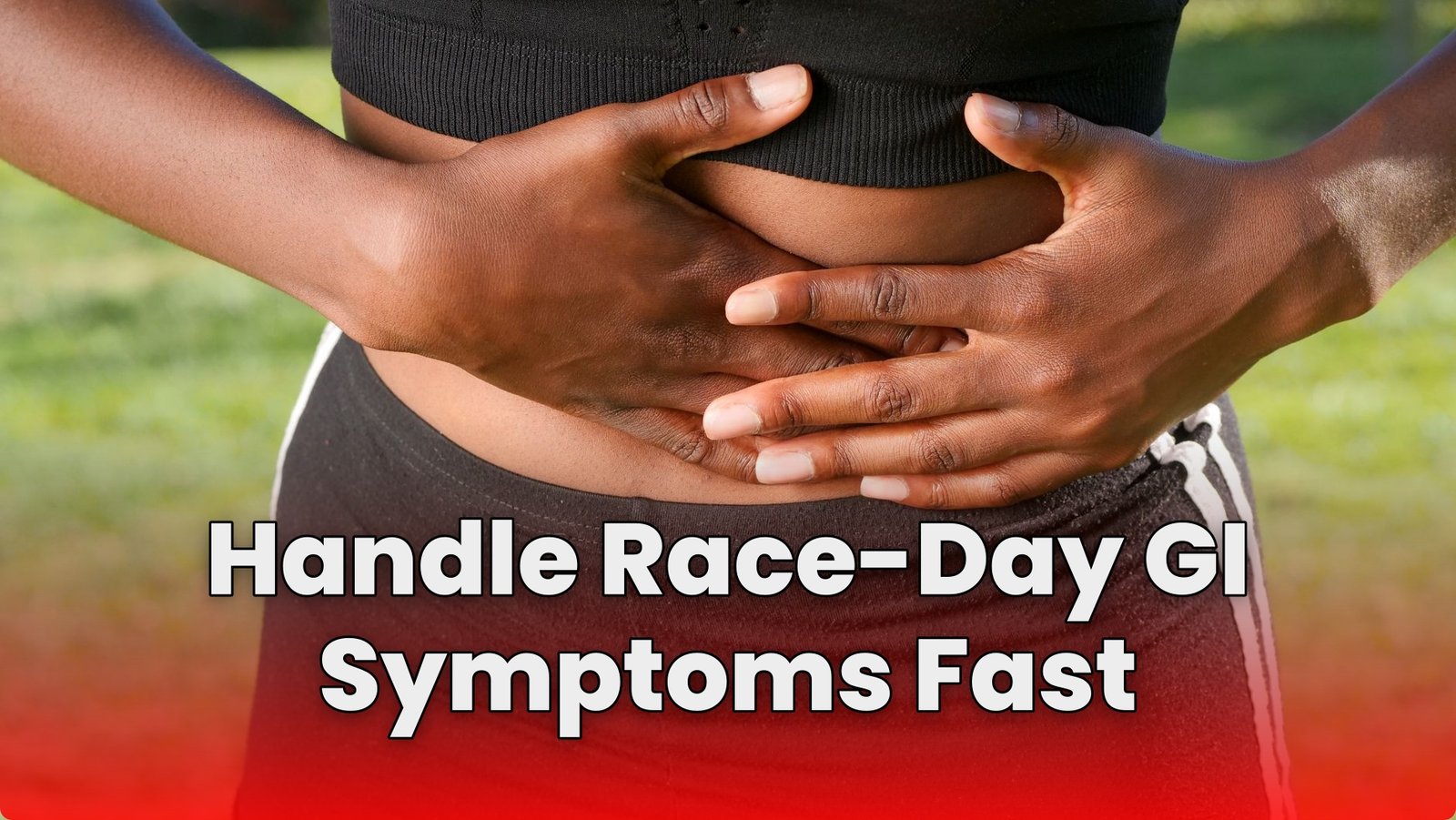
Stop guessing when unexpected GI symptoms hit on race day, because pushing through usually makes the problem bigger. The smarter move is to treat it as an urgent “stabilize and reduce gut stress” situation, with action taken within minutes, not hours.
Your fast plan should start immediately: slow your pace right away to improve digestion blood flow, and cool down if you feel overheated. Switch from big gulps to small, frequent sips, add electrolytes or sodium if you need them, and if nausea is starting, try small amounts of cola and only consider ginger if you have tested it before.
If cramping or an urgent bathroom urge shows up, walking often helps and strategic pit stops beat stubbornly forcing the next mile. Do not push through warning signs like severe pain, profuse bleeding, or feeling faint, and get medical help immediately; for prevention, the fastest route is to avoid new foods mid-race, stick to what you trained with, and steer clear of common gut irritants like heavy fats, high fiber, alcohol, caffeine, spicy foods, and NSAIDs.
Stop Treating It Like Normal Discomfort
If you’re asking what to do with race-day unexpected gi symptoms, fast plan, start with the only honest answer: you treat it as an emergency. Not a dramatic one, but a time-sensitive gut stress problem that needs immediate action. The longer you keep pushing, the more likely your body turns urgency into damage.
Runners love tough-talk. But tough-talk does not increase blood flow to digestion, does not calm gut contractions, and does not fix dehydration or overheating. Why gamble your finish when the first 15 to 30 minutes decide whether the day is salvageable?
Slow Your Pace Immediately to Restore Digestion
Unexpected GI symptoms on race day usually worsen because the body is overloaded: blood is redirected to muscles, movement becomes jolting, and the gut gets less oxygen and more stress. Your first lever is simple and fast. Slow your pace right away, often within 15–30 minutes, to improve blood flow to digestion.
Think of it like switching gears before the engine knocks. You are not surrendering. You are reducing gut stress. If you keep grinding at the same pace, you’re basically feeding the problem with momentum.
Cool Down Fast If Heat Is Hijacking Your System
Overheating can crank up nausea, cramps, and the urge to run to the bathroom. If you’re hot, do not just “wait it out.” Cool off immediately using practical tools like an ice bandana or dunk hat when available.
This is not a luxury. Heat stress changes how your body moves fluids and how sensitive your intestines become. You are trying to lower the internal temperature load so your gut can stop acting like it’s under assault.
Sip Small and Add Electrolytes Instead of Chugging
When symptoms hit, runners often do the worst possible thing: they gulp. Big gulps can overwhelm a stressed stomach and trigger more nausea and cramping. The fix is timing and volume. Switch from big gulps to smaller, more frequent sips, and add sodium or electrolytes as needed.
Dry mouth and low sodium can make everything feel worse, including pain perception. Controlled sips give your body fuel without turning hydration into another trigger.
Use Safe Emergency Options Before You Try Random Experiments
When nausea starts, you need low-risk options that match what your gut can tolerate. For many runners, small amounts of cola can help because carbonation and acidity can settle certain sensations. If you’ve tested it earlier, small-dose ginger can also be a reasonable tool.
Just remember the governing rule: tested beats theoretical. There’s a reason race day punishes improvisation. Following practical nutrition guidelines helps you choose what to try and what to skip.
The Fast Plan Decisions You Should Actually Follow
You do not need a philosophy. You need a sequence. The goal of a fast plan is to reduce gut stress early, prevent the spiral, and decide quickly whether to continue, adjust, or stop. Use this as a mental flow you can execute without debating.
Here is a compact decision guide for the most common situations:

| Symptom Pattern | Immediate Action | Time Target |
|---|---|---|
| Nausea or “bubbly” gut | Slow pace, small sips | 15–30 min |
| Cramping | Slow down, walk briefly | 10–20 min |
| Urgent bathroom need | Use pit stop, reset hydration | As needed |
| Overheating | Cool with ice or water | Immediately |
| Rattling thirst | Electrolytes with sips | Within 10 min |
Then watch the trend. If symptoms ease after these steps, you can attempt to proceed. If they intensify, you stop the self-deception and shift to safety.
Walk Through Urgency and Make Strategic Pit Stops
Cramping and urgent bathroom urges often improve when you stop forcing your body to run through discomfort. Walking can reduce jolting and give the gut a moment to settle. Use it intentionally, not emotionally.
Many runners can resume after voiding, especially once the immediate trigger is addressed. The fastest way forward is often a short walk, a bathroom stop, and a controlled restart rather than a heroic grind that keeps the pressure rising.
Do Not Push Through Red Flags That Demand Medical Help
This is where pride becomes dangerous. If you have severe pain, profuse bleeding, or you feel faint, do not negotiate with yourself. Stop and seek medical attention immediately.
GI symptoms are not always “race nerves.” When the warning signs show up, your job is safety first.
Resume Only When Symptoms Are Calmer, Not When Hope Is
Resuming is not about time lost. It is about physiology stabilized. If nausea is still escalating, cramps are worsening, or urgency keeps returning, your body is telling you the race is not the priority.
If symptoms ease after you slow down and empty the system, you can try a gradual return to effort. Start controlled, reassess every few minutes, and keep your fueling minimal until your gut behaves again.
Prevent Repeat Episodes by “Not Experimenting”
The fastest way to prevent a repeat episode is to refuse the most common race-day mistake: experimenting mid-race. Your gut is not a lab, and pain is not data. Choose the foods and fluids you trained with.

Do not experiment on race day. That means no new gels, no last-minute “tastes,” and no daring fueling strategy when your stomach is already stressed. Consistency trains tolerance; surprises train panic.
Cut Common Irritants Before the Gun Even Fires
If you’re prone to race-day GI trouble, prevention starts before the start line. Avoid high-fiber, high-fat, and high-protein loads that sit heavy during a long effort. Skip alcohol, caffeine, spicy foods, and NSAIDs like ibuprofen, naproxen, or aspirin, which can aggravate the gut for some runners.
Also pay attention to lactose. Many athletes find milk and dairy trigger symptoms through lactose intolerance. Your goal is boring predictability, not a “perfectly optimized” gamble.
Hydrate Early and Hit a Simple Fluid Target
Start the race well-hydrated and keep your intake steady. A practical target is about 16–20 oz of fluid per hour, and more if conditions are hot and you’re sweating heavily. Then keep the same logic: small sips, frequent pacing, and electrolytes as needed.
Most importantly, stick to practiced, simple-carbohydrate fueling. Start early, use smaller more frequent intakes like gels or chews designed for simple carbs, and do not stack large doses or new products during the hardest stretches.
What Should You Do for Race-Day Unexpected GI Symptoms, Fast Plan?
What is the first step when you get race-day unexpected GI symptoms?
Treat it as an immediate “stabilize and reduce gut stress” problem by slowing your pace right away (often within 15–30 minutes), stopping any overheating exposure, and focusing on gentle, controlled movement until your stomach settles.
How should you adjust pace, cooling, and hydration during GI distress on race day?
Slow down and cool off if you’re overheating (for example, using an ice bandana or dunk hat), then switch from big gulps to smaller, more frequent sips of fluid and add electrolytes or sodium as needed.
What can you try for nausea or cramping with a fast plan while running?
If nausea is starting, try small amounts of cola (carbonation and acidity) and consider a small-dose ginger option you have tested earlier; for cramping or urgent bathroom urges, walking and strategic pit stops often help.
When can you resume running after urgent bathroom symptoms on race day?
You can often resume after you’ve voided and your symptoms ease, because cramping and urgency commonly improve with walking; keep your next efforts gentle and return to your plan only when you feel stable.
What warning signs mean you should stop and seek medical help for race-day GI symptoms?
Do not push through—seek medical attention immediately if you have severe pain, profuse bleeding, or you feel faint, because these can be signs of a problem that requires urgent care.
How can you prevent race-day GI upsets with simple fueling and training changes?
Prevent repeat episodes by “not experimenting”: train your gut with your planned foods, avoid high-fiber/high-fat/high-protein and common irritants (including alcohol, caffeine, spicy foods, and NSAIDs like ibuprofen, naproxen, or aspirin), avoid milk (lactose) and high-fructose concentrates, start well-hydrated, aim for about 16–20 oz of fluid per hour (more if hot), and use practiced simple-carbohydrate fueling in smaller, more frequent intakes.
Use a Fast Stabilize and Prevent Plan for Race-Day GI Surprises
What to do with race-day unexpected gi symptoms, fast plan should be your first priority: slow down immediately to reduce gut stress, switch to small frequent sips with electrolytes, use simple, tested comfort options like a small amount of cola or a little ginger if nausea starts, and use walking and smart pit stops to reset cramps and urgency. Then do not push through warning signs like severe pain, profuse bleeding, or faintness, and for prevention commit to the one rule that matters most: do not experiment on race day. The fastest recovery and best outcome come from acting early, keeping it simple, and choosing safety over pride.

I am Ozan, a London-focused running writer and marathon enthusiast with a passion for helping people discover the city’s best races, running routes, walking trails, and fitness events. I research and write practical, up-to-date guides covering marathons, race preparation, training tips, running gear, and everything related to staying active in London.
My goal is to create reliable, easy-to-follow content that helps runners and walkers of all experience levels explore London with confidence, whether they’re preparing for their first 5K or their next marathon.