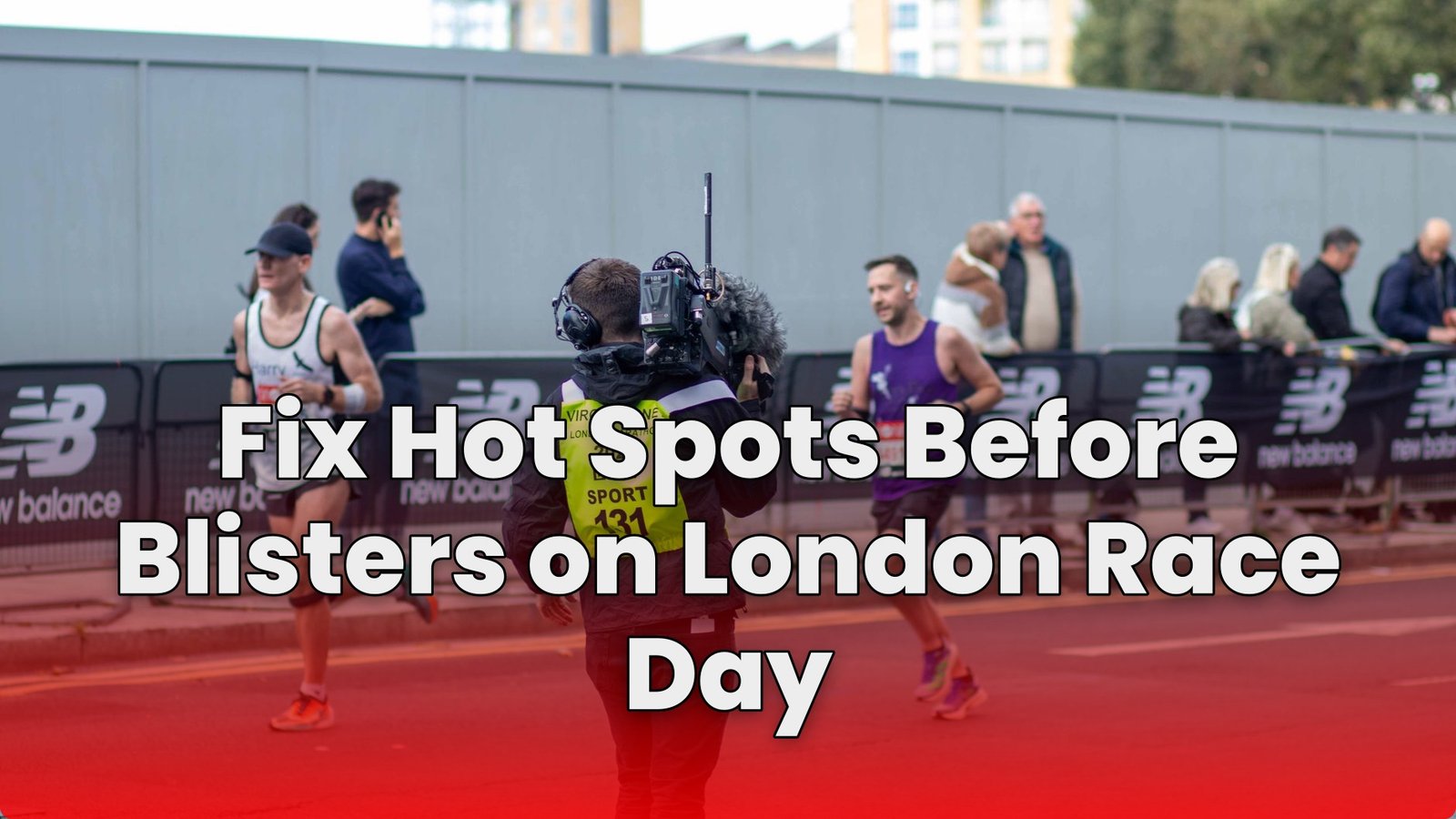
Small prevention beats painful race-day treatment every single time. Most runners only think about blister risk after the first sting, but that is already too late for comfort. The real winning move is fix hot spots before they become blisters on london race day, because friction and pressure rarely announce themselves politely.
Hot spots start as micro-irritations, often from a slightly wrong sock weave, a seam that shifts under load, grit inside the shoe, or moisture that turns fabric into sandpaper. If you address the problem the moment you notice rub, you stop skin layers from separating and you keep inflammation from escalating into a blister you cannot ignore.
This is why proactive habits matter: check your feet early, smooth out socks so they do not bunch, and carry a simple blister kit for mid-run fixes. Use taping or a hydrocolloid patch on the exact spot, and if the skin is not broken yet, an anti-friction lubricant can reduce shear before damage starts. In a race as unforgiving as London, “wait and see” is the one strategy that guarantees you will pay later.
Daily checks Beat Race-Day Panic
If you wait until London race day to “see what happens,” you are already choosing pain over preparation. Fixing trouble while it is still a hot spot is simple, fast, and far more reliable than trying to rescue a full blister once the skin layers start separating.
Check your feet every day, then check again right before you dress for the run. During the event, treat the first signs immediately. A rub that feels minor at mile one can turn into a draining wound by mile eight. Why gamble with the one part of your body that cannot be replaced?
The Three Triggers Always Win Friction Moisture Pressure
Hot spots form when one of three forces takes control: friction, moisture, or pressure. You can’t out-train a burn that keeps happening in the same spot every stride. Your plan should start with diagnosis, not guesses.
Friction is what you feel. Moisture is what you often cannot. Pressure is what hides inside your shoe when it rubs with every impact. If you can identify which trigger dominates, you can fix hot spots before they become blisters on London race day instead of merely bandaging symptoms.
Your Shoes Hide Grit That Turns a Rub Into a Burn
Sand and grit are not rare, especially on route areas with construction dust, damp grit, or unexpected debris. Even a tiny particle can create micro-friction that overwhelms your skin in minutes.
Inspect the inside of your shoe before you lace up. Look for rough seams, stubborn fabric fibers, and any grit trapped near the toe box or heel counter. It is also worth shaking out shoes between sessions, not just before the big day.
Socks Decide Whether Heat Stays Controlled
Socks are not a cosmetic choice. They are the interface between your skin and your shoe. Smooth socks with no creases reduce shear, while damp socks amplify moisture and friction at the exact spot you can’t afford to injure.
Skip cotton for longer efforts. Many runners avoid cotton beyond roughly 5 miles because it holds moisture and stays wet. If your socks bunch, replace them mid-routine. If they bunch on race morning, they will bunch at the worst possible time.
Lubrication Works Best Before the Skin Fails
When you wait for redness, you wait too long. If you know your heel or ball-of-foot is a repeat offender, apply an anti-friction lubricant before the skin layers separate. Think of it as prevention for the moment your stride starts creating damage.
Yes, some people dislike the mess. But what is the cost of a mess compared to losing pace, changing your gait, and fighting a painful blister for days? A thin layer in the right zones can make the difference between steady running and forced walking.
Patch the Rub Immediately and Treat It Like a Fire
As soon as you feel a rub, stop early if you can and cover it right away. A dedicated hydrocolloid blister patch can stabilize the area and remove the friction and pressure that keep feeding the problem. If there is no clear red mark yet, a lubricant first can buy time while you still keep moving.
Runner experience and clinical guidance converge on the same principle: early, targeted coverage beats late, dramatic repairs. For practical runner prevention advice, runner prevention advice emphasizes dealing with hotspots at the first sign of friction.
| Hot Spot Trigger | On-the-Spot Action | When to Apply |
|---|---|---|
| Friction from rubbing | Hydrocolloid patch or tape | Instantly at the rub |
| Moisture buildup | Swap damp sock if possible | After the first soak |
| Localized pressure | Pad with tape then patch | Before pain escalates |
| Toe overlap or rubbing | Toe socks or spacer | Pre-race and early miles |
| Known trouble zone | Pre-tape with body-safe tape | Before the start |
Do not wait for a perfect moment. You only need a workable window where the skin is still intact enough to benefit from protection. In a race like London, that window is measured in minutes, not hours.
Pre-Tape Known Trouble Spots and Stop Negotiating With Fate
If your heel has betrayed you before, treat it like a scheduled event. Pre-tape the known friction points so you do not have to make split-second decisions while you are already tired and distracted by race demands.
This is not superstition. It is engineering. A small barrier placed before the first stride is more dependable than hoping your shoe behaves differently on the day it is most crowded and most stressful.
Callus Control Matters Because Blisters Under Armor Are Harder
Calluses can protect until they don’t. The problem is that blisters forming under calluses are especially difficult to drain and can worsen quickly. You end up with pain that is deeper, more stubborn, and less responsive to simple patching.
Reduce callus buildup before the event with sensible foot care. Keep the skin supple, avoid aggressive last-minute treatments, and do what prevents damage from starting in the first place. Why build thick armor when you could build comfort?
Fit and Break-In Decide Your Baseline Comfort
No amount of patching can fix a shoe that does not fit. A proper fit reduces micro-movement, and micro-movement is what turns a mild rub into a repeat injury. Break in shoes before race week, not during it.
Many long-race runners size up about half a size for comfort as feet swell. If you have a history of pressure points, test the fit with long runs so you can adjust before race day turns your options into regrets.
Your Blister Kit Should Be Small Enough to Carry and Smart Enough to Use
You do not need a medical warehouse. You need a compact kit: a patch, some tape, and lubricant. Carry it so you can reapply without waiting for a miracle. When the rub returns, you cover it again. When the area stabilizes, you keep going.
Plan where you will stop to apply your fix. If you always wait until you are forced to stop, you lose the chance to prevent enlargement. A deliberate reapplication routine is the difference between “a brief interruption” and “a long battle.”
If a Blister Forms Your Goal Is Stop It Growing
Should a blister form anyway, act to prevent it from enlarging and keep it from getting infected. Small, unbroken blisters can be covered to protect the underlying skin. Larger blisters that are painful and not blood-filled require careful cleaning and dressing.
Clean the area with antiseptic like rubbing alcohol or antibiotic soap and water, then handle coverage promptly. Avoid reckless measures, and never ignore spreading redness. Your skin is telling you something, and it is better to listen early than late.
Know When to Get Help and Protect the Rest of Your Season
Some problems do not belong in a race-day triage mindset. If redness spreads, swelling increases rapidly, there is foul-smelling discharge, or pain escalates beyond what a patch can manage, seek medical help.
You want to finish London. But you also want to run again next month. Getting the right care early can protect your training schedule, prevent infection, and stop one foot issue from becoming a season-long setback.
Fix Hot Spots Before They Become Blisters on London Race Day with Smart Foot Care
How can I fix hot spots before they become blisters on London race day?
Check your feet daily and stop at the first sign of rubbing during the run, then address the cause immediately—typically friction, moisture, or pressure—by inspecting your shoes for grit, smoothing out any sock creases, and covering the hot spot right away with tape or a hydrocolloid blister patch.
What should I inspect on my feet during London race day to catch hot spots early?
Feel for early heat or tight spots, then look for redness and check for trapped debris by examining the inside of your shoe, especially around the heel and forefoot, and make sure your socks are flat with no bunching or damp areas.
Which socks and shoe-fit choices help prevent friction and moisture blisters on London race day?
Use moisture-wicking socks and avoid cotton for longer distances, consider toe socks if toes rub, and use double-layer socks if you’re prone to recurring blistering; ensure a secure but not tight fit by breaking shoes in and choosing the correct size before the event.
How do I use hydrocolloid blister patches and anti-friction lubricant on hot spots?
If you see a clear red spot, place a hydrocolloid patch or apply tape over the area to reduce friction and protect the skin; if there’s no obvious blister yet but rubbing starts, apply an anti-friction lubricant like Bodyglide to high-contact areas before layers begin separating.
Should I pre-tape or pre-treat known trouble spots before London race day?
Yes—if you know where you usually blister, pre-tape the heel or other hotspots and carry a small blister kit for reapplication during the race, so you can act quickly if conditions or stride change.
What should I do if a blister forms during London race day to prevent infection?
If a small blister is unbroken, cover it so the skin can protect you; if it’s large and painful but not bloody, clean the area, carefully drain only if appropriate, then bandage, and seek medical help if redness spreads or you notice foul-smelling discharge.
Prevent Problems Before They Start
Fix hot spots before they become blisters on london race day because waiting until pain breaks through is how a small rub turns into a full stop. Check, treat, and cover early with the right patch or lubricant, make sure your socks and shoes are fitted for the miles ahead, and carry a simple blister kit so you can correct course immediately. Your race result comes from smart preparation, not luck.

I am Ozan, a London-focused running writer and marathon enthusiast with a passion for helping people discover the city’s best races, running routes, walking trails, and fitness events. I research and write practical, up-to-date guides covering marathons, race preparation, training tips, running gear, and everything related to staying active in London.
My goal is to create reliable, easy-to-follow content that helps runners and walkers of all experience levels explore London with confidence, whether they’re preparing for their first 5K or their next marathon.