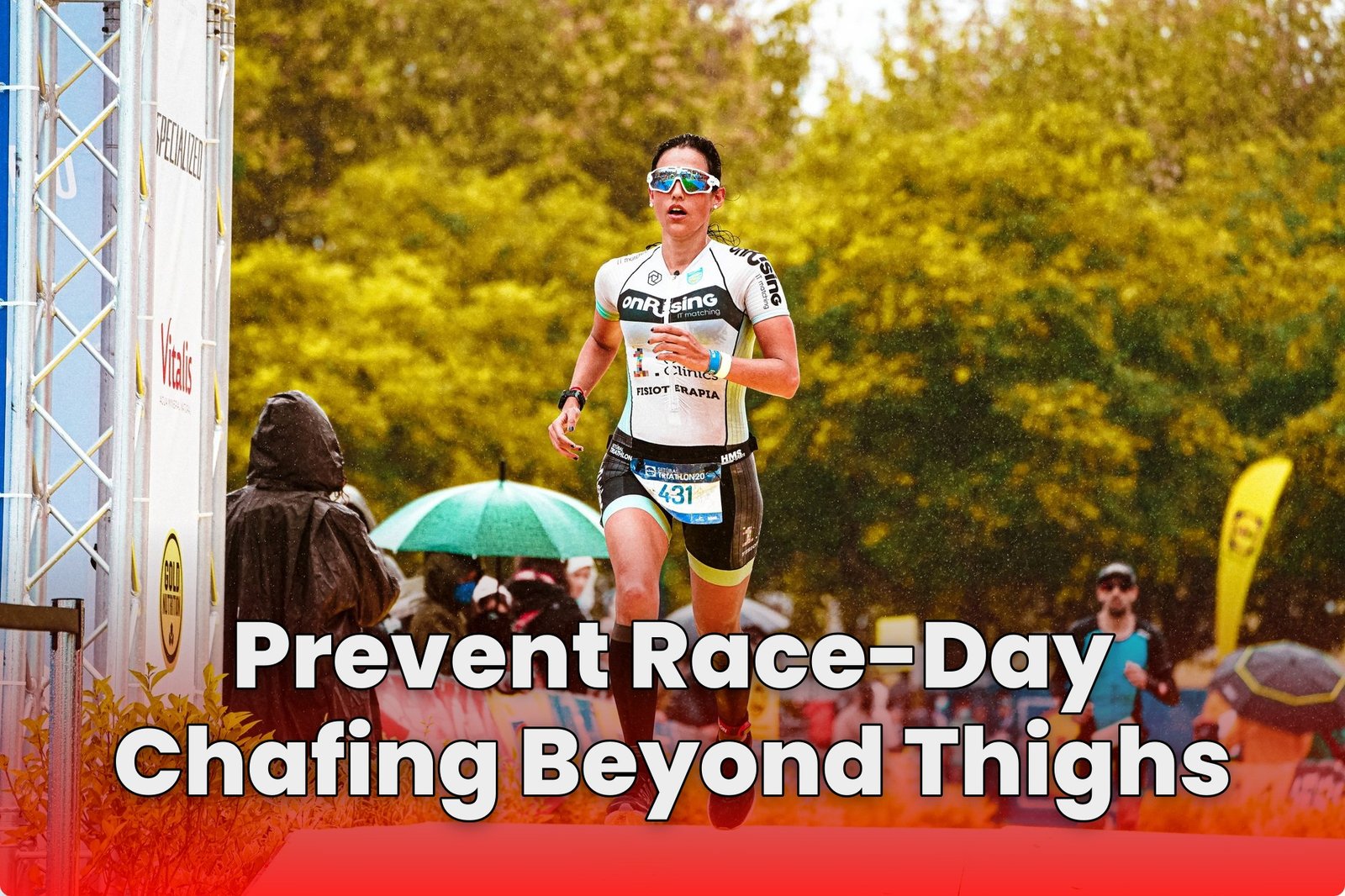
Chafing on race day is rarely an “inner-thigh only” problem. If you wait until your thighs feel sore, you are already too late, because seams, stitches, and contact points with gear can start the damage long before you notice.
The fix is simple but it is not subtle: do a quick hot-spot scan, then protect every friction zone where fabric, hardware, or skin-to-skin rubbing meets. Use a thin, even anti-chafe barrier on known trouble spots, and do not ignore areas like bra or strap lines, waistband edges, armpits, groin folds, and nipple coverage for anyone prone to runner’s nipple.
You also have to control the environment, not just the skin. Choose moisture-wicking, low-friction apparel with smooth seams, check garments for rough stitching or raised edges, and tighten any moving equipment so it does not bounce. When you treat chafing at the seams and stitches, you stop the problem at the source, not after it spreads.
Chafing Starts Where Friction Lives, Not Where You Notice It
Race-day chafing is not a mystery that appears only in inner thighs. It is a predictable mechanical failure: skin, fabric, and motion create friction at specific contact points. If you focus only on thighs, you will miss the seam line that eats through your confidence long before the finish.
Here is the hard truth: seams, stitches, and under-support areas often start the damage. By the time you feel it, the surface is already inflamed. Prevention has to be proactive, not reactive. Why wait for the burn when you can neutralize friction early?
Do A Quick Hot-Spot Scan Before You Leave the House
Before you tie your shoes, do a two-minute scan of your body like a mechanic inspecting a belt system. Move your arms, flex your torso, jog in place, and pay attention to where fabric rubs or where gear shifts. The goal is simple: find the contact points that will move against skin for the next hour or more.
Next, think beyond skin-only friction. Where will seams and stitch lines meet your body under load? Where will straps press, bounce, or rotate? If you cannot name the hot spots, you cannot defend them.
Keep Skin Dry Then Add A Thin Anti-Chafe Barrier
Chafing hates two things: dryness and low friction. Start by keeping skin dry with a quick towel wipe and, if you sweat easily, a light dusting strategy where appropriate. Then apply an anti-chafe barrier in a thin, even layer to known rubbing points. Petroleum jelly or Vaseline, hypoallergenic balm, or sports lubricant work because they reduce shear when skin and fabric slide.
The best barrier is the one you apply before movement turns irritation into inflammation.
Apply it where seams, straps, and gear touch. Not everywhere, not randomly. If you treat the hot spots with the right layer, you reduce friction at the source rather than fighting symptoms later.
Treat Seams, Tags, And Stitches Like Small Sandpaper
Most people blame anatomy because it feels personal. But the pattern usually points to construction. Raised seams, thick stitch ridges, and abrasive tags that seem harmless standing still can irritate after about 45 minutes of continuous rubbing. Your run turns tiny imperfections into heat and redness.
Sports medicine guidance supports the same principle: protect the contact points and control friction early. Even before you apply a barrier, sports medicine tips emphasize starting with dry skin and a thin layer where seams rub.
Pick Apparel That Minimizes Rough Contact Under Load
Your outfit is not just style. It is a friction system. If you want to prevent race-day chafing at seams and stitches, avoid cotton and choose moisture-wicking technical synthetics that do not stay wet. Wet fabric clings, then releases unevenly, which increases shear every time you stride.
Prioritize seamless or tagless designs and flatlock seam construction. Also check garments inside-out for sharp edges and raised stitching. If the garment feels smooth when you test it on your hands but rough when worn, that is your warning sign.
Map Your Contact Points And Apply Protection With Purpose
Now make it operational. Think of your body like a route map with high-friction intersections. Identify them, then apply your barrier exactly at those locations so seams and gear glide instead of grind.
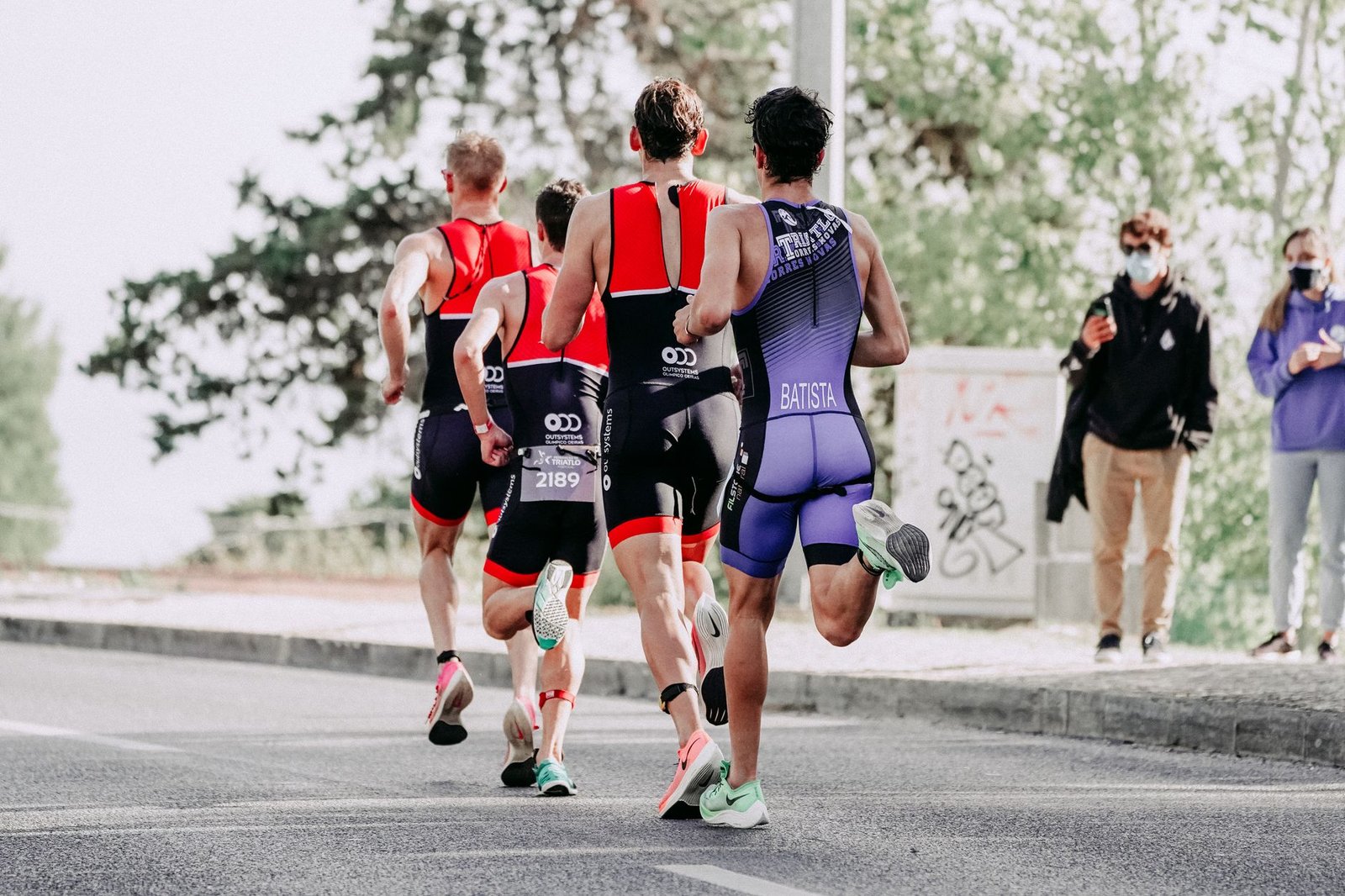
Use this quick map to focus your pre-run prep. It is not exhaustive, but it covers the zones that most often turn seams into trouble.
| Contact Zone | Why It Chafes | Practical Barrier Prep |
|---|---|---|
| Bra Line and Underboob | Seam pressure plus sweat | Thin balm layer |
| Armpits | Arm swing abrasion | Sports lubricant strip |
| Waistband and Lower Back | Micro-sliding in motion | Even petroleum jelly coat |
| Groin Folds | Skin-on-skin friction | Barrier coverage at folds |
| Nipples | Runner’s nipple risk | Guard or tape overlay |
Apply the barrier to the rubbing points, then press it in lightly so it stays where it should. If you can feel a seam edge through the fabric, fix the friction with construction choice or a targeted protective layer, not willpower.
Stabilize Packs And Straps So Gear Stops Bouncing
Chafing is often blamed on skin, but moving equipment causes its own version of damage. When a pack strap, hydration belt, or monitor chest strap bounces, it repeatedly changes angle and pressure. That motion creates friction even if your clothing is technically perfect.
Tighten and stabilize straps so they do not bounce. Then lubricate contact areas with the same barrier product. If straps still shift, adjust the fit before you adjust your expectations.
Protect The Groin And Underboob With Coverage That Stays Put
Skin-on-skin areas and under-support zones are predictable. Groin folds and underboob regions chafe because moisture and friction combine with small, repeated movements. The solution is not thicker product. It is coverage that stays in place through sweat and stride.
Apply barrier in the exact creases and contact regions where movement brings surfaces together. For underboob, ensure the fabric does not roll upward, and for groin folds, focus on folds rather than just the inner thigh. If you keep the friction points protected, you stop the problem before it escalates.
Guard The Nipples For Long Runs And Anyone Prone To Runner’s Nipple
Nipple chafing is real, and it often arrives faster than people expect on long runs. Heat, sweat, and repeated friction can make small irritation feel like a bigger injury. If you are prone to runner’s nipple, plan for it instead of hoping it behaves this time.
Use nipple guards or tape and small bandage-style solutions designed for sports. Apply correctly, then check that the edges stay flat. Your goal is to eliminate skin-on-fabric abrasion at the source.

Dress For Conditions And Reapply Before the Burn
Weather changes the rules. Humid air, rain, and prolonged sweat increase friction and wash away barriers. That means “set it and forget it” is a trap. If conditions are aggressive, use more protection upfront and plan reapplication during the run, not after.
Reapply barriers at logical checkpoints based on duration and sweat rate, especially for long efforts where irritation typically escalates. If you start feeling warmth or rubbing, treat it early. The moment you ignore a hot spot is the moment it becomes a setback.
Test New Gear And Products On Short Runs First
The race is not a lab. New apparel, new lubricants, and new barrier routines can behave differently once you are tired, sweaty, and moving for hours. If you have a product you have never used in real conditions, test it on shorter runs before race day.
Check for two things during testing: whether the barrier stays put and whether your garment construction creates a seam-led friction line. If your thighs survive but your chest seam or underboob stitch line irritates, that is your fix list for race day.
Use A Simple Ruleset On Race Day so You Do Not Guess
Chafing prevention works best when your steps are repeatable. Follow a ruleset: scan hot spots, keep skin dry, apply a thin barrier to seam and gear contact points, stabilize straps, and protect known high-risk areas like groin folds and nipples. Then dress in moisture-wicking technical synthetics with seam-friendly construction.
Ask yourself one question before the gun: Have I treated the seams and stitches that will rub under motion? If the answer is no, your plan is incomplete. Do the work once, do it deliberately, and let the race be about speed, not skin.
How Can You Prevent Race-Day Chafing at Seams and Stitches?
How do I find race-day chafing hot spots from seams and stitches before I leave?
Do a quick pre-race hot-spot scan by checking the inside of your kit for raised stitching, tags, and seam lines that rub when you move, then note likely contact points where fabric or gear will shift after 30 to 45 minutes.
What skin prep and anti-chafe barrier work best to prevent chafing at seams and stitches?
Start with clean, dry skin and apply a thin, even layer of a proven anti-chafe barrier such as petroleum jelly, a hypoallergenic balm, or a sports lubricant to the areas that you expect to rub most—then reapply as needed for long, humid, or wet conditions.
Which apparel features help reduce chafing from seams and stitches, not just inner thighs?
Choose moisture-wicking technical fabrics and prioritize seamless or tagless construction, or flatlock seam designs, and avoid rough cotton; also try garments inside-out to feel for sharp edges and raised threads.
How should I protect common race areas that chafe from seams and stitches?
Cover high-friction zones where seams or gear touch, such as bra line/underboob, armpits, waistband and lower back, groin folds, and nipples for longer runs, using barriers or dedicated guards where appropriate.
How can I prevent chafing at seams and stitches caused by moving straps, packs, or belts?
Stabilize equipment by tightening and adjusting straps so they don’t bounce, then apply your anti-chafe barrier to the exact strap and contact areas, including where a hydration belt, pack, or chest strap repeatedly rubs during the run.
Should I test new gear or products before race day to stop seam and stitch chafing?
Yes—test any new clothing, tape, or lubricants on shorter runs first so you can spot irritation early and adjust coverage, fit, or reapplication timing before race day.
Protect Every Contact Point, Not Just Inner Thighs
If you want to avoid getting sidelined by irritation, you need to follow how to prevent race-day chafing at seams and stitches, not just inner thighs, including preseason hot-spot checks, seam-aware kit choices, and friction control at bra line, armpits, waistband, groin folds, nipples, and any gear that bounces. Stop treating chafing like a one-area problem and start treating it like a whole-route issue, because the smartest protection is the kind you apply where the rubbing actually happens.

I am Ozan, a London-focused running writer and marathon enthusiast with a passion for helping people discover the city’s best races, running routes, walking trails, and fitness events. I research and write practical, up-to-date guides covering marathons, race preparation, training tips, running gear, and everything related to staying active in London.
My goal is to create reliable, easy-to-follow content that helps runners and walkers of all experience levels explore London with confidence, whether they’re preparing for their first 5K or their next marathon.